
Rhyme identification Worksheets for Ages 5-9
3 filtered results
Difficulty Level
Grade
Age
-
From - To
Subject
Activity
Standards
Discover our engaging Rhyme Identification Worksheets designed specifically for children ages 5 to 9! These fun and interactive resources help young learners develop essential phonetic skills by identifying rhyming words. With a variety of activities, including matching games, coloring pages, and puzzles, children will enhance their listening and vocabulary skills while enjoying playful learning. Our worksheets foster creativity and literacy in an enjoyable way, making learning to read delightful. Perfect for parents, educators, and homeschooling, these printable worksheets will captivate your child's imagination while strengthening their rhythmic awareness. Begin their journey towards reading fluency today with our expertly crafted rhyme activities!
Favorites
With answer key
Interactive
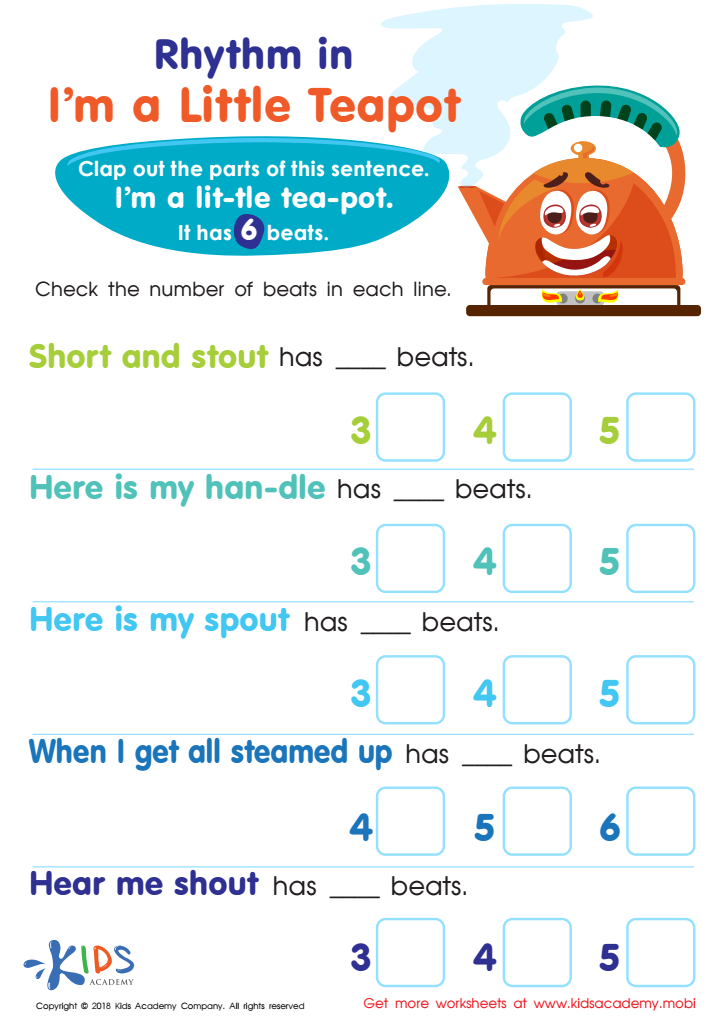
Rhythm in I'm a Little Teapot Worksheet
Clap along and count the beats of this classic children's song! With this worksheet, help your child read and clap out each phrase. Check the boxes for the correct number of syllables in each word. Have fun counting and learning with this cute ELA activity!
 Assign to My Students
Rhythm in I'm a Little Teapot Worksheet
Worksheet
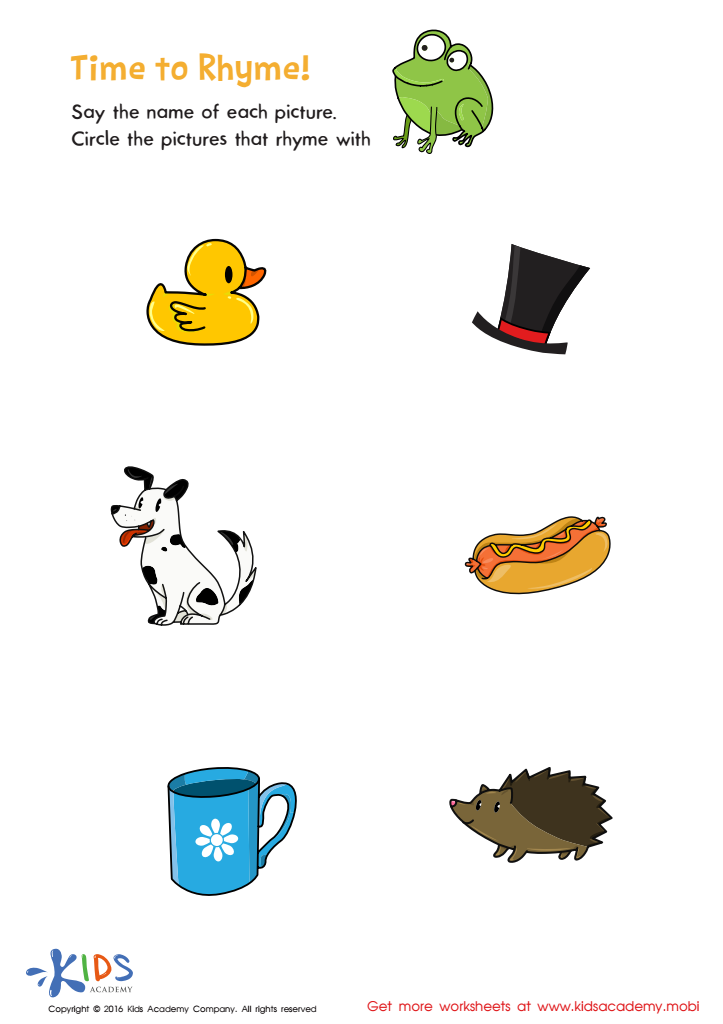
Rhyming Worksheet: Time to Rhyme Rhyming Worksheet
This worksheet offers learning, cognition and creative fun! It recognizes and identifies rhyming words, encourages mental tasks to improve focus and lets your child express their creativity through coloring. Writing the word for each picture adds to the fun and helps them identify rhyming words. Have them circle matching rhyming words for more coloring fun!
Rhyming Worksheet: Time to Rhyme Rhyming Worksheet
Worksheet
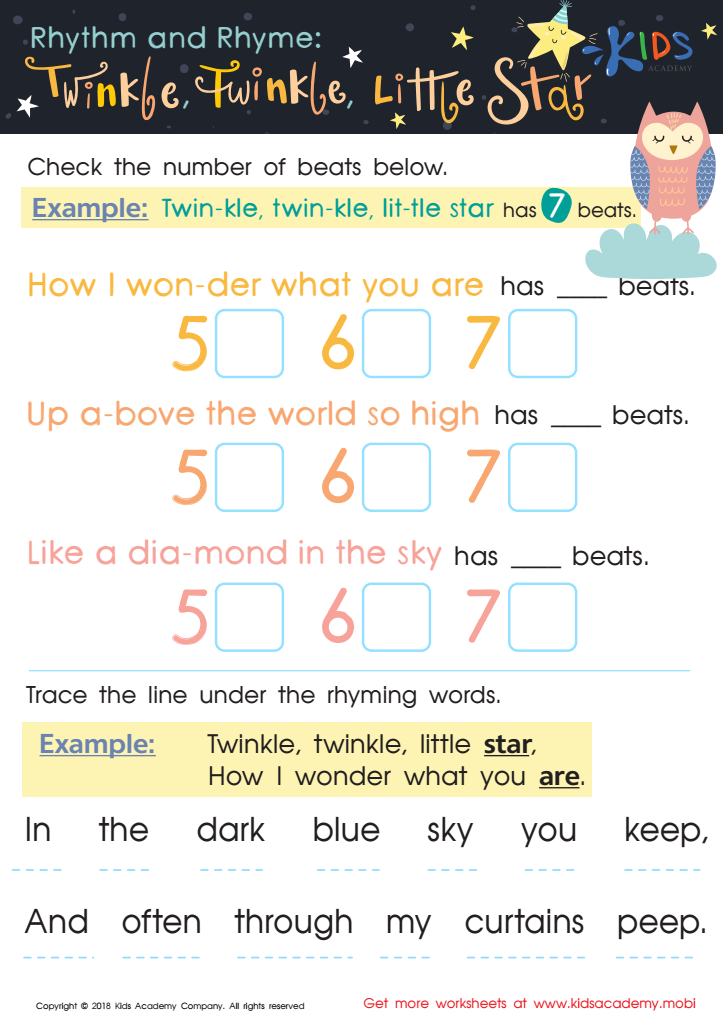
Rhythm and Rhyme: Twinkle, Twinkle, Little Star Worksheet
Kids will love learning about syllables in words with a fun children's song! Use the song Twinkle, Twinkle, Little Star to explain that each word has at least one beat. Have them clap out the beats in each word and check the boxes on this cute worksheet to identify the syllables.
Rhythm and Rhyme: Twinkle, Twinkle, Little Star Worksheet
Worksheet
Join Kids Academy for Free
Who is primarily going to use this learning content?





Rhyme identification is a crucial aspect of early literacy development for children aged 5-9, making it essential for parents and teachers to prioritize. Understanding and recognizing rhymes enhances phonemic awareness, which is the ability to hear, identify, and manipulate the sounds in spoken words. This foundational skill is vital as it plays a critical role in reading acquisition and fluency.
When children engage with rhymes, they develop sound discrimination skills, making it easier for them to decode unfamiliar words later on. Additionally, rhyme identification supports vocabulary development, as kids are introduced to new words in a fun and memorable context. This engaging form of language helps foster a love for reading and storytelling.
Moreover, rhyming activities promote cognitive skills, including memory and attention, as children often participate in songs and poems that require them to recall patterns. Socially, rhyming games encourage collaboration and communication among peers, providing a platform for shared learning experiences.
In summary, rhyme identification is an integral part of early literacy that educators and parents should actively nurture, as it not only supports reading readiness but also fosters comprehensive language skills, creativity, and social interaction in young learners.








