Rhyming skills development Worksheets for Ages 5-9
5 filtered results
-
From - To
Boost your child's rhyming skills with our engaging worksheets designed for ages 5-9! These interactive resources feature fun activities that encourage early literacy, phonemic awareness, and vocabulary development. Children will enjoy matching words, completing rhymes, and participating in creative exercises that make learning exciting. Our worksheets align with educational standards and cater to diverse learning styles, ensuring that every child can thrive. Perfect for classroom settings or home practice, these materials provide valuable repetition and reinforcement of rhyming concepts. Encourage your young learners to explore the world of language through playful and effective rhyming activities today!
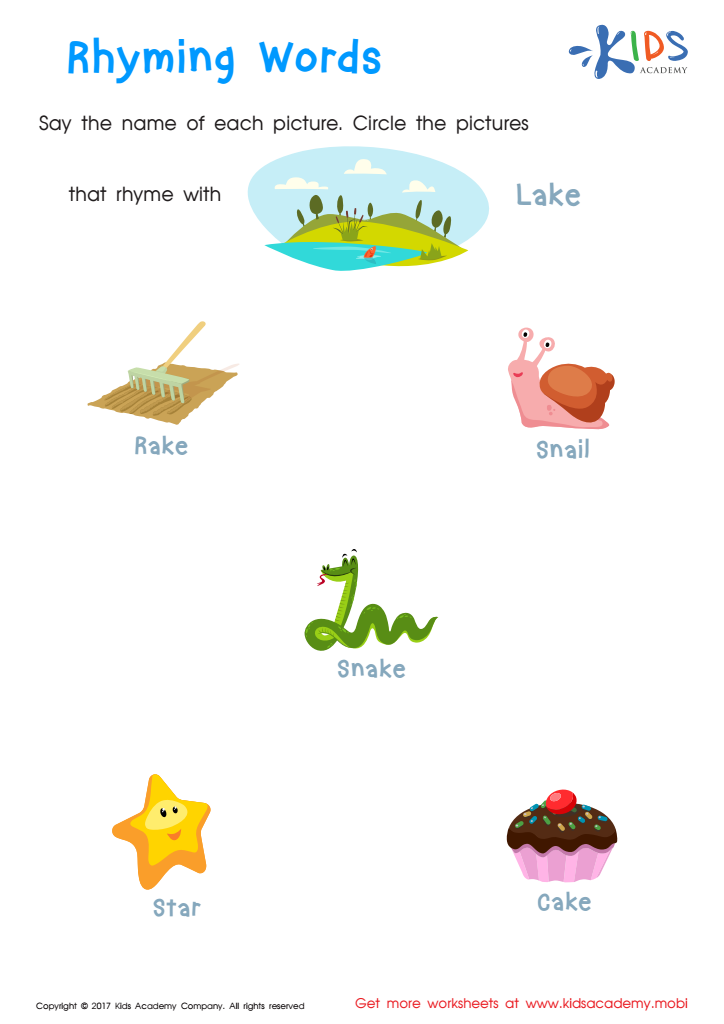
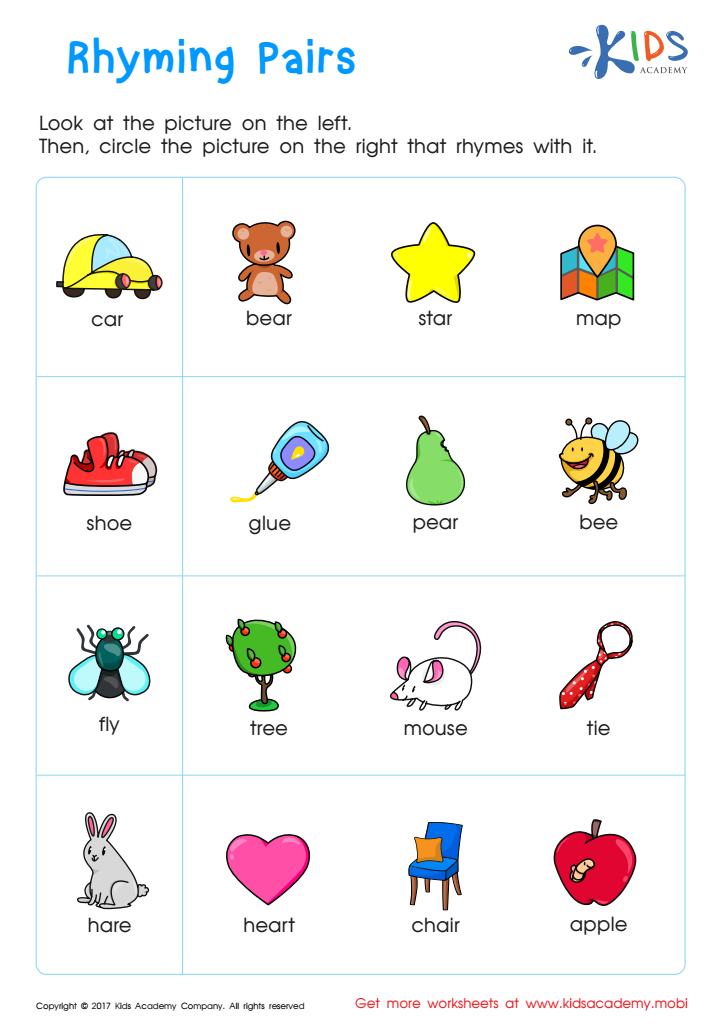
Rhyming Words Rhyming Worksheet
 Assign to My Students
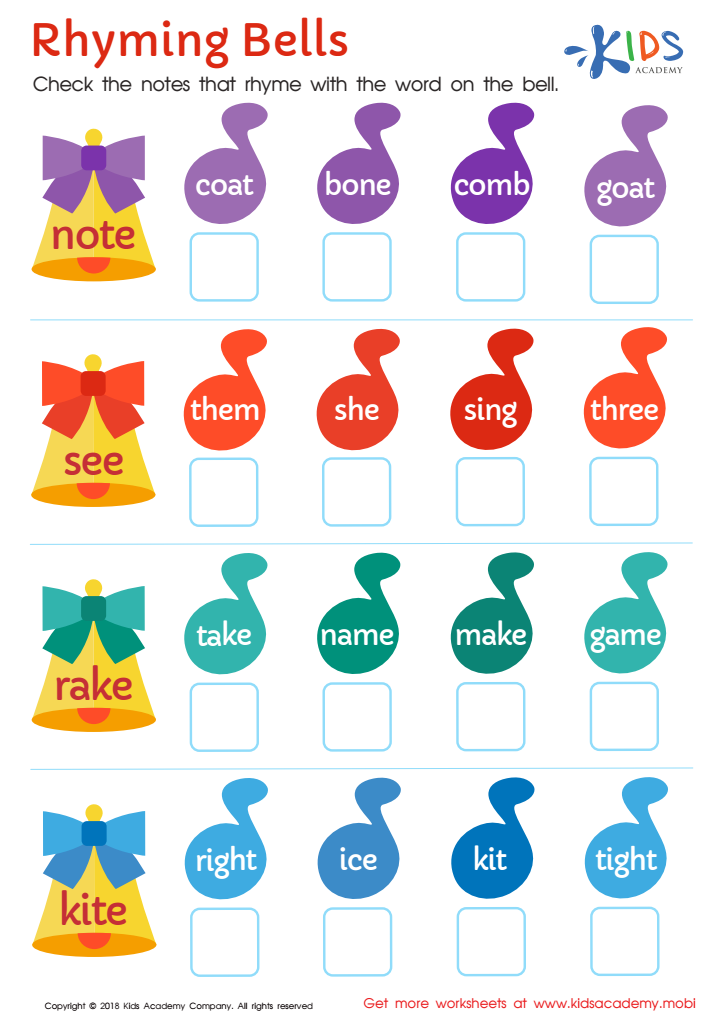
Rhyming Bells Worksheet
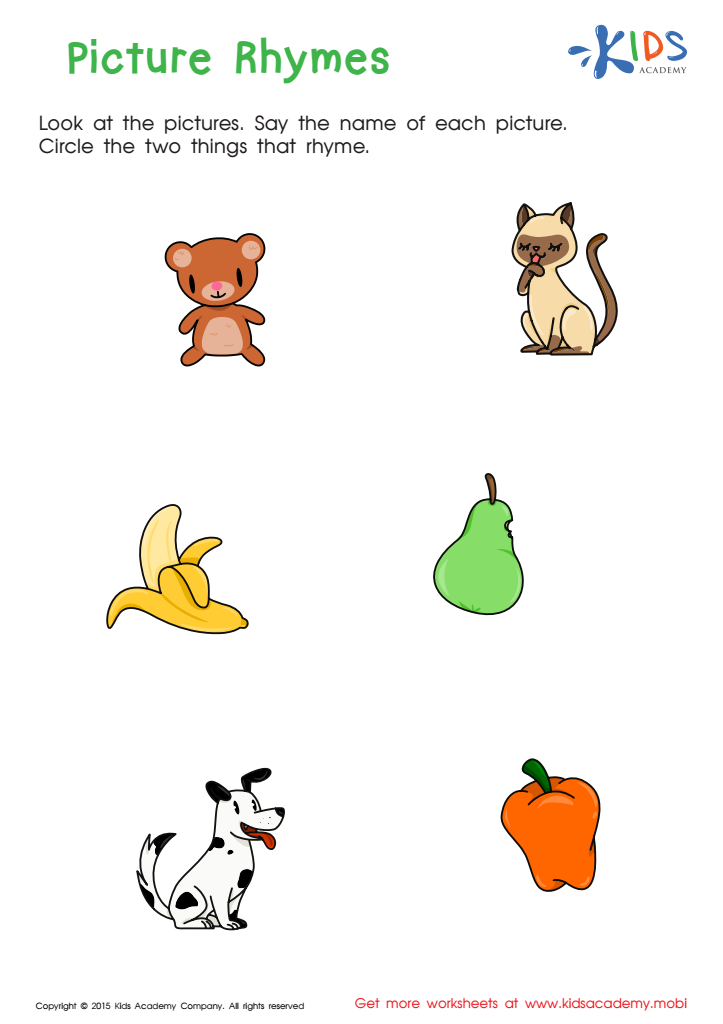
First Words: Picture Rhymes Worksheet
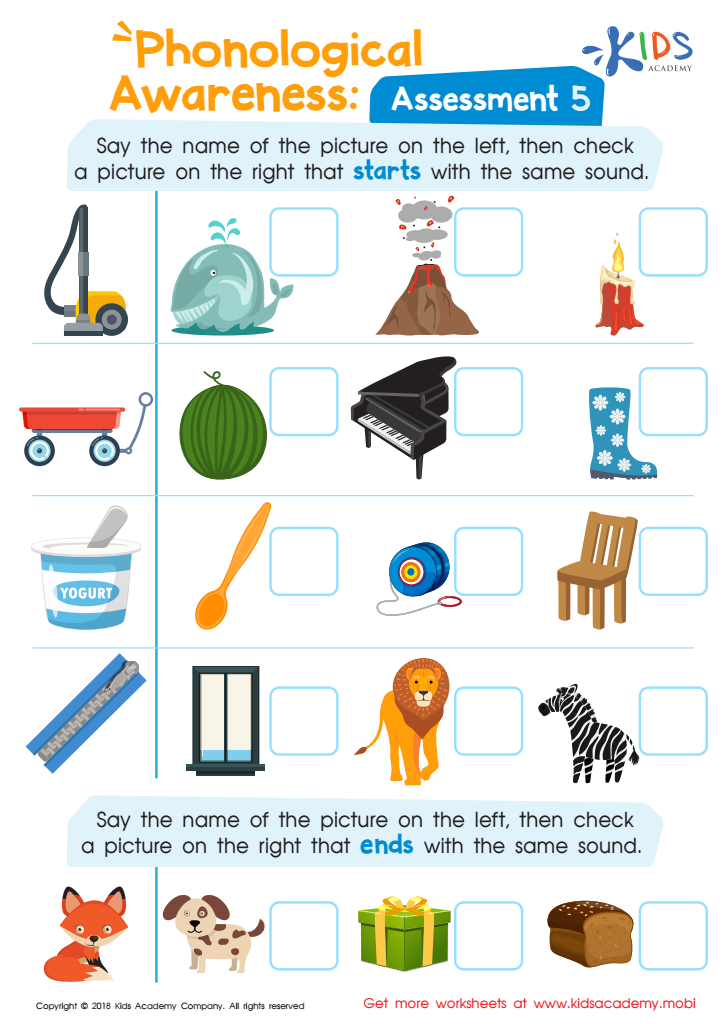
Phonological Awareness: Assessment 5 Worksheet






Rhyming skills are crucial for children's literacy development, especially for ages 5-9. During this formative stage, children are not only cultivating phonological awareness, but also enhancing their listening and speaking skills. Rhyming helps them recognize similarities and differences in sounds, which is foundational for reading and writing. When children engage with rhymes, they learn to segment words into individual sounds, which fosters stronger decoding abilities when they encounter new words in reading.
Additionally, rhyming encourages vocabulary expansion. As children explore rhymes in stories and songs, they encounter new words in meaningful contexts, enhancing their understanding and retention. This playful aspect of language also builds confidence in language usage, sparking a love for reading.
Moreover, rhyming supports cognitive and social-emotional development. It encourages participation in group activities, promotes creativity, and cultivates a sense of rhythm and musicality in language. For these reasons, both parents and teachers should prioritize rhyming skills in the curriculum or at home through playful activities, songs, and literature. Emphasizing rhyming lays a strong foundation for literacy which children will continue to build upon throughout their academic journey. Investing time in these skills ultimately prepares them for success in later reading and writing endeavors.








