
Sentence structure Worksheets for Ages 5-9
9 filtered results
Difficulty Level
Grade
Age
-
From - To
Subject
Activity
Standards
Discover our engaging Sentence Structure Worksheets designed for children aged 5-9! These worksheets aim to build essential language skills by introducing young learners to the fundamentals of sentence construction. With fun exercises that include matching, fill-in-the-blanks, and simple prompts, kids will enhance their ability to create clear and complete sentences. Each worksheet is tailored to nurture creativity and strengthen grammar proficiency, making them perfect for classroom activities or home study. Empower your child’s confidence in communication and help them master sentence structure with our vibrant and user-friendly resources. Explore our collection and take the first step towards literacy success today!
Favorites
With answer key
Interactive
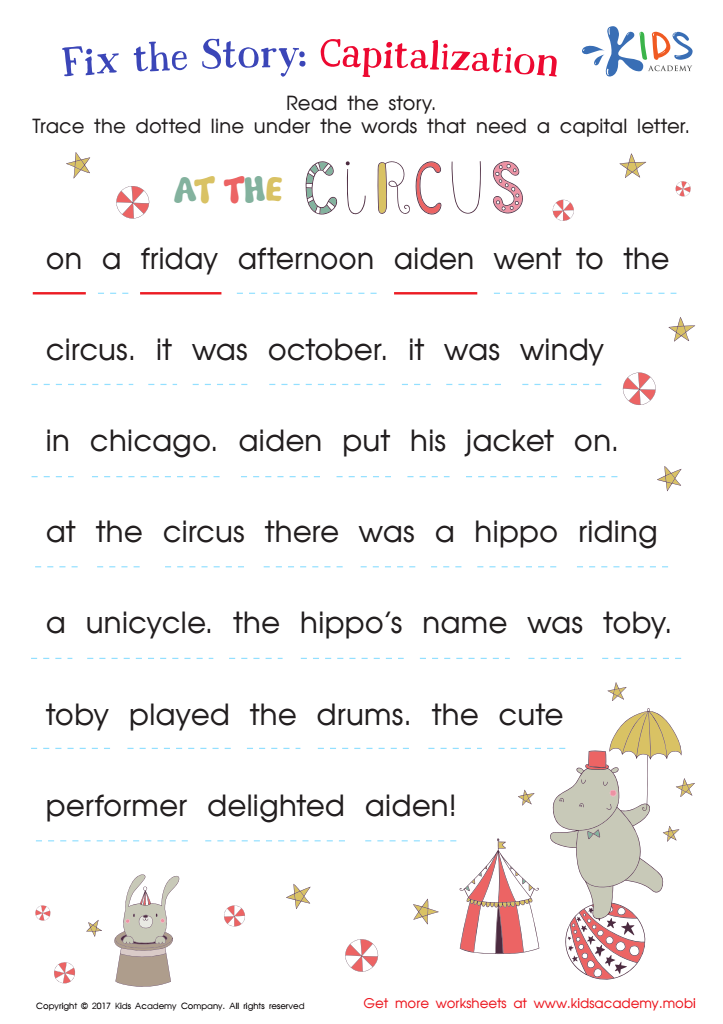
Capitalization: Fix the Story Worksheet
This worksheet is perfect for mastering capitalization in stories: Fix the Story. Read along with your child and help them find all the words that require capitalization. It's sure to be a fun and engaging challenge!
 Assign to My Students
Capitalization: Fix the Story Worksheet
Worksheet
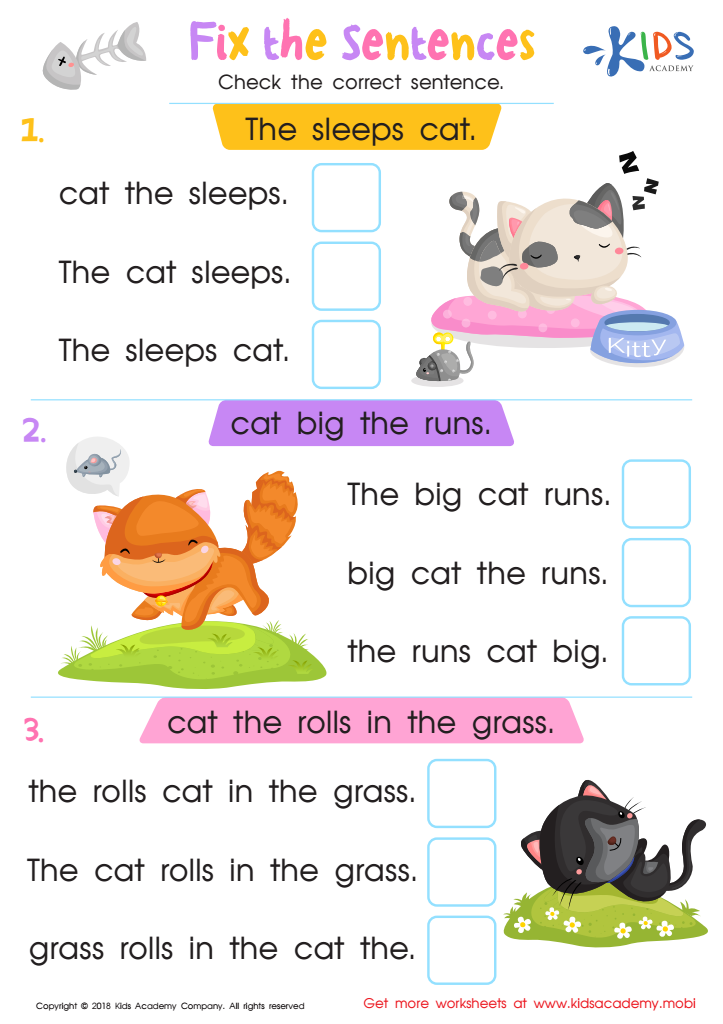
Fix the Sentences Worksheet
Once your students know the alphabet, teach them words. Then move on to constructing sentences. If they have a handle on sentence structure, give them this worksheet. Ask them to read the sentences and check the correct one.
Fix the Sentences Worksheet
Worksheet
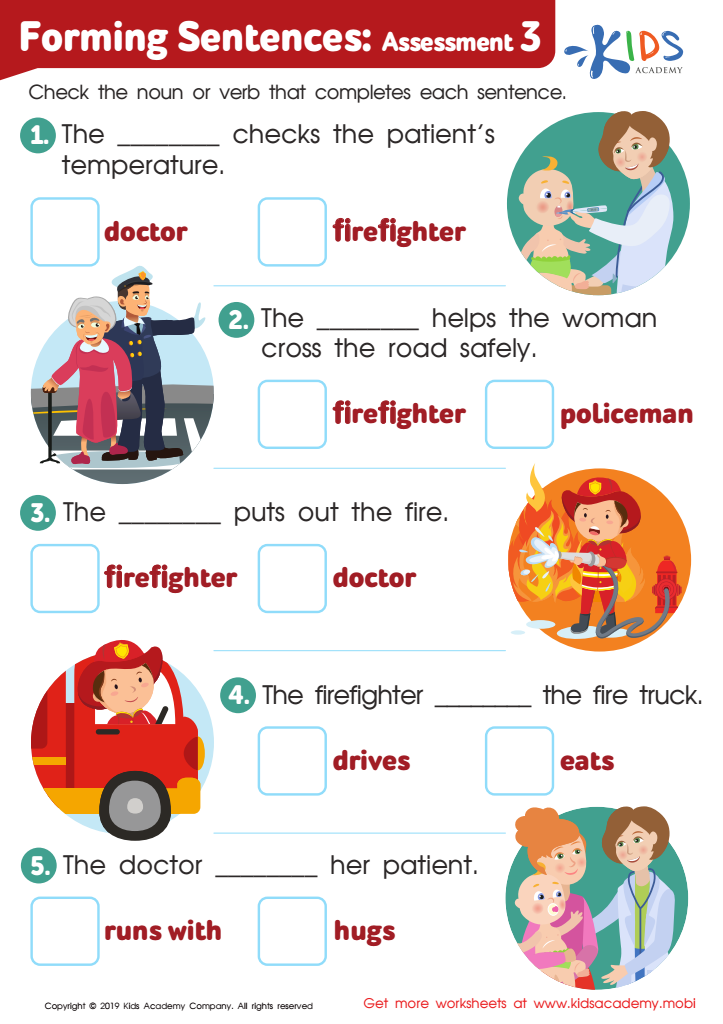
Forming Sentences: Assessment 3 Worksheet
Students must master sentence formation to be successful English learners. After grasping the ABCs and basic words, the next step is to construct sentences using those words. Worksheets like this one can help teach kids how to make sentences; they need to look at the pictures and select the correct noun or verb to complete each sentence.
Forming Sentences: Assessment 3 Worksheet
Worksheet
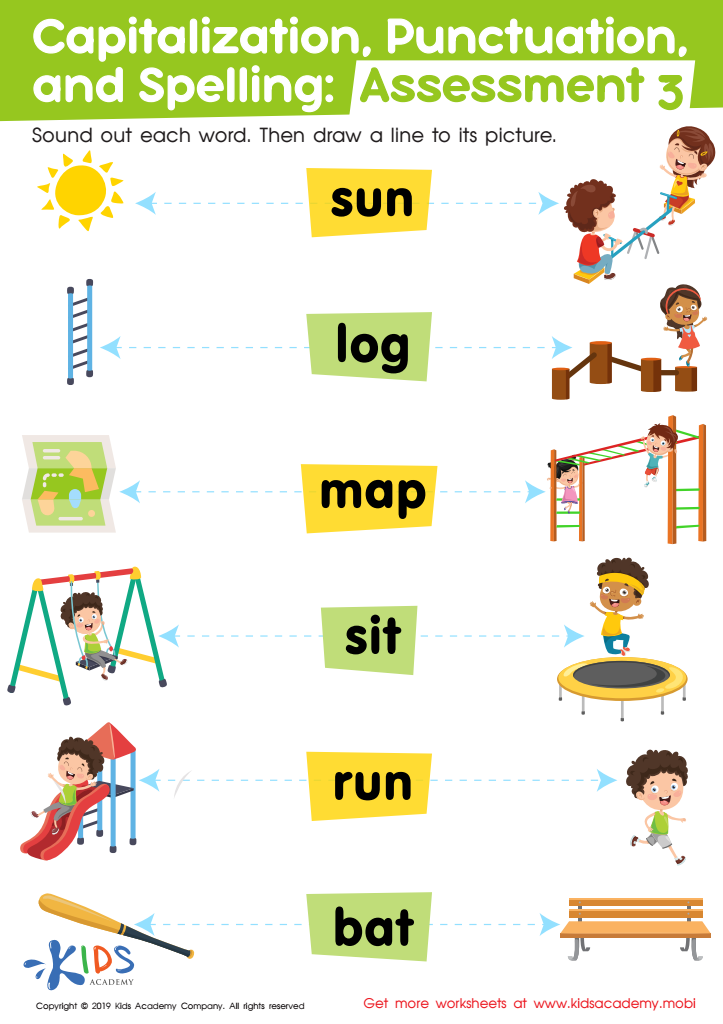
Capitalization. Punctuation. Spelling. Assessment 3 Worksheet
Before starting this worksheet, have your kids spell some simple words. Correct if wrong and show the right spellings. Then, ask them to link the pictures to the words you read out. Spelling is key for a good writer, and kids need to know how to spell to read texts easily.
Capitalization. Punctuation. Spelling. Assessment 3 Worksheet
Worksheet
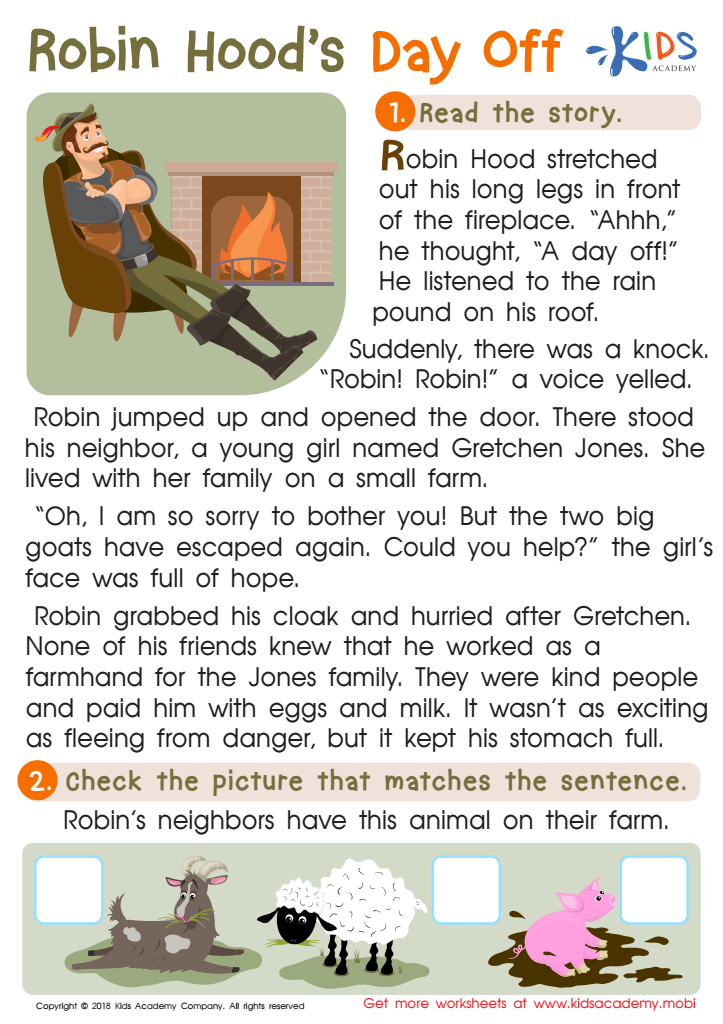
Robin Hood's Day Off Worksheet
Encourage your child to express their personality by writing stories. Show them this worksheet's short story about Robin Hood and read it slowly and carefully. Read it again if needed and ask the question below the story. This will help your child use their knowledge to answer it.
Robin Hood's Day Off Worksheet
Worksheet
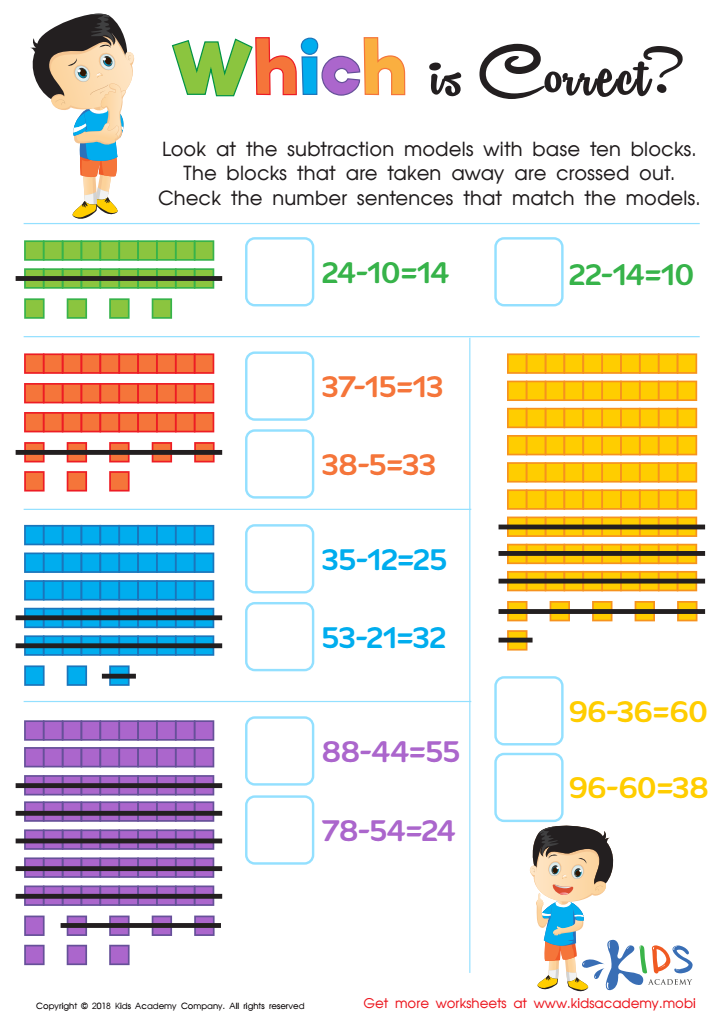
Which Is Correct? Math Worksheet
Young mathematicians will gain confidence solving subtraction problems with this bright, colorful worksheet. They'll use base ten blocks representations, then pick the right number sentence to match. It's great practice for developing number sense, helping them excel in higher-level math.
Which Is Correct? Math Worksheet
Worksheet
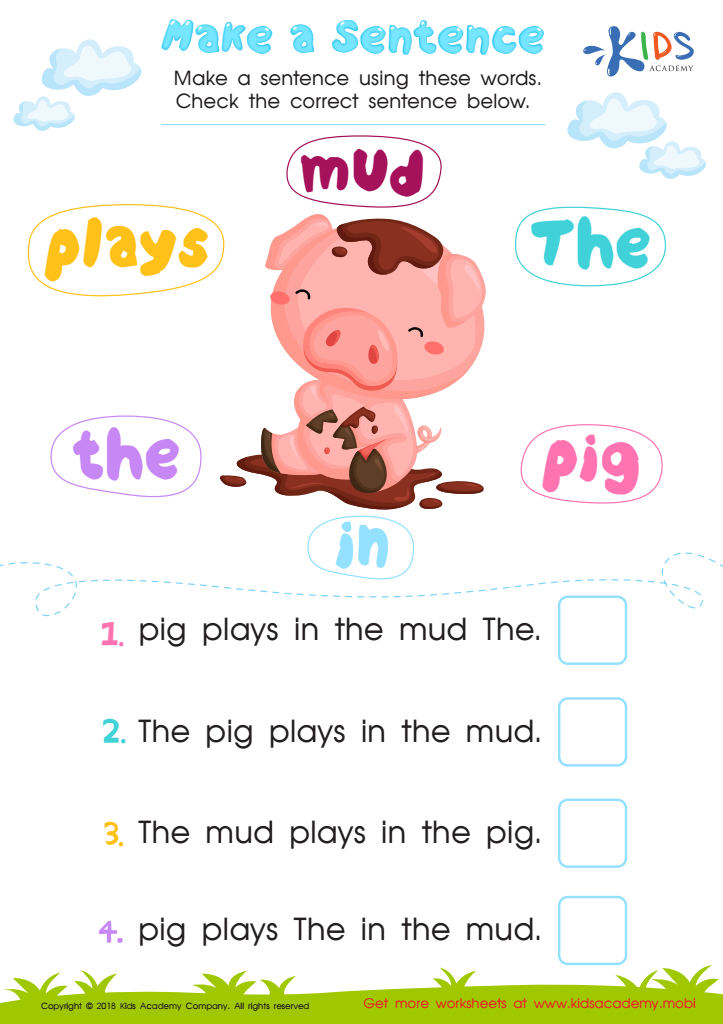
Assessment: Make a Sentence Worksheet
Help your kids identify the animal in the printout. Read the words in the bubbles and then read the four sentences in the options 1 – 4. Ask them to check the box with the correct sentence.
Assessment: Make a Sentence Worksheet
Worksheet
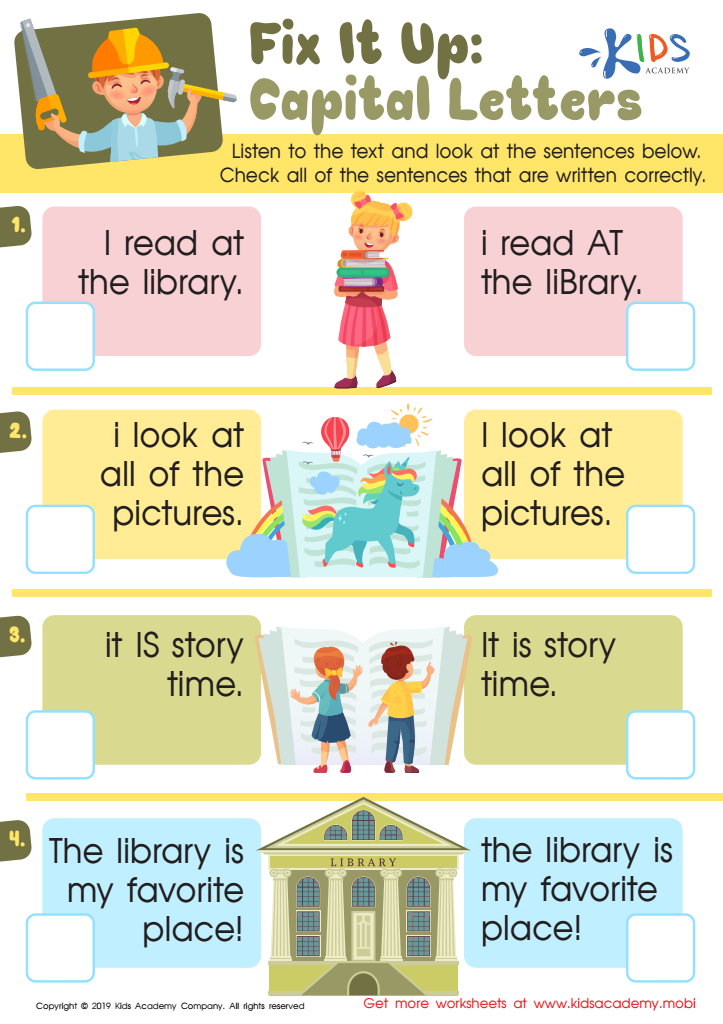
Fix Capital Letters Worksheet
Put on your hardhats and get out the tools - it's time to do some repair work! Have your child identify sentences written with proper capitalization on this fun and colorful worksheet. Ask more advanced students to rewrite incorrect sentences correctly - it'll help them understand letter case better.
Fix Capital Letters Worksheet
Worksheet
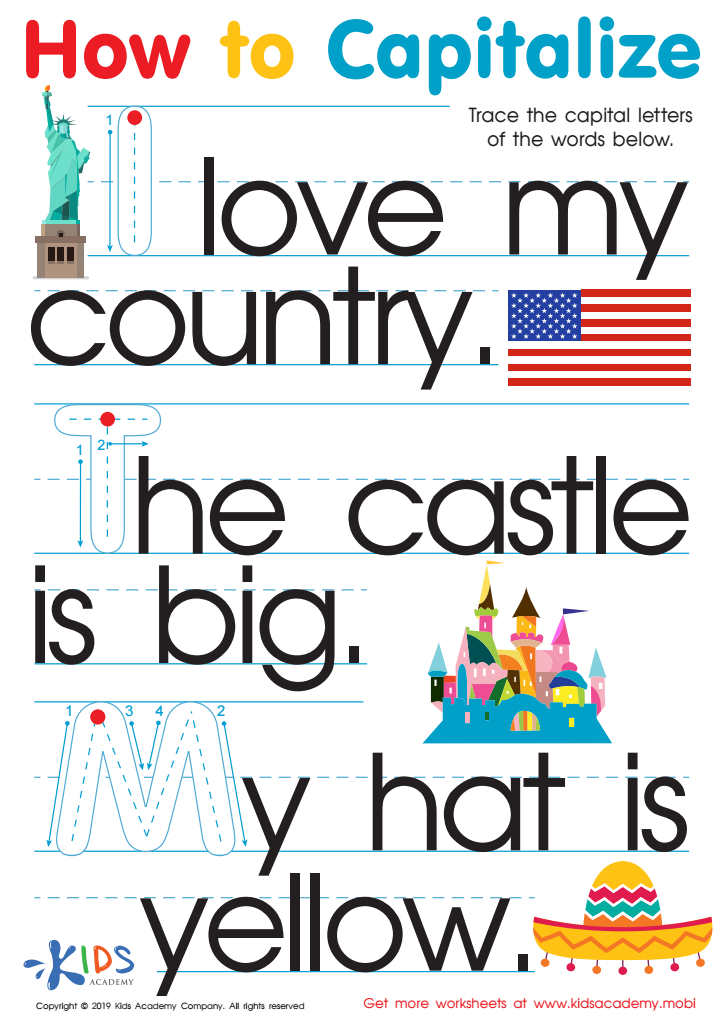
How to Capitalize Worksheet
Capitalizing letters is important in English. This worksheet will help your child learn how to write them. Words such as "the" and "I" will be covered, with visuals such as the Statue of Liberty, the American Flag, a castle, and a sombrero. The "How to Capitalize" PDF is a great way to sharpen your child's writing and aid their success!
How to Capitalize Worksheet
Worksheet
Join Kids Academy for Free
Who is primarily going to use this learning content?








Understanding sentence structure is crucial for children aged 5-9 because it lays the foundation for effective communication and literacy skills. At this young age, children are beginning to develop their reading and writing capabilities, and a grasp of sentence structure significantly enhances these abilities.
Firstly, recognizing how sentences are formed—from simple to more complex structures—enables children to better comprehend what they read. They learn to identify subjects, verbs, and objects, which helps them grasp meaning more efficiently. This understanding fosters a love for reading as they can decipher stories and information with greater ease.
Moreover, as children begin to write, knowing how to construct varied sentences allows them to express thoughts and ideas more creatively. It encourages them to experiment with their language and develop their voice. This skill is also linked to critical thinking, as organizing thoughts coherently is crucial for effective problem-solving.
Both parents and teachers play a vital role in guiding children through engaging activities and lessons focused on sentence structure. By prioritizing this aspect of language development, they are equipping children with essential tools for academic success and effective communication, impacting their lifelong learning trajectory.








