Sentence structure understanding Worksheets for Ages 5-9
5 filtered results
-
From - To
Enhance your child's language skills with our engaging Sentence Structure Understanding Worksheets, designed for ages 5-9! These worksheets provide a fun and interactive way for young learners to grasp essential elements of sentence construction, including identifying subjects and predicates, using proper punctuation, and forming complete thoughts. Each colorful worksheet encourages critical thinking and boosts creativity, making learning both enjoyable and effective. Perfect for at-home practice or classroom activities, our resources help build a solid foundation for language arts. Explore our collection to support your child's reading and writing development while fostering a love for language!
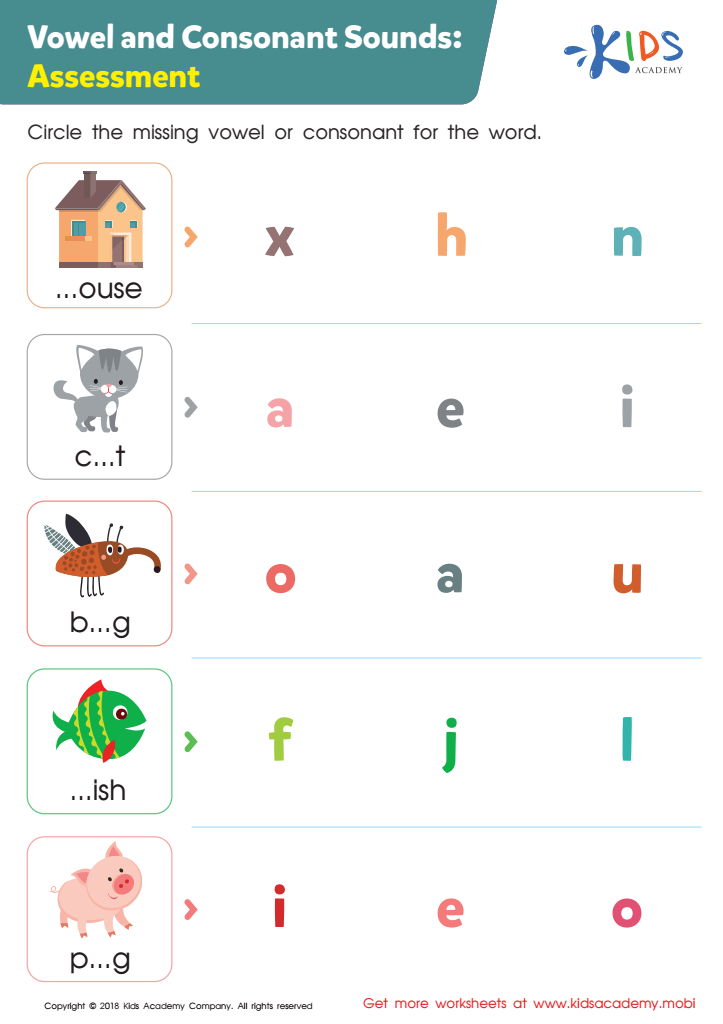
Vowel and Consonant Sounds: Assessment Worksheet
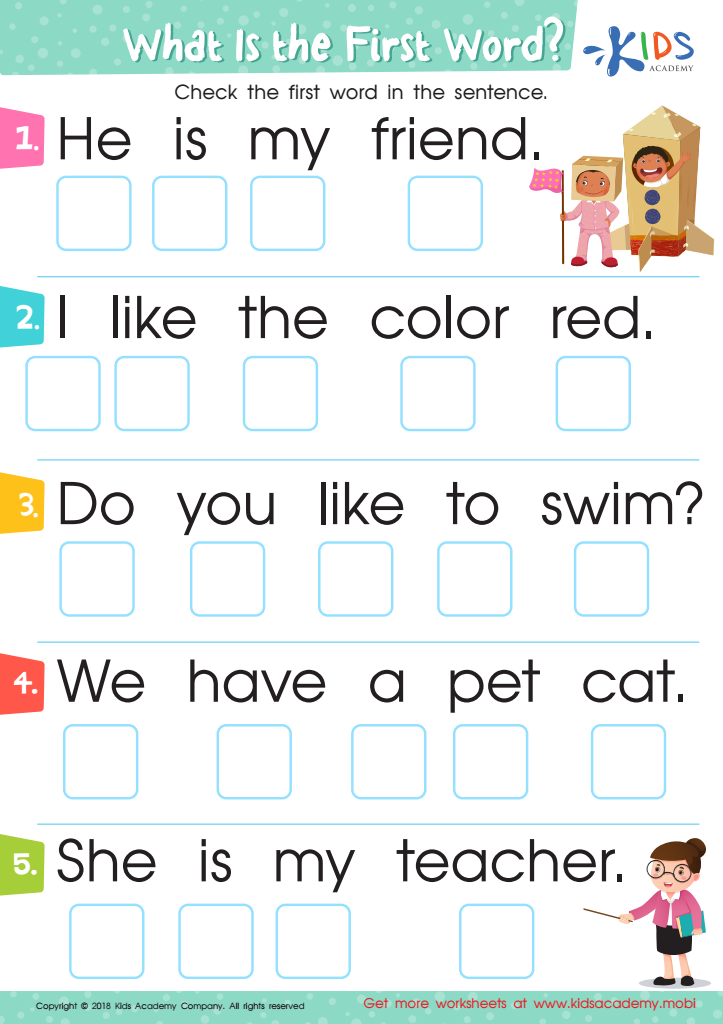
What is the First Word? Worksheet
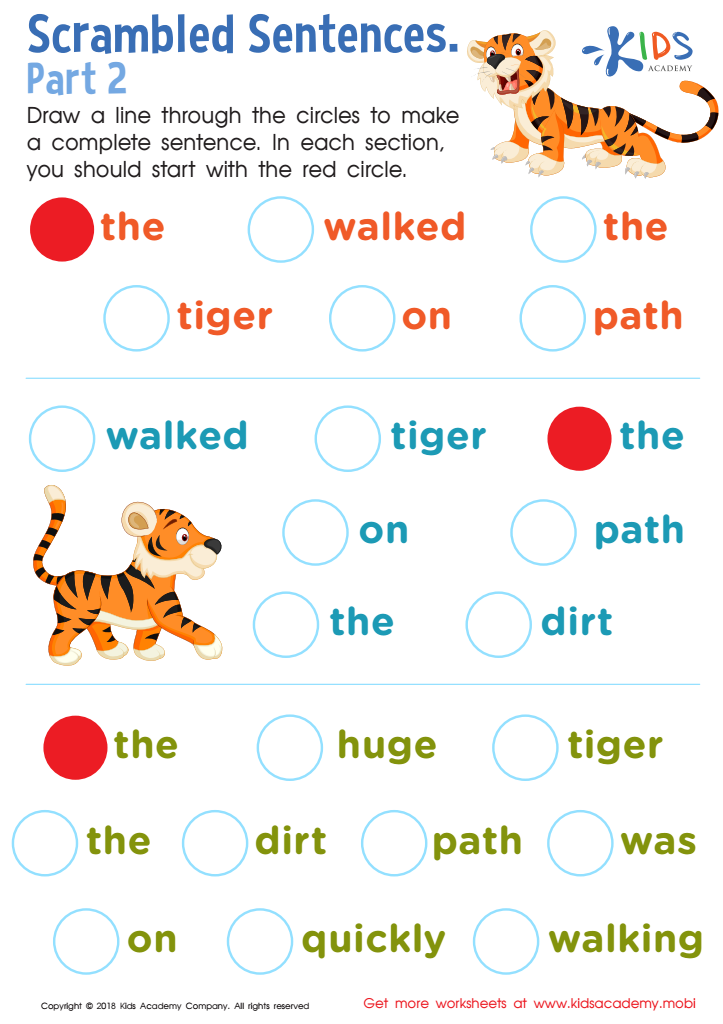
Scrambled Sentences Part 2 Worksheet
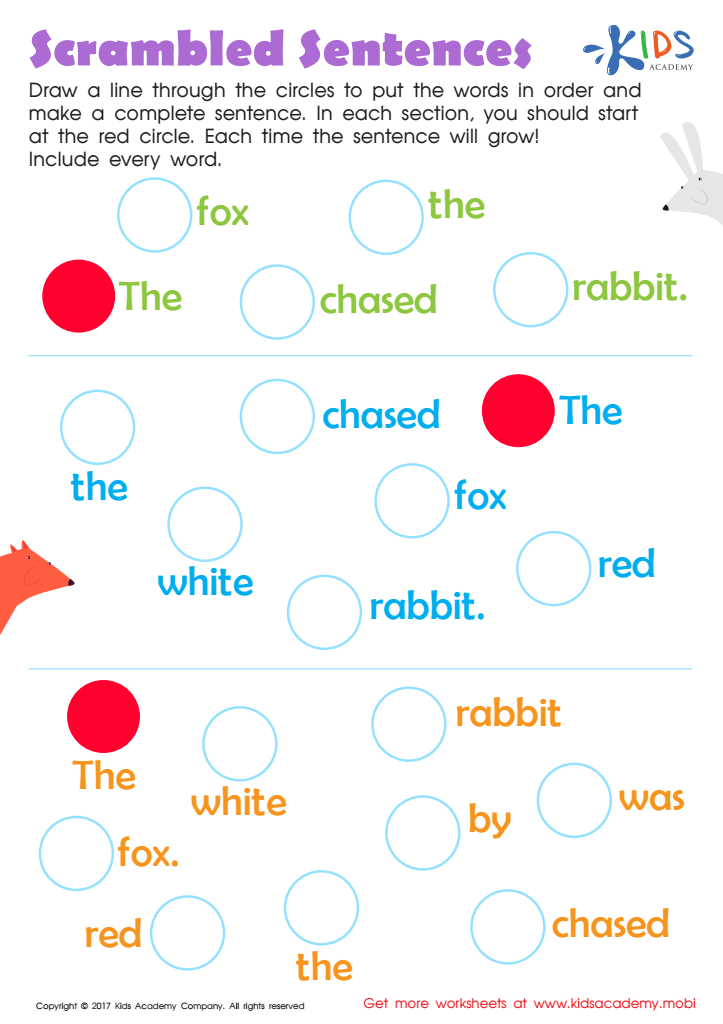
Scrambled Sentences Worksheet
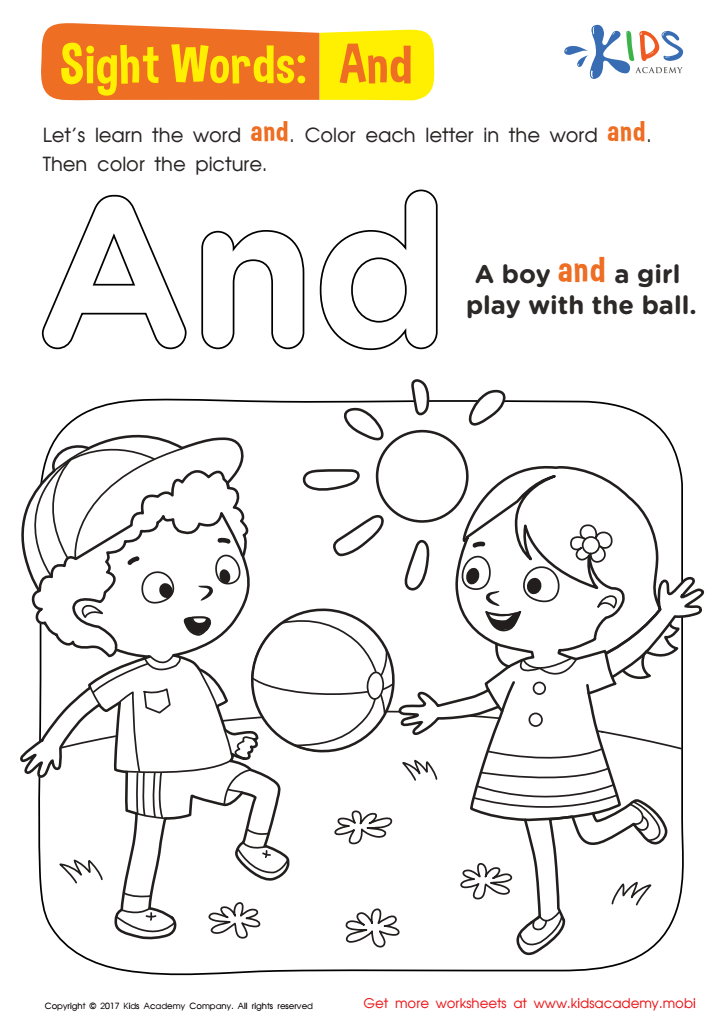
And Worksheet Sight Words Worksheet
 Assign to My Students








Understanding sentence structure is crucial for children aged 5-9, as it lays the foundation for effective communication and literacy skills. At this age, children are developing their reading and writing abilities, and grasping how to construct sentences helps them express their thoughts clearly and coherently. A solid grounding in sentence structure enhances their comprehension of written texts, enabling them to decode and understand more complex ideas as they progress in school.
Moreover, a grasp of sentence construction fosters critical thinking. Children learn to organize their ideas logically, which is essential for problem-solving and decision-making. When they become proficient in identifying subjects, verbs, and objects, they are better equipped to create and interpret various texts, from stories to informative pieces.
From an educational standpoint, sentence structure understanding promotes higher academic achievement. Children confident in their writing circuitry are more inclined to participate in classroom discussions and collaborative projects. For parents and teachers, supporting this aspect of language development can lead to fostered engagement in other subjects, as literacy is intertwined with overall learning. Ultimately, prioritizing sentence structure cultivates a foundation for lifelong communication skills, laying the groundwork for success in academic and social spheres.








