Filters

57 filtered results

Clear all filters
Favorites
With answer key
Interactive

57 filtered results

Difficulty Level

Grade


Check out this FREE "Spatial awareness" Trial Lesson for age 5-9!

Cut Rectangles: Halves and Wholes

Favorites
With answer key
Interactive
  • 5-9
  • Spatial awareness
Find Words Mouse Maze Worksheet

Find Words Mouse Maze Worksheet

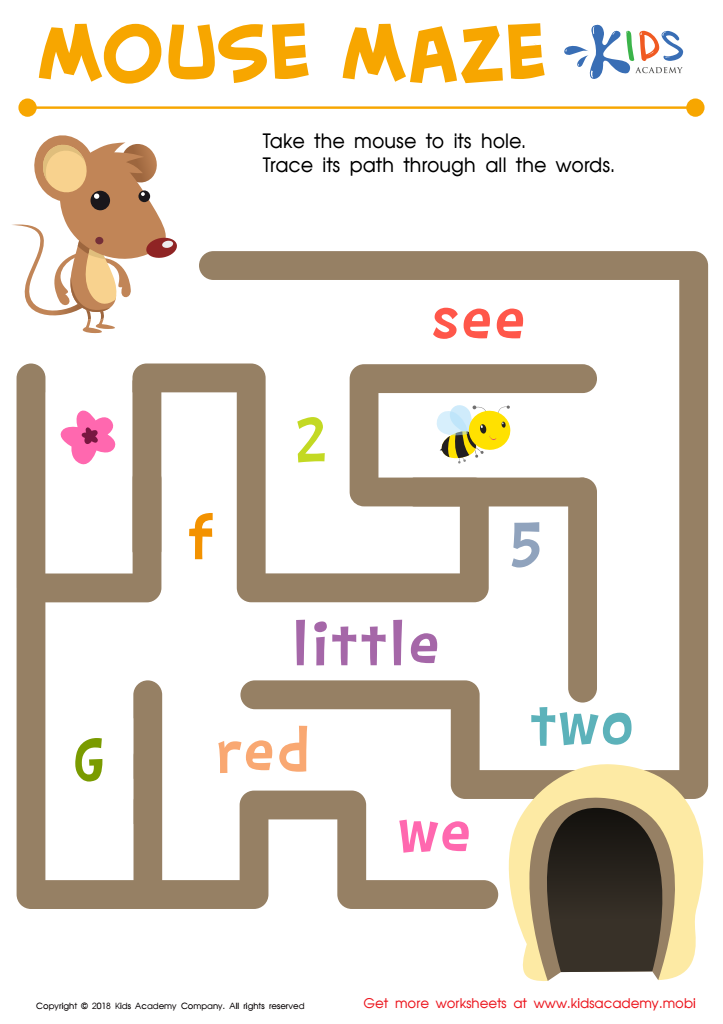
Help your child identify words and guide the mouse home! Ask them to point out the colorful animal on the worksheet, then take their hand and show them how to trace the path, going through all the words in the maze to get the mouse back to its hole.
Find Words Mouse Maze Worksheet
Worksheet
Adding up to 1000: Page 18

Adding up to 1000: Page 18

Adding up to 1000: Page 18
Worksheet
Underwater Adventure Worksheet

Underwater Adventure Worksheet

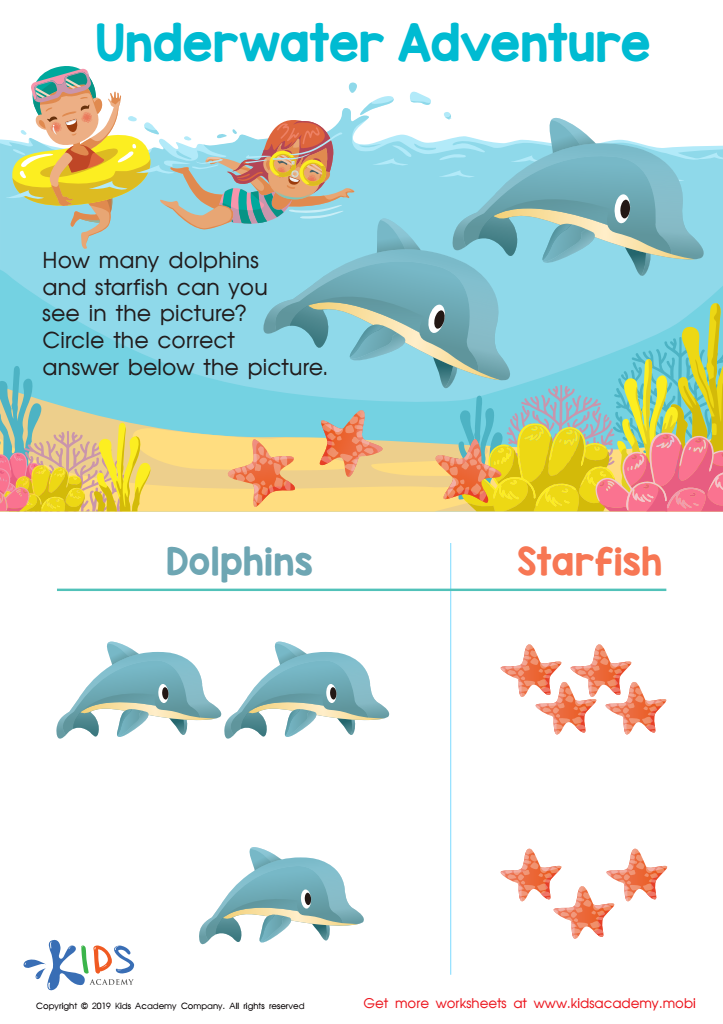
Kids can explore the ocean without realizing they're doing math! This free worksheet takes them on an underwater adventure with dolphins and starfish. They count using pictures and answer questions by circling the right images. Along the way, they'll have a blast!
Underwater Adventure Worksheet
Worksheet
Do You Remember? Worksheet

Do You Remember? Worksheet

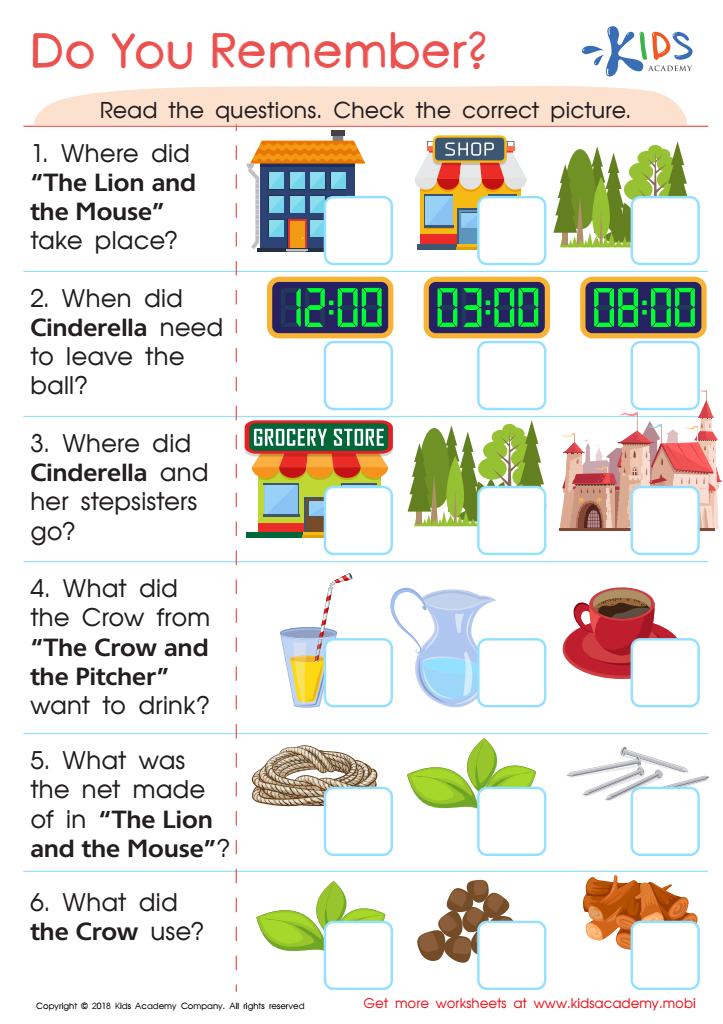
Read "Cinderella", "The Crow and the Pitcher" and "The Lion and the Mouse" to your child. Discuss the plot and characters, and how their choices shape the story. Use this worksheet to check their comprehension and memory. Read the questions and have them select the correct picture answer.
Do You Remember? Worksheet
Worksheet
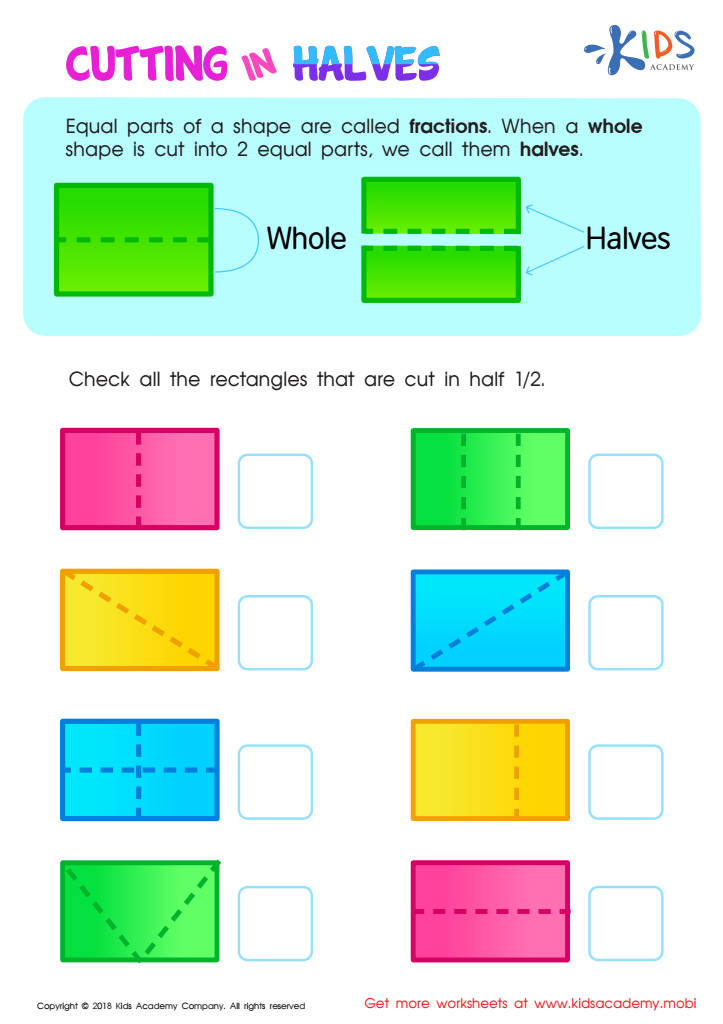
Cutting in Halves Worksheet

Cutting in Halves Worksheet

Show your child how to divide a whole shape, like a square, into smaller pieces to become fractions. Point out when a shape is divided into two equal parts, it's called a half. Look at the worksheet together, and identify all rectangles that are cut in half (½).
Cutting in Halves Worksheet
Worksheet
Up or Down Worksheet

Up or Down Worksheet

Teach your toddlers the concepts of up and down with Kids Academy's vivid worksheet! Use the seesaw analogy to reinforce this language with them and build a strong foundation for future learning. Show them how a balloon can float up but must come back down too.
Up or Down Worksheet
Worksheet
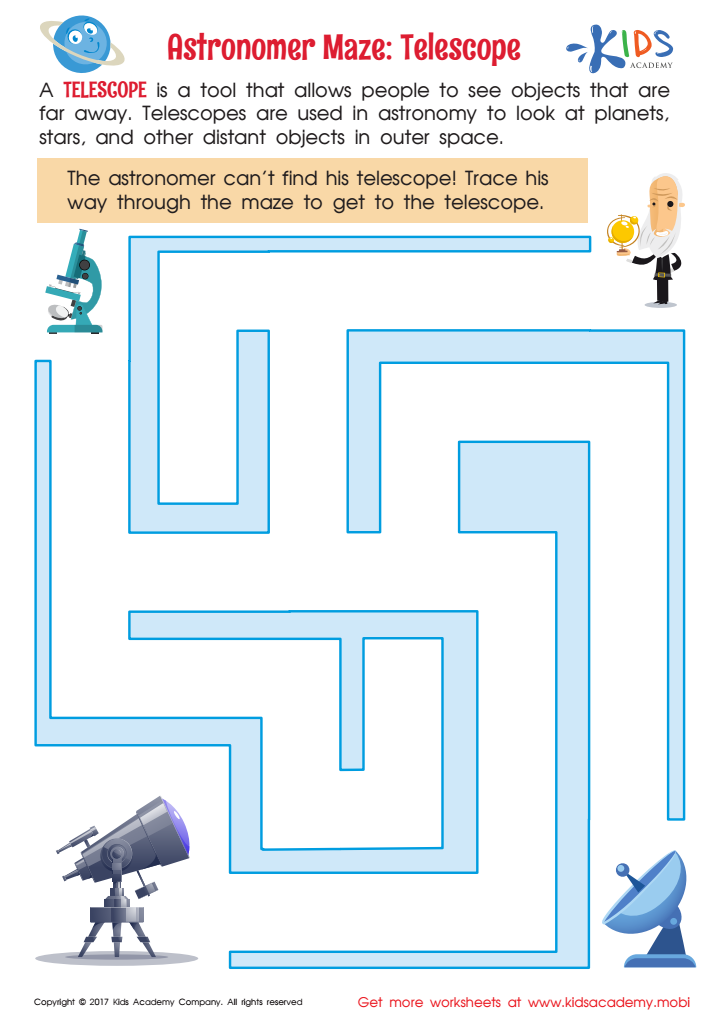
Space maze worksheet: Telescope

Astronomer Maze: Telescope Worksheet

Let your mini astronomer explore the galaxy with this fun and puzzling space maze worksheet – Telescope! Your child will have a great time navigating the maze, while learning how telescopes help scientists study the stars.
Astronomer Maze: Telescope Worksheet
Worksheet
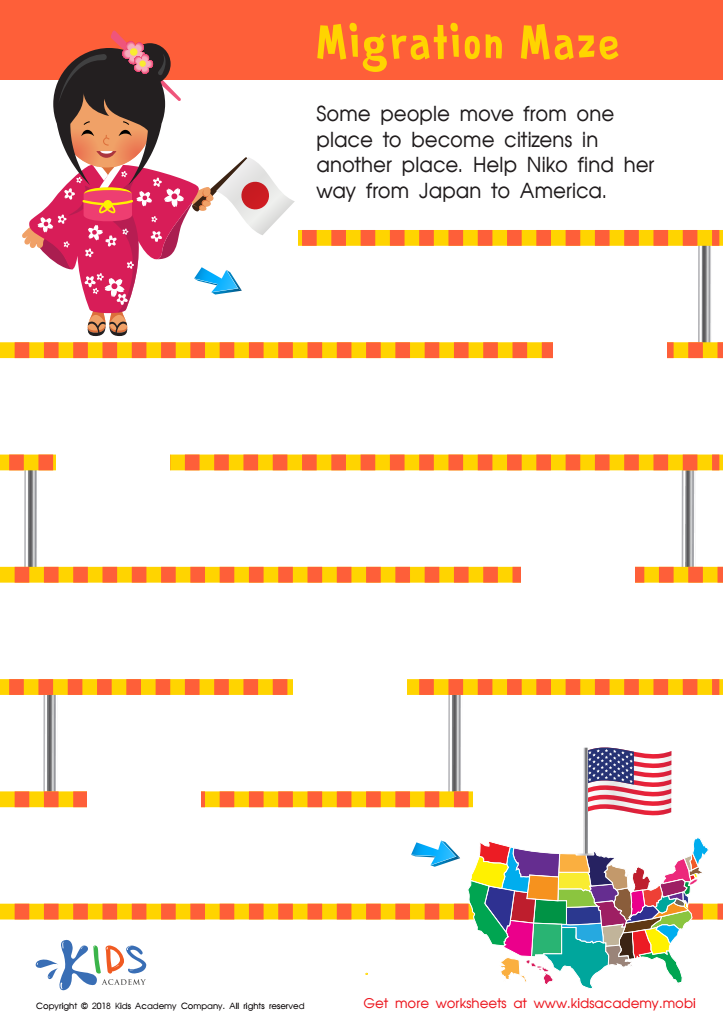
Migration Maze Worksheet

Migration Maze Worksheet

You are a citizen of your school, city and country. Many people migrate to become citizens of another place, like Niko in this worksheet. Ask your students to help her find her way from Japan to America.
Migration Maze Worksheet
Worksheet
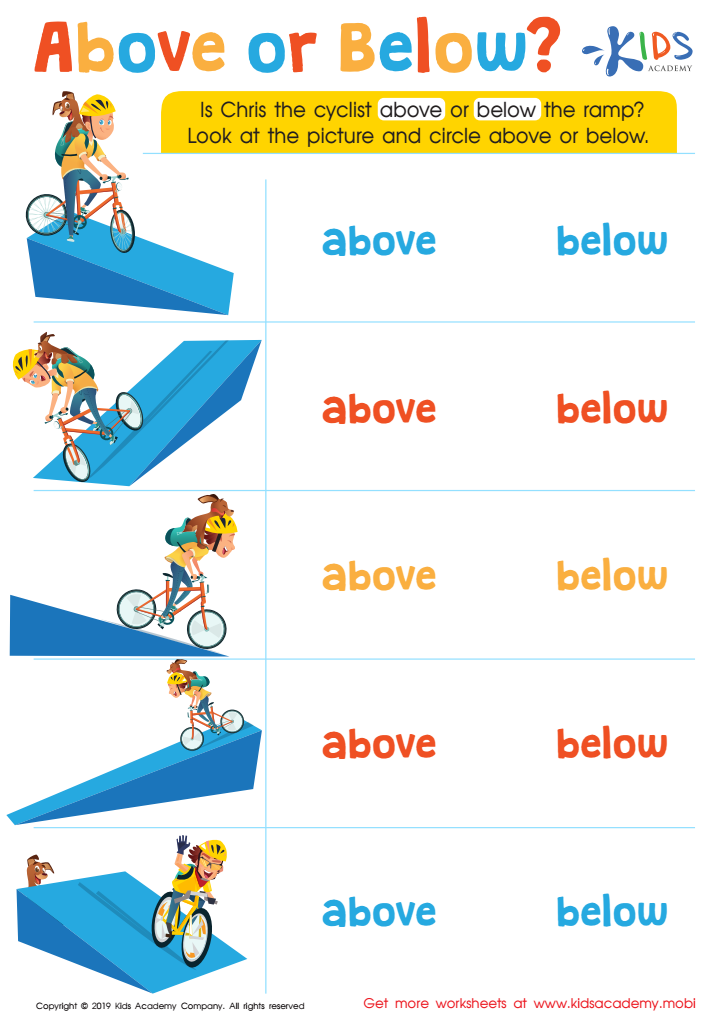
Above or Below? Worksheet


Above or Below? Worksheet
Do your kids cycle? Chris is a cyclist practicing on a ramp. Look at the pictures with them and decide if Chris is above or below the ramp. It's an important skill to help your kids become fluent speakers and writers - using the right words to describe something. Cycling is a fun sporting event.
Above or Below? Worksheet
Worksheet


... 2 3

Spatial awareness is crucial for children ages 5-9 as it plays a significant role in their cognitive and physical development. For parents and teachers, fostering good spatial skills helps children navigate their environment effectively, whether in play or formal learning.

Firstly, spatial awareness contributes to academic success. Many subjects, particularly mathematics and science, require an understanding of spatial relationships. Concepts such as geometry, measurement, and visualization are foundational, and children who master these early are often more proficient as they progress academically.

From a physical standpoint, spatial awareness is fundamental for coordination and motor skills. Activities like sports, dancing, and even simple playground games rely on a child’s ability to judge distances, recognize object placement, and coordinate their movements accordingly. This can enhance a child’s physical fitness and reduce the risk of injury.

Socially and emotionally, spatial awareness impacts how children interact with their peers and surroundings. Understanding personal space and boundaries promotes better social skills and empathy. Moreover, children who are spatially aware are often more confident, readily engaging in diverse activities and problem-solving tasks.

Lastly, in this digital era, spatial skills are also linked to better handling of technology and innovative thinking. Early attention to spatial awareness gives children a well-rounded foundation, ensuring they are ready and capable for future challenges and opportunities.