Time calculation skills Worksheets for Ages 5-9
3 filtered results
-
From - To
Enhance your child's understanding of time with our engaging Time Calculation Skills Worksheets for ages 5-9! Designed to make learning fun, these worksheets cover essential concepts like reading clocks, understanding AM/PM, and simple time-related problems. Each activity is crafted to boost your child's confidence and skills in time management through vibrant illustrations and interactive exercises. Ideal for home or classroom use, our resources cater to various learning styles and reinforce critical thinking. Empower your child to master time concepts while keeping learning enjoyable! Download today and watch your little ones transform into time-savvy learners.
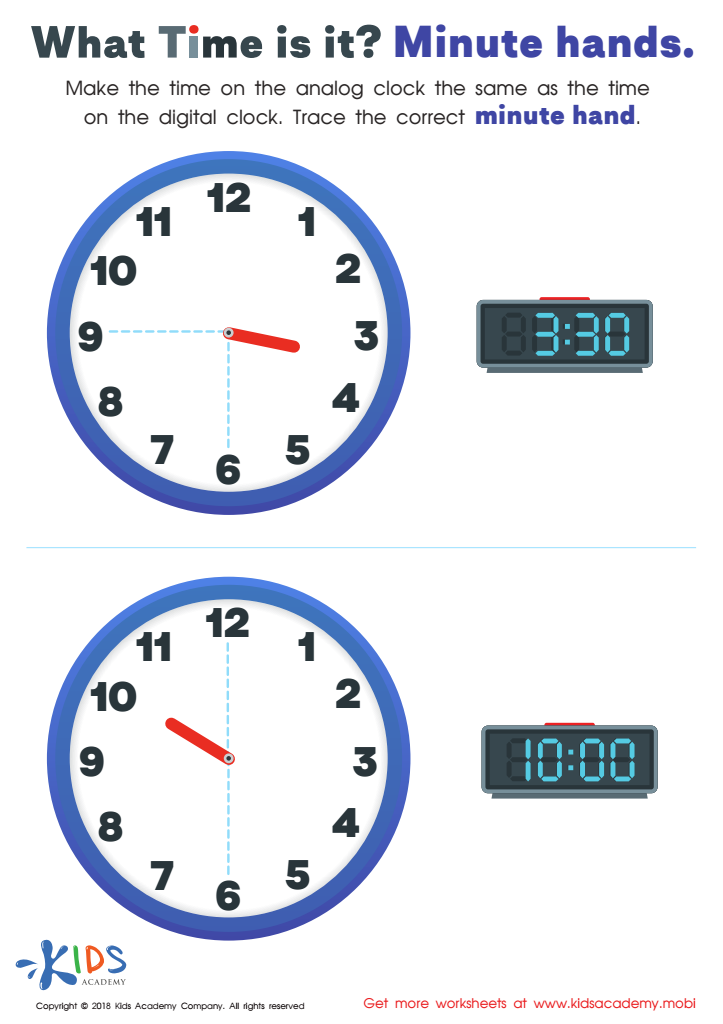
What Time Is it? Minute Hands Worksheet
 Assign to My Students
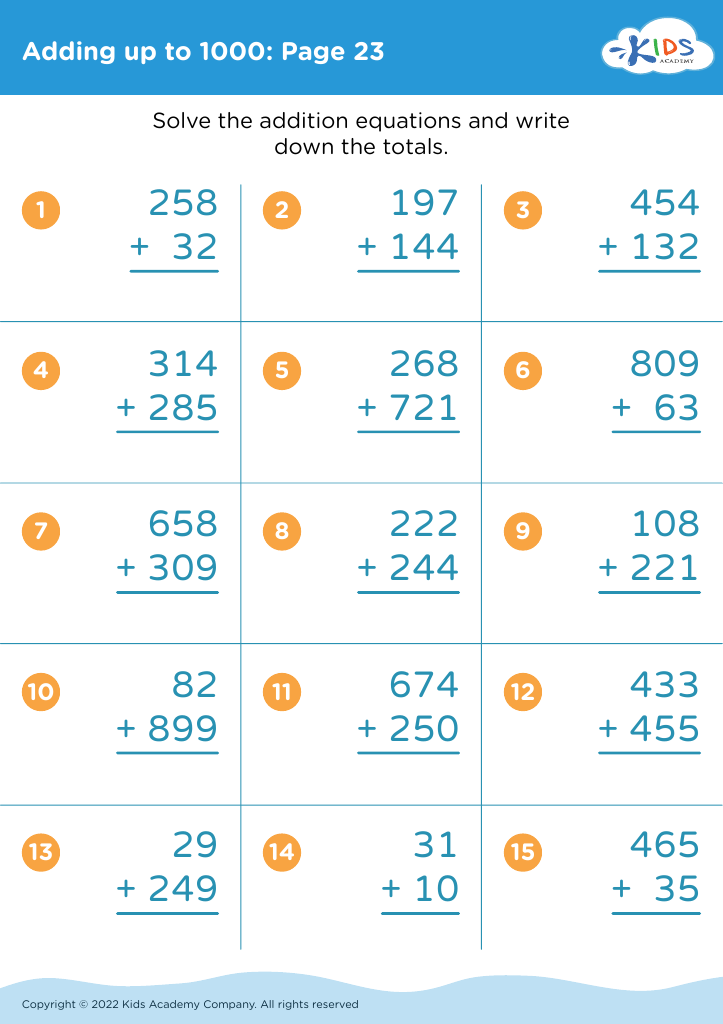
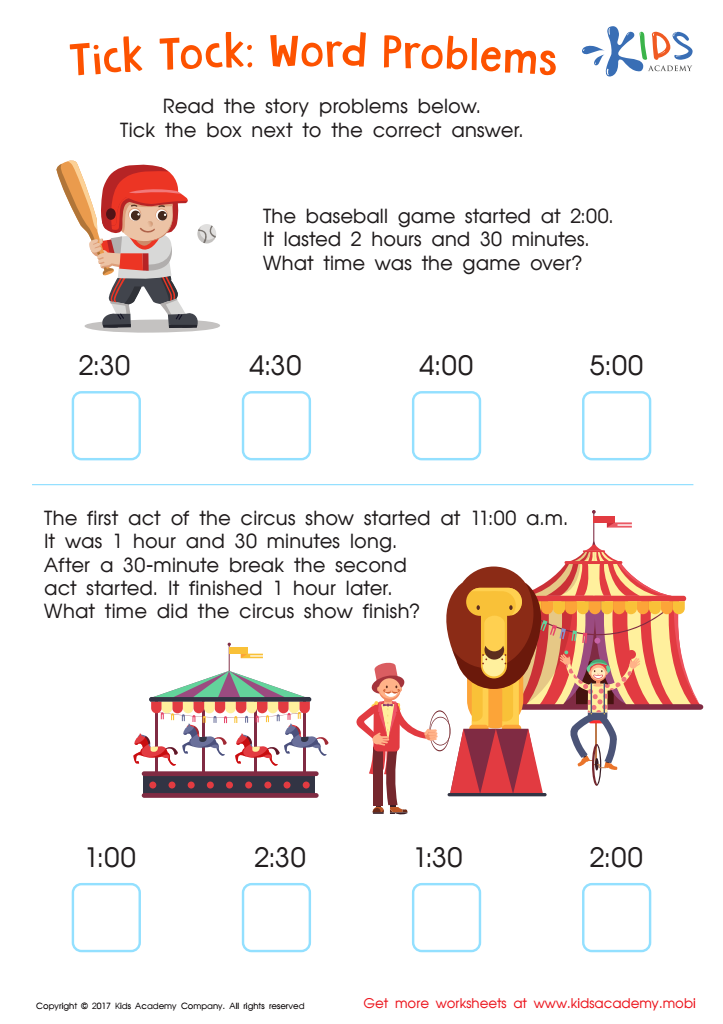
Tick Tock Word Problems Time Worksheet








Time calculation skills are crucial for children aged 5 to 9 as they form the foundation for essential life skills and cognitive development. At this age, children are beginning to understand the concepts of time, sequencing, and scheduling. Proficiency in time calculation helps them learn to manage their daily routines, a skill that supports independence and responsibility.
Understanding time fosters critical thinking and problem-solving abilities. Students will encounter time-related math problems that enhance their overall arithmetic skills, such as addition and subtraction. Moreover, learning to read clocks and comprehend concepts like hours, minutes, and transitions like AM/PM cultivates their observational and analytical skills.
For teachers, incorporating time calculations in the curriculum allows for a more integrated approach to learning. It encourages interactive class activities that promote teamwork and communication, giving children a practical context for their studies.
For parents, fostering time calculation skills empowers children to set priorities and understand the concept of waiting and planning. As children master these skills, they develop confidence and self-discipline. Ultimately, time calculation skills are not just about telling time; they equip children with the tools they need to navigate their world effectively.








