Our "Understanding Comparisons Worksheets for Ages 5-9" are designed to enhance your child's learning skills with engaging and educational activities. These printable worksheets help young learners grasp essential comparison concepts, such as bigger vs. smaller, more vs. less, and taller vs. shorter. Through fun exercises and colorful illustrations, kids can develop critical thinking and problem-solving abilities in a playful manner. Ideal for pre-K to 3rd-grade students, our worksheets provide a solid foundation in math and reasoning skills. Give your child the head start they deserve with our expertly crafted comparison worksheets, designed to make learning enjoyable and effective.

Check out this FREE "Understanding comparisons" Trial Lesson for age 5-9!

Comparing Numbers Word Problems

Favorites
With answer key
Interactive
  • 5-9
  • Understanding comparisons
Animal Features Worksheet

Animal Features Worksheet

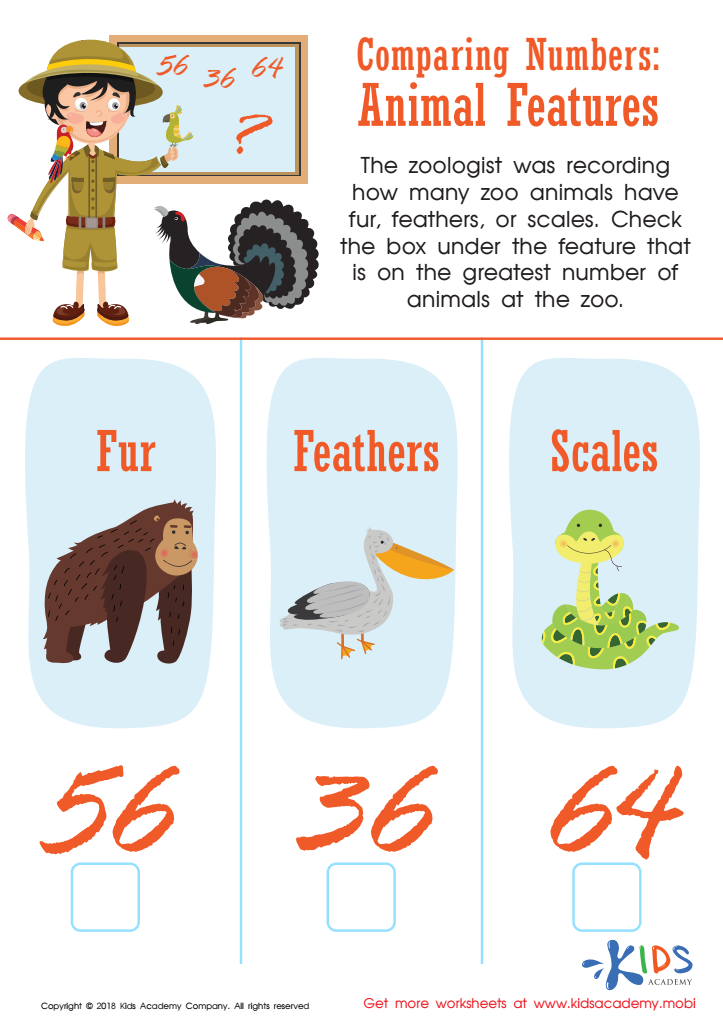
Let your kids join a budding zoologist! They can count zoo animals' fur, feathers or scales, then use numbers and comparison to check the box with the most friends. The PDF will captivate them and help them understand how the value of '6' changes based on its position.
Animal Features Worksheet
Worksheet
Comparing with a Third Object Worksheet

Comparing with a Third Object Worksheet

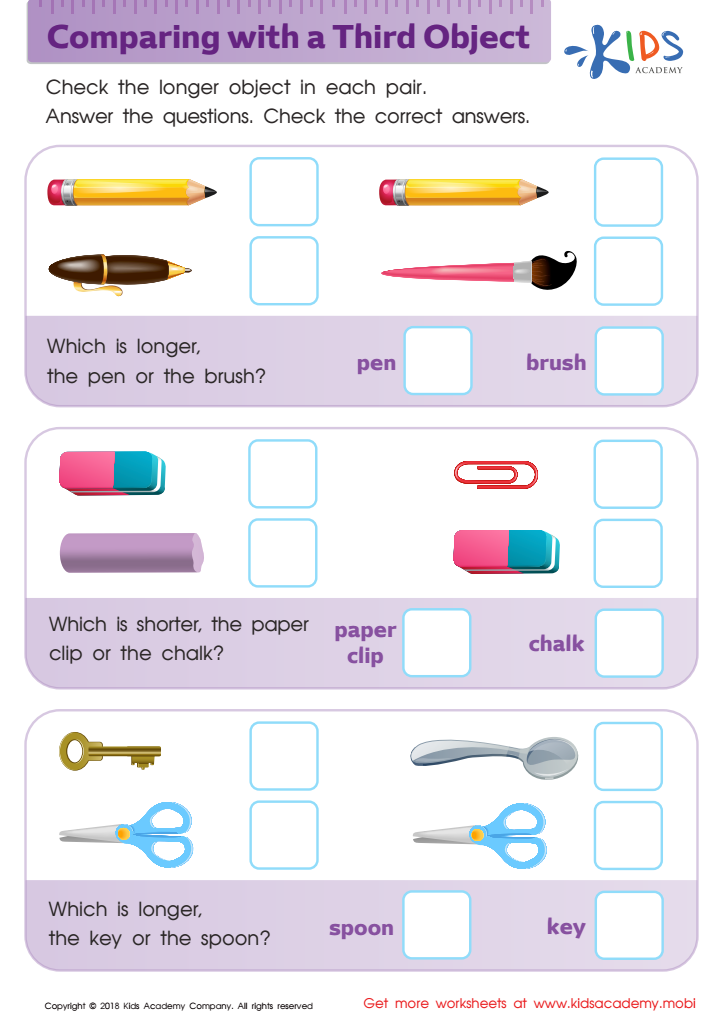
Help your child master measurement skills with this free downloadable math worksheet! Ask them to compare each pair of objects, checking the box for the longer one. Then, read the question and compare the objects across the pairs before ticking the box and continuing to the next group of pictures.
Comparing with a Third Object Worksheet
Worksheet
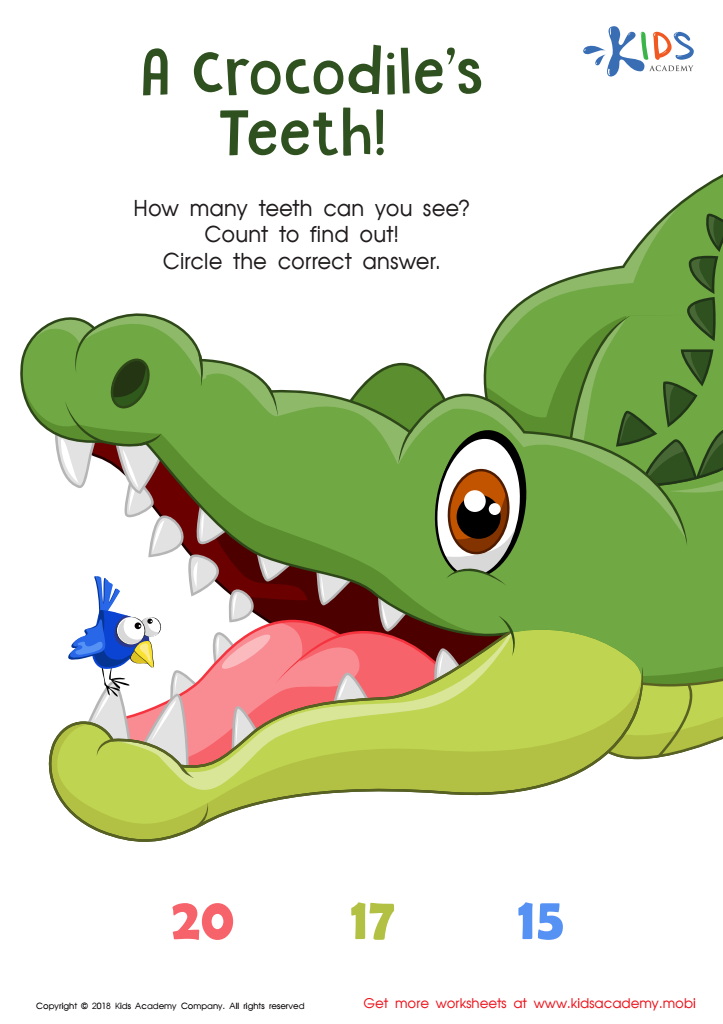
A Crocodile's Teeth Worksheet

A Crocodile's Teeth Worksheet

Show your child the animal image and ask them to identify it. If they watch animal shows, they'll likely be interested. Count the teeth together, then look at the options and help them circle the right one.
A Crocodile's Teeth Worksheet
Worksheet
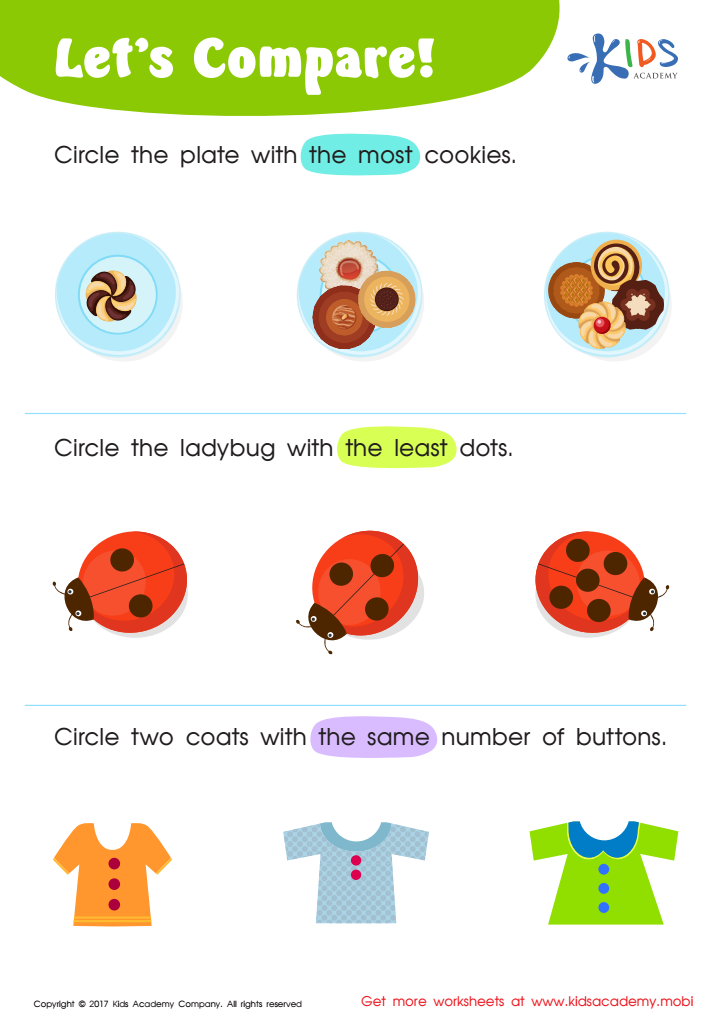
Matching: Classifying Toys by Size Worksheet

Matching: Classifying Toys by Size Worksheet

. Have your young one's observation and counting skills ready for this worksheet; carefully look through the images and count the objects, then circle the plates with the least, most or equal number of patterns. Pay attention and have good counting abilities to make this task easy.
Matching: Classifying Toys by Size Worksheet
Worksheet
Comparisons Worksheet

Comparisons Worksheet

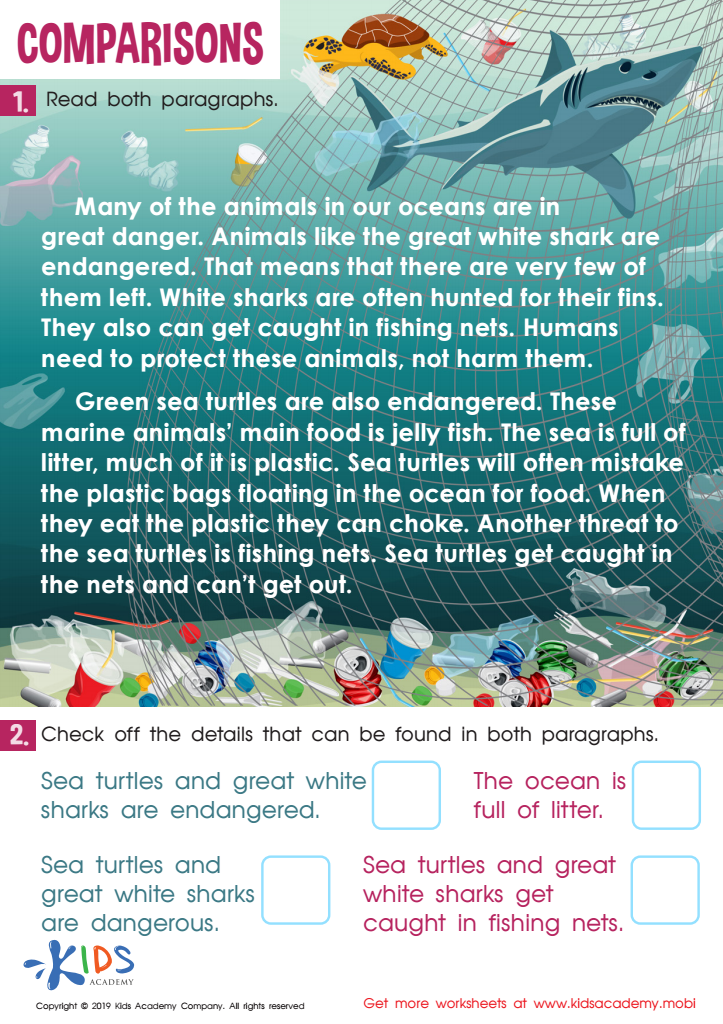
Compare two things easily: place them side by side and note the differences. Use this passage to help kids practice reading and comprehension, and teach them about the ocean and sea creatures. Read both paragraphs, then check off details found in both. (80 words)
Comparisons Worksheet
Worksheet
Matching and Sorting  for Preschool: Assessment 3 Worksheet


Matching and Sorting for Preschool: Assessment 3 Worksheet

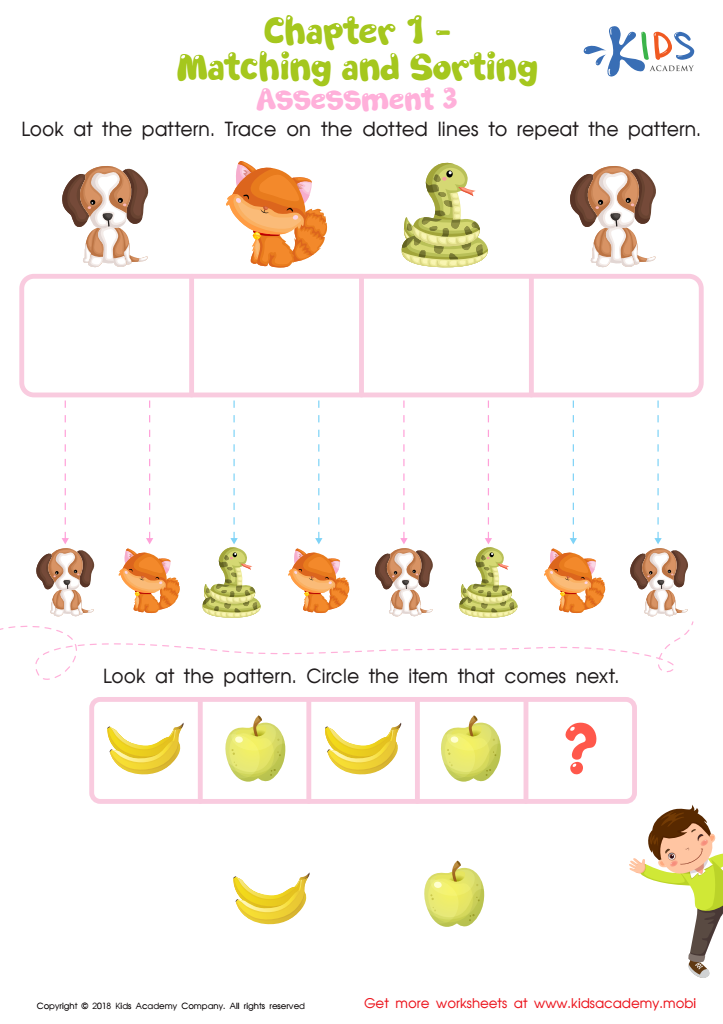
This worksheet helps kids practice and improve pattern recognition and matching skills. Task one: Ask your child to trace the pattern on the dotted lines. Task two: Look at the arrangement of fruits and ask your child to circle the corresponding item in the pattern. With this exercise, your child will gain a better understanding of pattern recognition and matching.
Matching and Sorting for Preschool: Assessment 3 Worksheet
Worksheet


Understanding comparisons is a vital skill for children aged 5-9 because it fosters critical thinking and problem-solving abilities. At this developmental stage, youngsters primarily think concretely. Comparing concepts like size, quantity, or time helps them make sense of the world around them. Engaging in these activities sharpens observational skills and vocabulary, providing them with the tools necessary for effective communication.

For instance, comparing the height of two plants or the number of apples in two different baskets helps children grasp mathematical concepts such as measurement and number sense. These foundational skills are crucial for more advanced math topics they will encounter later. Furthermore, it aids in the development of logical reasoning. When a child lays out why one stick is longer than another, they practice forming and articulating reasoned arguments, a skill applicable in all areas of learning.

From a social-emotional perspective, learning to compare helps children understand fairness, sharing, and empathy because they can evaluate situations more thoroughly. Finally, adequately comprehending these basics readies children for academic challenges, boosting confidence and a joy for learning. Thus, parents and teachers who invest time in helping children understand comparisons are setting them up for comprehensive cognitive and social development.