Understanding currency Worksheets for Ages 5-9
5 filtered results
-
From - To
Enhance your child's financial literacy with our "Understanding Currency Worksheets" designed for ages 5-9! These engaging worksheets provide age-appropriate activities that introduce young learners to the basics of money. Your child will explore coins, notes, and their values through fun exercises like identifying, counting, and comparing currency. With lively illustrations and interactive challenges, these worksheets make learning about money enjoyable and informative. Perfect for at-home learning or classroom activities, our resources promote essential math skills and help foster a deeper understanding of real-world finances. Start your child's journey to being money-smart today!
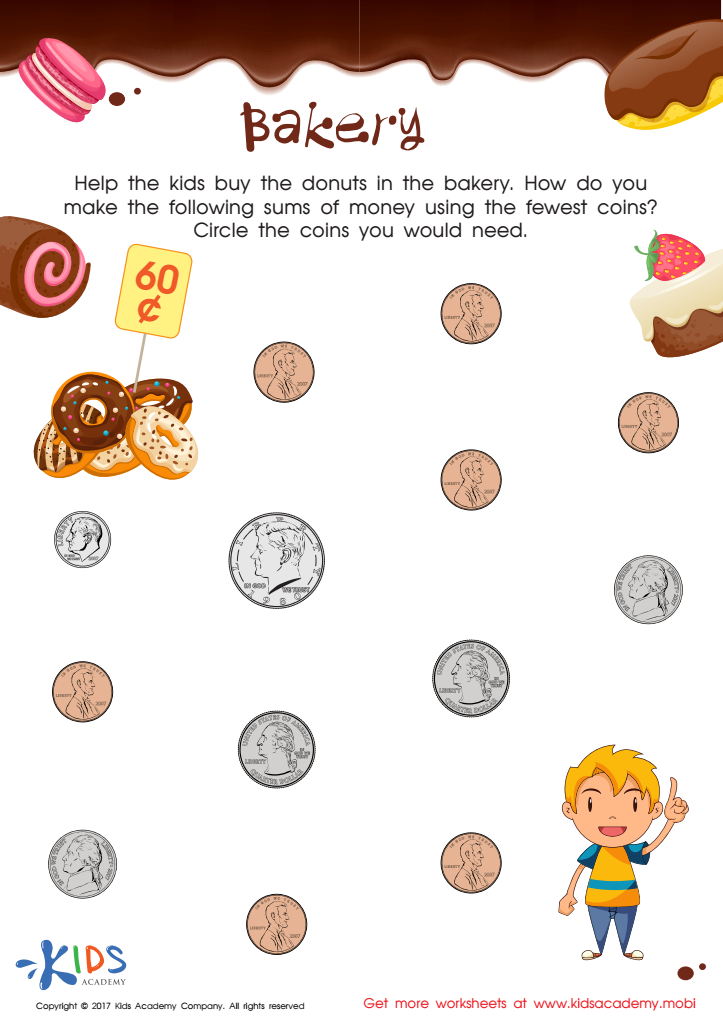
Counting Coins Worksheet
 Assign to My Students
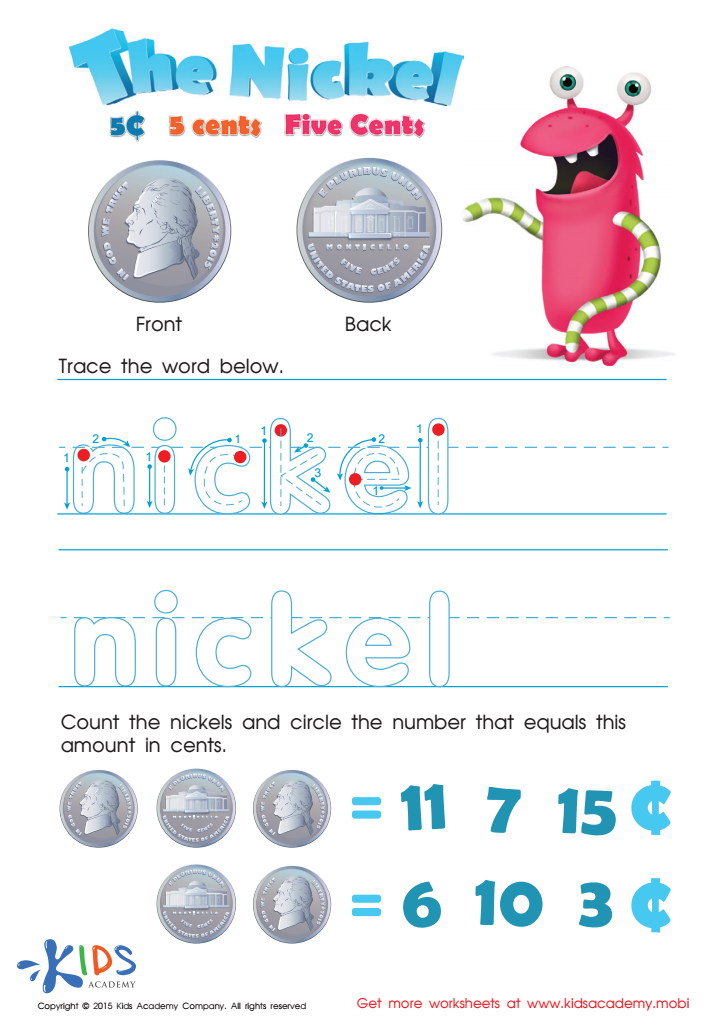
Five Cents or the Nickel Money Worksheet
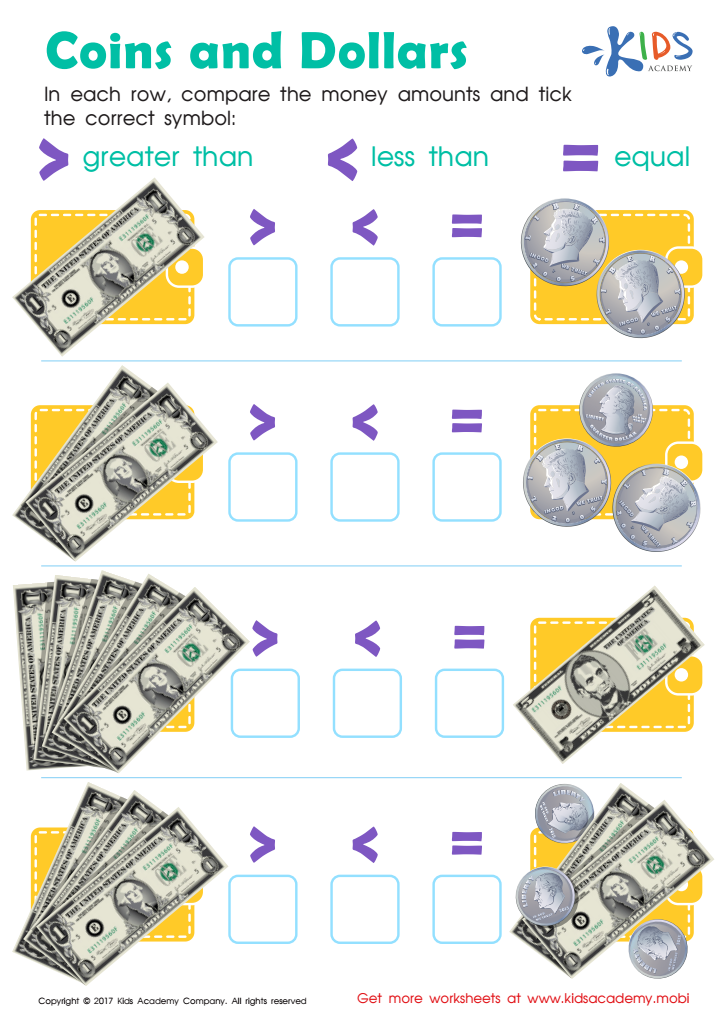
Money: Coins Dollars Printable
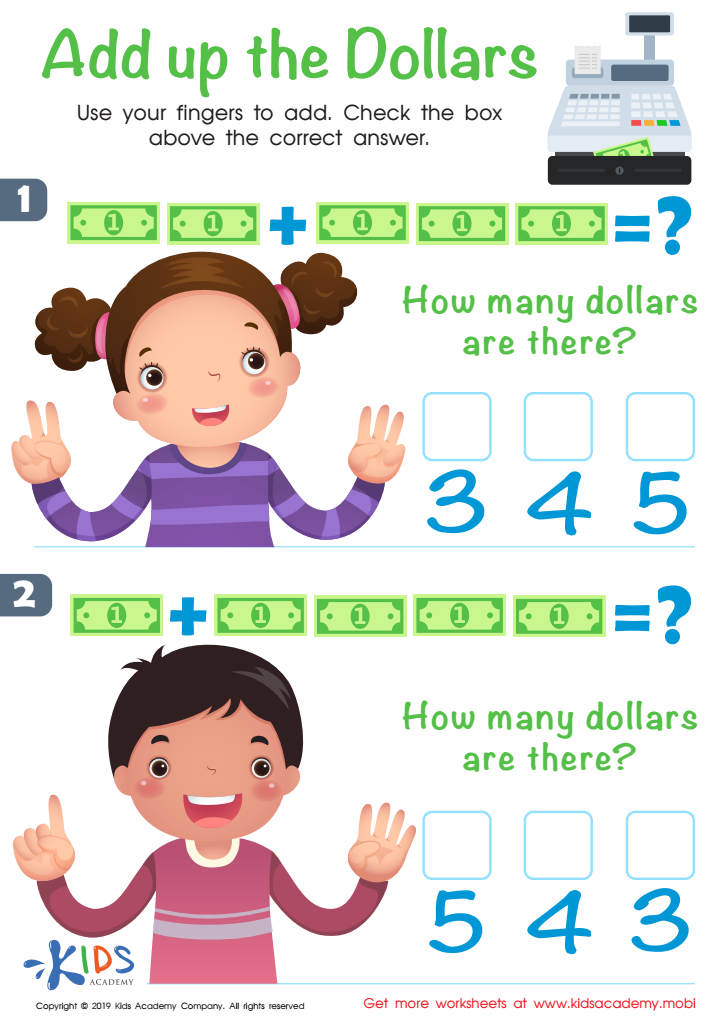
Add up the Dollars Worksheet








Understanding currency is crucial for children ages 5-9 as it lays the foundation for essential life skills, financial literacy, and responsible decision-making. At this age, children are naturally curious and eager to learn, making it an ideal time to introduce concepts related to money and its value. Teaching them about currency helps them recognize coins and bills, understand their worth, and practice basic math skills such as addition, subtraction, and counting.
Moreover, grasping the concept of currency promotes the development of critical thinking and financial literacy. Children learn how to make informed choices, manage small amounts of money, and appreciate the importance of saving. This knowledge influences their future attitudes toward money, giving them the tools to avoid financial pitfalls as they grow older.
Additionally, understanding currency encourages social skills and responsibility. By participating in activities like storytime about shopping or pretend play in 'store' settings, children foster collaboration, negotiation, and fairness among peers. Ultimately, parents and teachers play a vital role in making financial education engaging and relevant, ensuring that children not only comprehend currency but also develop the competencies to thrive in an increasingly complex economic world.








