Understanding grouping Worksheets for Ages 5-9
3 filtered results
-
From - To
Introduce your child to the fun and engaging world of math with our "Understanding Grouping Worksheets for Ages 5-9". These worksheets are designed to help young learners develop essential skills in counting, sorting, and grouping objects, providing a solid foundation for future math concepts. Featuring colorful illustrations and age-appropriate challenges, our worksheets make learning an enjoyable experience. Perfect for both classroom and at-home use, they encourage critical thinking and problem-solving. Foster your child's mathematical abilities with our expertly crafted worksheets and watch them gain confidence and proficiency in no time!
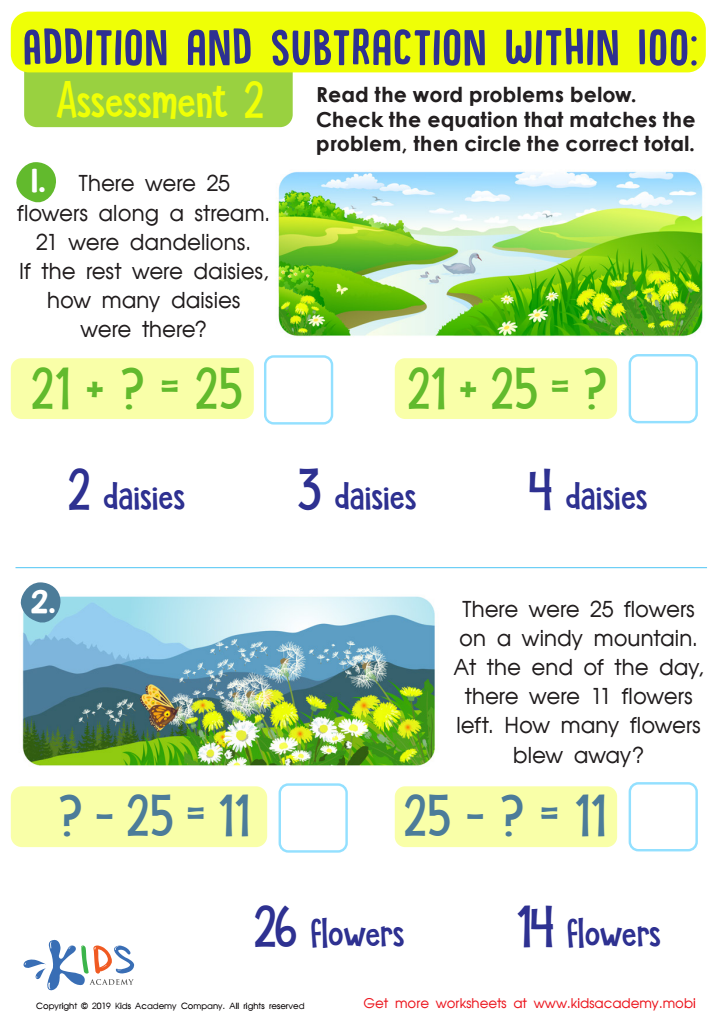
Assessment 2 Math Worksheet
 Assign to My Students
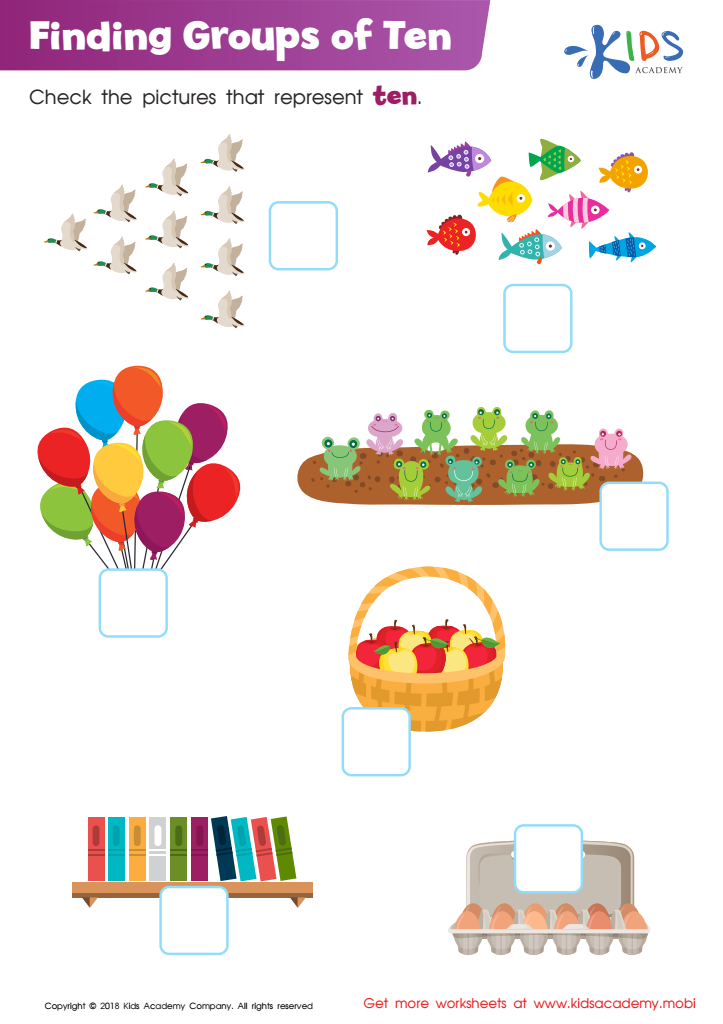
Finding Groups of Ten Worksheet
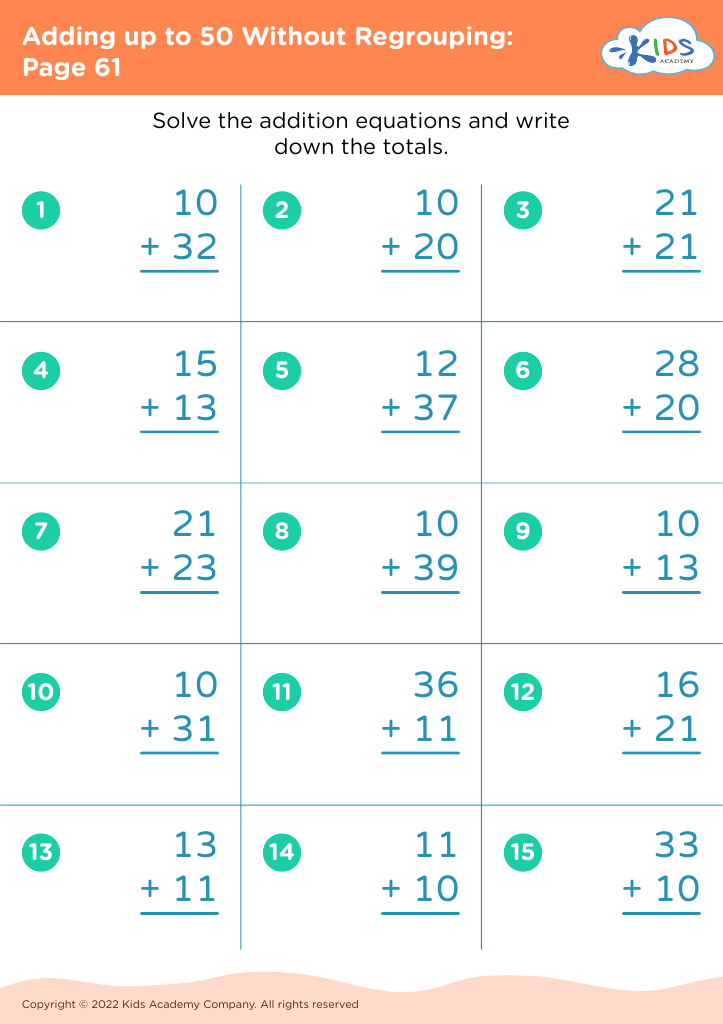






.jpg)
Understanding grouping is pivotal for young children aged 5-9 as it lays a solid foundation for advanced mathematical concepts and overall cognitive development. When parents and teachers emphasize grouping, they help children grasp the idea of categorizing objects into sets or collections based on similar features, aiding in pattern recognition, organization skills, and simplification of complex tasks.
In mathematics, grouping is essential for learning basic arithmetic operations, such as addition, subtraction, multiplication, and division. For instance, understanding that 5 counted objects can be grouped as 2 and 3 facilitates easier mental arithmetic. Moreover, the concept of grouping underpins place value, where numbers are grouped in tens, hundreds, etc., vital for counting and understanding large numbers.
Beyond mathematics, grasping grouping teaches children fundamental skills such as sorting and classifying in everyday activities. These skills are crucial for effective problem-solving and critical thinking. For example, grouping toys by color or type fosters organizational skills and logical reasoning.
Furthermore, intrinsic to grouping is the ability to see relationships and patterns, which are essential for reading comprehension and scientific exploration. Parents and teachers who focus on teaching grouping are essentially setting children on a path of enhanced logical thinking, better academic performance, and a lifelong appreciation for how organizing the world around them can facilitate learning and growth.








