Understanding magnetism Worksheets for Ages 5-9
4 filtered results
-
From - To
Discover the wonders of magnetism with our "Understanding Magnetism Worksheets for Ages 5-9". Designed to ignite curiosity, these engaging resources introduce young learners to the basics of magnets, their properties, and uses. Each worksheet combines playful illustrations and hands-on activities to make learning about magnetic fields, attraction, and repulsion fun and easy to understand. Ideal for children in early elementary grades, our worksheets support both classroom education and home learning. Watch your kids explore and learn as they experiment with magnetic forces and develop essential scientific skills. Explore the world of magnets today!
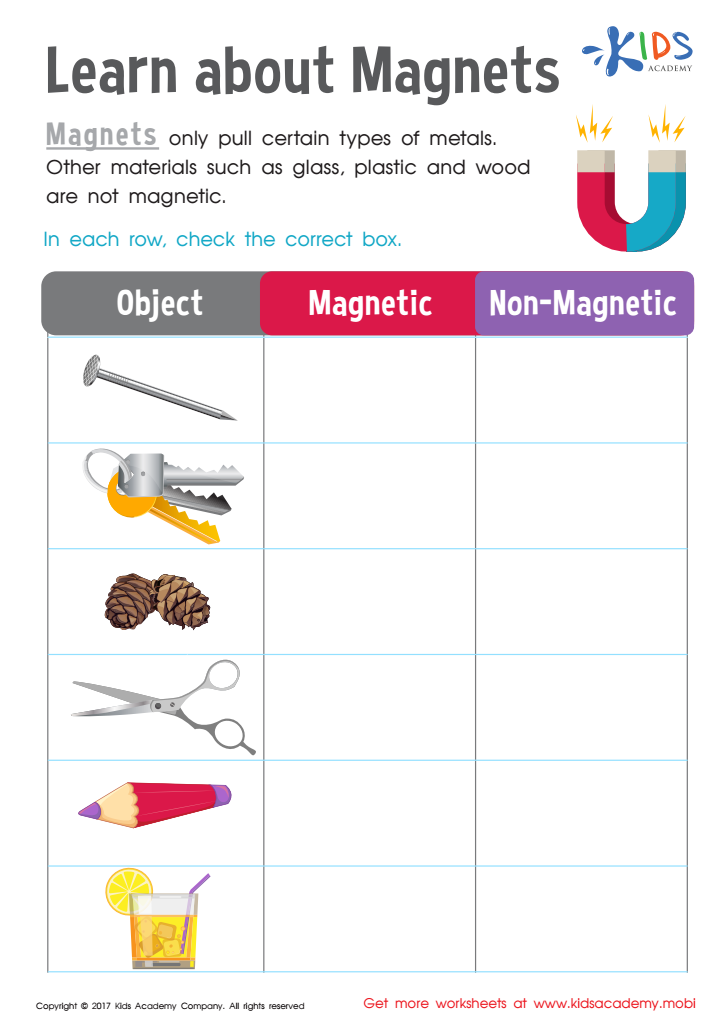
Magnetic Or Not Worksheet
 Assign to My Students
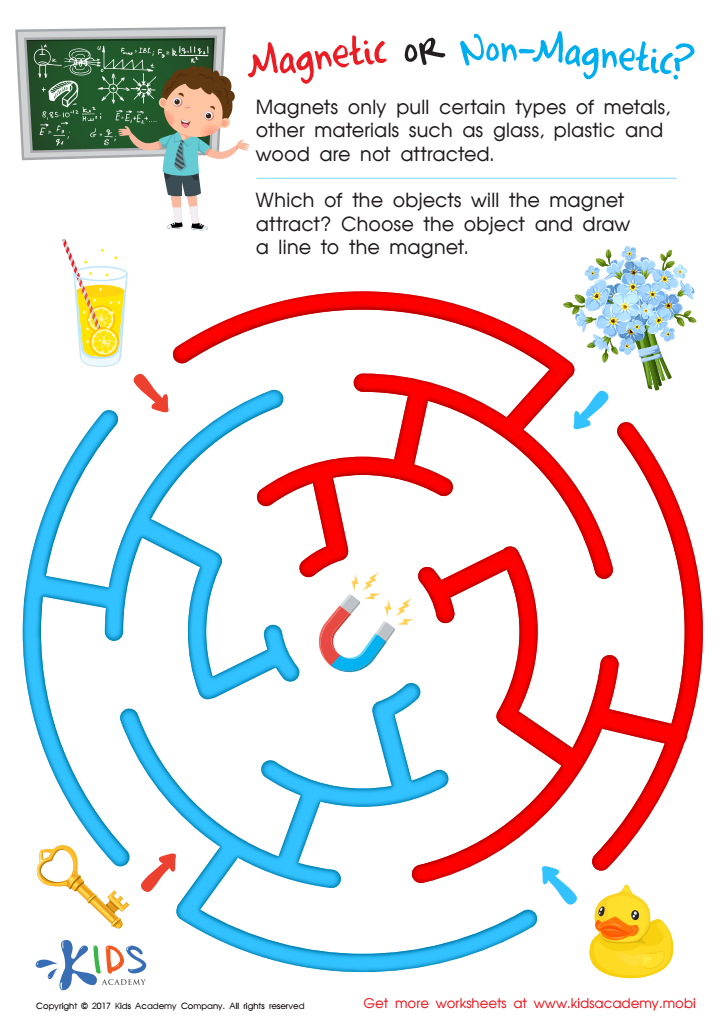
Magnetic or Non–Magnetic Worksheet
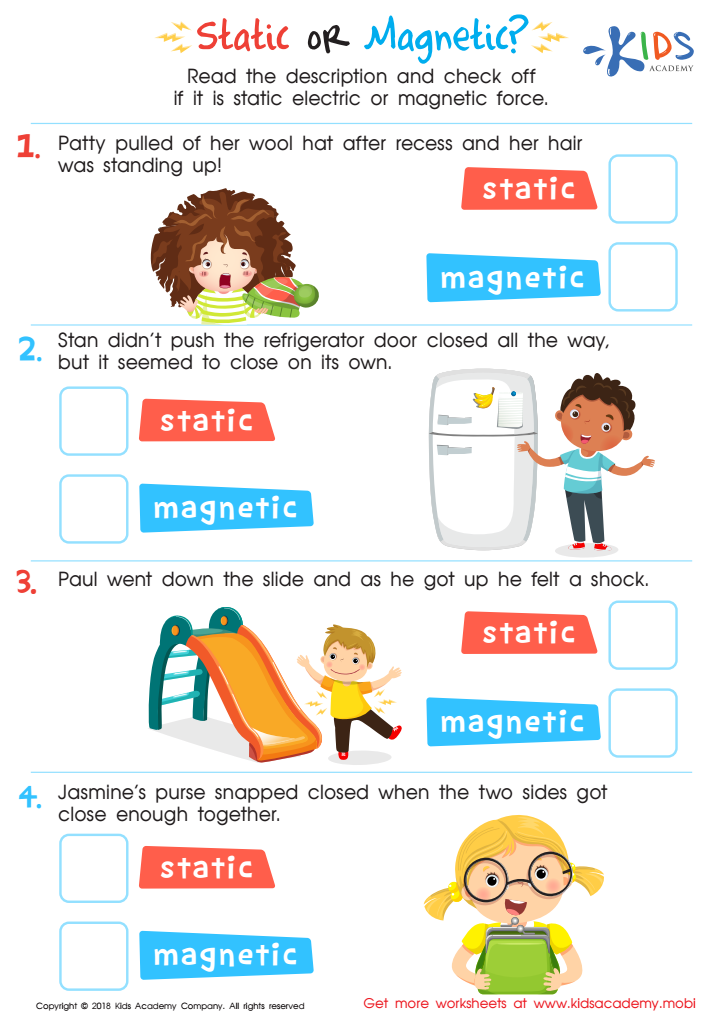
Static or Magnetic Printable Worksheet
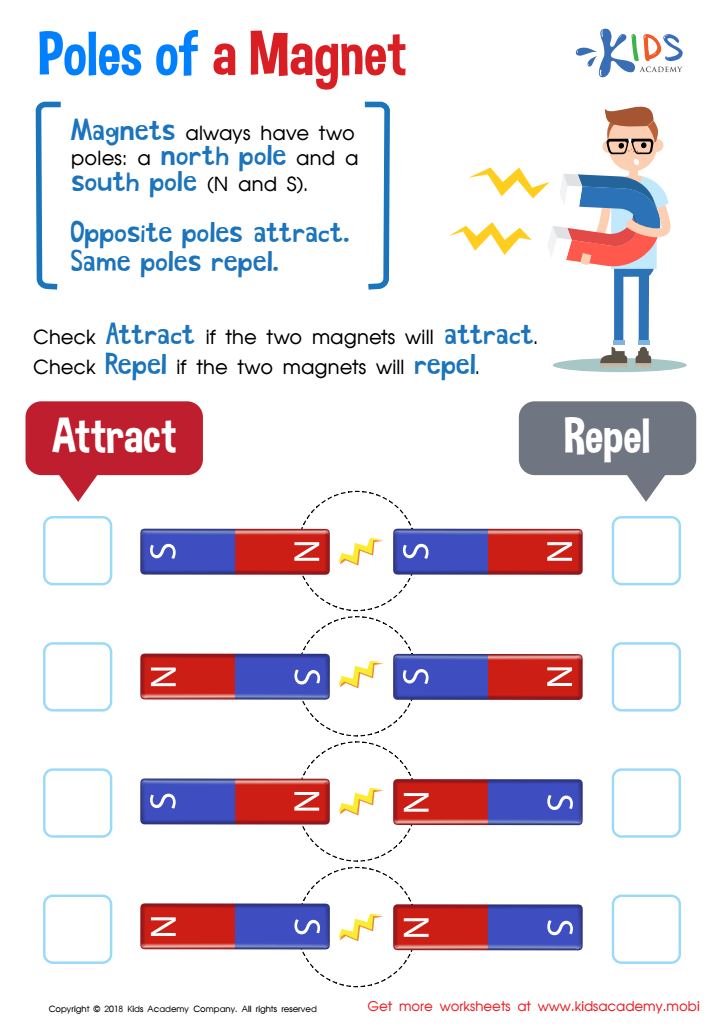
Magnet Poles Attract or Repel Worksheet


.jpg)





Understanding magnetism for ages 5-9 is critical because it lays a foundation for scientific thinking and curiosity. At this formative stage, children are naturally inquisitive, and learning about magnetism captures their interest while fostering essential skills like observation, prediction, and experimentation.
Magnetism provides tangible and interactive ways to explore principles of physics. When children witness magnets attract or repel, they engage in hands-on learning that helps them grasp abstract scientific concepts more effectively. This understanding is crucial for later academic success in science, technology, engineering, and mathematics (STEM) disciplines.
Additionally, early exposure to magnetism enhances fine motor skills as children manipulate magnets and objects. It also heightens their problem-solving abilities as they think critically to understand why magnets behave the way they do. For example, exploring which materials magnets attract can lead to discussions about metal, the earth's magnetic field, and even everyday applications like compasses.
Moreover, engaging with magnetism cultivates a sense of wonder and excitement about the natural world. This enthusiasm for learning can motivate children to explore other scientific concepts and instill in them a lifelong passion for discovery and education.
In summary, introducing magnetism at an early age enriches children’s cognitive development and educational journey, making it a valuable topic for both parents and teachers to focus on.








