Understanding more/less concept Worksheets for Ages 5-9
3 filtered results
-
From - To
Our "Understanding More/Less Concept Worksheets for Ages 5-9" are designed to help young learners grasp essential math skills in an engaging way. These worksheets use fun visuals and interactive activities to teach children how to compare quantities, enhancing their understanding of more and less. Perfect for ages 5-9, these exercises build a strong foundation in early math, critical thinking, and problem-solving skills. Ideal for parents and teachers, our printable worksheets make learning this fundamental concept easy and enjoyable. Download now to provide your child with the tools to succeed in math and beyond.
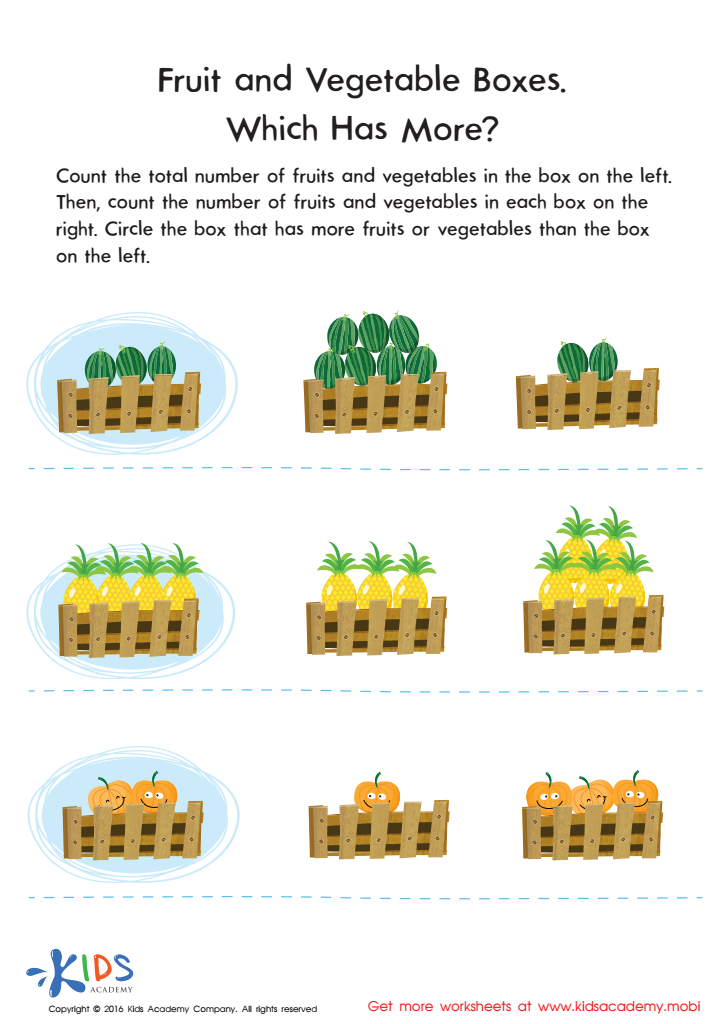
Which Has More? Size Worksheet
 Assign to My Students
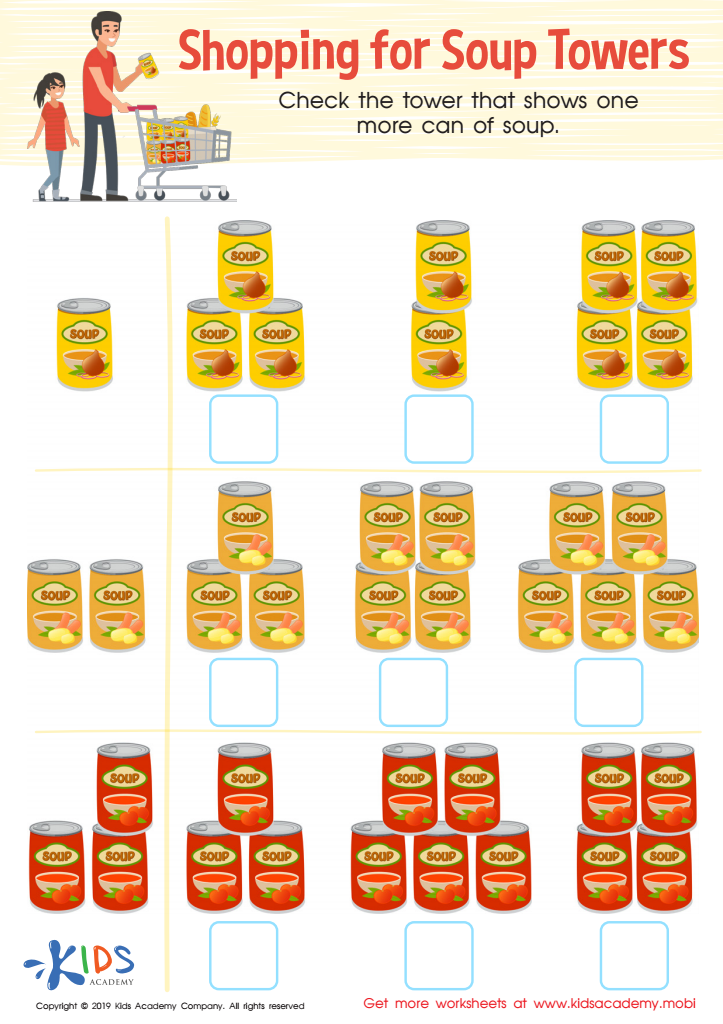
Soup Towers Worksheet
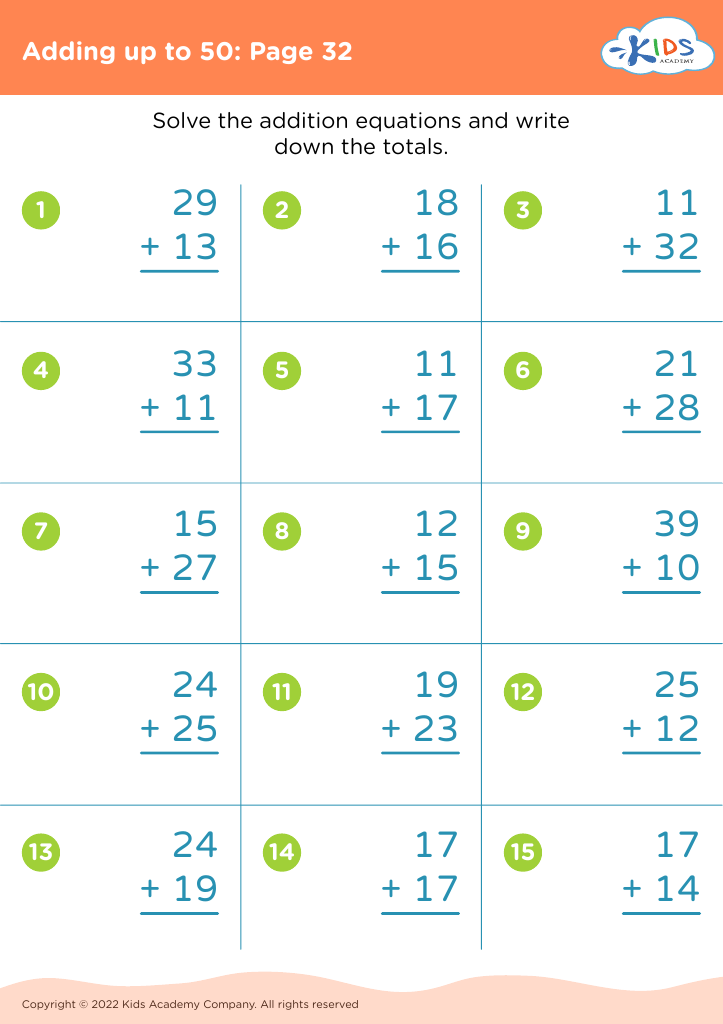








Understanding the concept of "more" or "less" is critical for children aged 5-9 because it lays the foundation for their mathematical development and cognitive skills. At this age, children are in a crucial period of cognitive development where they begin to grasp abstract concepts through concrete experiences.
Knowing "more" or "less" helps children develop number sense, an essential skill for future arithmetic operations like addition and subtraction. When children can compare quantities, they begin to understand relationships between numbers, enabling them to solve real-world problems more efficiently.
Moreover, this concept extends beyond math. It aids in developing critical thinking and decision-making skills. For instance, being able to compare resources can teach children the basics of budgeting, sharing, and resource management.
Socially, understanding "more" and "less" helps children to play and collaborate with peers. It supports fair play by teaching them how to split items equally or understand turn-taking, fostering empathy and cooperation.
Parents and teachers should prioritize these concepts to build a solid grounding in logical reasoning, problem-solving, and social interaction. By integrating fun, interactive methods to teach these principles, educators ensure a well-rounded developmental process for young learners, setting them up for academic and life success.








