Understanding ordinal numbers Worksheets for Ages 5-9
3 filtered results
-
From - To
Unlock the world of ordinal numbers with our engaging worksheets designed for children aged 5-9! These interactive resources offer young learners fun and meaningful ways to understand and apply concepts of order, from first to tenth and beyond. Featuring colorful illustrations and age-appropriate exercises, our worksheets help build essential skills in sequencing and comparison. Perfect for both classroom and home learning, these printable materials cater to various learning styles, ensuring every child gains confidence in using ordinal numbers in real-life situations. Explore our collection today and watch your child’s math skills flourish with excitement and ease!
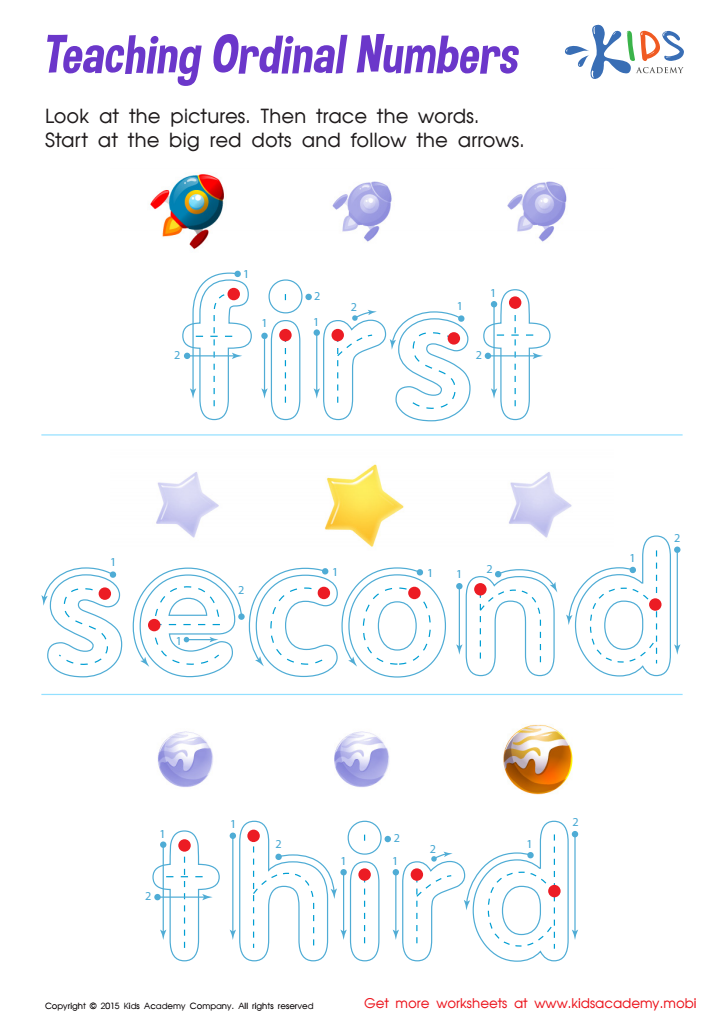
Ordinal Numbers: Teaching Ordinal Numbers Printable
 Assign to My Students
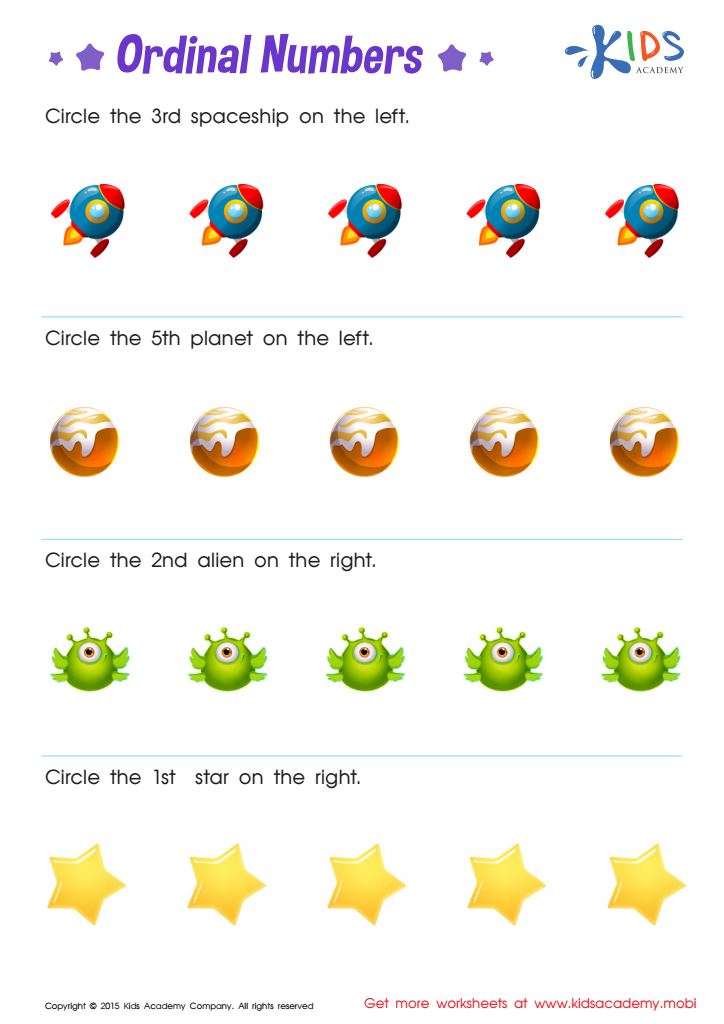
Ordinal Numbers: Space Ordinals Worksheet




.jpg)



Understanding ordinal numbers is crucial for children aged 5-9 as it lays the foundation for essential math skills and everyday reasoning. Ordinal numbers, which indicate position or order (first, second, third, etc.), help children grasp important concepts in sequencing, ranking, and comparing. Mastering this skill enables young learners to follow instructions, participate in games, and comprehend classroom activities that rely on order.
Moreover, ordinal numbers support the development of critical thinking. For example, children learn to organize information, making it easier to analyze and respond to questions in various contexts, such as during reading or math activities. This understanding influences their ability to interpret data, meaningfully engage with storytelling, and follow multi-step processes.
In social settings, recognizing the importance of ordinal positions can aid in friendship dynamics, turn-taking during play, or understanding competitions, embedding essential life skills.
For parents and teachers, focusing on ordinal numbers is not just about math but fostering a sense of order that contributes to a child's overall cognitive and social development. By supporting children in learning this concept, we empower them to interact confidently with the world around them.








