Understanding pollination Worksheets for Ages 5-9
4 filtered results
-
From - To
Explore the fascinating world of pollination with our engaging worksheets designed for children ages 5-9! These resources provide an exciting way for young learners to understand the vital process of pollination and its crucial role in nature. Our worksheets feature colorful illustrations and interactive activities that promote critical thinking and creativity. Kids will discover how bees, butterflies, and other pollinators help plants grow and produce fruits and flowers. Perfect for classroom activities or at-home learning, these worksheets encourage curiosity about the environment and the importance of protecting pollinators. Make science fun and memorable while nurturing a love for the natural world!
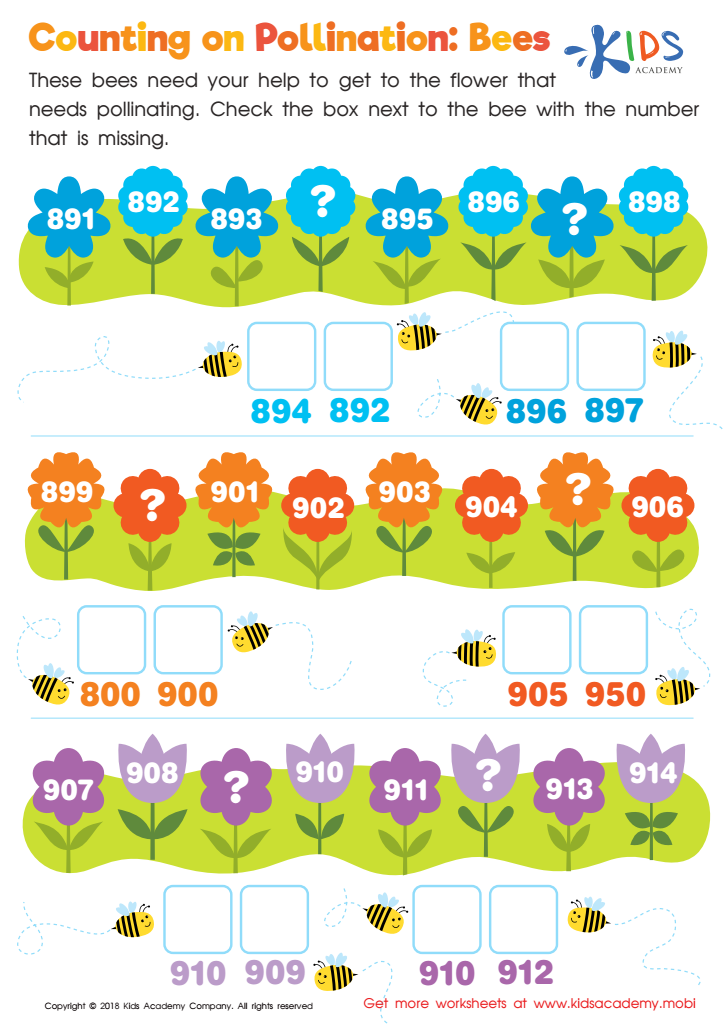
Counting on Pollination: Bees Worksheet
 Assign to My Students
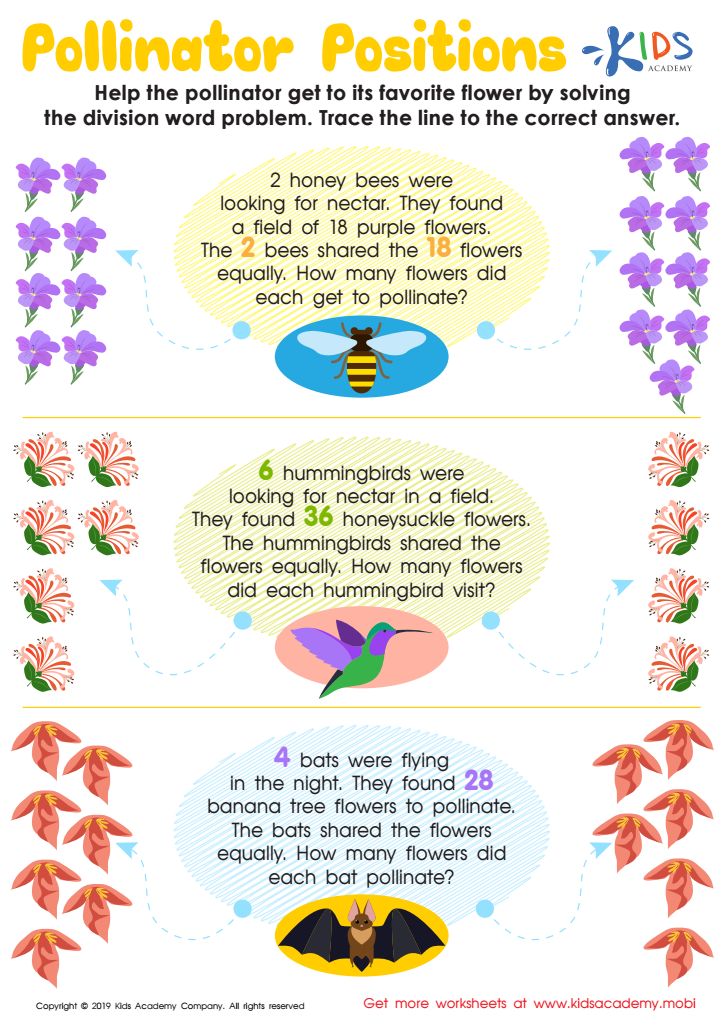
Pollinator Positions Worksheet
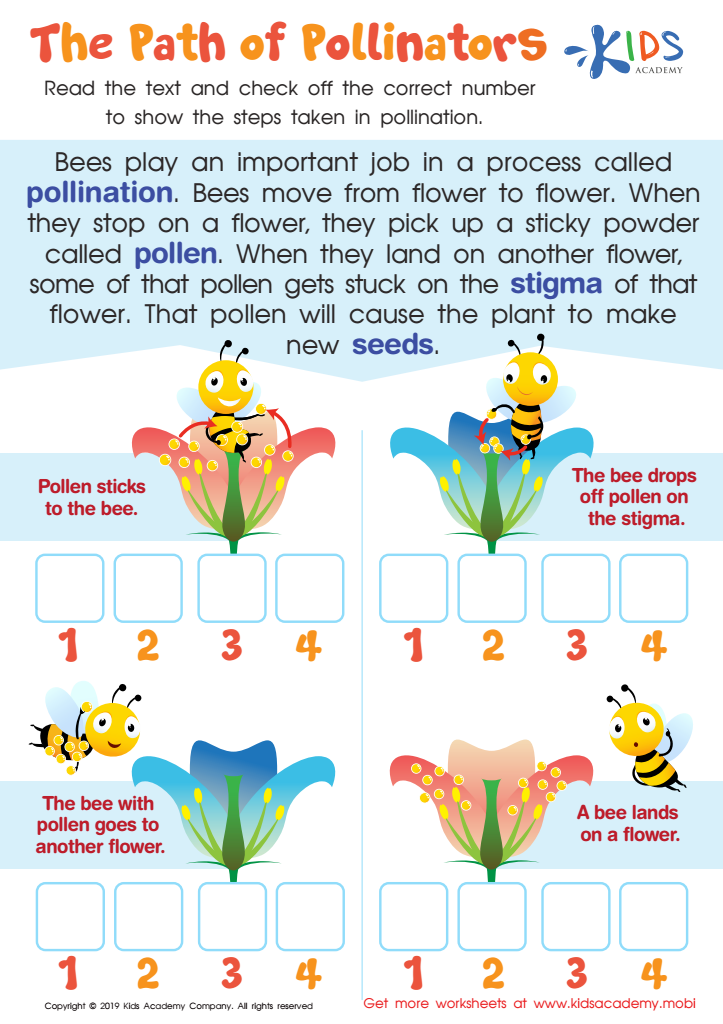
The Path of Pollinators Worksheet
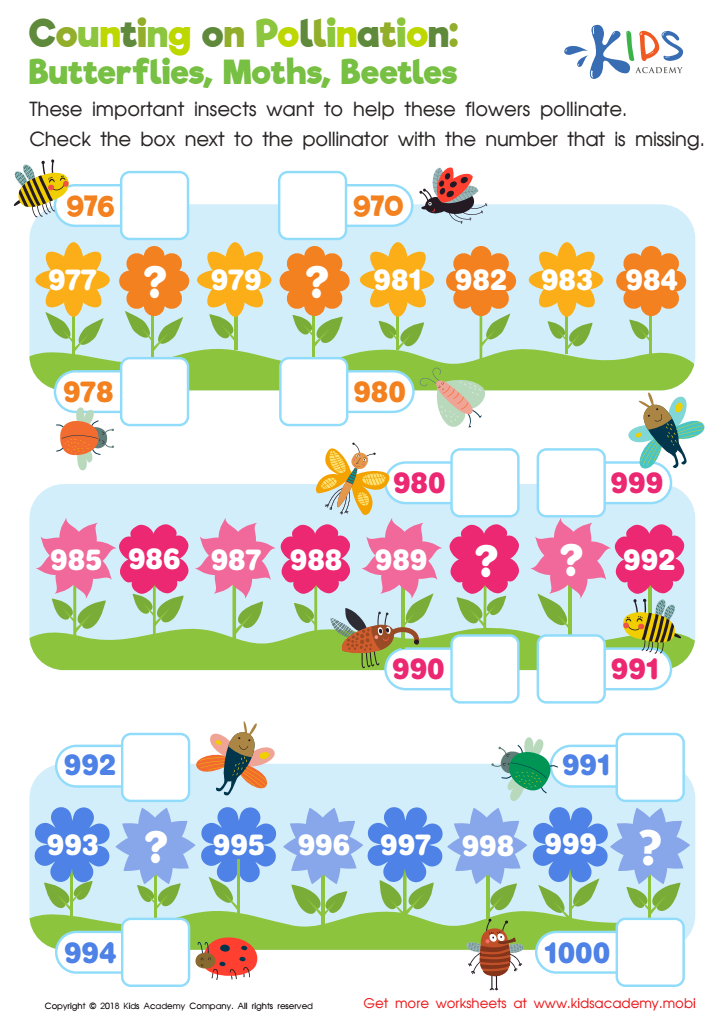
Counting on Pollination: Butterflies, Moths, Beetles Worksheet







Understanding pollination is crucial for children aged 5-9, as it lays the foundation for their appreciation of nature and the environment. Teaching young learners about pollination fosters a sense of wonder and curiosity about how plants reproduce and thrive. This understanding highlights the interconnectedness of ecosystems, showing children how flowers, bees, butterflies, and other creatures rely on each other for survival.
Moreover, knowledge about pollination helps children appreciate the role it plays in food production. Many fruits, vegetables, and nuts depend on pollinators, teaching kids the importance of preserving these species and their habitats. When children grasp these concepts early, they cultivate a mindset of stewardship towards nature, which is vital in today's world of pollution and dwindling habitats.
Involving children in hands-on activities, like planting seeds or observing bees, not only makes learning enjoyable but also reinforces critical thinking and observation skills. Understanding pollination ignites passion for science, encouraging further exploration and learning. In a broader context, it equips children with essential knowledge about environmental issues, fostering responsible citizens who can advocate for sustainable practices in the future. Thus, parents and teachers play a vital role in nurturing this understanding, helping to shape informed individuals who care about the world around them.








