Understanding quantity Worksheets for Ages 5-9 - Page 2
31 filtered results
-
From - To
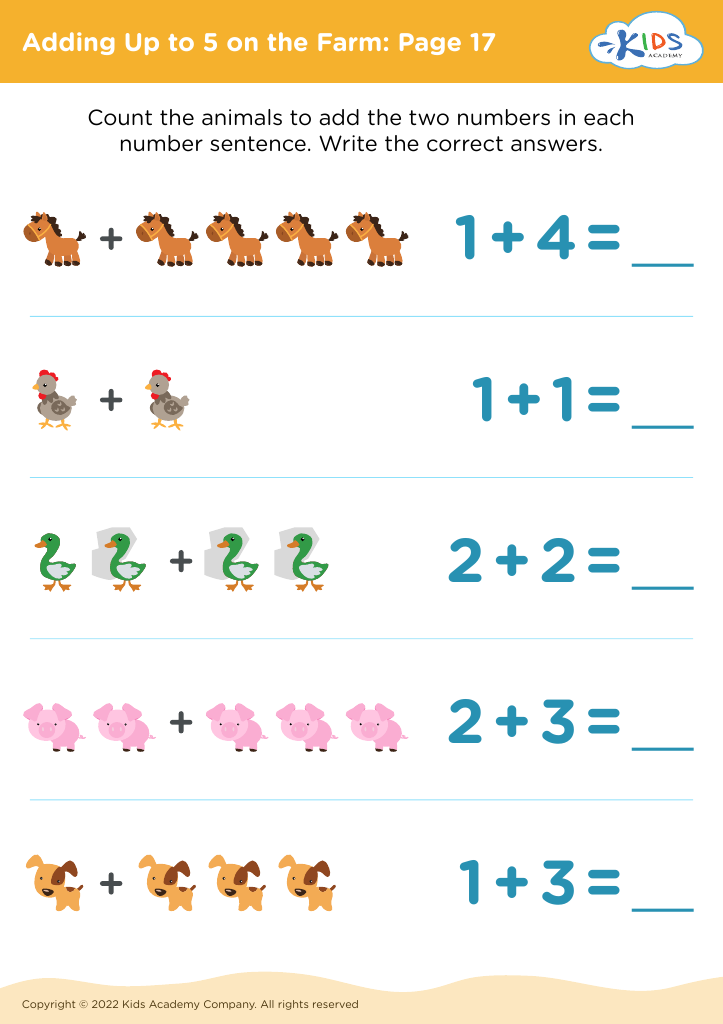
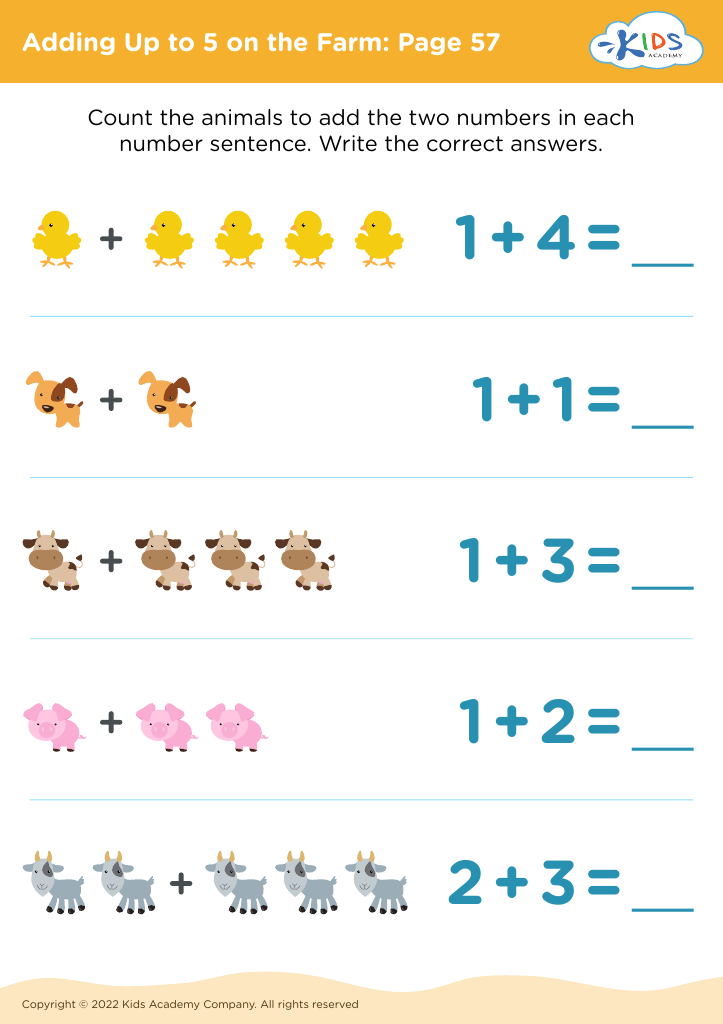
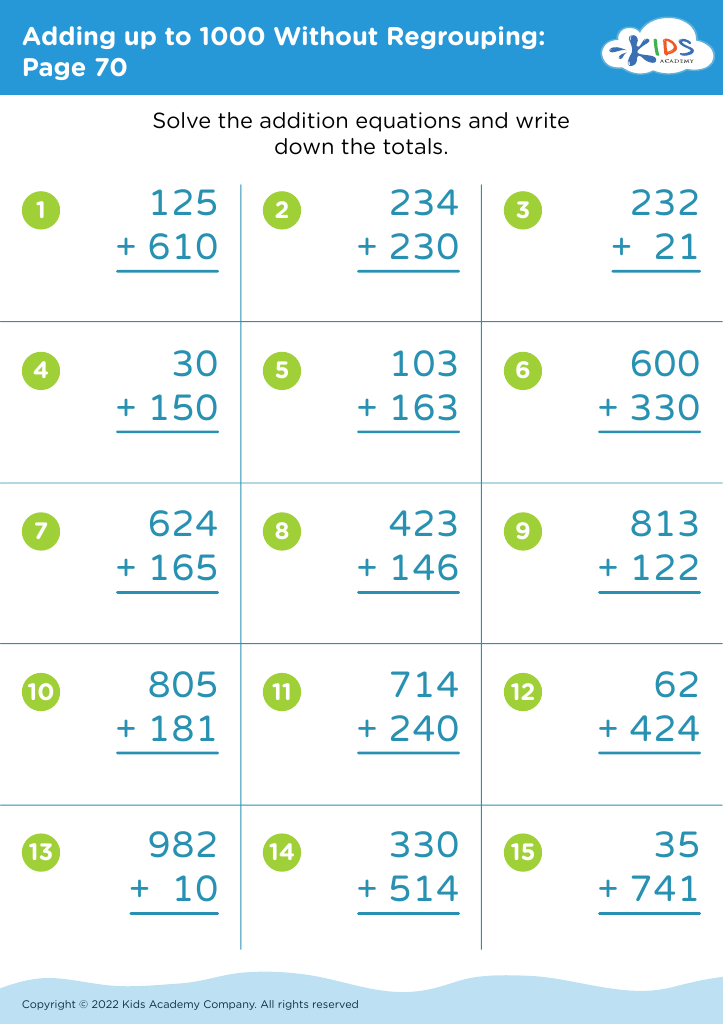
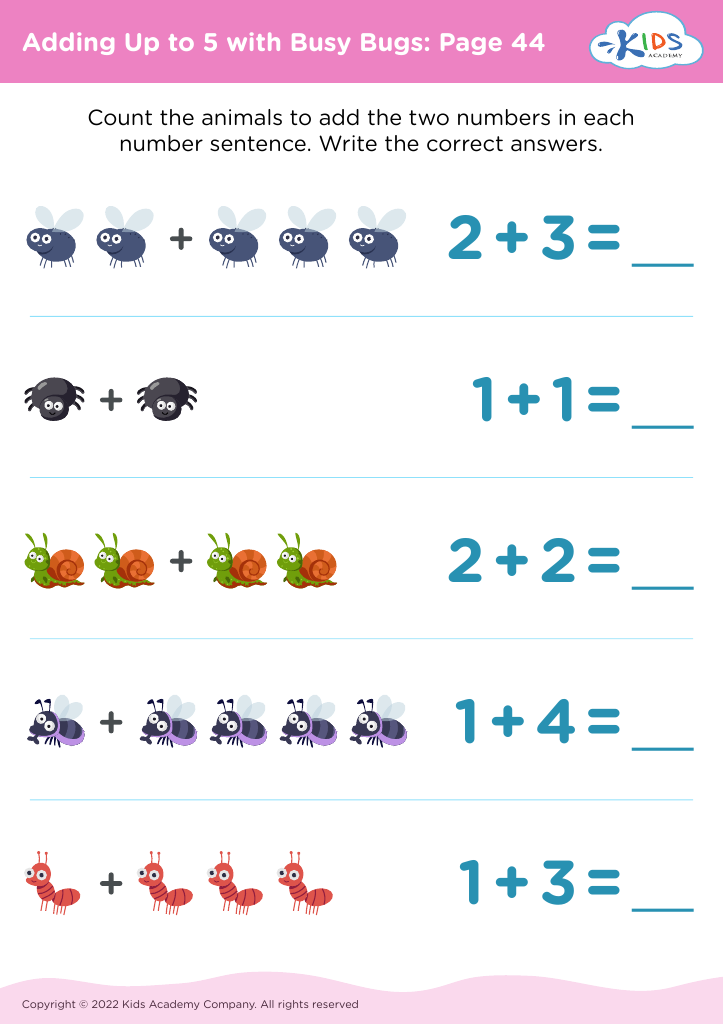
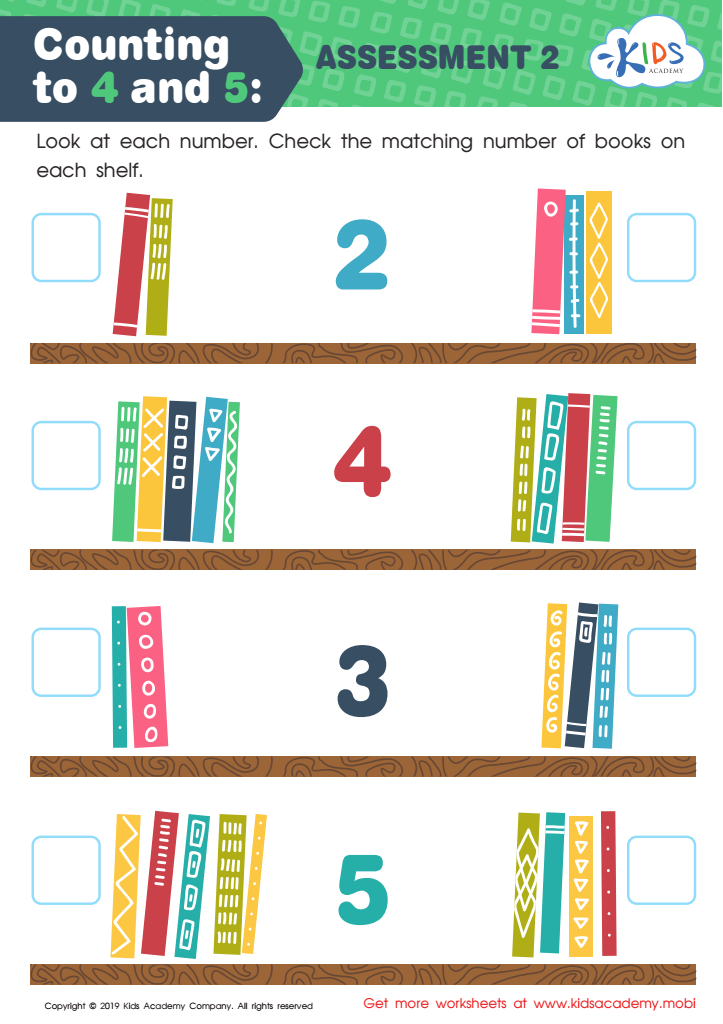
Counting to 4 and 5: Assessment 2 Worksheet
 Assign to My Students
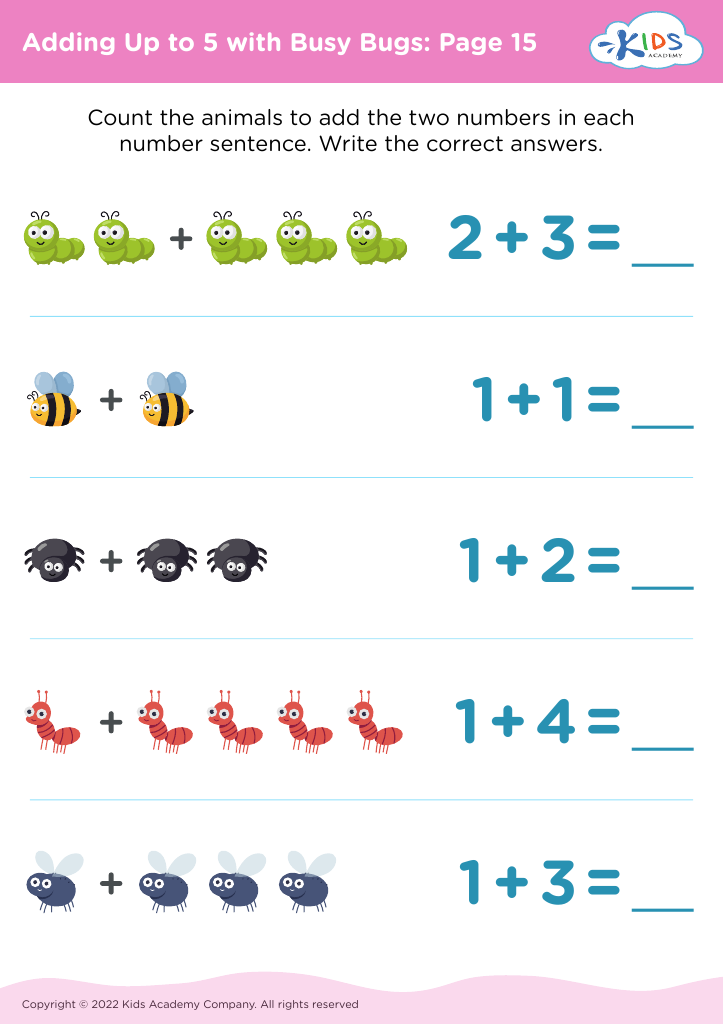








Understanding quantity is critical for children aged 5-9 as it lays the foundation for future mathematical skills and cognitive development. During this formative period, children are not just learning to count or recognize numbers, they are developing an intuition about how numbers relate to the world around them.
Grasping quantity helps children with everyday tasks like sharing snacks fairly, measuring ingredients while cooking, or understanding time and money. It supports their ability to solve problems, make logical decisions, and understand patterns, which are essential skills in both academic settings and daily life.
For parents and teachers, nurturing an understanding of quantity in young children means they are aiding the development of essential brain functions, such as improved memory, attention span, and analytical skills. When children fully grasp the concept of quantity, it boosts their confidence in handling mathematical tasks and reduces math anxiety later in life.
Hands-on experiences like using toys, blocks, and real-life scenarios make learning about quantity engaging and memorable. By valuing and supporting the development of these skills, parents and teachers can provide children with strong mathematical foundations, ensuring they remain confident and competent learners as they grow.








