
Underwater animal identification Worksheets for Ages 5-9
3 filtered results
Difficulty Level
Grade
Age
-
From - To
Subject
Activity
Standards
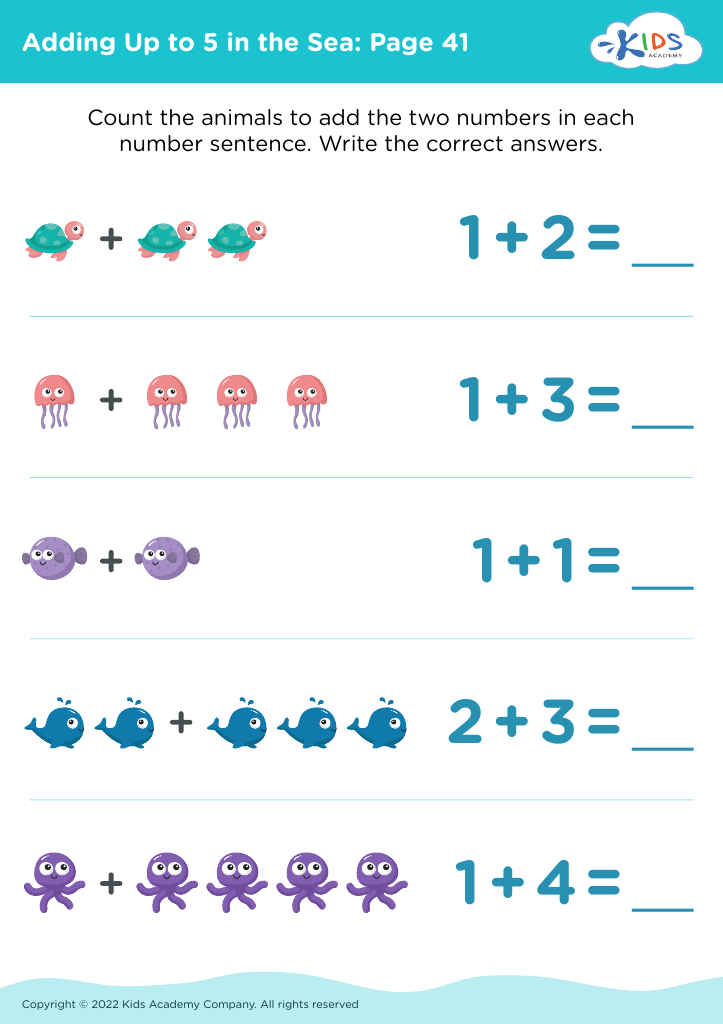
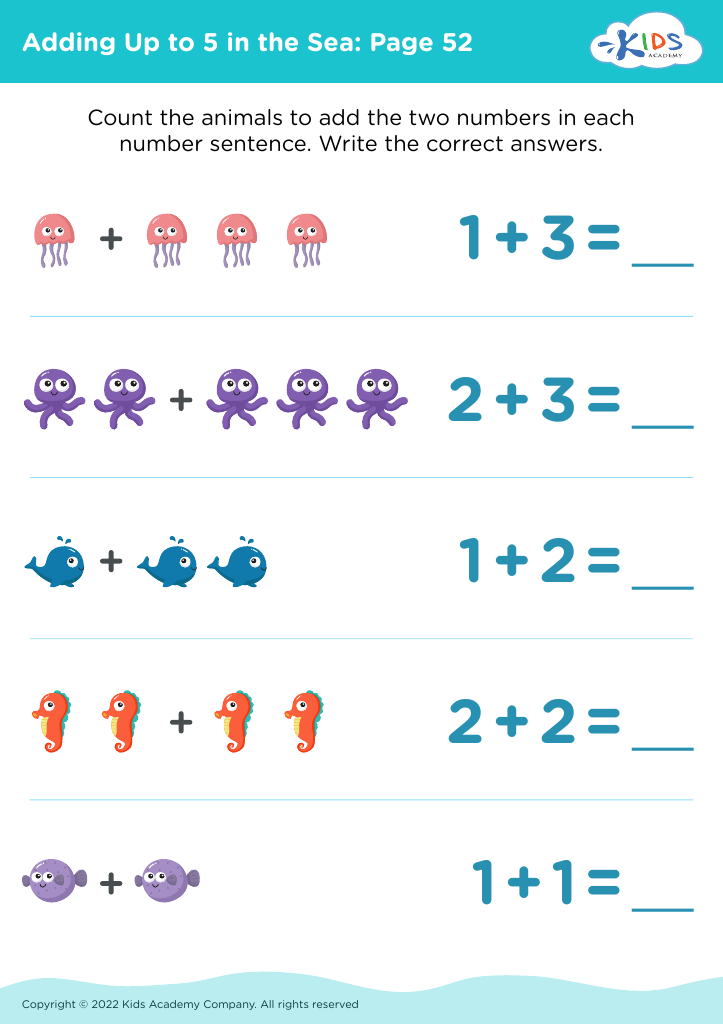
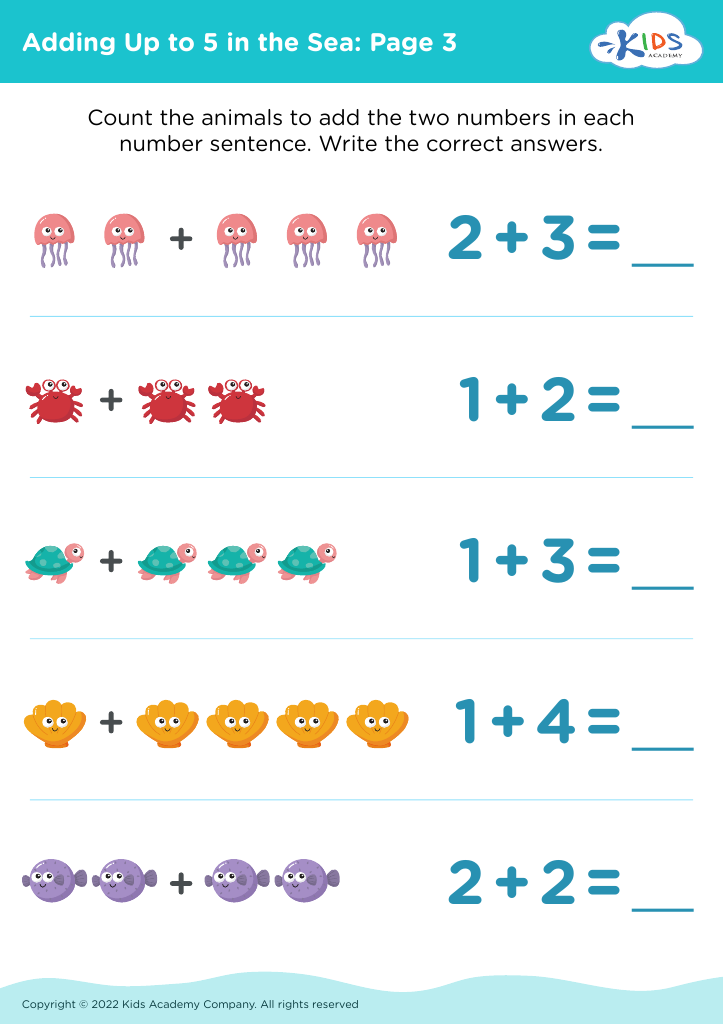
Dive into the wonders of the ocean with our Underwater Animal Identification Worksheets, specially designed for children ages 5-9! These engaging worksheets introduce young learners to a variety of fascinating marine creatures, enhancing their knowledge and appreciation of underwater life. Kids will enjoy identifying different animals, reinforcing their ability to recognize and name species through colorful illustrations and fun activities. Perfect for both classroom settings and at-home learning, our resources promote critical thinking and observation skills while igniting a passion for ocean conservation. Explore the depths of learning with these interactive worksheets that make discovering marine life exciting and educational!
Favorites
With answer key
Interactive
Join Kids Academy for Free
Who is primarily going to use this learning content?



.jpg)




Parents and teachers should care about underwater animal identification for children aged 5-9 because it fosters critical early learning and environmental awareness. At this developmental stage, children are naturally curious about the world around them, and introducing them to marine life can enhance their observation skills, classification abilities, and curiosity about ecosystems.
Studying underwater animals stimulates scientific thinking. As children learn to identify different species, they engage in active inquiry—observing, questioning, and drawing conclusions about their environment. This hands-on learning experience encourages them to appreciate biodiversity and understand the importance of preserving aquatic ecosystems.
Additionally, introducing young learners to marine life enriches their vocabulary and communication skills as they describe and discuss various species and their habitats. It can also inspire a passion for the ocean, potentially leading to future environmental stewardship or careers in marine biology, ecology, or conservation.
Furthermore, underwater animal identification can be a springboard for broader discussions about climate change, pollution, and the impact humans have on ocean health, promoting responsible behavior in future generations. In summary, engaging children with underwater life identification is a multifaceted educational tool enhancing critical thinking and fostering a connection to nature.








