Uppercase identification Worksheets for Ages 5-9
5 filtered results
-
From - To
Discover our engaging Uppercase Identification Worksheets designed specifically for children ages 5-9! These fun, printable activities help young learners develop essential literacy skills by recognizing and identifying uppercase letters. Each worksheet is crafted to foster early reading success through interactive exercises that promote letter recognition in a colorful and stimulating format. Perfect for use at home or in the classroom, these worksheets cater to various learning styles, ensuring that each child stays motivated and eager to learn. Boost your child's confidence in reading and writing with our comprehensive collection of uppercase identification resources. Start exploring today and watch their skills soar!
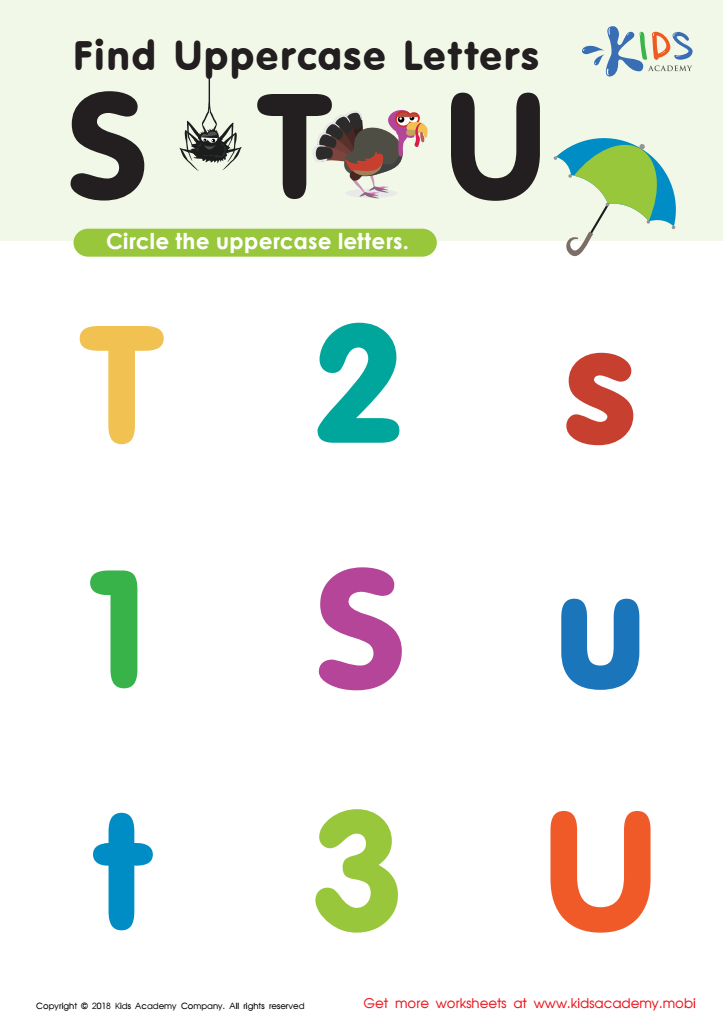
Find Uppercase Letters Worksheet
 Assign to My Students
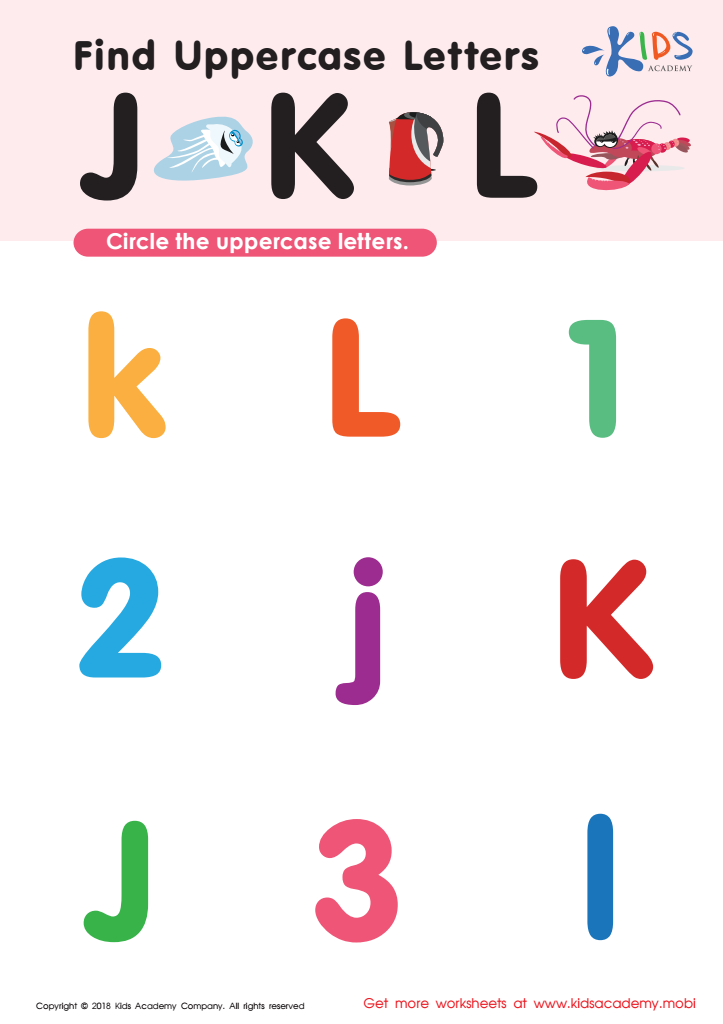
Find Uppercase Letters J, K, and L Worksheet
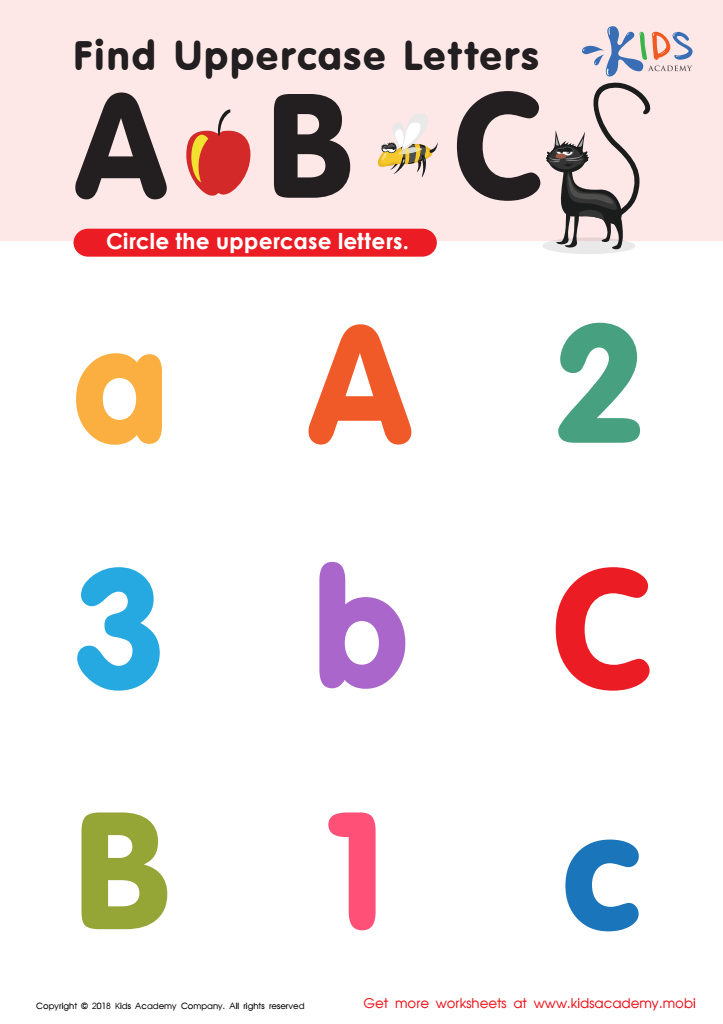
Find Uppercase Letters A, B, and C Worksheet
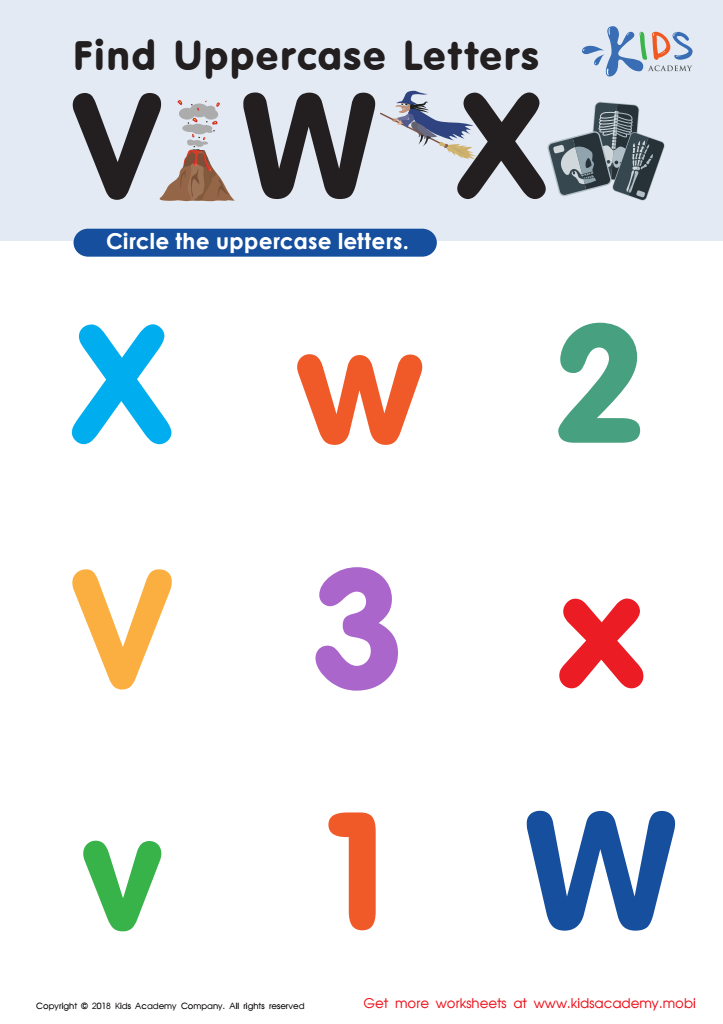
Find Uppercase Letters V, W, X Worksheet
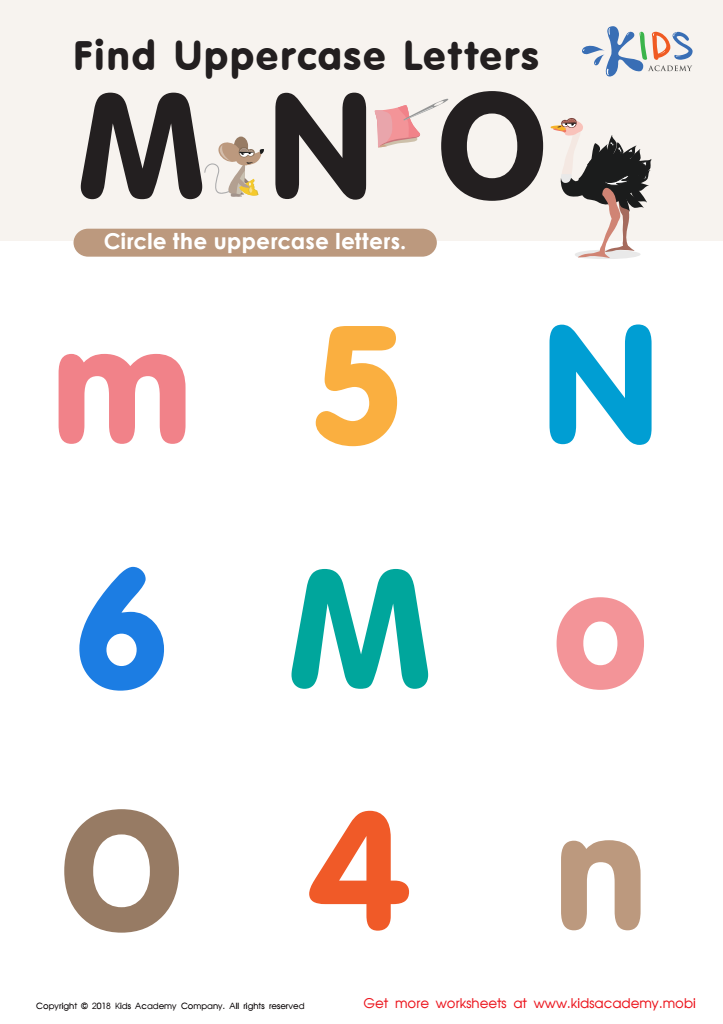
Find Uppercase Letters M, N, and O Worksheet







Uppercase letter identification is a foundational skill for children ages 5 to 9, and it plays a crucial role in their early literacy development. First, recognizing uppercase letters helps young learners understand the structure of written language. Many books and print materials use uppercase letters for titles, proper nouns, and the beginning of sentences, making this knowledge essential for reading comprehension.
Moreover, mastering uppercase letter identification enhances children's phonemic awareness as it allows them to associate letters with their corresponding sounds. This knowledge is key in forging connections between phonics and spelling, ultimately contributing to improved writing skills. Teachers and parents can reinforce this learning through fun, engaging activities such as letter scavenger hunts, crafts, and interactive games.
Additionally, uppercase letters are often first introduced to children in classrooms, often creating a sense of familiarity. Developing proficiency in recognizing these letters boosts children's confidence as they embark on their reading journey. Lastly, effective uppercase identification supports other academic skills, as engaged readers are more likely to excel in various subjects. Therefore, prioritizing uppercase letter recognition is vital for a child’s literacy success and overall academic achievement.








