Basic geometry understanding 2D Shapes Worksheets for Ages 5-9
4 filtered results
Difficulty Level
Grade
Age
-
From - To
Subject
Activity
Standards
Unlock the world of geometry for your child with our "Basic Geometry Understanding 2D Shapes Worksheets for Ages 5-9." Specially curated for young learners, these worksheets build foundational math skills through fun and engaging activities. Designed to enhance shape recognition, spatial awareness, and problem-solving abilities, our worksheets cater to kids at different educational levels within the 5-9 age range. Whether in the classroom or at home, these printable exercises offer a perfect blend of education and entertainment, helping children develop a strong grasp of 2D shapes effortlessly. Make learning geometry an enjoyable adventure today!
Favorites
With answer key
Interactive
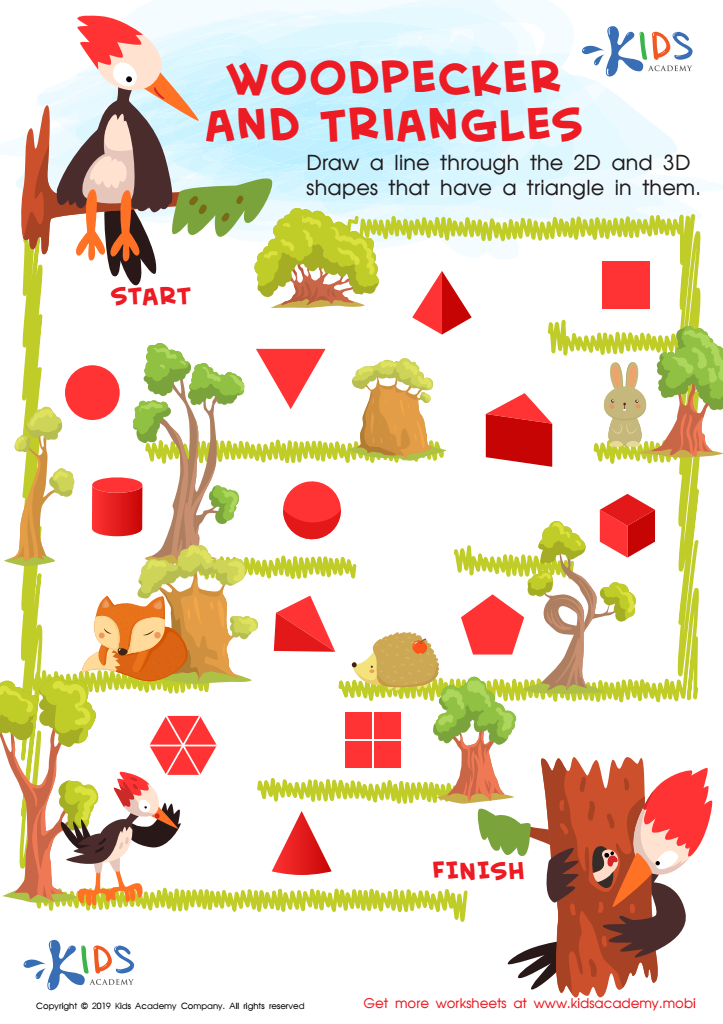
Woodpecker and Triangles Worksheet
Woodpeckers peck wood, and this printout helps kids learn about triangles. Ask your kindergartners to draw a triangle, then draw a line through the shapes that have a triangle in them to help the woodpecker get out of the maze.
 Assign to My Students
Woodpecker and Triangles Worksheet
Worksheet


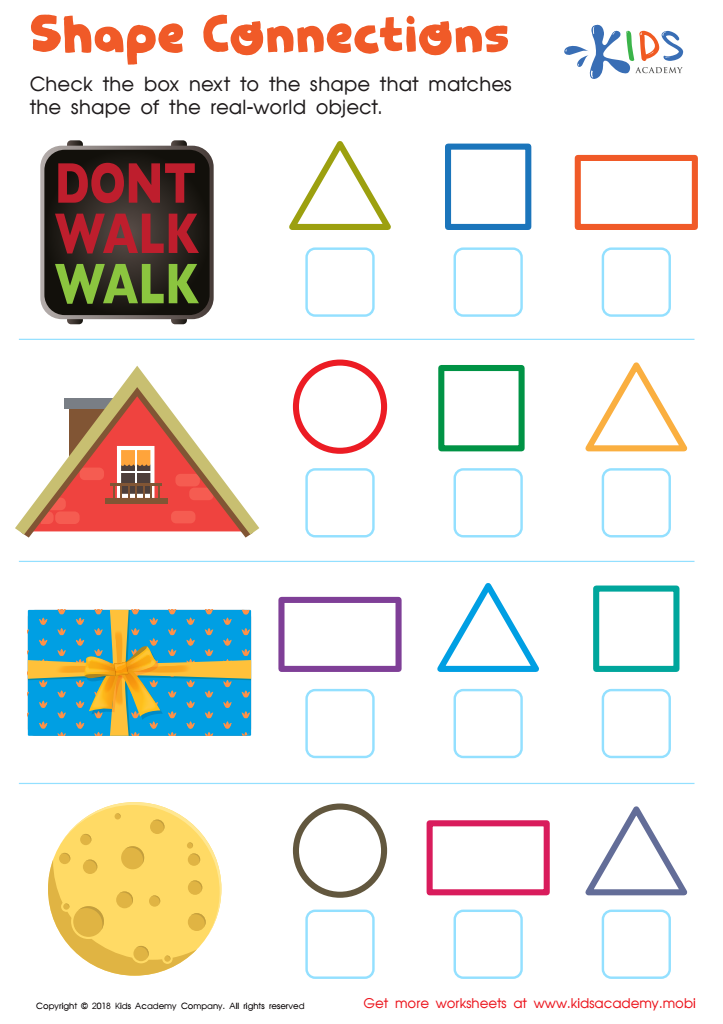
Shape Connections Worksheet
Geometric shapes are all around us and this fun worksheet brings it to life. Kids will match real-world pictures with the corresponding basic shapes, connecting how math is used in various aspects of daily life. A great way to reinforce these concepts!
Shape Connections Worksheet
Worksheet
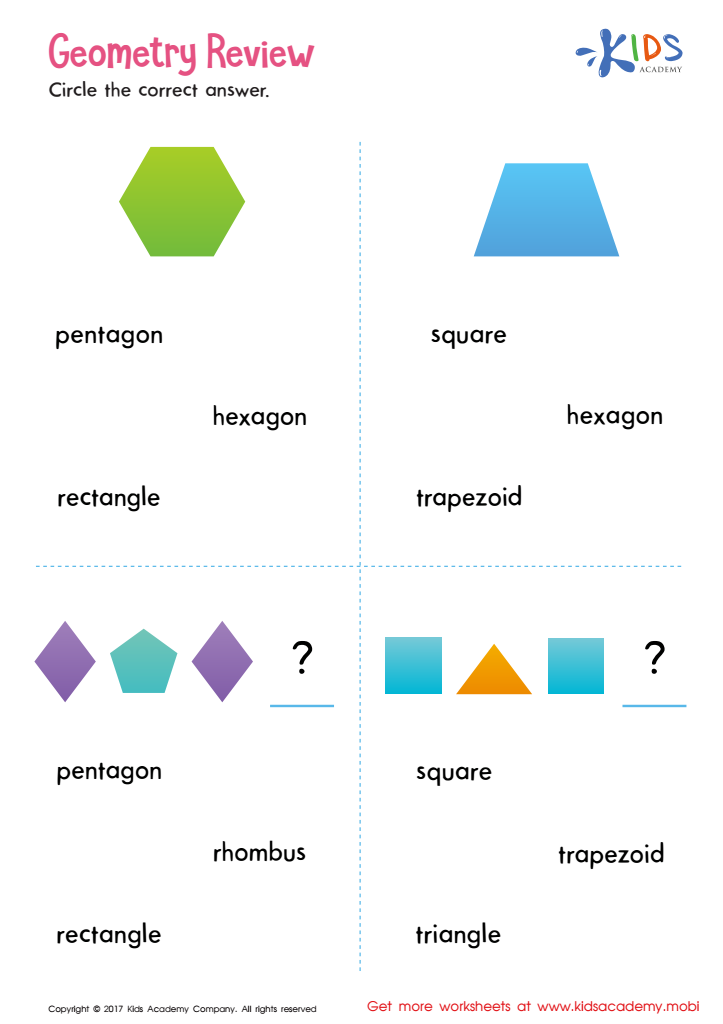
Geometry Review Printable
Repetition is key to success; give your child the practice they need with this geometry worksheet.
Geometry Review Printable
Worksheet
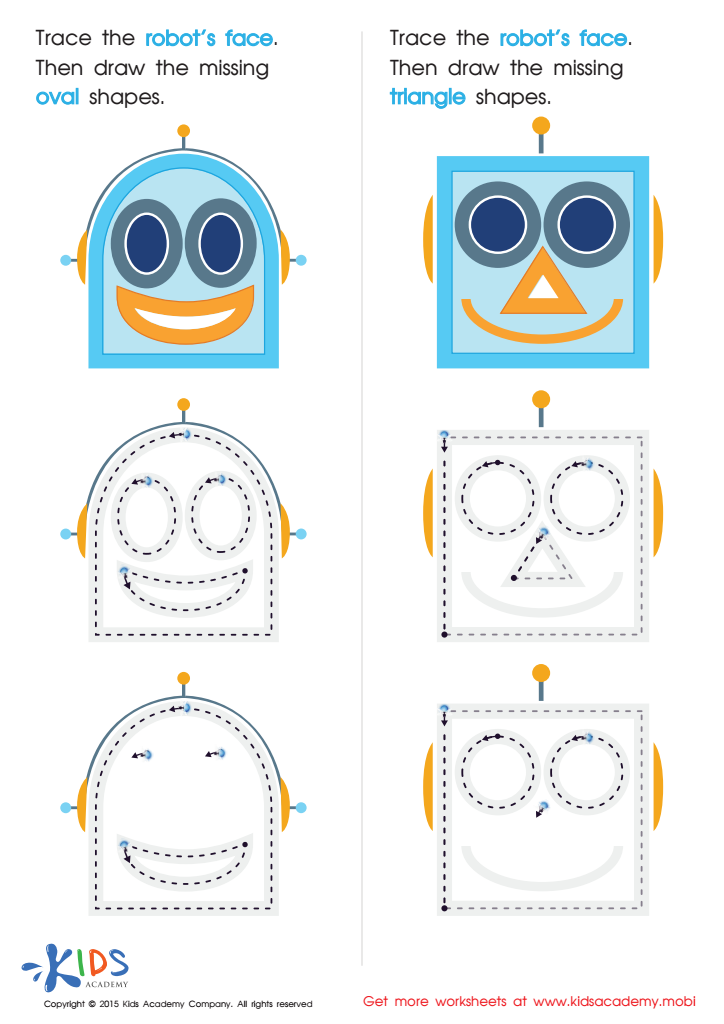
Drawing Ovals And Triangles with Fun Printable
Trace the face and draw missing ovals and triangles. Test your memory and recall shapes' names. Check if you remember how to draw them!
Drawing Ovals And Triangles with Fun Printable
Worksheet
Join Kids Academy for Free
Who is primarily going to use this learning content?








Understanding basic geometry, particularly 2D shapes, is crucial for children aged 5-9. At this developmental stage, kids encounter numerous new cognitive challenges, and geometry enhances their spatial awareness, which is foundational for many day-to-day activities. Recognizing, naming, and manipulating 2D shapes such as circles, squares, triangles, rectangles, and other polygons fosters problem-solving abilities and logical reasoning.
Learning about 2D shapes also bridges to other key subjects. For instance, grasping geometric concepts can improve a child's understanding of visual arts by identifying shapes and patterns. In mathematics, recognizing shapes helps in grasping more complex concepts, such as fractions (dividing shapes into equal parts), addition, and subtraction set in geometric contexts.
Additionally, geometry cultivates children's language development. When they describe shapes and their properties, they practice specific vocabulary—terms like edges, vertices, and symmetry. Engaging with shapes also aligns well with fine motor skills development; activities like drawing and cutting shapes bolster hand-eye coordination.
Beyond academics, familiarity with shapes helps young children navigate their environments more effectively. By recognizing shapes in everyday objects, children can develop better organizational skills and spatial orientation. Therefore, both parents and teachers should prioritize basic geometry in early education, ensuring a solid foundation for future learning and practical life skills.