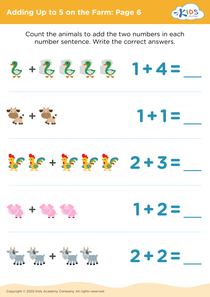
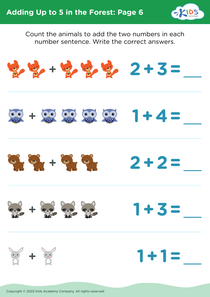
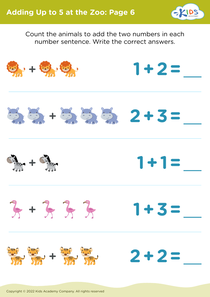
Improving concentration Adding in the Sea Worksheets for Ages 5-9
4 filtered results
-
From - To
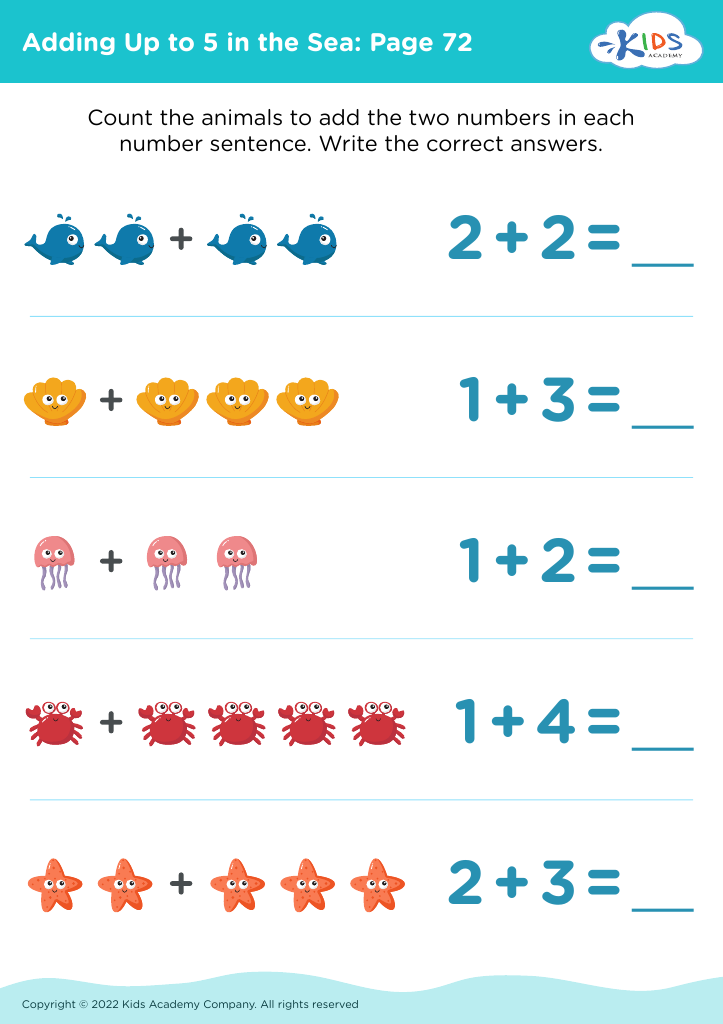
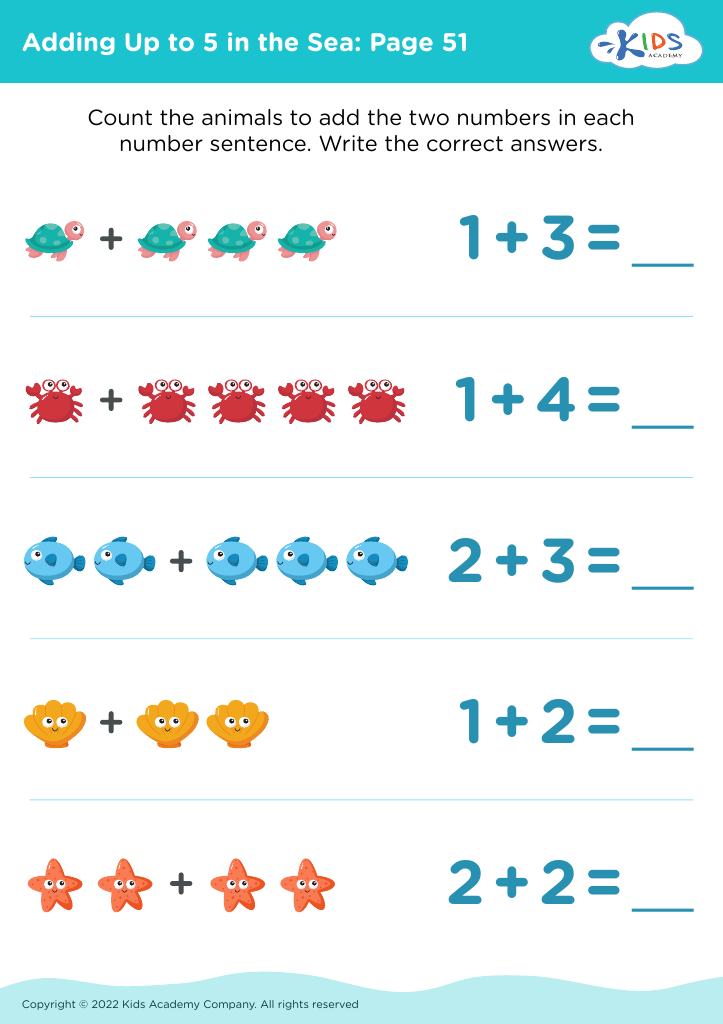
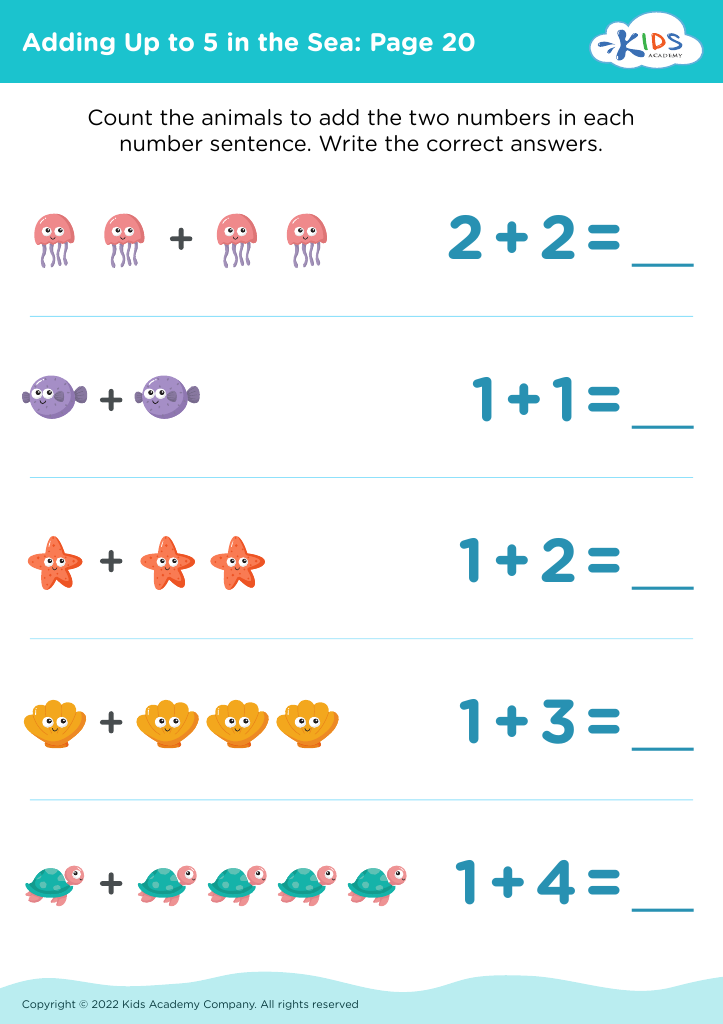
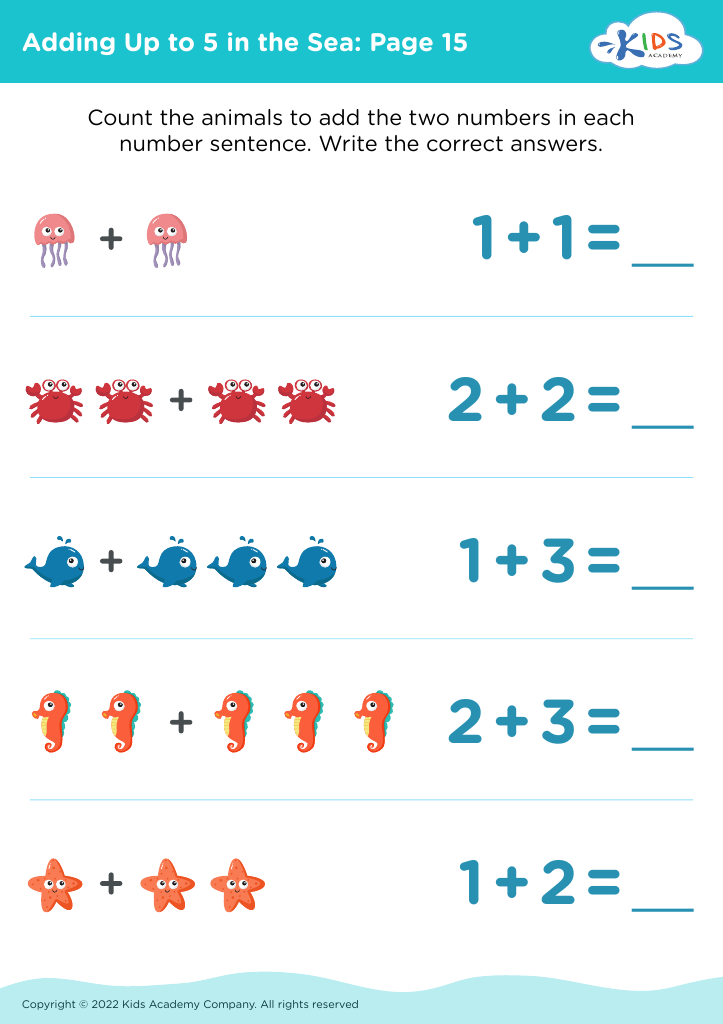
Boost your child's concentration with our "Adding in the Sea" worksheets designed for ages 5-9! At Kids Academy, we've crafted engaging, sea-themed math activities to transform learning into an underwater adventure. These printable worksheets are not only fun but also strategically developed to improve focus and enhance your child's addition skills. Perfect for young mathematicians, the vivid ocean illustrations successfully capture attention while providing a relaxing yet stimulating environment. Dive into learning today with our expertly designed resources that cater to both educational needs and the curiosity of young minds, ensuring concentration and enjoyment with every addition problem!



Improving concentration skills in children aged 5-9 is crucial for their cognitive development and overall academic success. During these formative years, children are learning foundational skills that will influence their future learning and performance in school. Concentration aids in better comprehension and retention of new information, allowing children to build a strong knowledge base in subjects like reading, writing, and math.
Investing time in enhancing concentration skills also promotes behavioral improvements. Children who can focus tend to display better self-control and patience, reducing disruptive behaviors and fostering a positive learning environment. This is beneficial not only for individual learning but also for the classroom dynamic as a whole.
Furthermore, developing concentration early on encourages good study habits that last a lifetime. These skills contribute to a child's ability to set goals and work towards achieving them, which is essential for long-term academic and personal success.
Activities related to improving concentration, such as puzzles, reading sessions, and mindfulness exercises, can also be fun and engaging for children, making learning enjoyable and accessible. By prioritizing concentration, parents and teachers are investing in the child's future, setting the stage for academic achievement and personal growth.