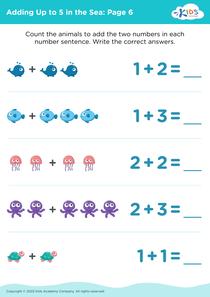
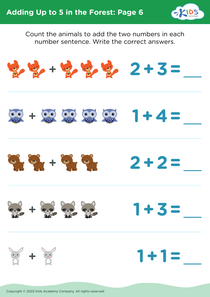
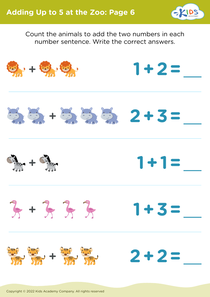
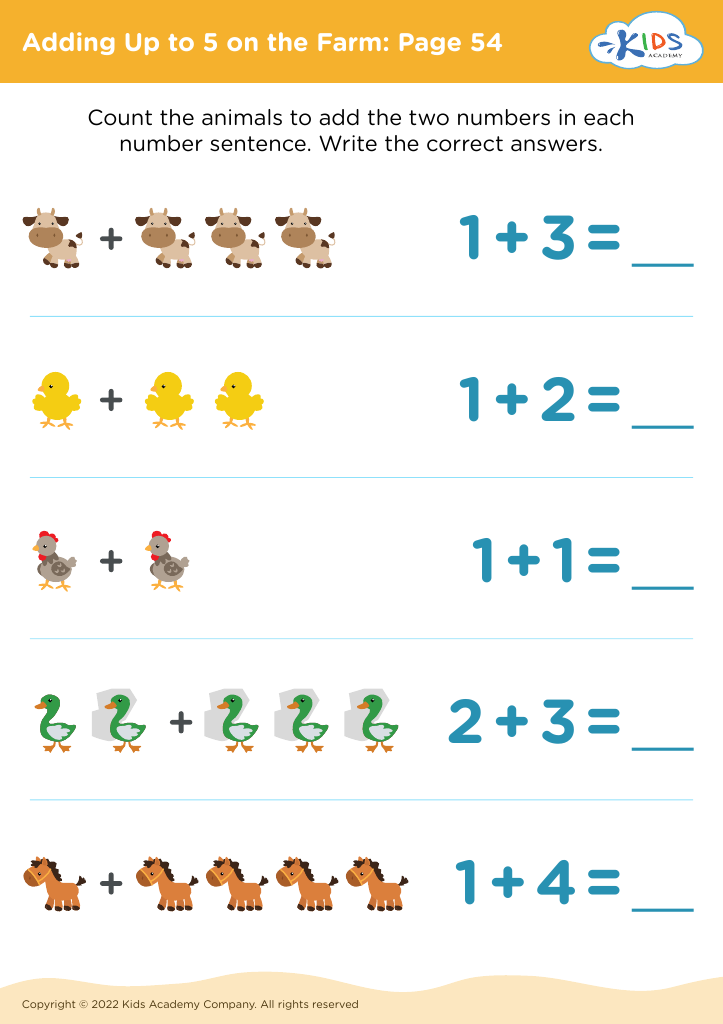
Animal identification Adding on the Farm Worksheets for Ages 5-9
15 filtered results
Difficulty Level
Grade
Age
-
From - To
Subject
Activity
Standards
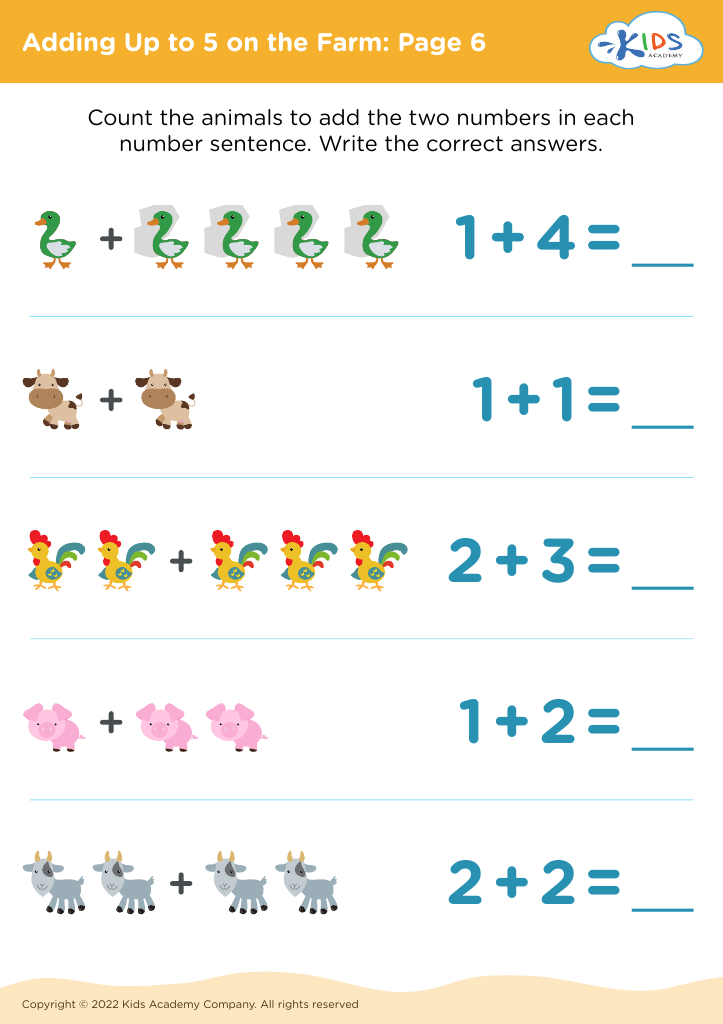
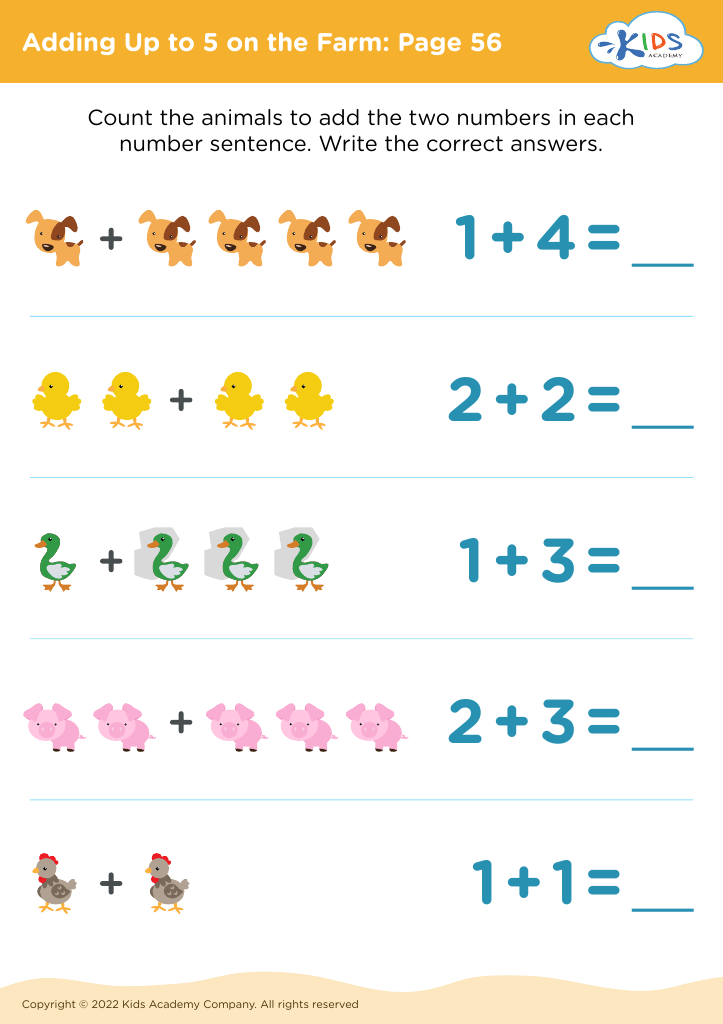
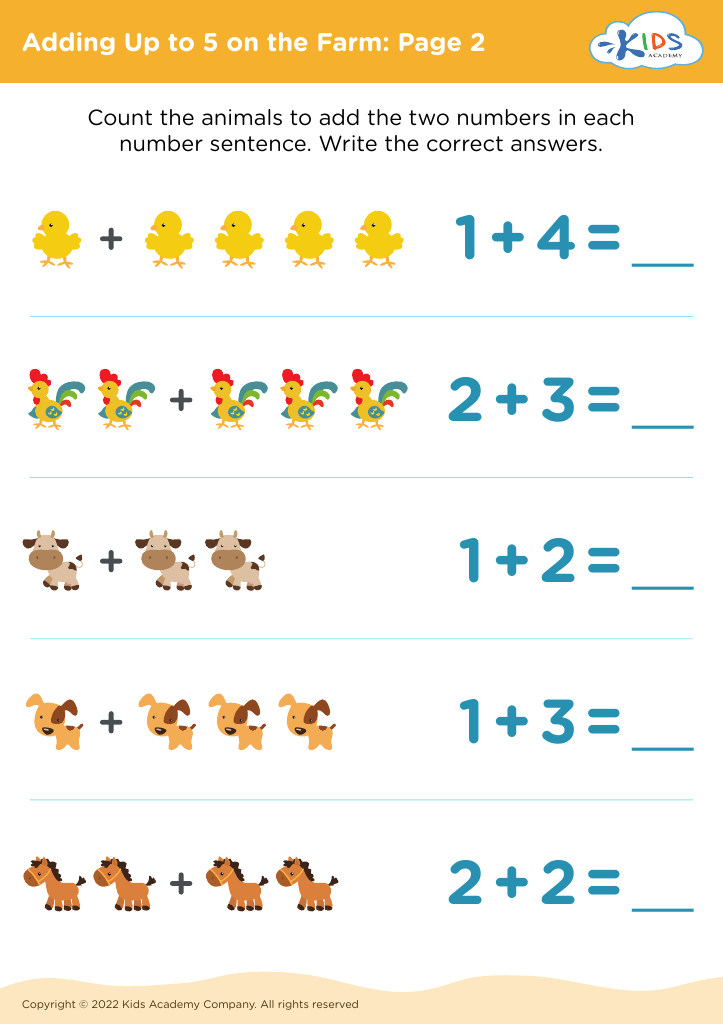
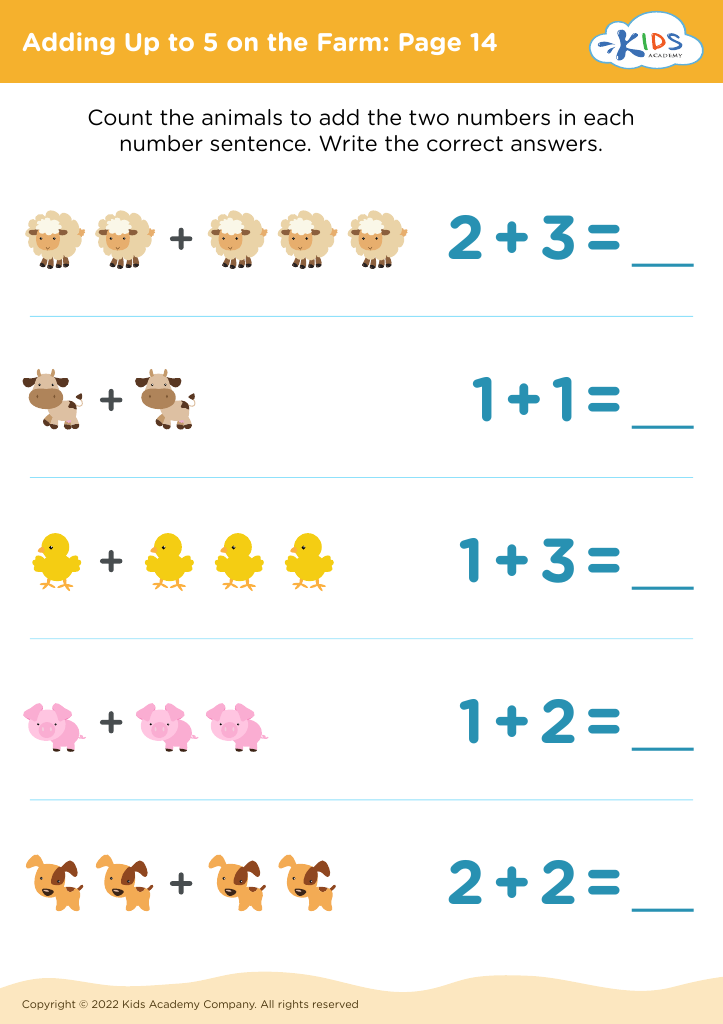
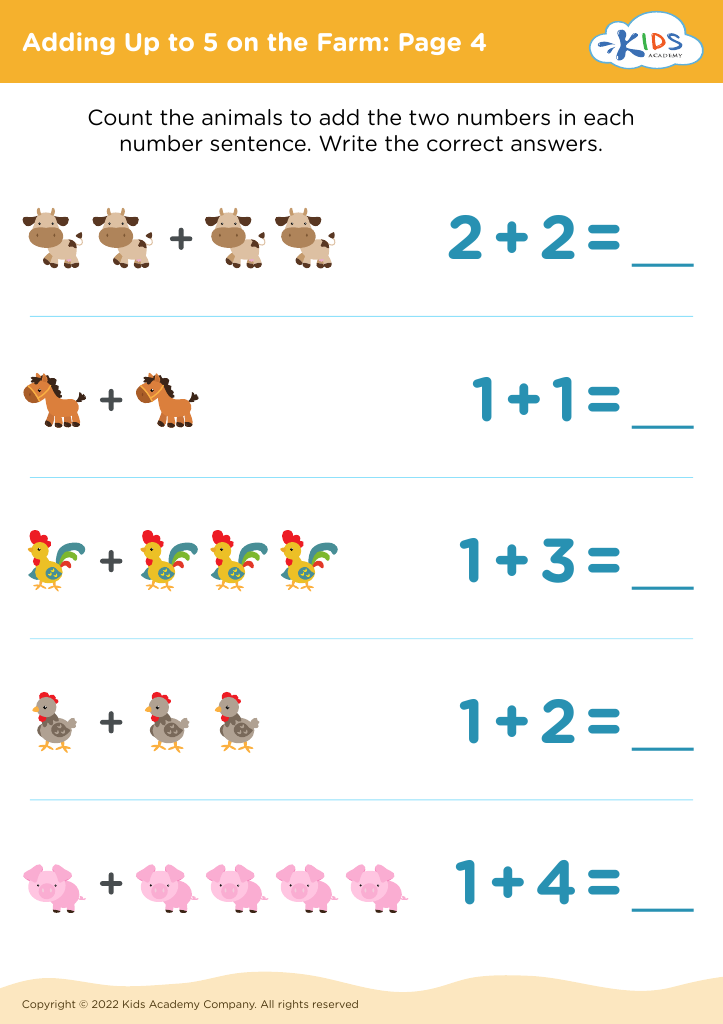
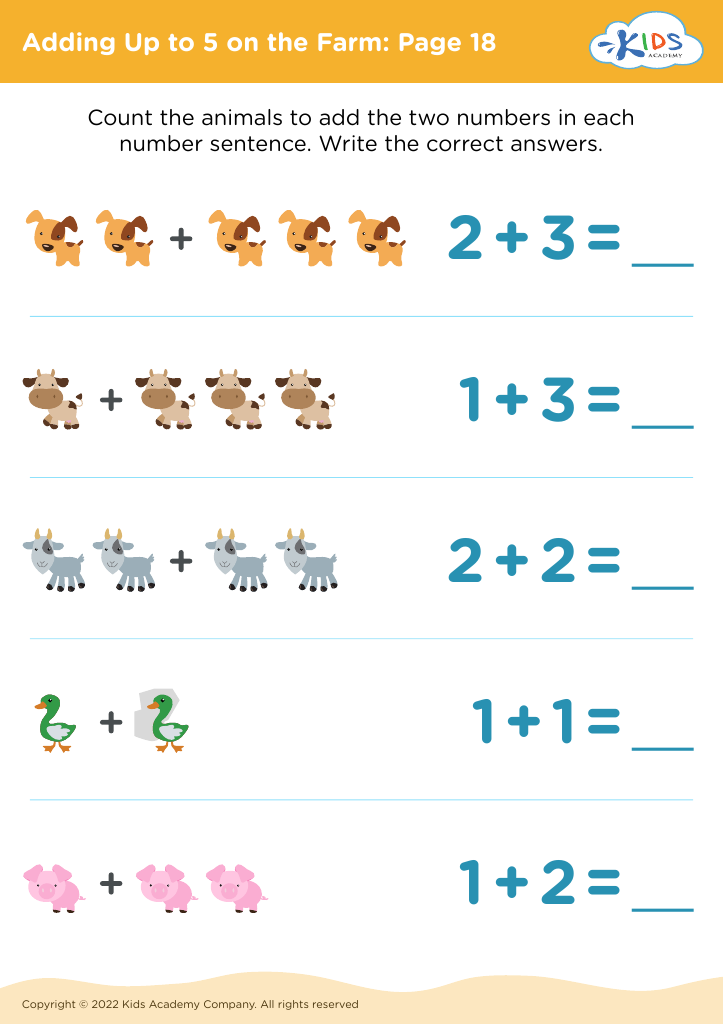
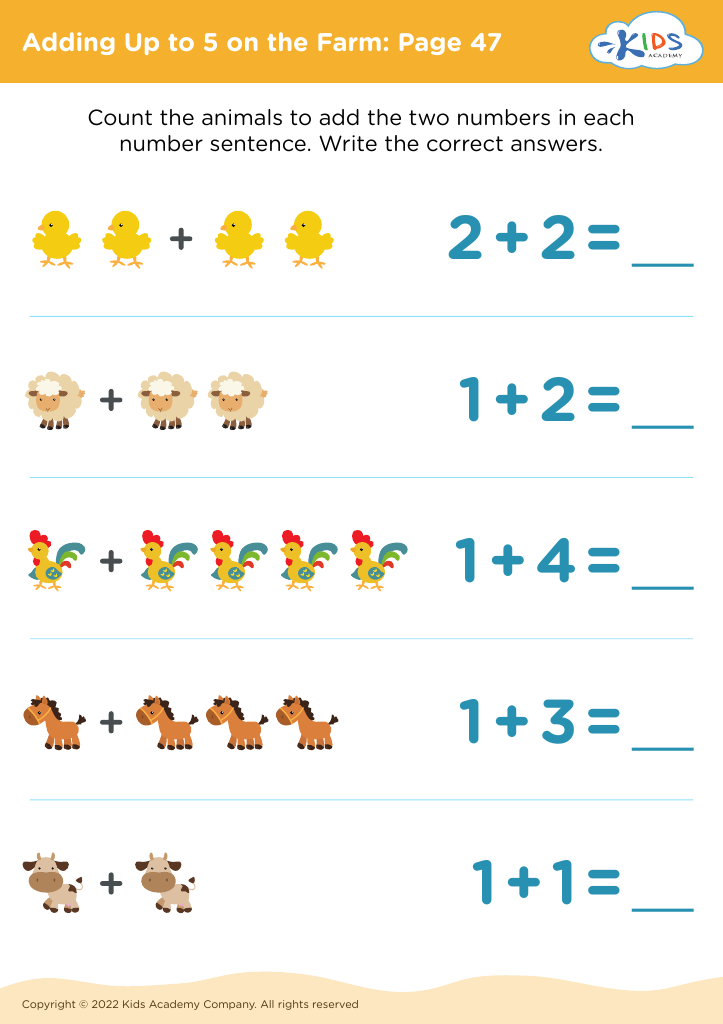
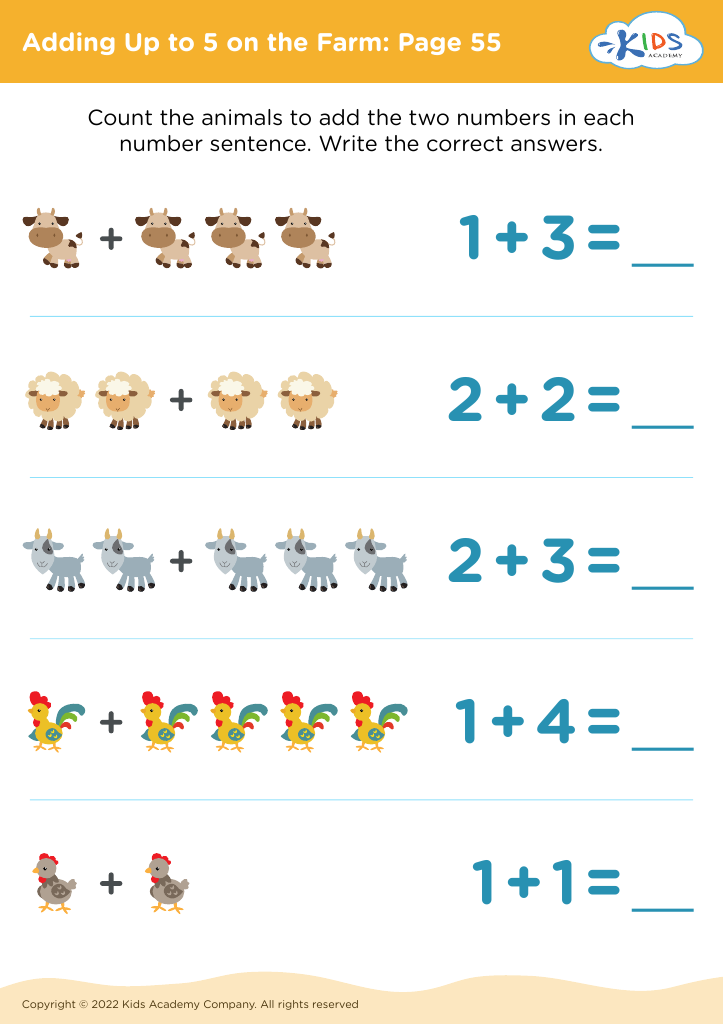
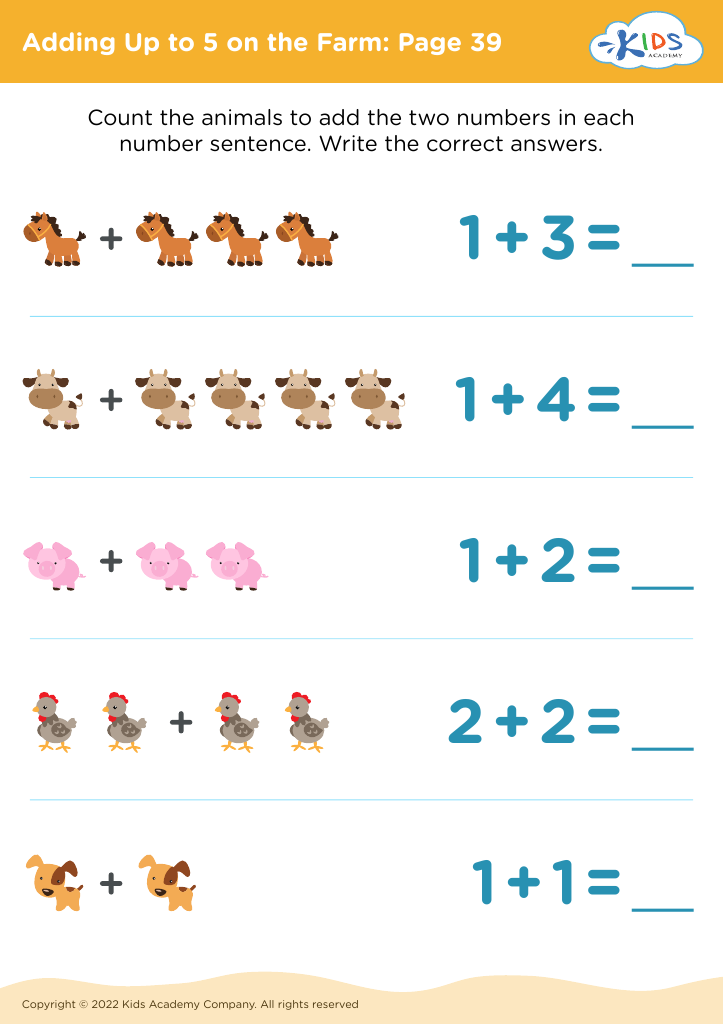
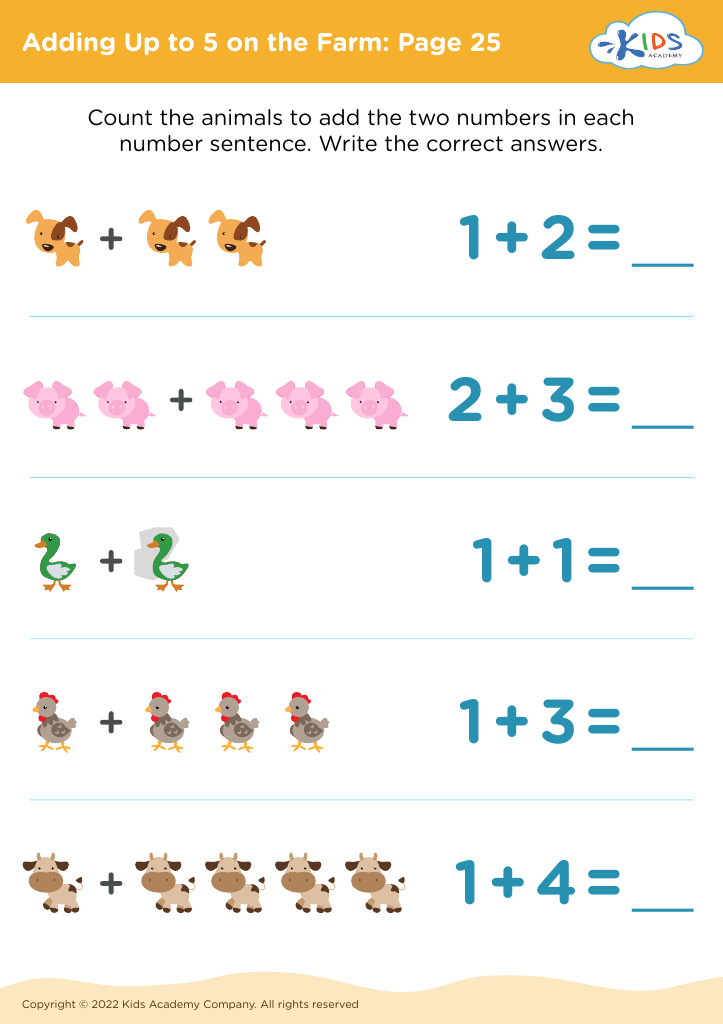
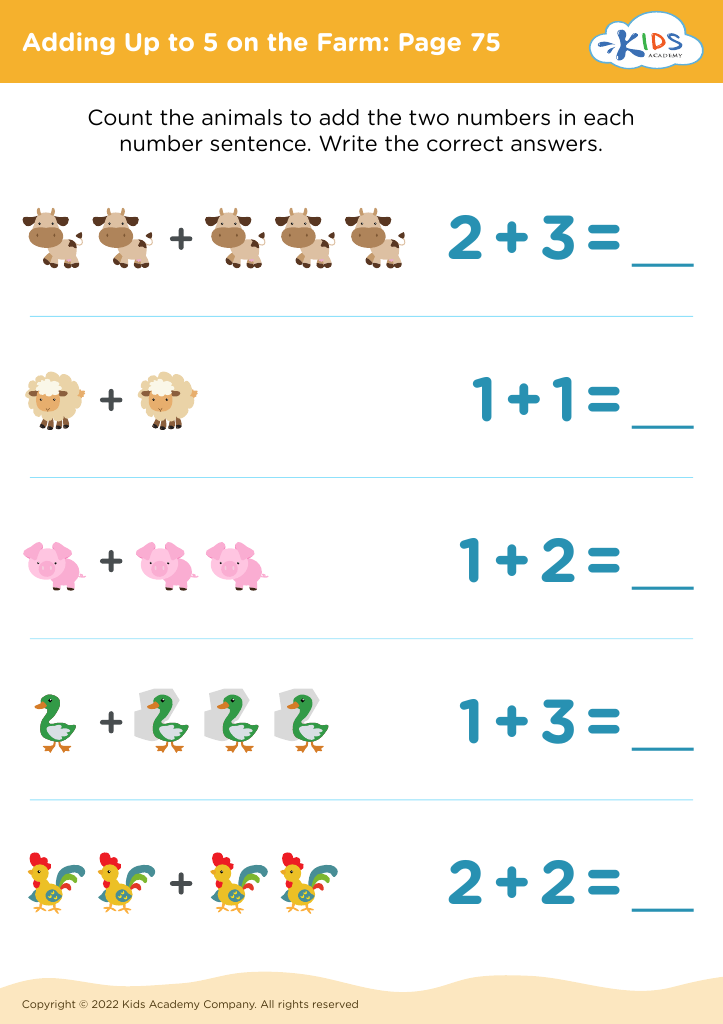
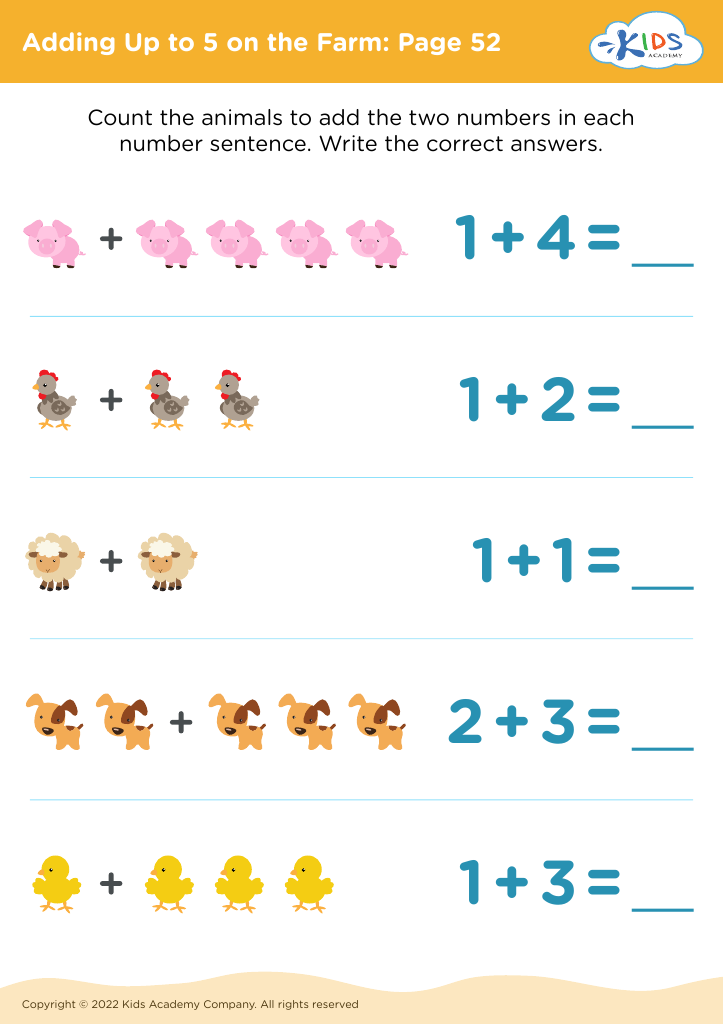
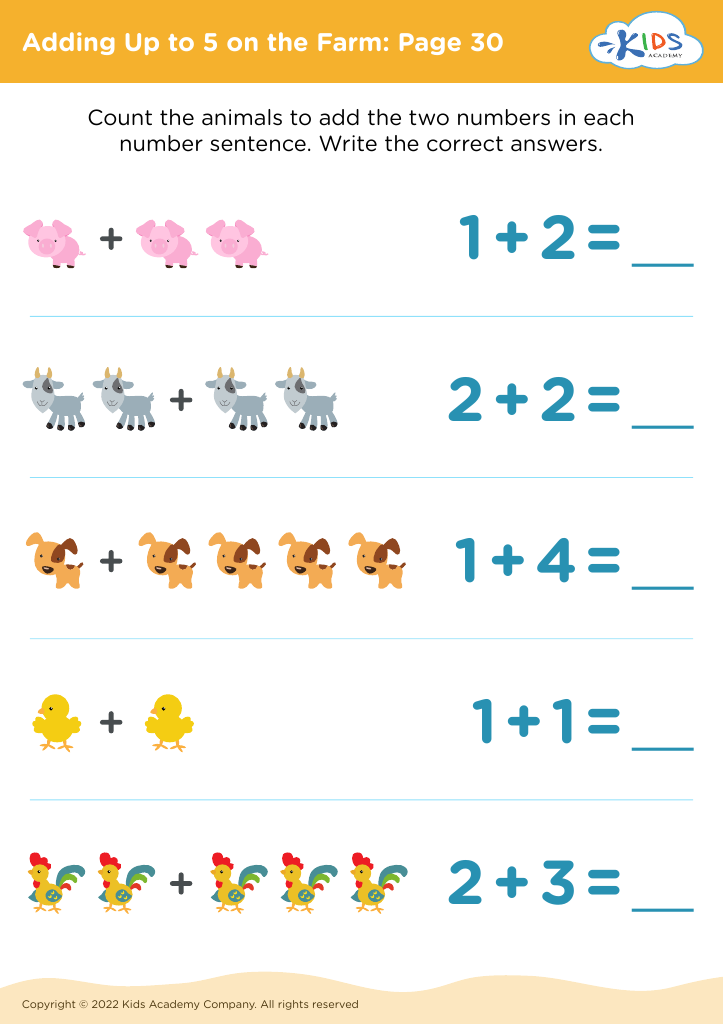
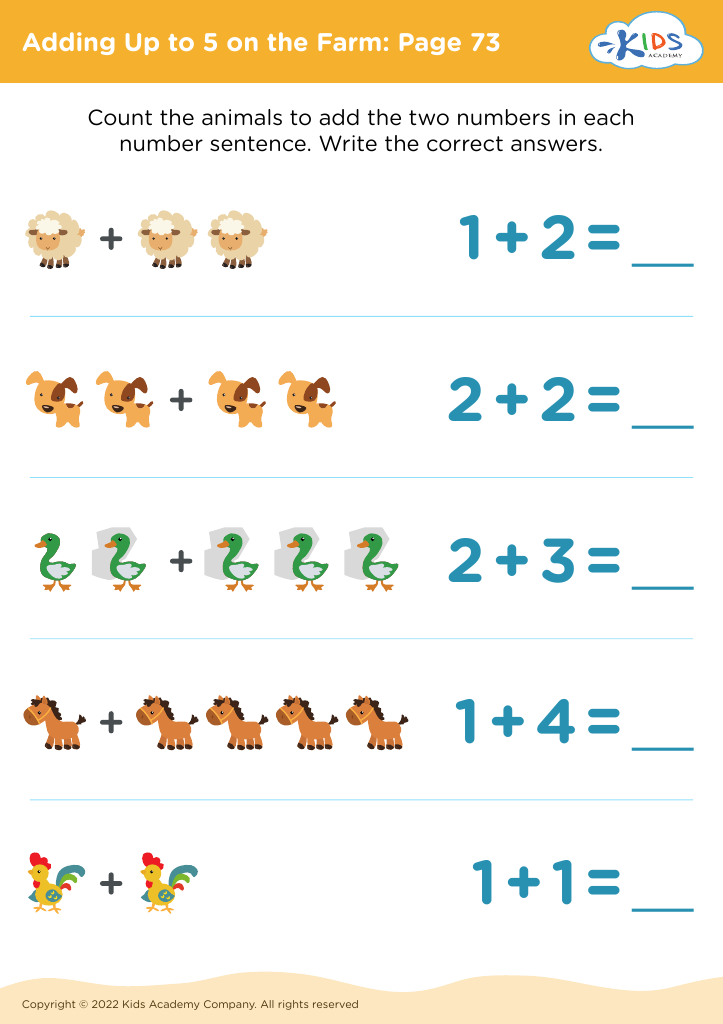
Discover our engaging "Animal Identification Adding on the Farm Worksheets" designed specifically for children aged 5-9! These fun and interactive worksheets blend math and animal recognition, allowing young learners to practice addition while identifying their favorite familiar farm animals. Each worksheet reinforces essential math skills through colorful illustrations, captivating scenarios, and supportive activities that encourage exploration and creativity. Kids will enjoy solving simple addition problems featuring a variety of farm animals, enhancing their counting and comprehension skills in a playful environment. Perfect for homeschooling or classroom use, these worksheets provide a delightful way to learn about animals and numbers simultaneously!
Favorites
With answer key
Interactive
Join Kids Academy for Free
Who is primarily going to use this learning content?



Animal identification is important for both parents and teachers, especially when it comes to educating children about farms and animal care. For young learners aged 5-9, understanding that each animal has unique features allows them to appreciate and connect with the world around them. This knowledge fosters empathy as children learn to recognize behaviors and needs specific to each species.
In an educational setting, teaching kids about identifying animals on a farm can spark curiosity and creativity. Activities like drawing, games, or storytelling centered around various farm animals help reinforce important concepts. Field trips to farms could enhance their learning, allowing hands-on interaction and observation.
Additionally, safety is a crucial reason to engage in animal identification. By recognizing different animals, children learn how to approach and interact with them safely, minimizing risks.
Finally, discussing animal identification lays the groundwork for topics like responsibility and the environment. Kids begin to develop an understanding of the importance of caring for animals, which leads to responsible pet ownership and a better appreciation for our ecosystem. Overall, engaging kids with animal identification enriches their learning experience, instills values of empathy, and enhances their understanding of nature.