Cognitive Development Adding on the Farm Worksheets for Ages 5-9
8 filtered results
-
From - To
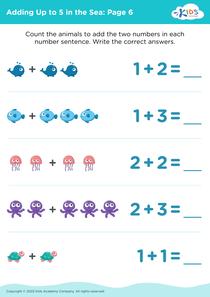
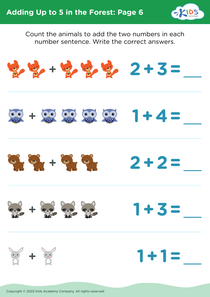
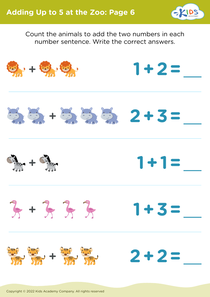
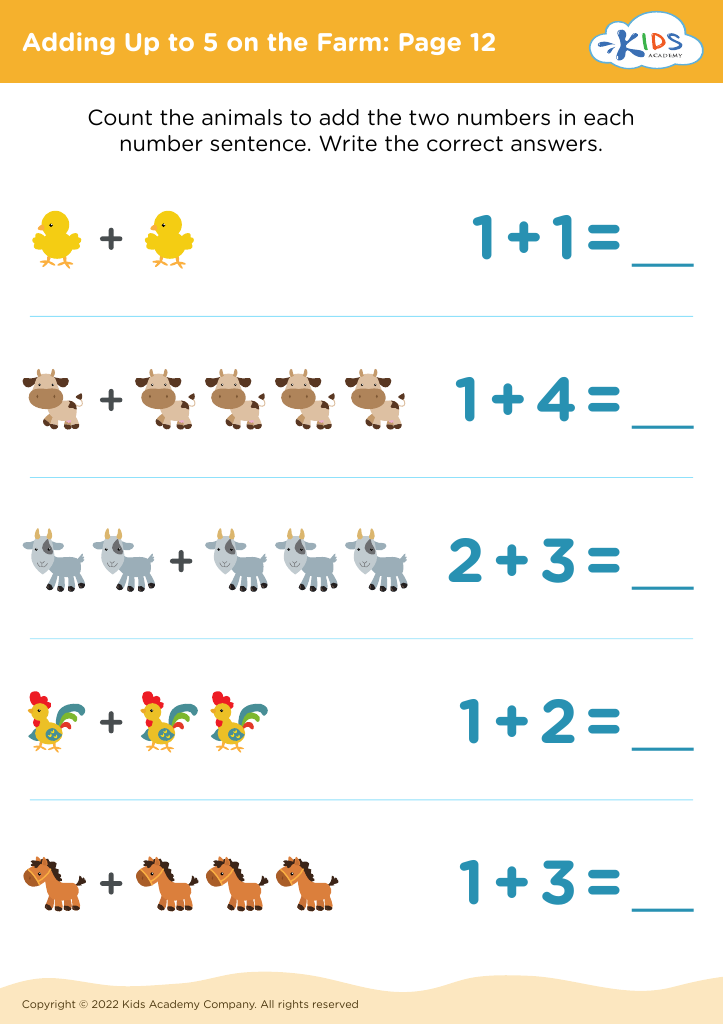
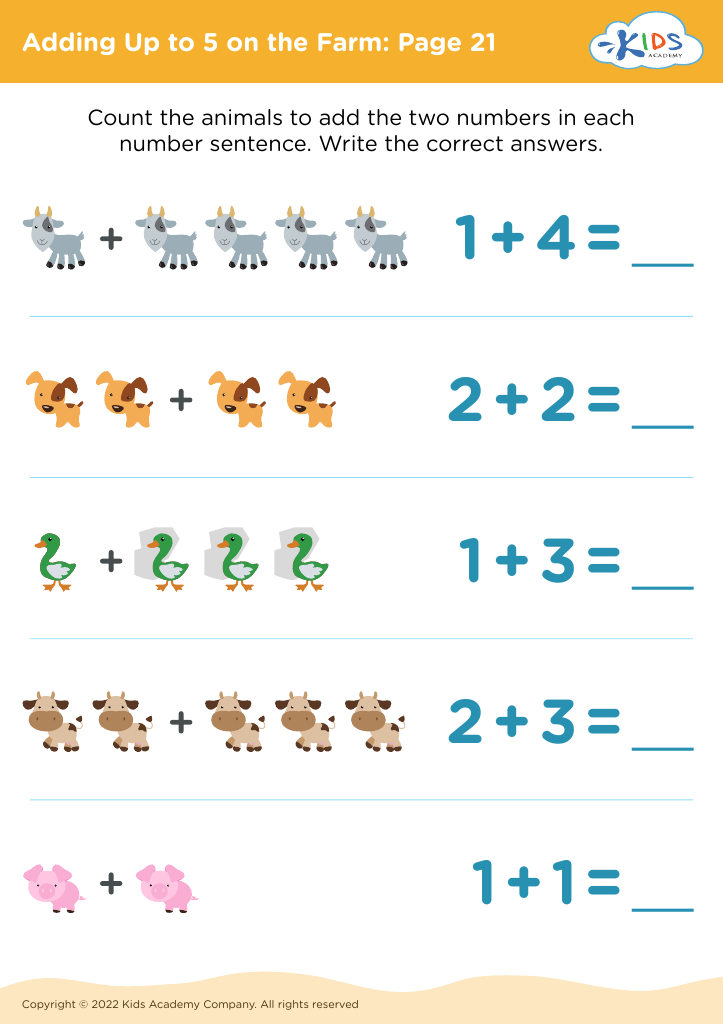
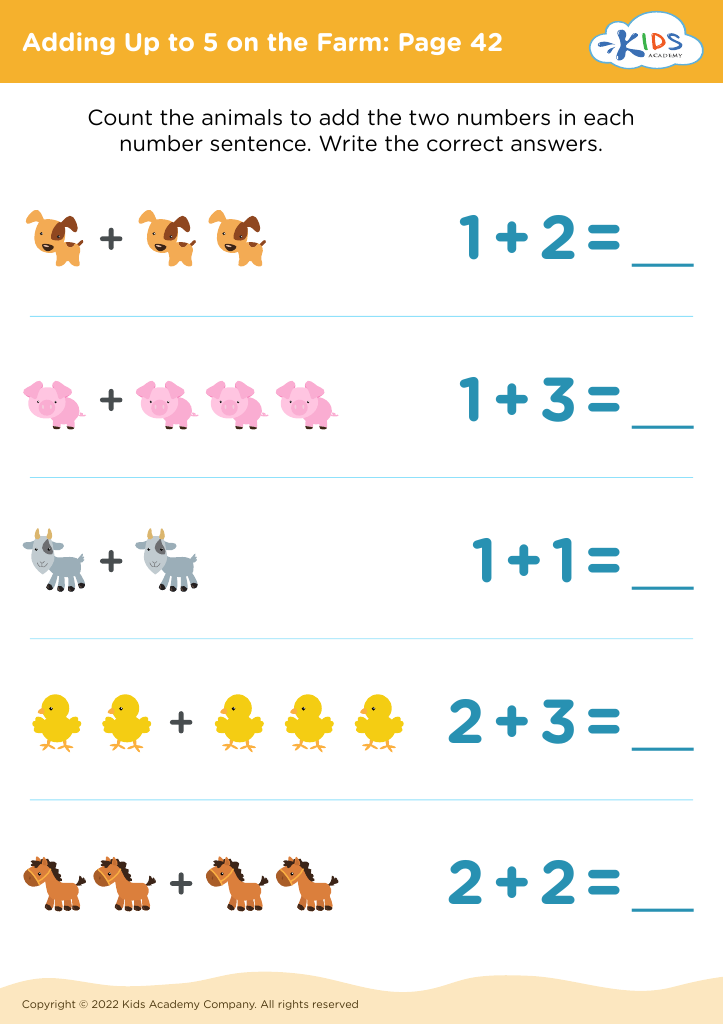
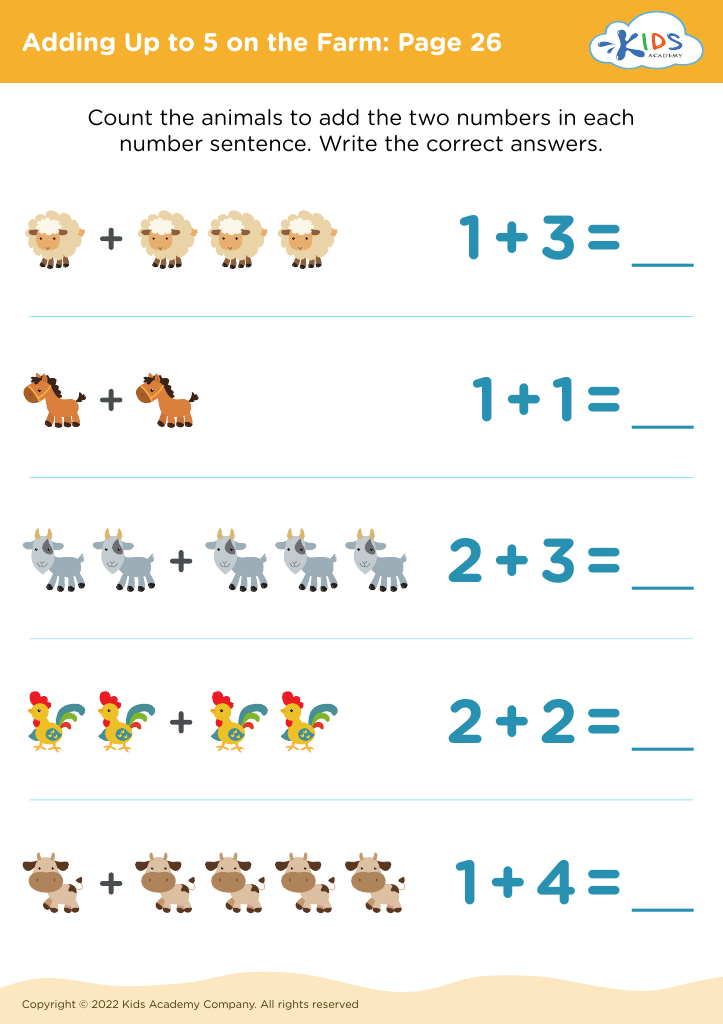
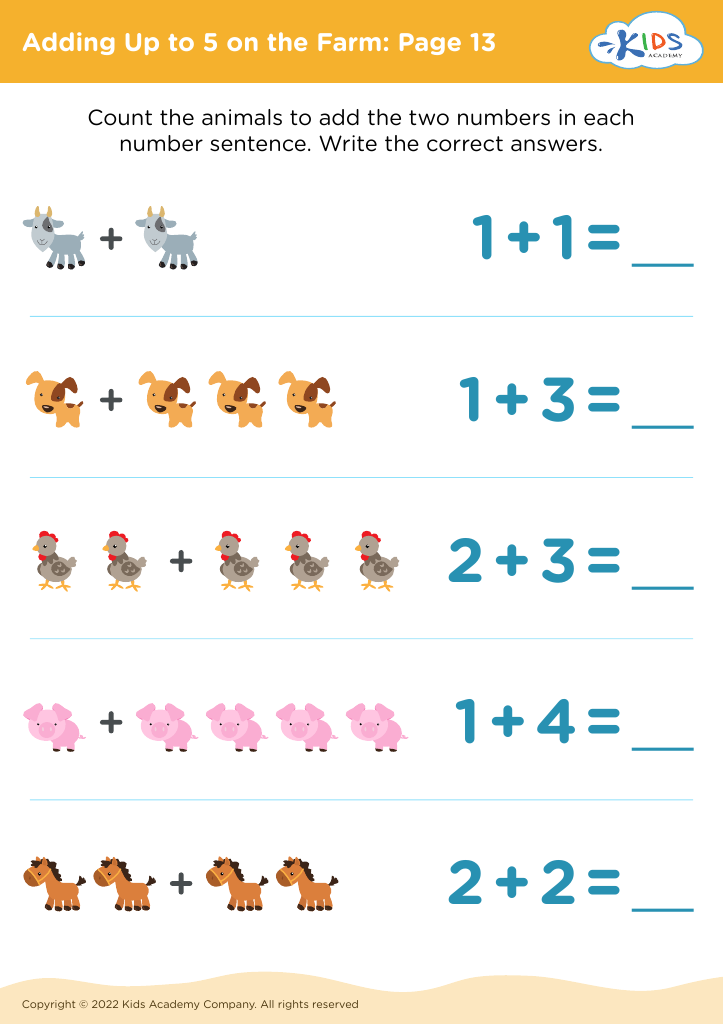
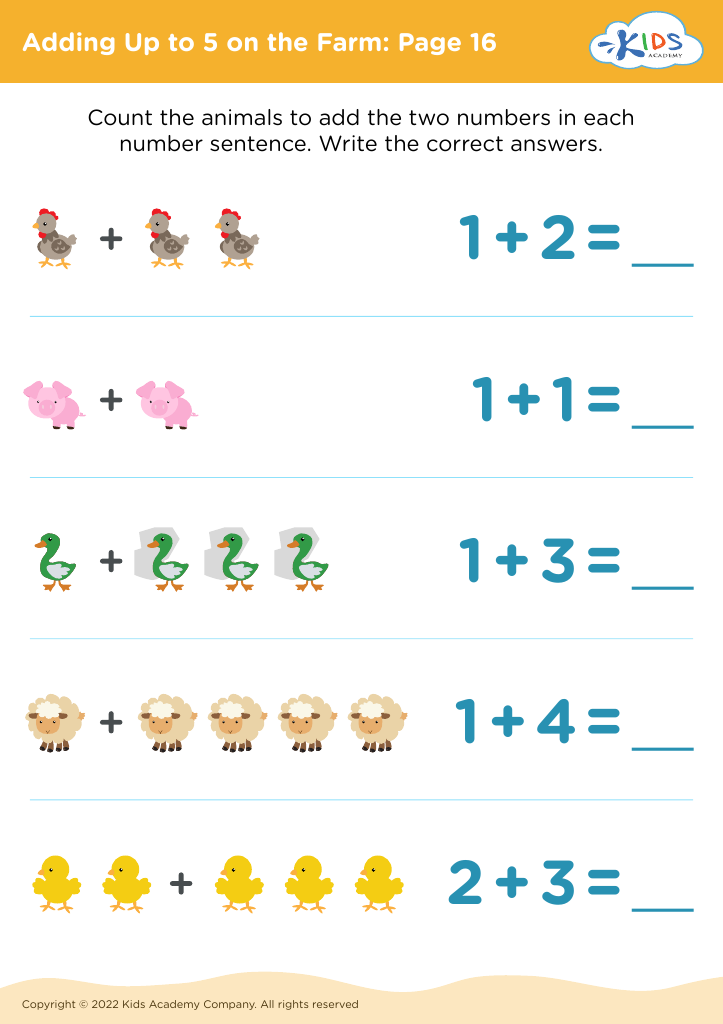
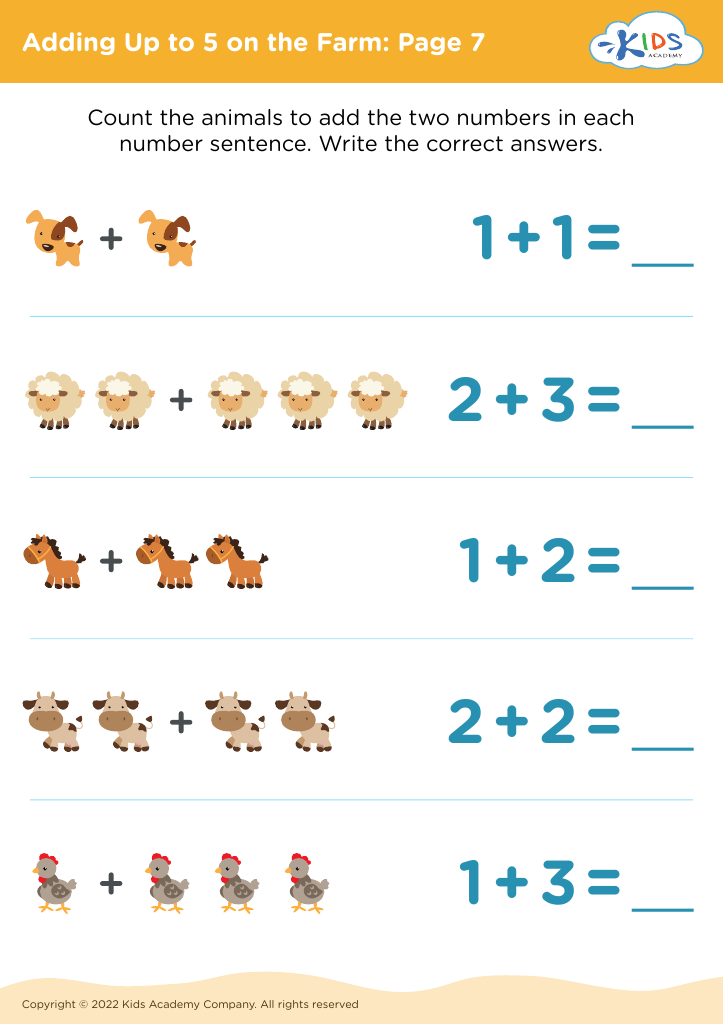
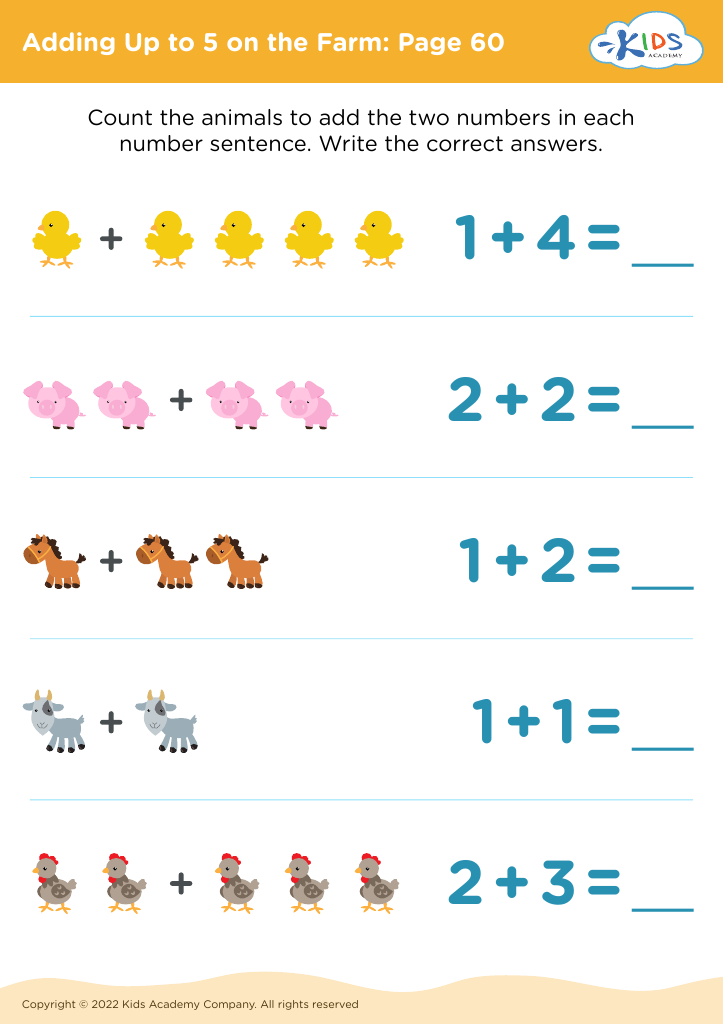
Explore our engaging "Cognitive Development Adding on the Farm Worksheets" designed for children ages 5-9. These worksheets blend math skills with delightful farm-themed activities, making learning fun and interactive. Each activity focuses on enhancing cognitive abilities such as problem-solving, critical thinking, and early arithmetic skills through engaging visuals and relatable scenarios. Young learners will enjoy counting, adding, and exploring numbers in a vibrant farm setting. Perfect for reinforcing classroom learning or enriching home study, these printable worksheets cater to different learning styles and help children gain confidence in their mathematical abilities while fostering a love for learning. Download now and cultivate young minds!



Cognitive development during early childhood, particularly for children aged 5-9, is crucial as it lays the foundation for lifelong learning, critical thinking, and problem-solving skills. Parents and teachers should care about this period because it is characterized by rapid brain development, where children begin to understand complex concepts, engage in logical thinking, and develop their ability to communicate and socialize.
Adding on the Farm introduces children to mathematical concepts in a meaningful context, making learning both fun and relatable. Through activities that involve counting animals, measuring crops, or managing resources, children enhance their numerical skills while also exploring themes of responsibility and teamwork. This hands-on approach promotes curiosity and encourages children to explore their surroundings, deepening their understanding of math and nature.
Moreover, fostering cognitive development in engaging, real-world contexts helps build a positive attitude towards learning. Children who engage in fun, practical activities are more likely to develop a lifelong love for education. By supporting cognitive development through enriching experiences like Adding on the Farm, parents and teachers nurture independent thinkers who are better equipped to tackle challenges both academically and in life. Investing in these formative years is essential for cultivating future innovators and problem-solvers.