Filters

50 filtered results

Clear all filters
Favorites
With answer key
Interactive

50 filtered results

Difficulty Level

Grade


Check out this FREE Trial Lesson on Adding Up to 5 for age 5-9!

T

Favorites
With answer key
Interactive
  • 5-9
  • Addition Practice
  • Adding Up to 5
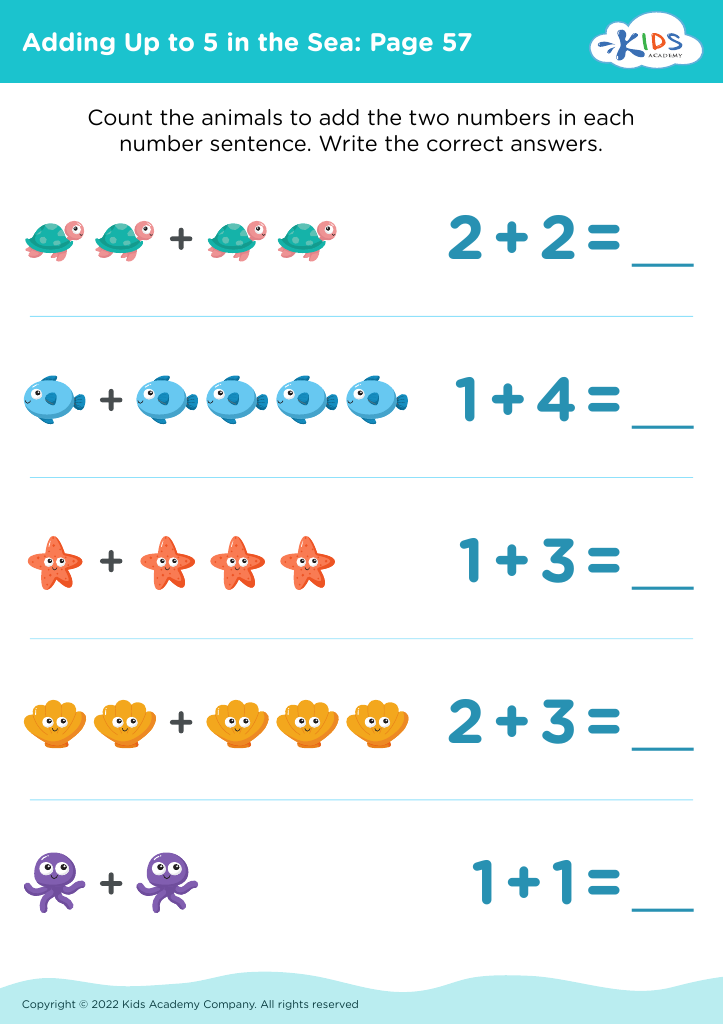
Adding Up to 5 in the Sea: Page 57
Worksheet
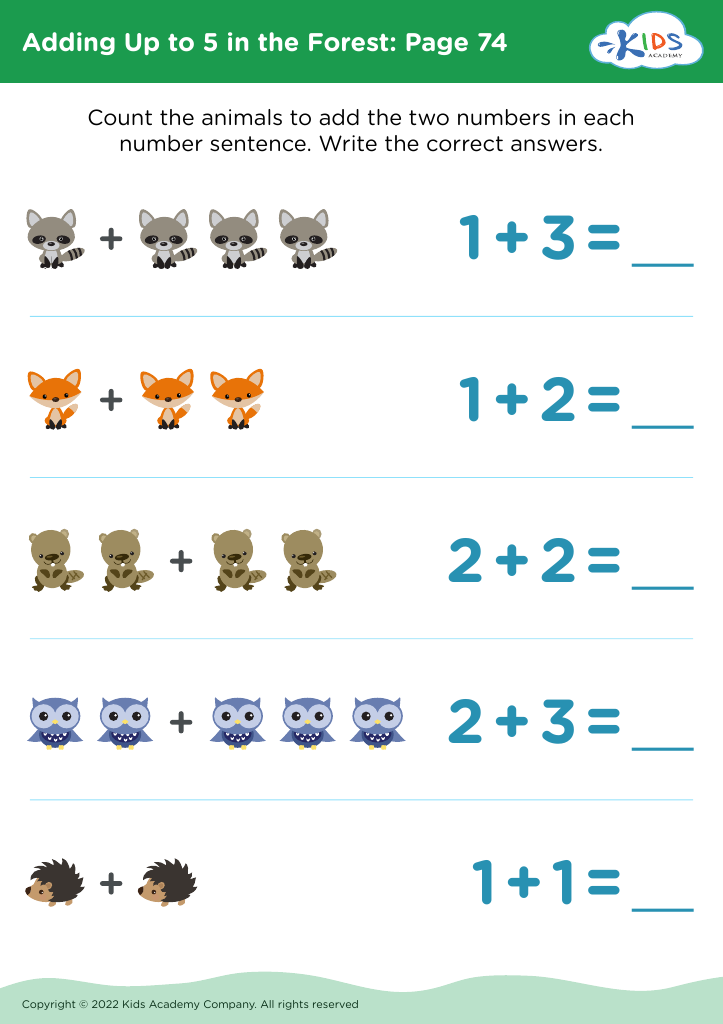
Adding Up to 5 in the Forest: Page 74
Worksheet
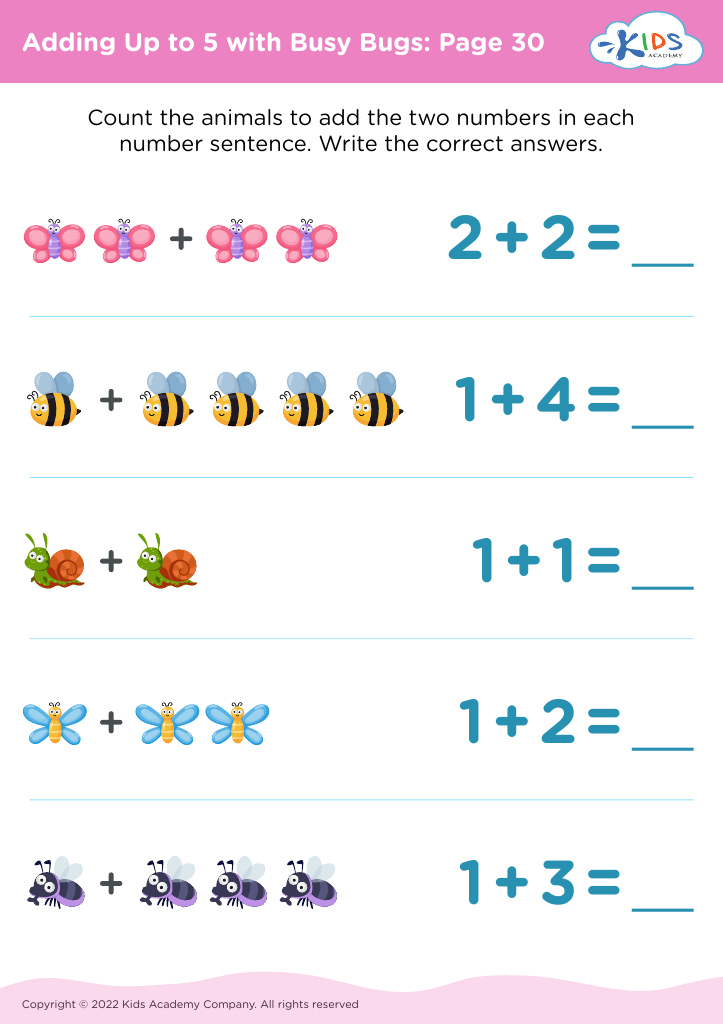
Adding Up to 5 with Busy Bugs: Page 30
Worksheet
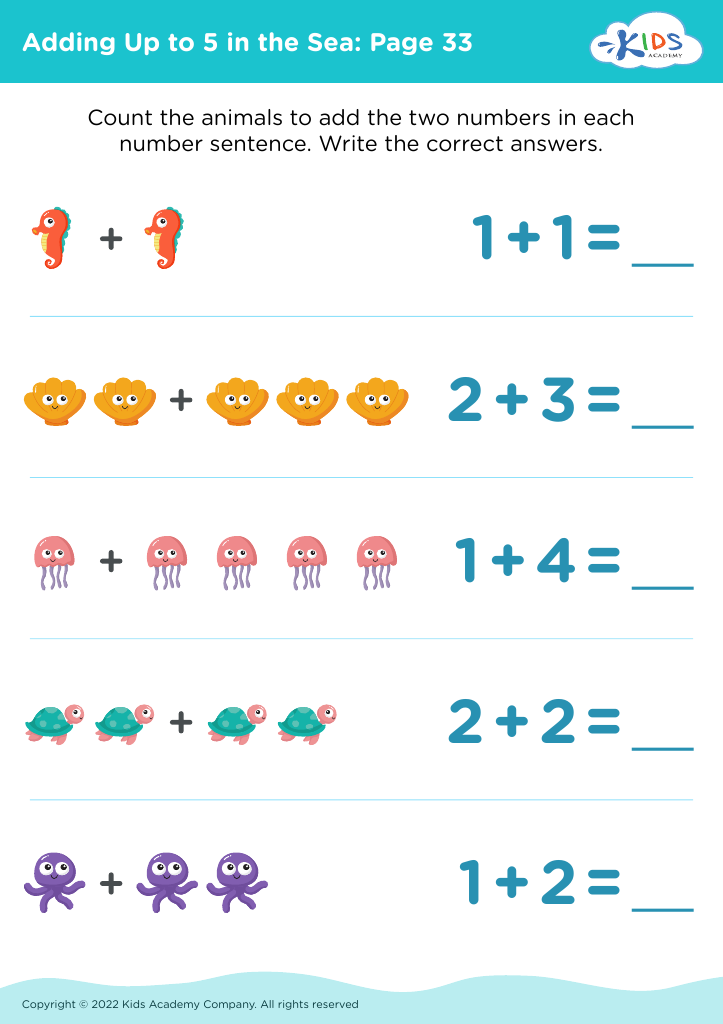
Adding Up to 5 in the Sea: Page 33
Worksheet
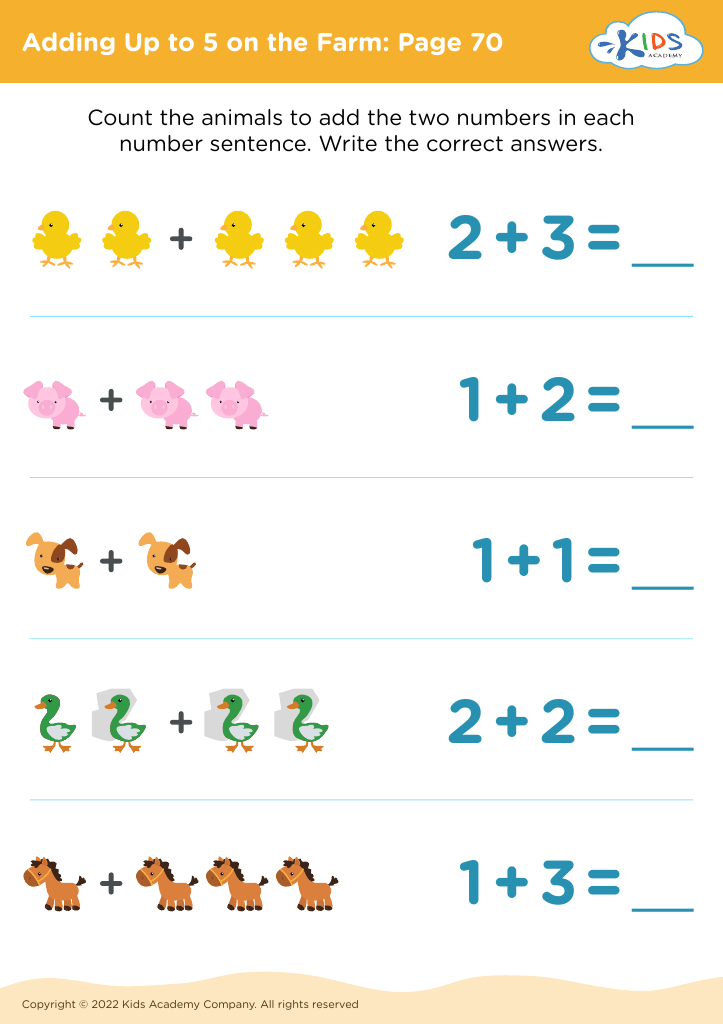
Adding Up to 5 on the Farm: Page 70
Worksheet
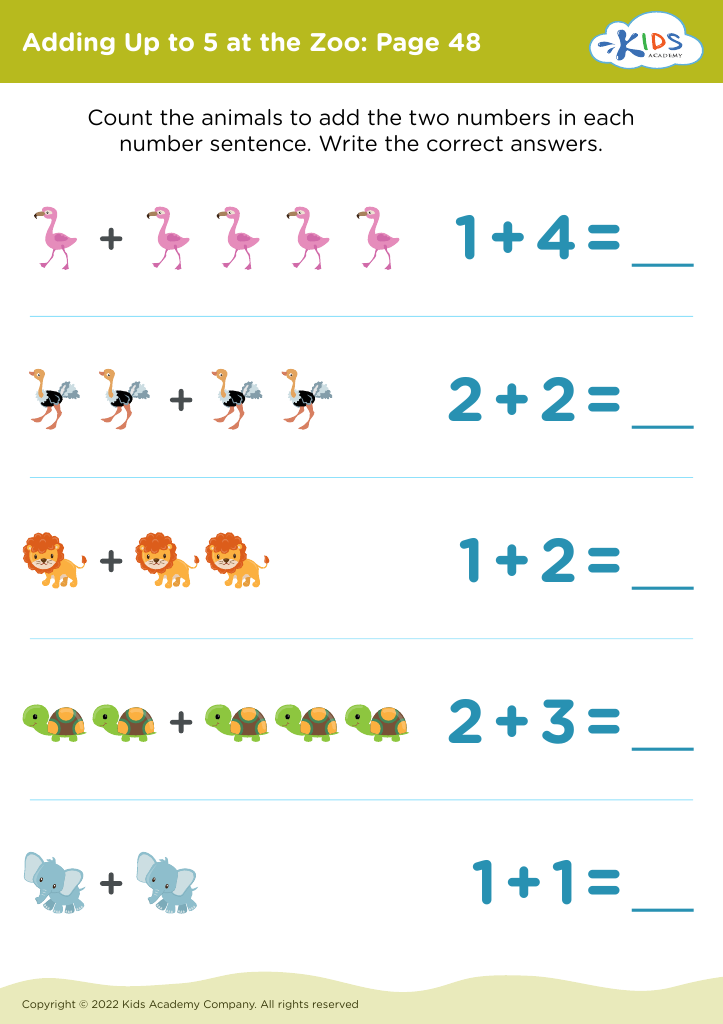
Adding Up to 5 at the Zoo: Page 48
Worksheet
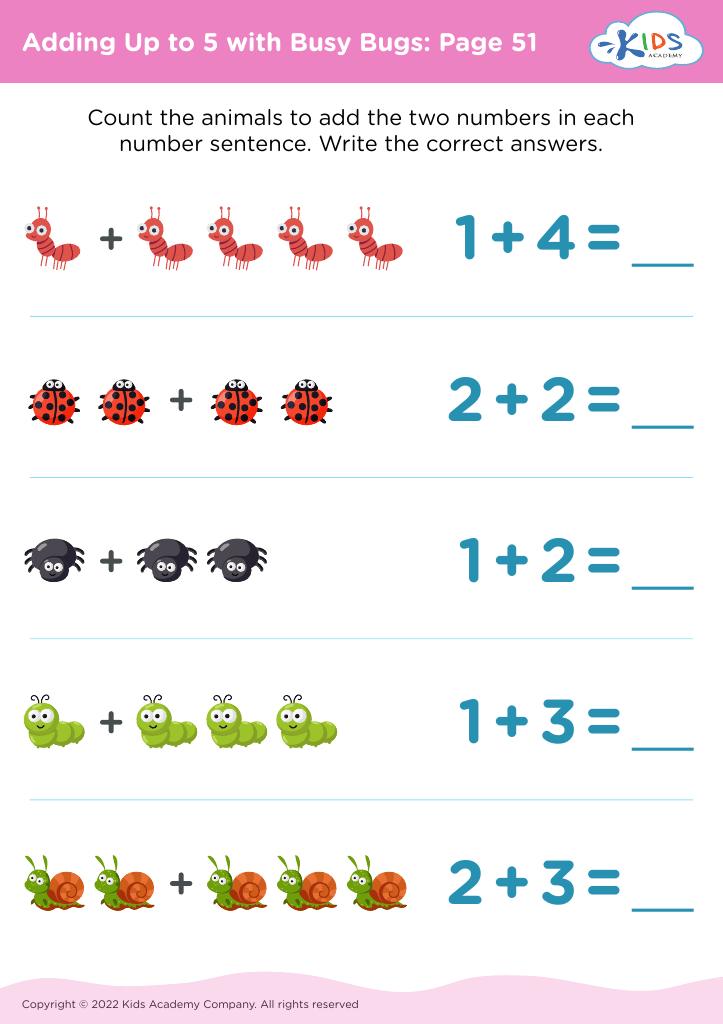
Adding Up to 5 with Busy Bugs: Page 51
Worksheet
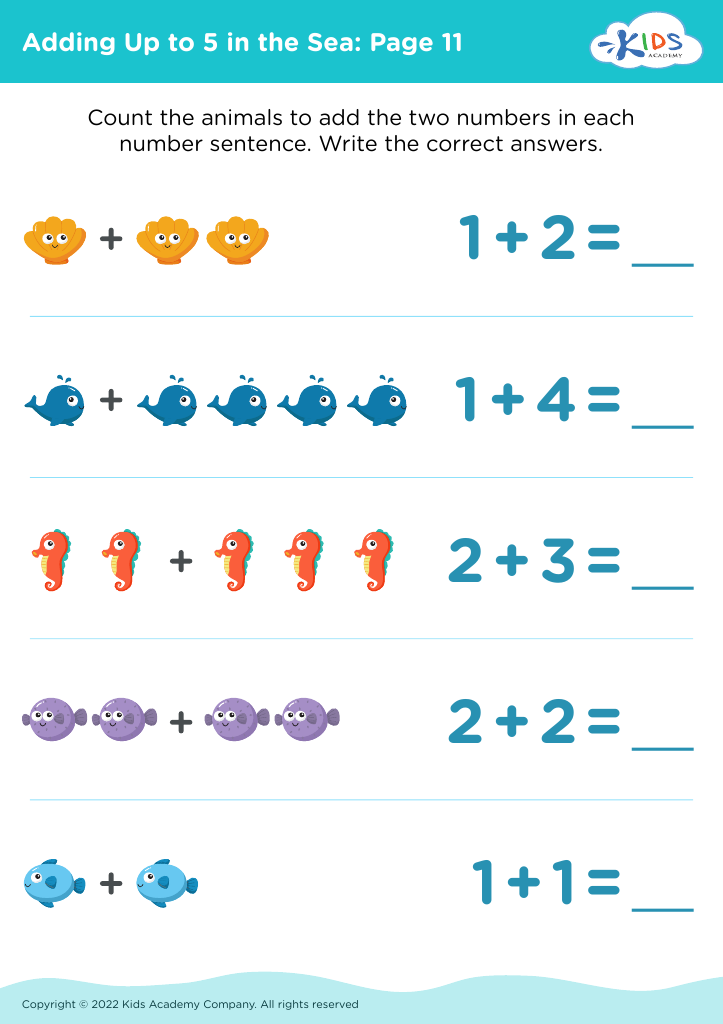
Adding Up to 5 in the Sea: Page 11
Worksheet
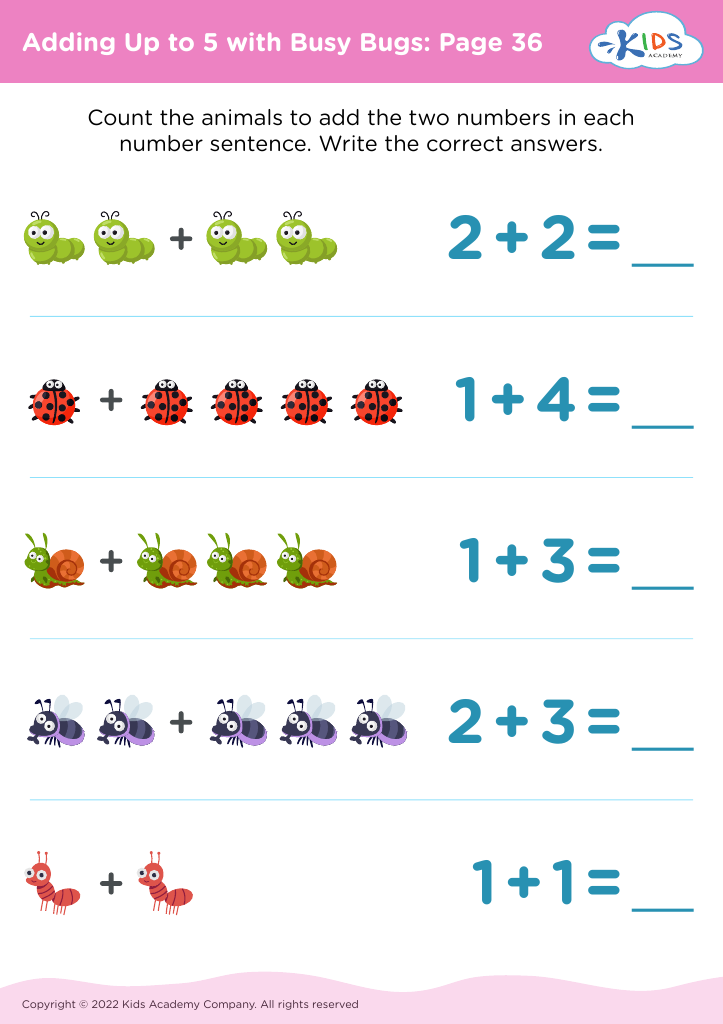
Adding Up to 5 with Busy Bugs: Page 36
Worksheet
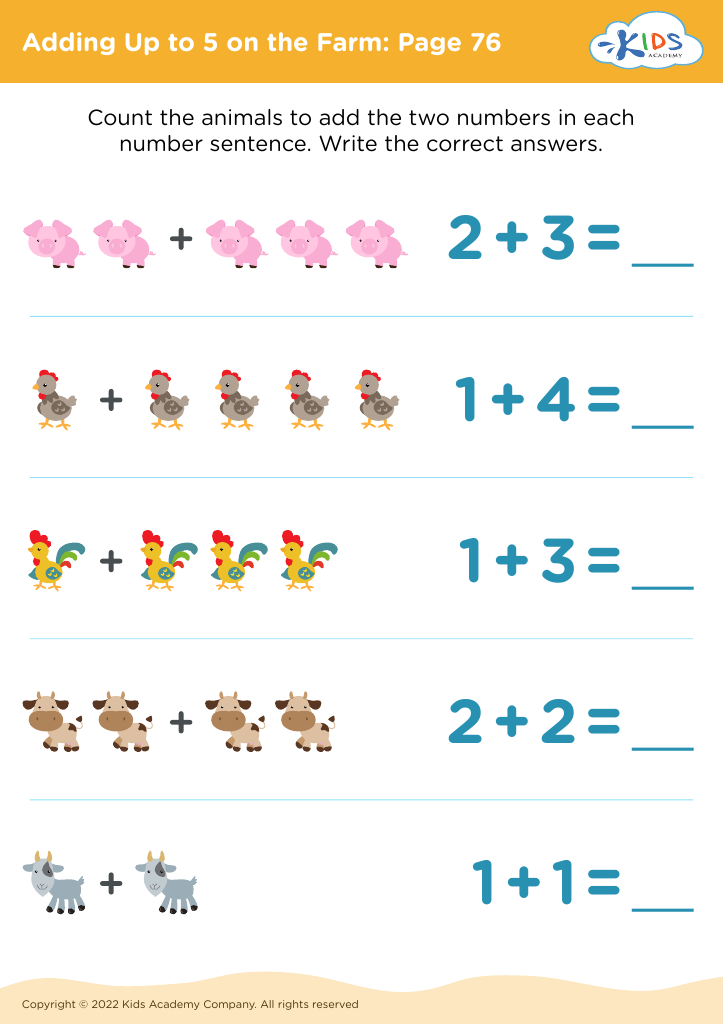
Adding Up to 5 on the Farm: Page 76
Worksheet
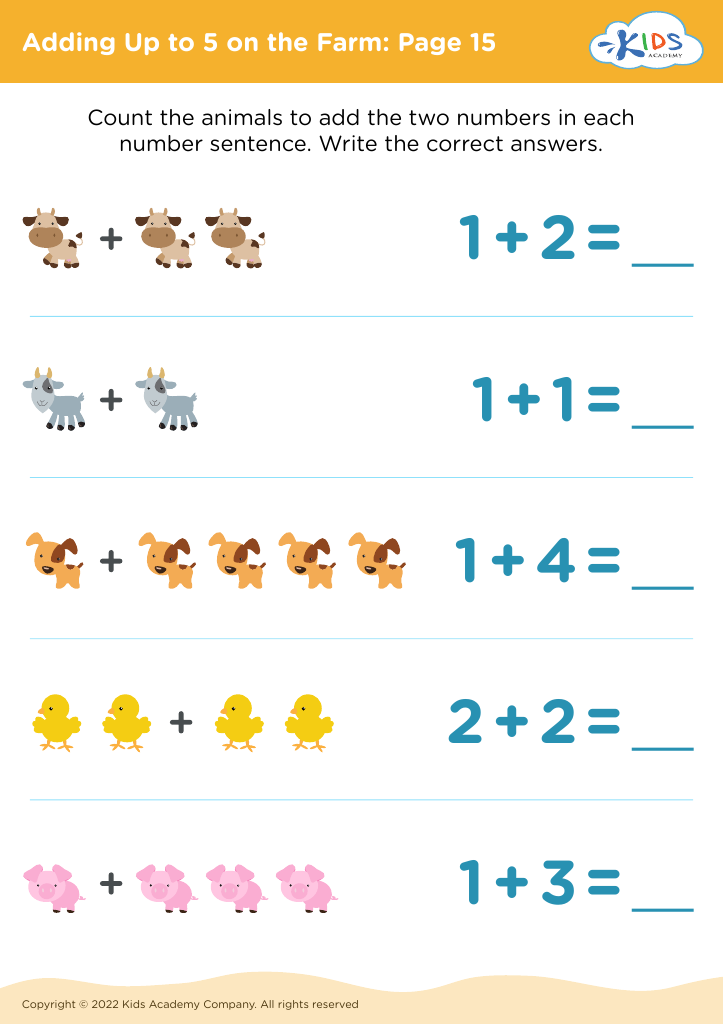
Adding Up to 5 on the Farm: Page 15
Worksheet
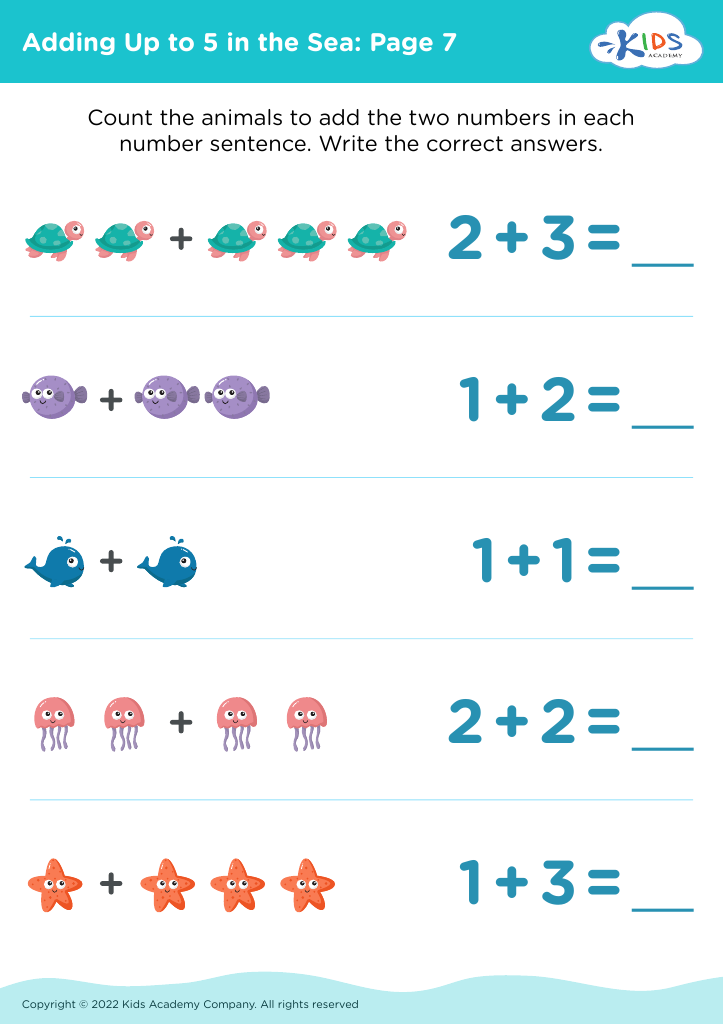
Adding Up to 5 in the Sea: Page 7

Adding Up to 5 in the Sea: Page 7

Adding Up to 5 in the Sea: Page 7
Worksheet
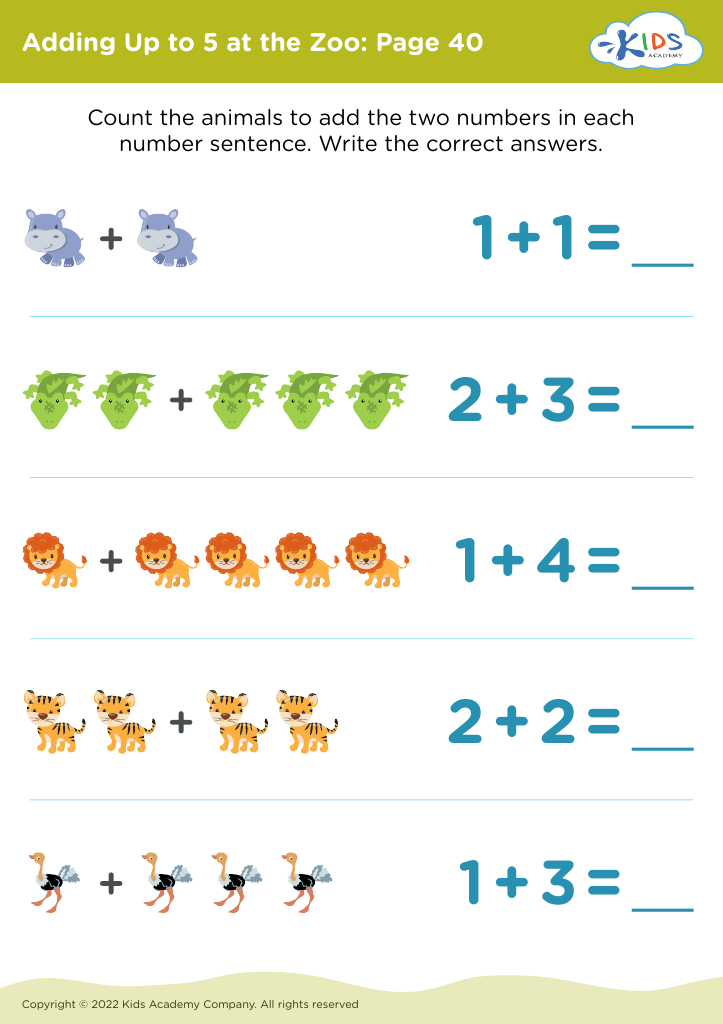
Adding Up to 5 at the Zoo: Page 40
Worksheet
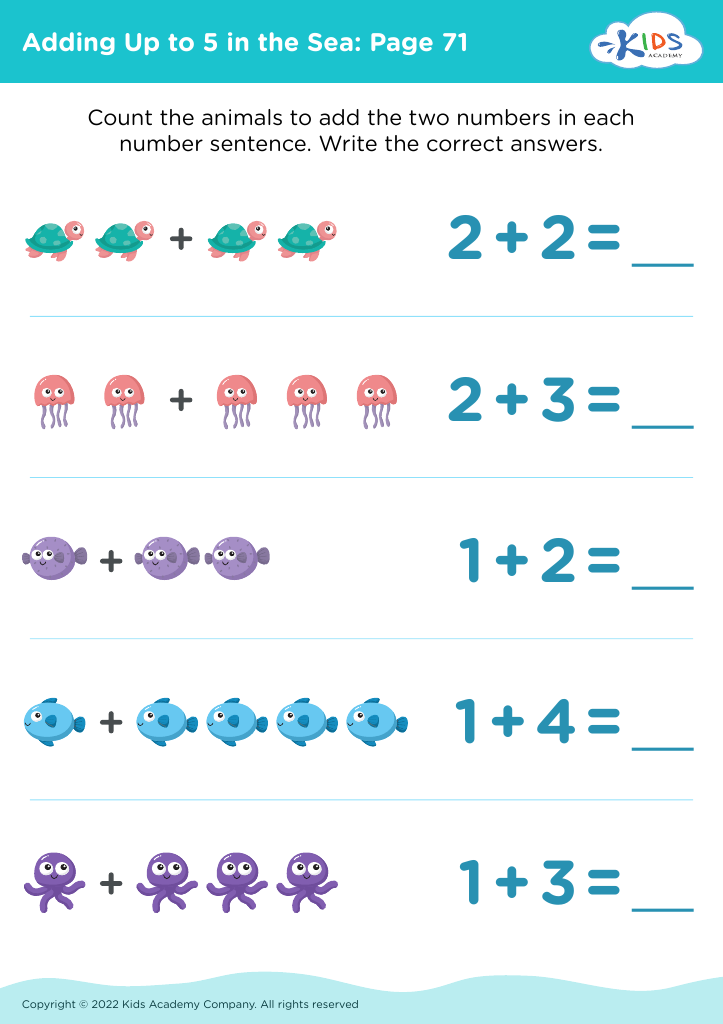
Adding Up to 5 in the Sea: Page 71
Worksheet
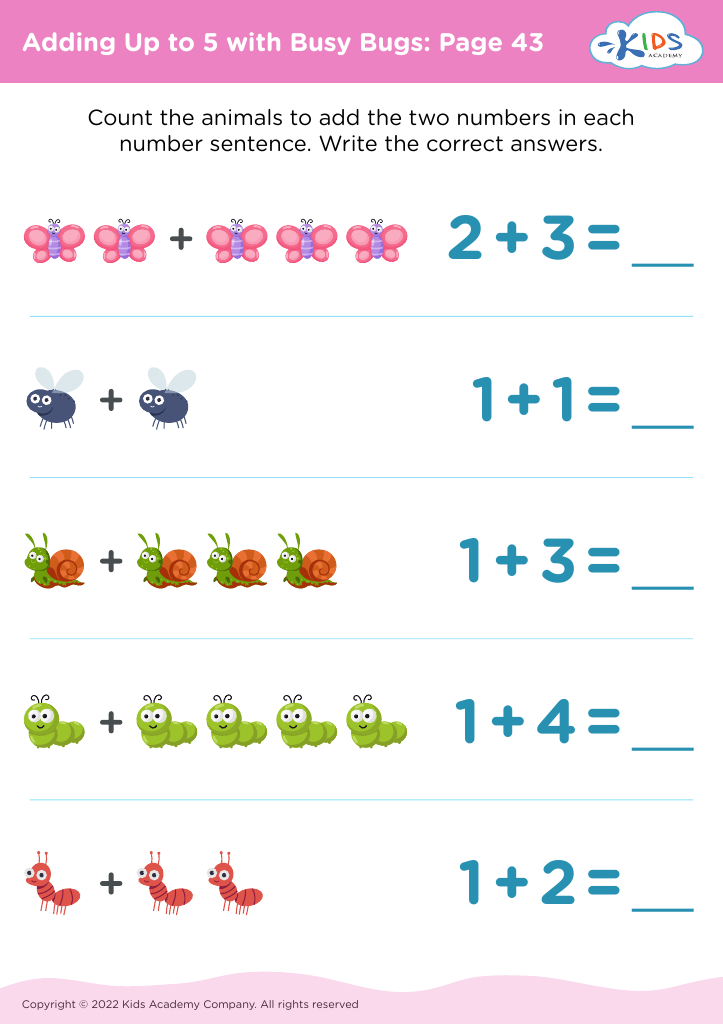
Adding Up to 5 with Busy Bugs: Page 43
Worksheet
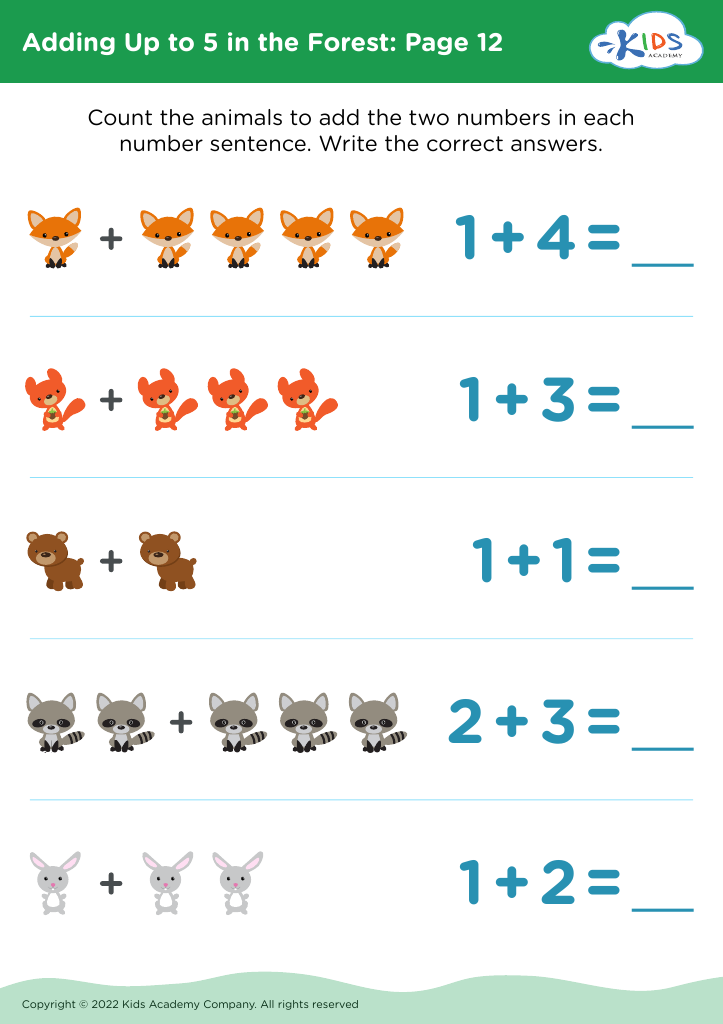
Adding Up to 5 in the Forest: Page 12
Worksheet
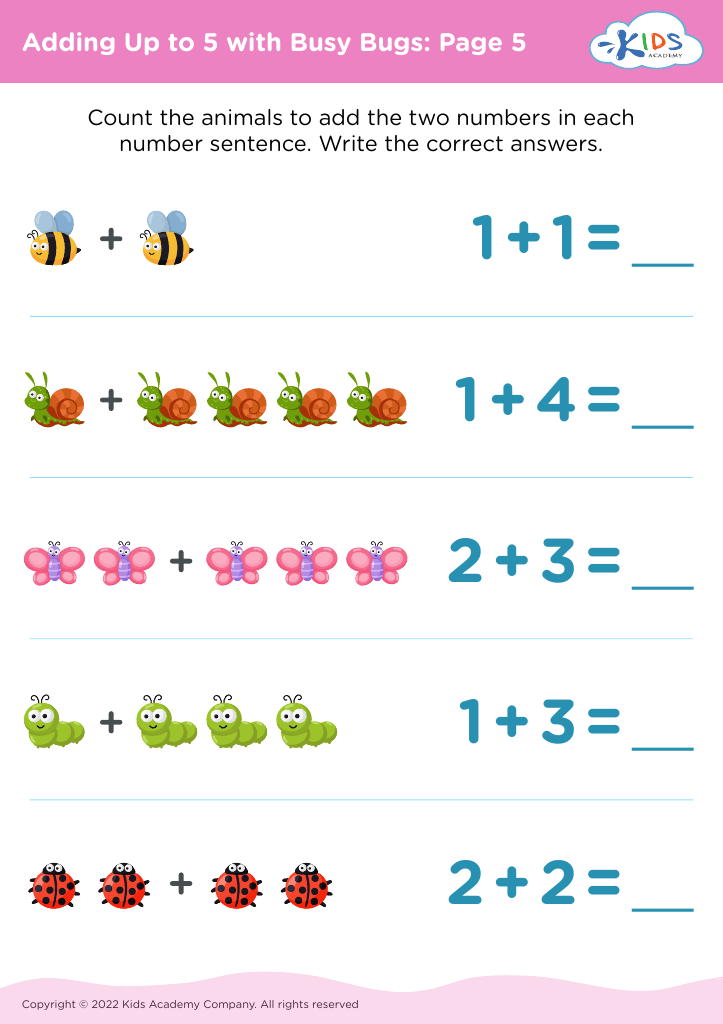
Adding Up to 5 with Busy Bugs: Page 5
Worksheet
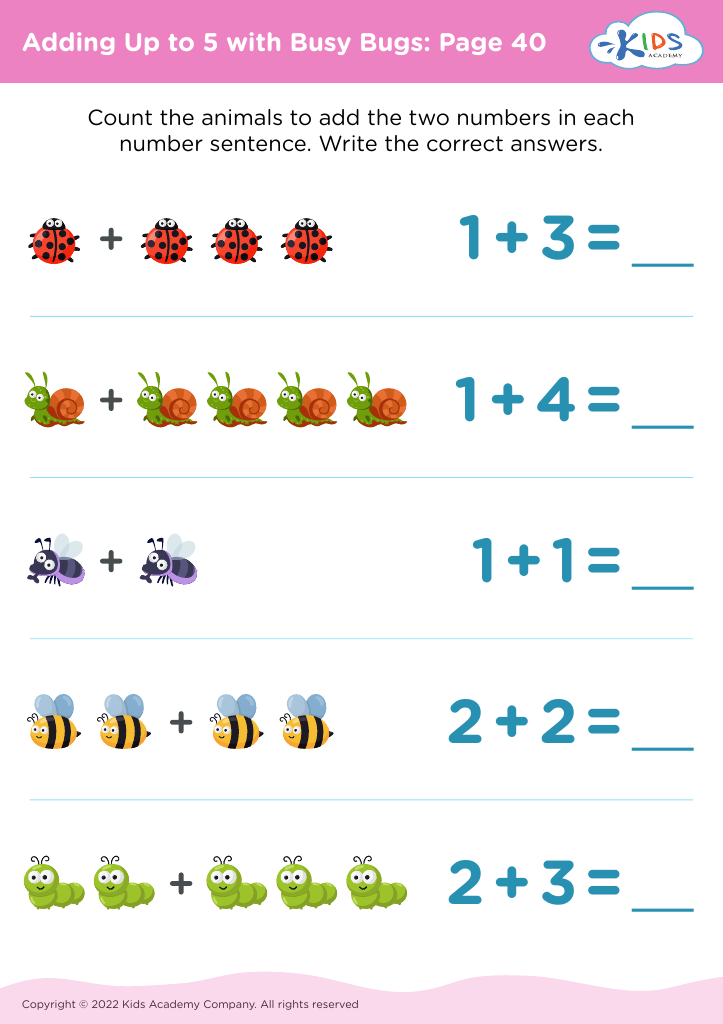
Adding Up to 5 with Busy Bugs: Page 40
Worksheet
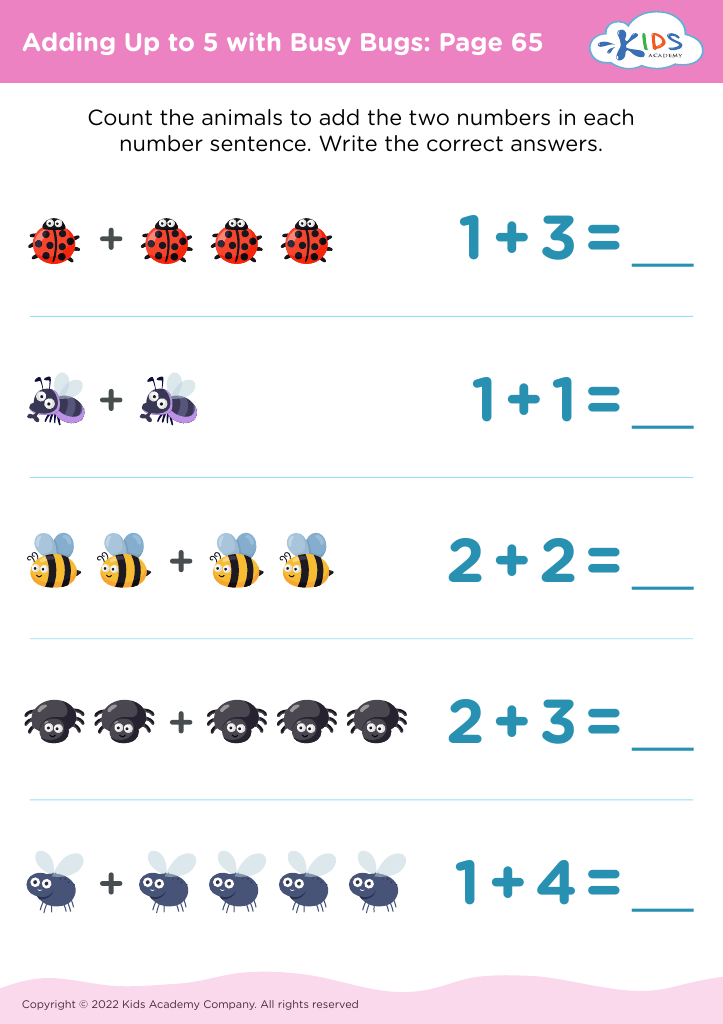
Adding Up to 5 with Busy Bugs: Page 65
Worksheet
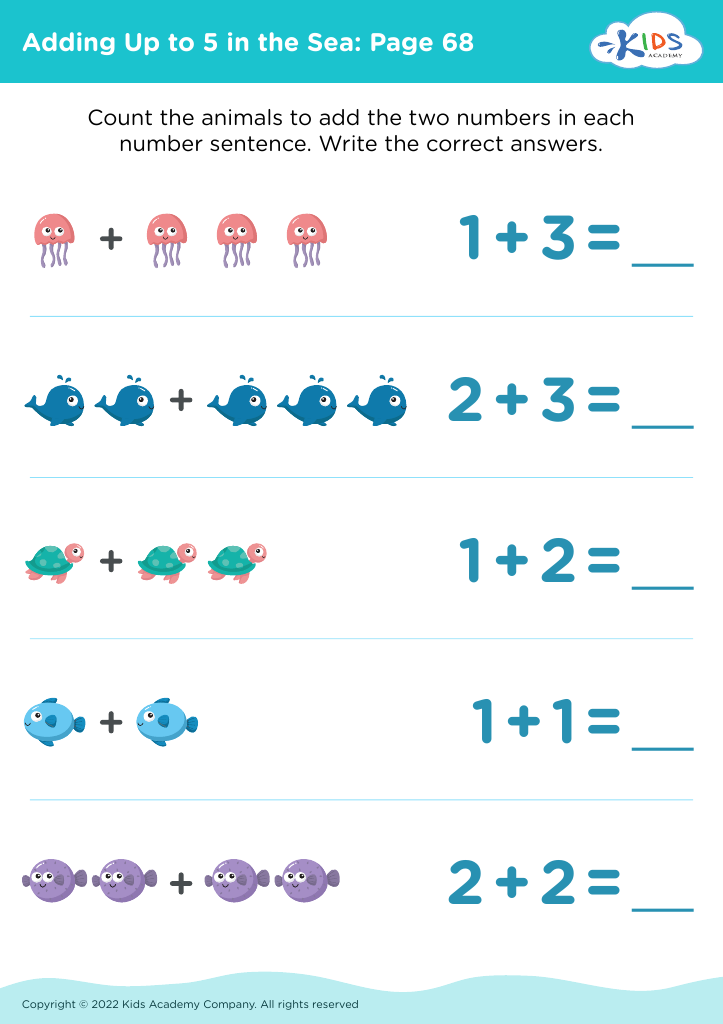
Adding Up to 5 in the Sea: Page 68
Worksheet
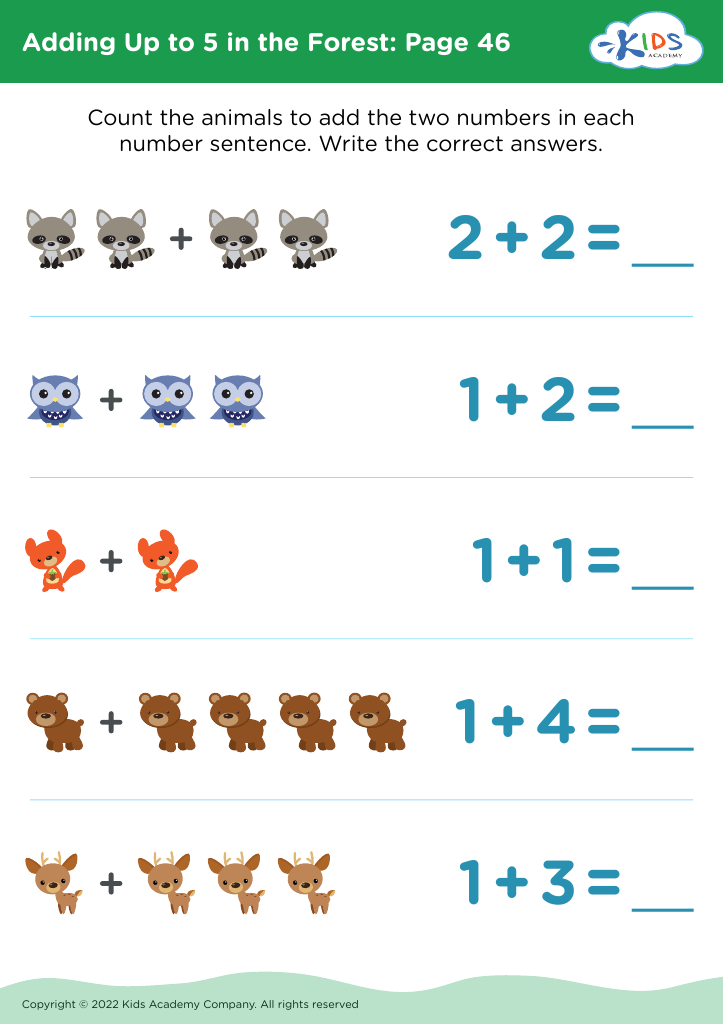
Adding Up to 5 in the Forest: Page 46
Worksheet
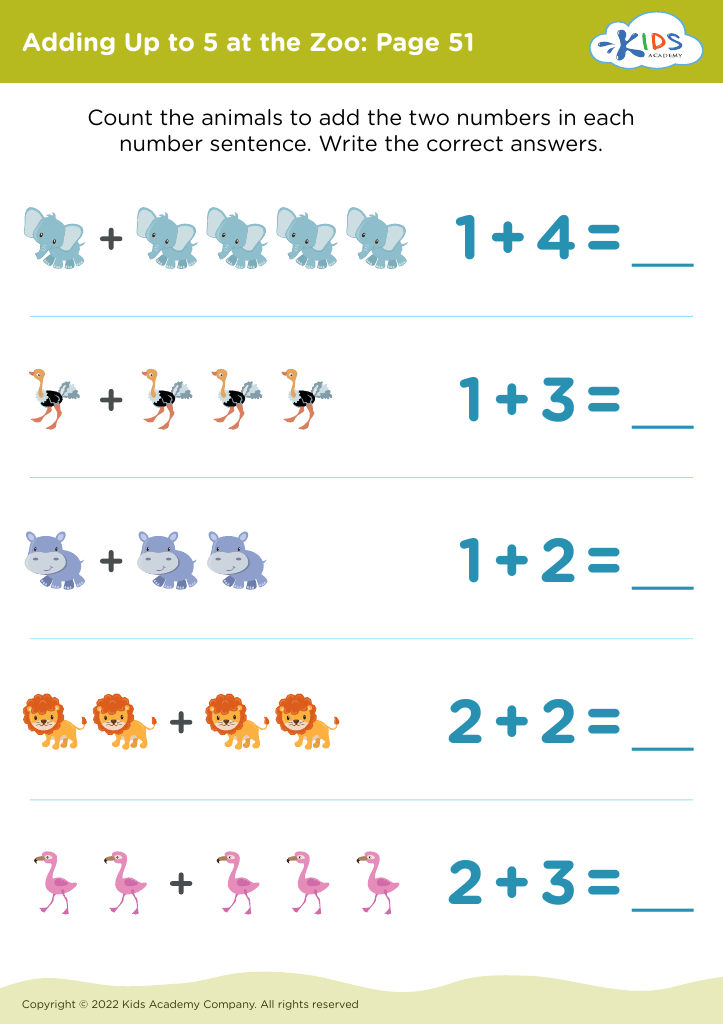
Adding Up to 5 at the Zoo: Page 51
Worksheet
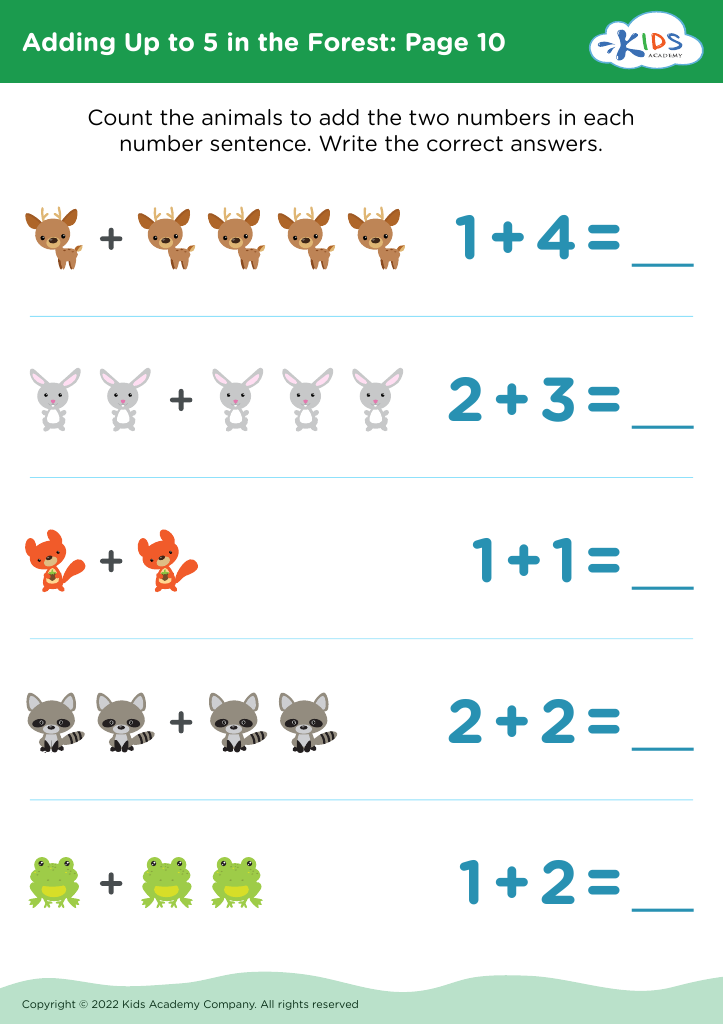
Adding Up to 5 in the Forest: Page 10
Worksheet
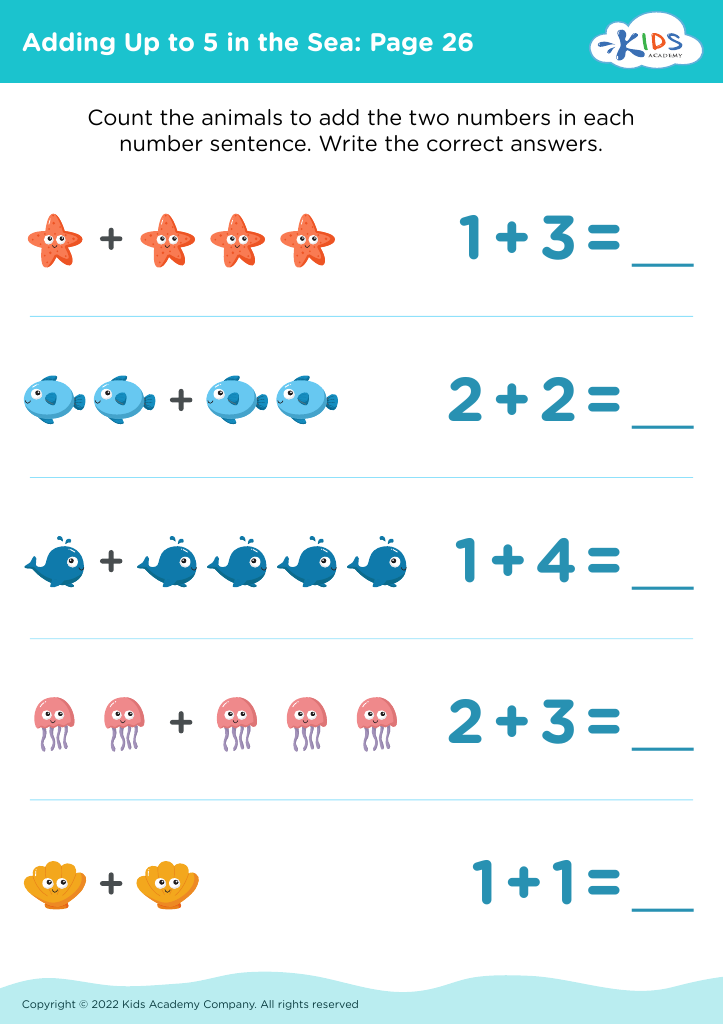
Adding Up to 5 in the Sea: Page 26
Worksheet


Addition practice, particularly when working with numbers that add up to five, is essential for young learners aged 5 to 9 for several reasons. First, it builds a strong mathematical foundation that allows children to grasp more complex concepts in the future. Understanding how to add small numbers is a precursor to mastering larger sums, ensuring students develop confidence in their numerical abilities.

Moreover, addition practice helps improve cognitive skills such as critical thinking and problem solving. As children learn to manipulate numbers, they engage in exercises that sharpen their reasoning capabilities. This foundational arithmetic skill is also crucial for real-life applications, from simple everyday calculations to solving practical problems as they grow.

Furthermore, engaging in addition practice fosters a sense of accomplishment. Successfully solving problems boosts children's self-esteem and motivation, making them more likely to embrace new challenges in mathematics and beyond. Finally, by working on addition skills at home or in the classroom, parents and teachers can help identify learning styles and address any areas where additional support is needed. Supporting children during this crucial phase empowers them to become successful learners, equipping them with the tools they need to excel in their academic journey.