Basic Arithmetic Adding Up to 5 Worksheets for Ages 5-9 - Page 2
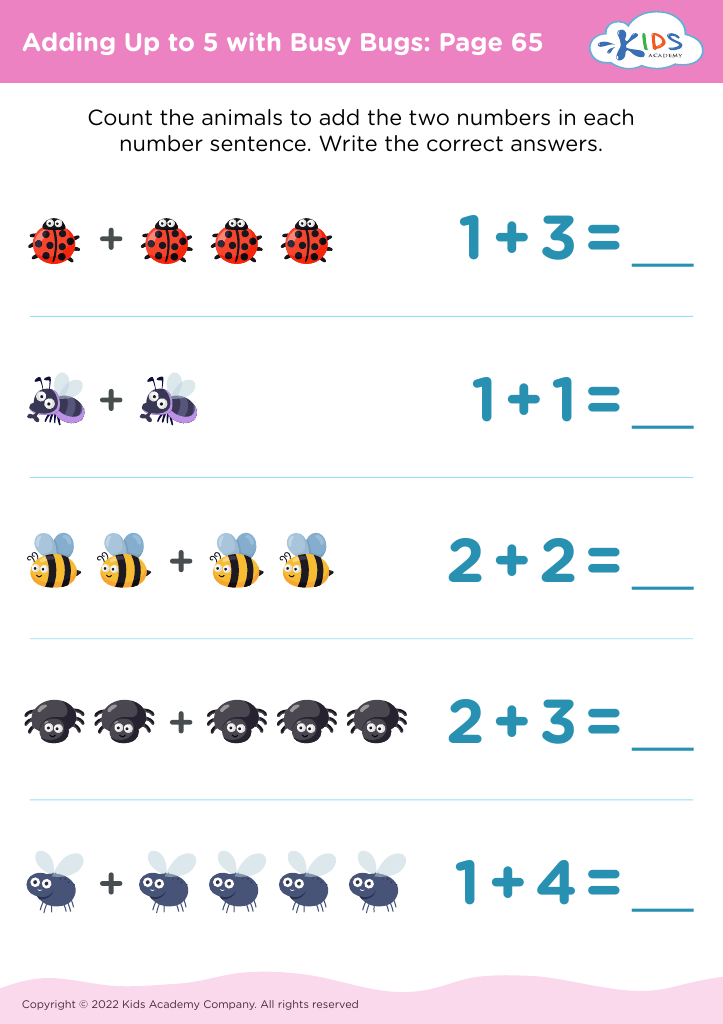
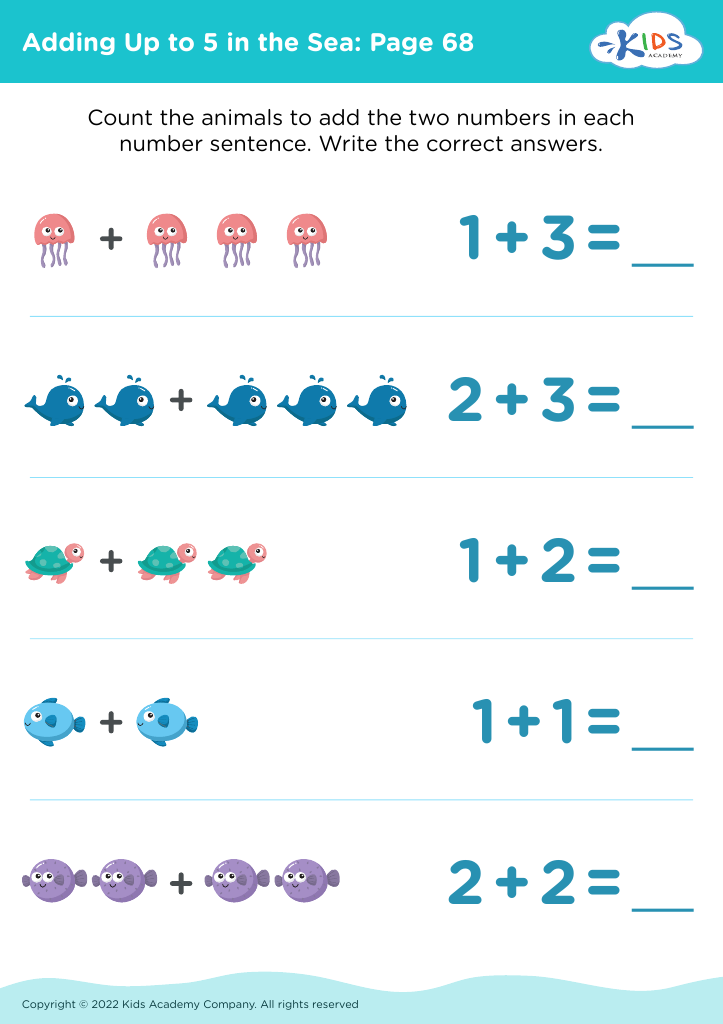
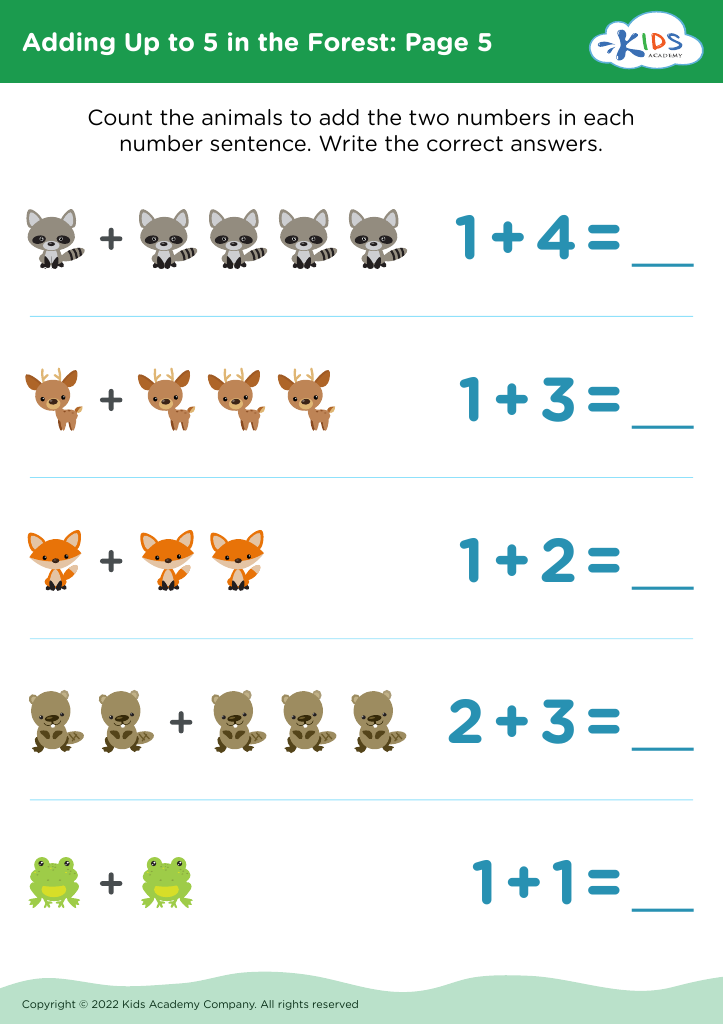
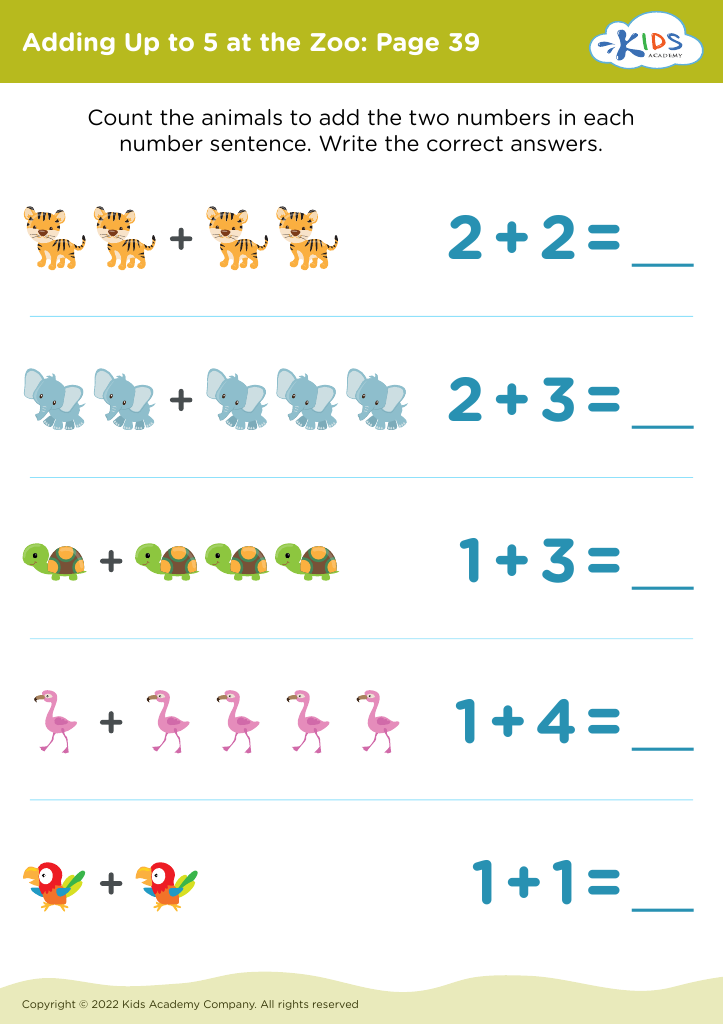
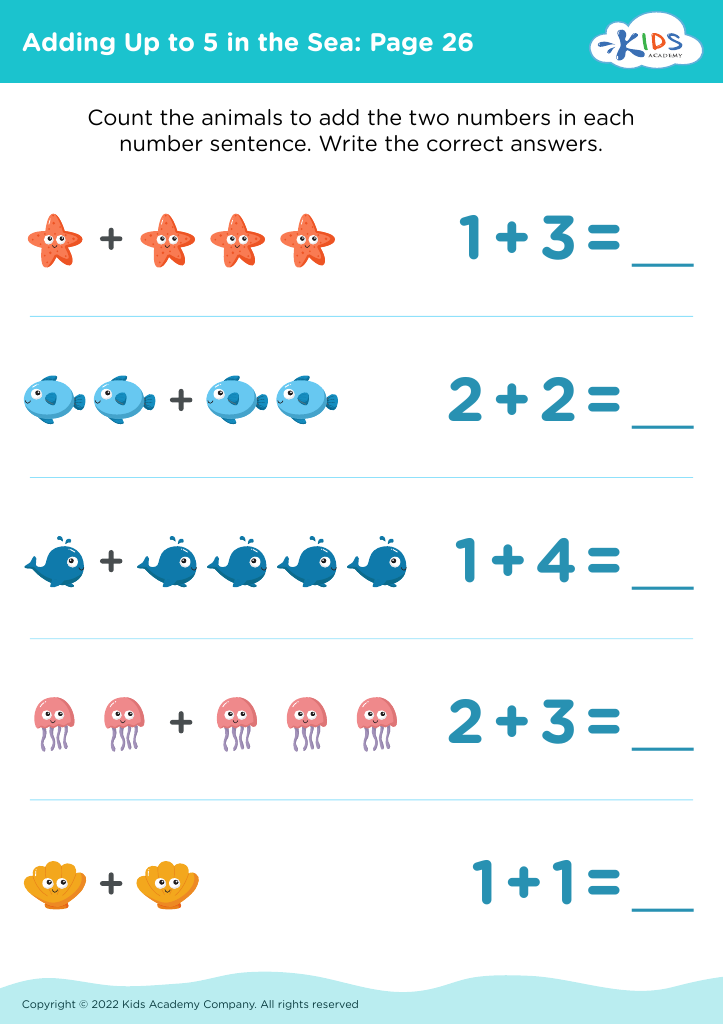
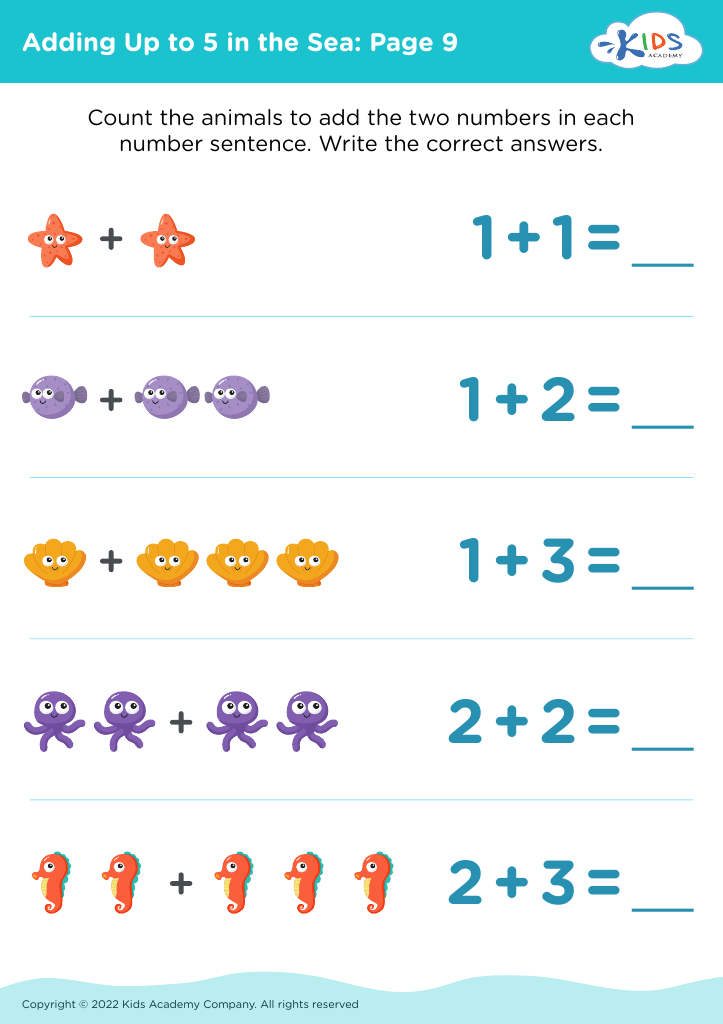


%20(1).jpg)





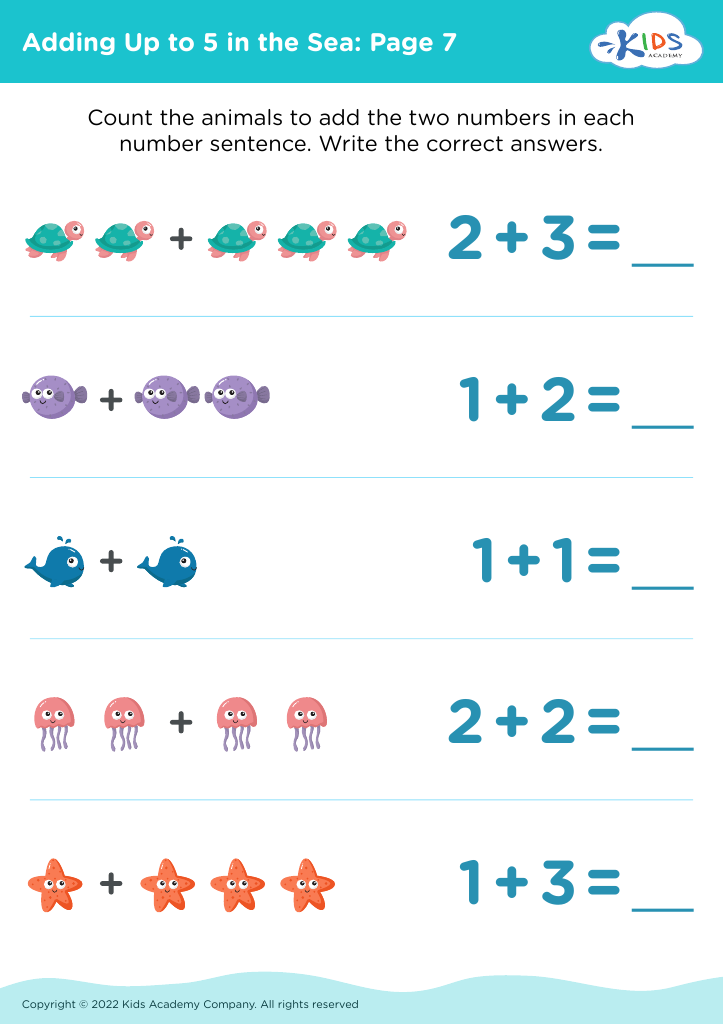
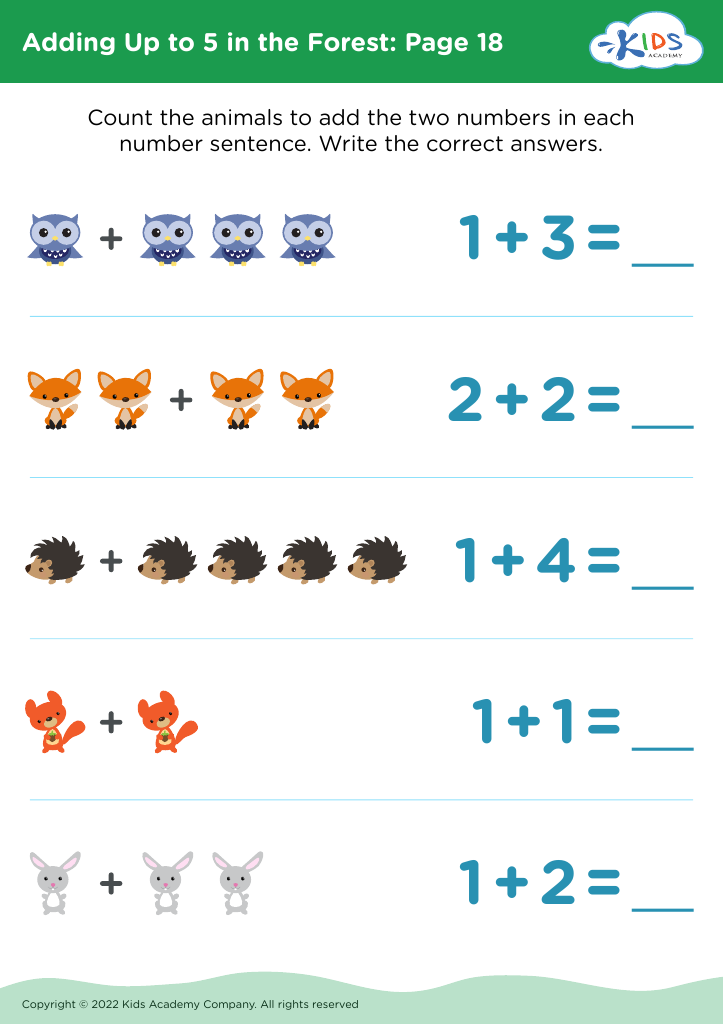
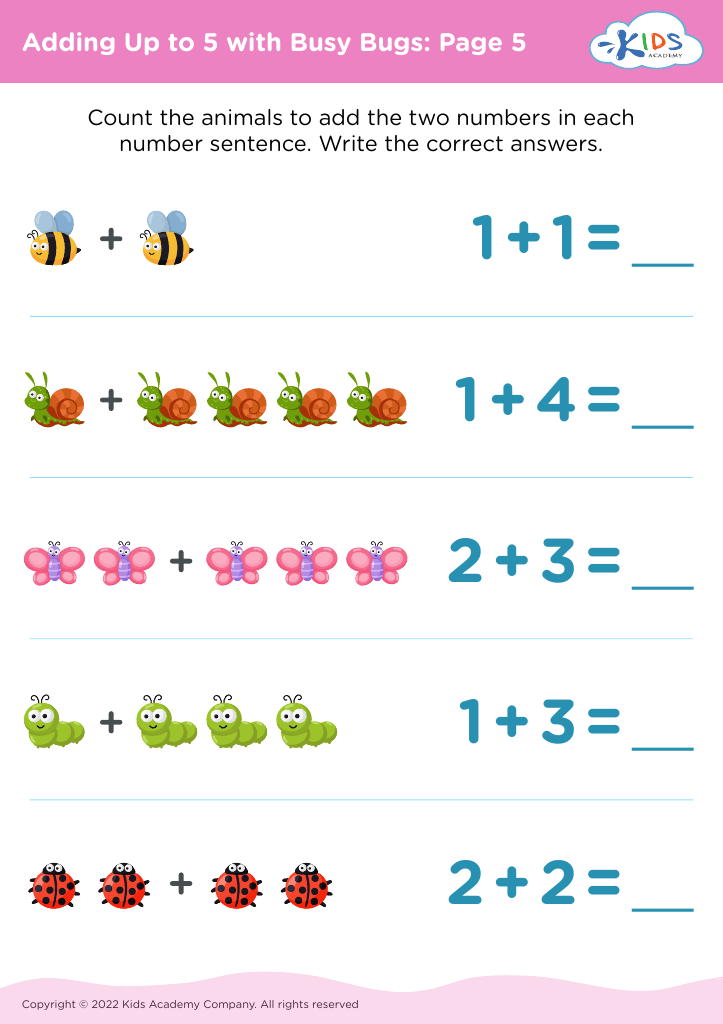
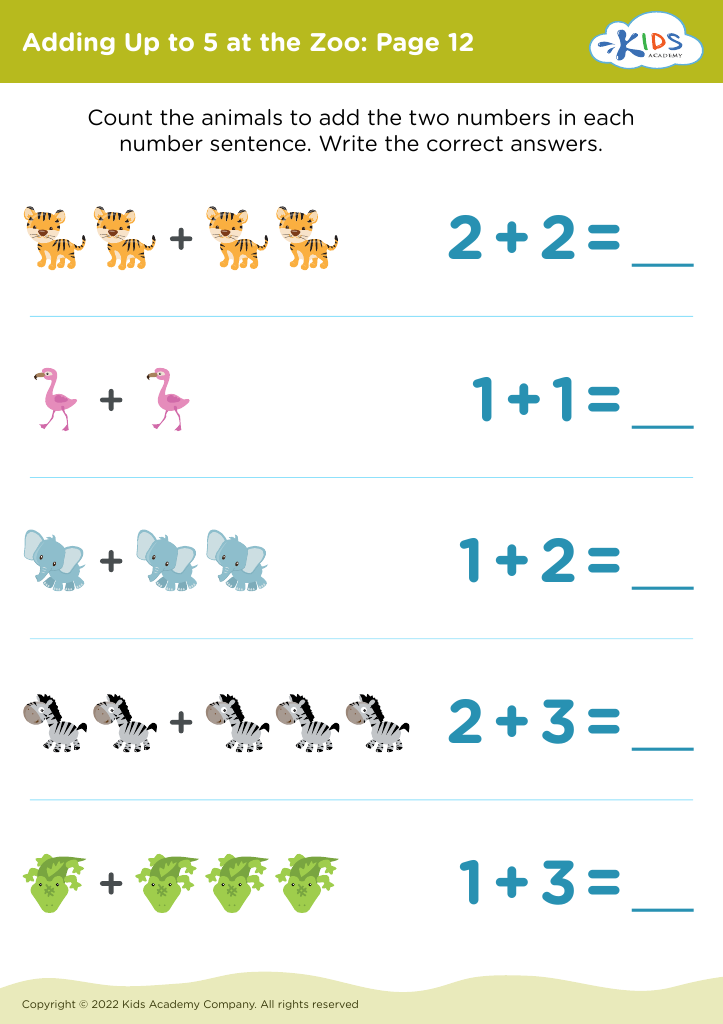
Basic arithmetic, particularly adding up to 5, is a crucial foundation for young learners aged 5 to 9. Understanding these fundamental concepts helps develop their numerical literacy, which is essential not just for advanced math but for everyday problem-solving, critical thinking, and decision-making. By mastering simple addition, children begin to build confidence in their mathematical abilities, which serves as a stepping stone for more complex operations later on.
Moreover, activities centered around addition foster cognitive growth, enhancing skills like pattern recognition and logical reasoning. When parents and teachers prioritize these early arithmetic skills, they create opportunities for playful learning through games and hands-on activities that make math enjoyable. This enjoyable approach lessens math anxiety and promotes a positive attitude toward learning.
Additionally, mastering addition up to 5 equips children with the tools they need to tackle real-world scenarios, such as sharing items fairly or managing simple finances, contributing to their overall life skills. Encouraging children to explore numbers and develop these basic math skills lays the groundwork for future academic success and enhances their ability to engage positively with their environment. Thus, investing time and effort into basic arithmetic education is vital for holistic child development.








