Filters

95 filtered results

Clear all filters
Favorites
With answer key
Interactive

95 filtered results

Difficulty Level

Grade


Subject

    Check out this FREE Trial Lesson on Adding Up to 5 for age 5-9!

    H

    Favorites
    With answer key
    Interactive
    • 5-9
    • Cognitive Development
    • Adding Up to 5
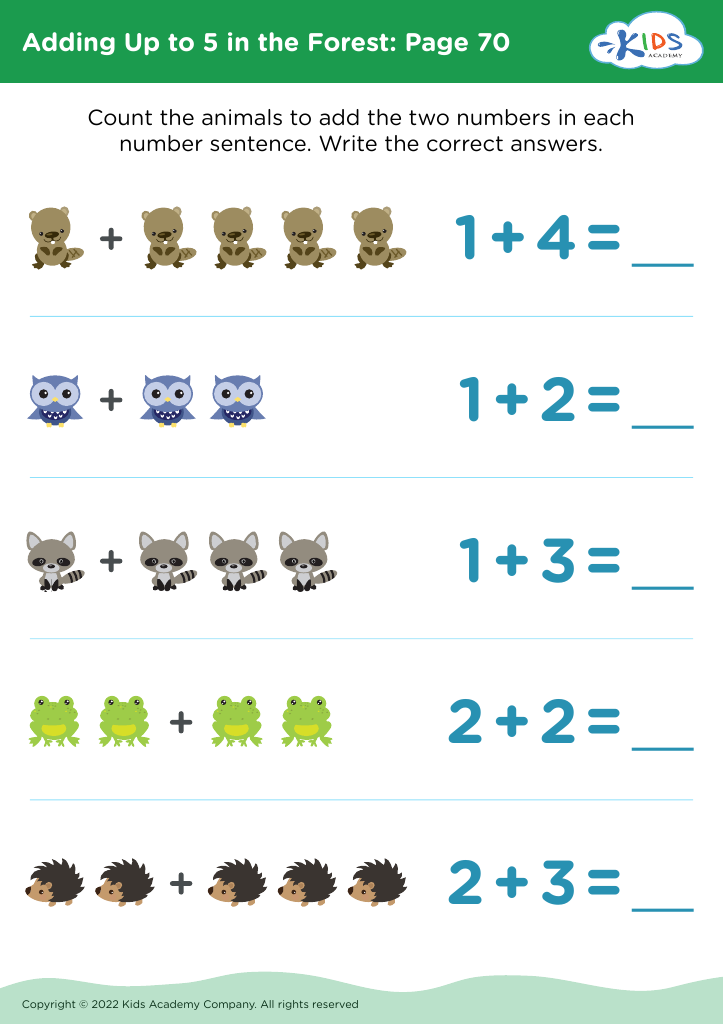
    Adding Up to 5 in the Forest: Page 70
    Adding Up to 5 in the Forest: Page 70
    Adding Up to 5 in the Forest: Page 70
    Worksheet
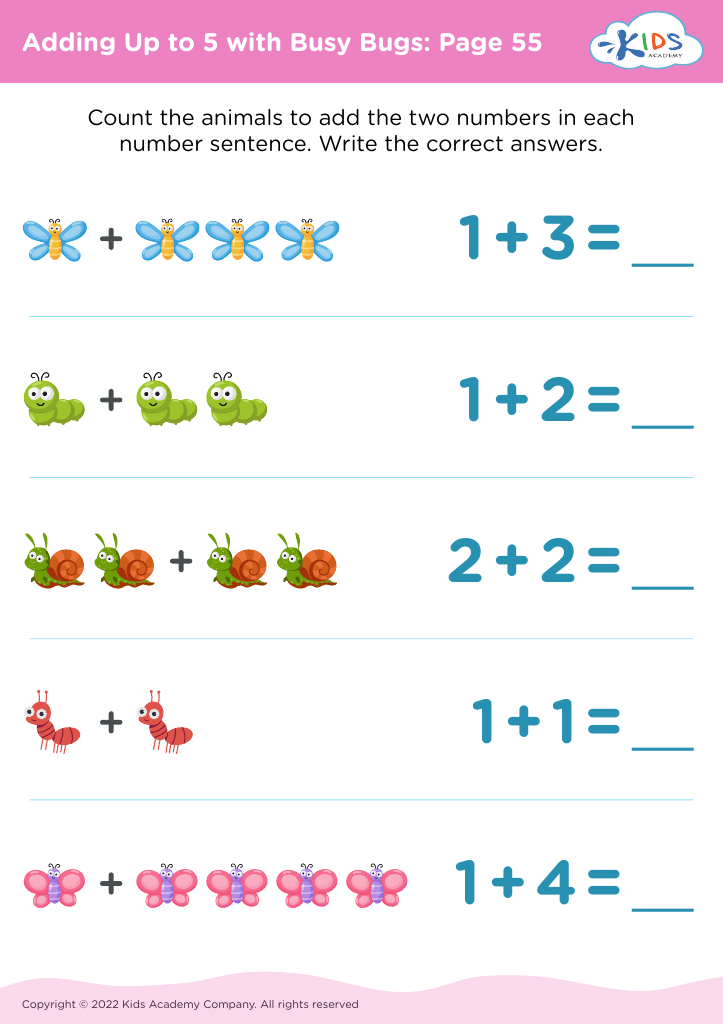
    Adding Up to 5 with Busy Bugs: Page 55
    Adding Up to 5 with Busy Bugs: Page 55
    Adding Up to 5 with Busy Bugs: Page 55
    Worksheet
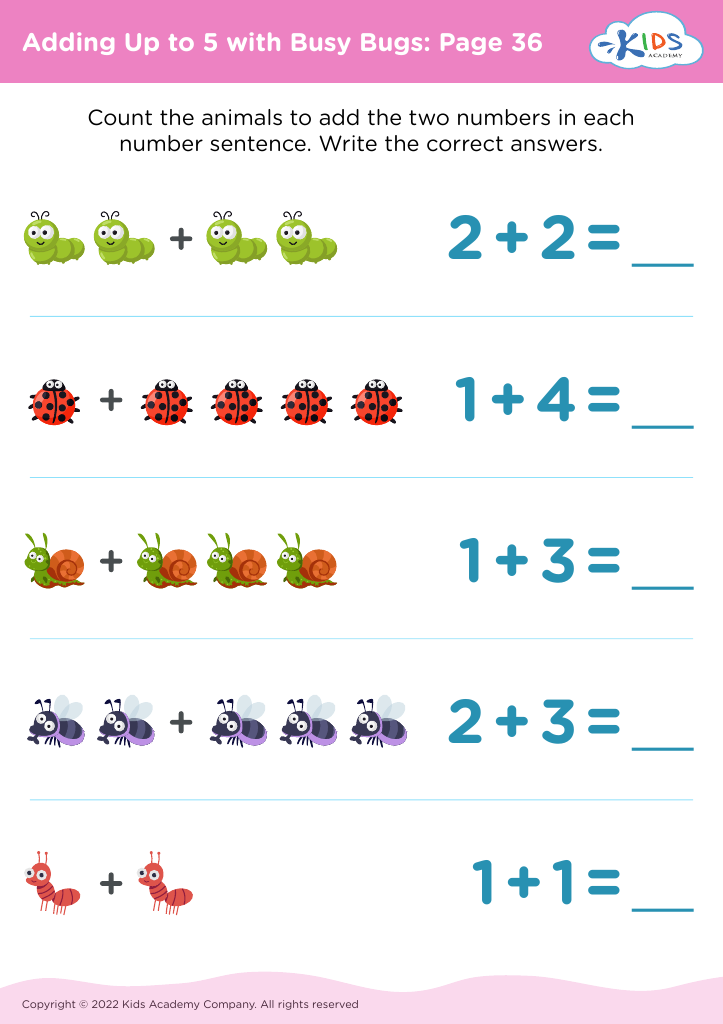
    Adding Up to 5 with Busy Bugs: Page 36
    Adding Up to 5 with Busy Bugs: Page 36
    Adding Up to 5 with Busy Bugs: Page 36
    Worksheet
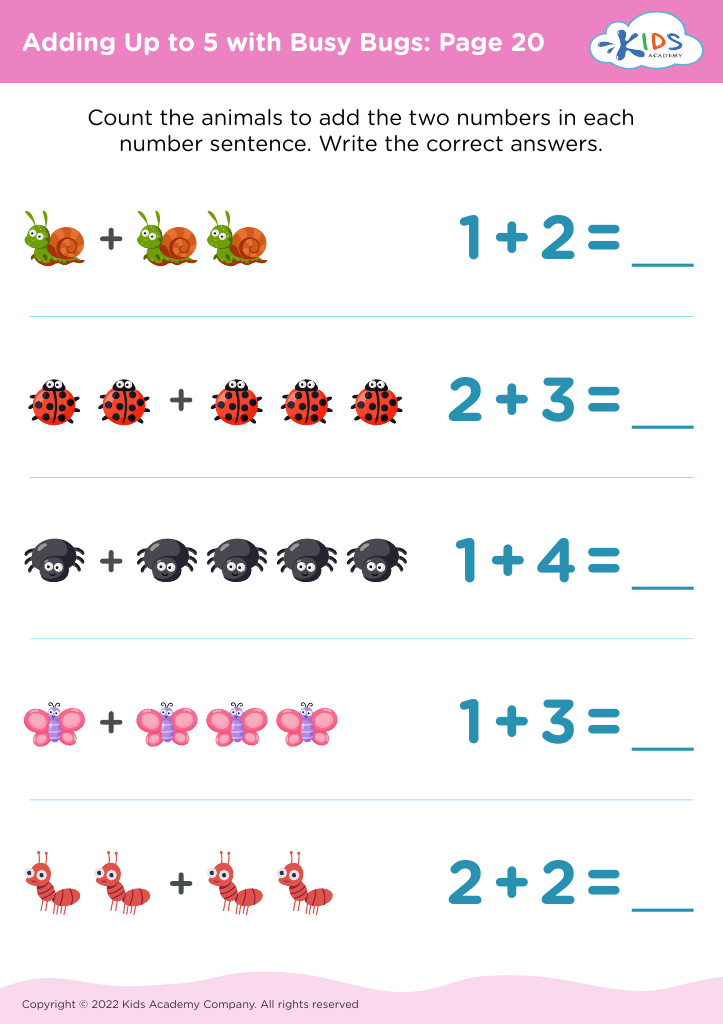
    Adding Up to 5 with Busy Bugs: Page 20
    Adding Up to 5 with Busy Bugs: Page 20
    Adding Up to 5 with Busy Bugs: Page 20
    Worksheet
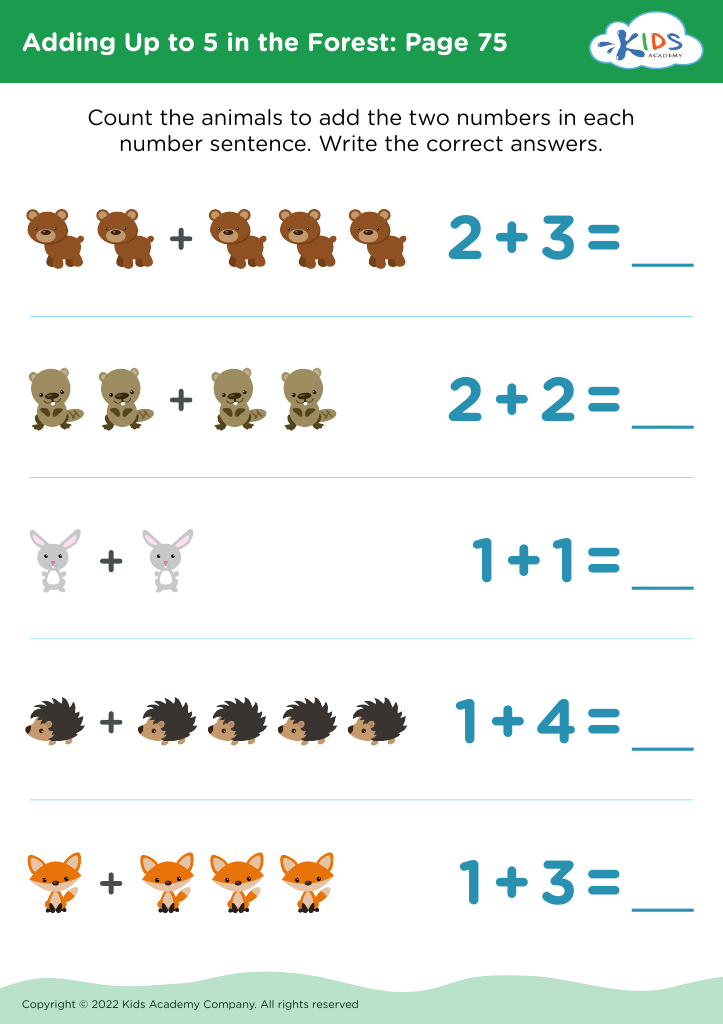
    Adding Up to 5 in the Forest: Page 75
    Adding Up to 5 in the Forest: Page 75
    Adding Up to 5 in the Forest: Page 75
    Worksheet
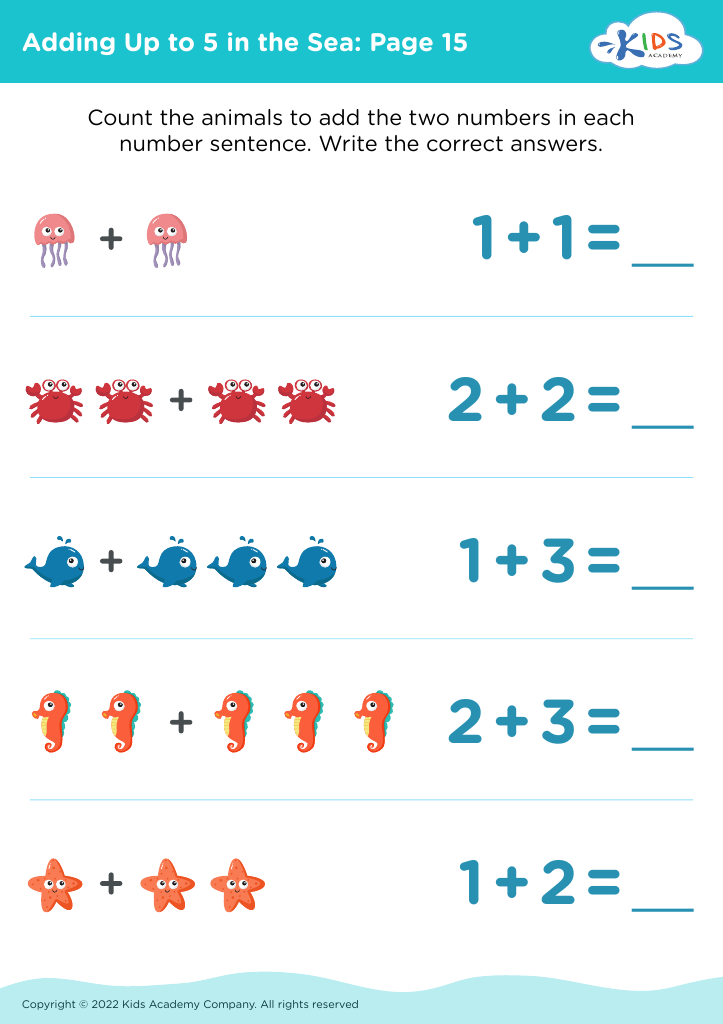
    Adding Up to 5 in the Sea: Page 15
    Adding Up to 5 in the Sea: Page 15
    Adding Up to 5 in the Sea: Page 15
    Worksheet
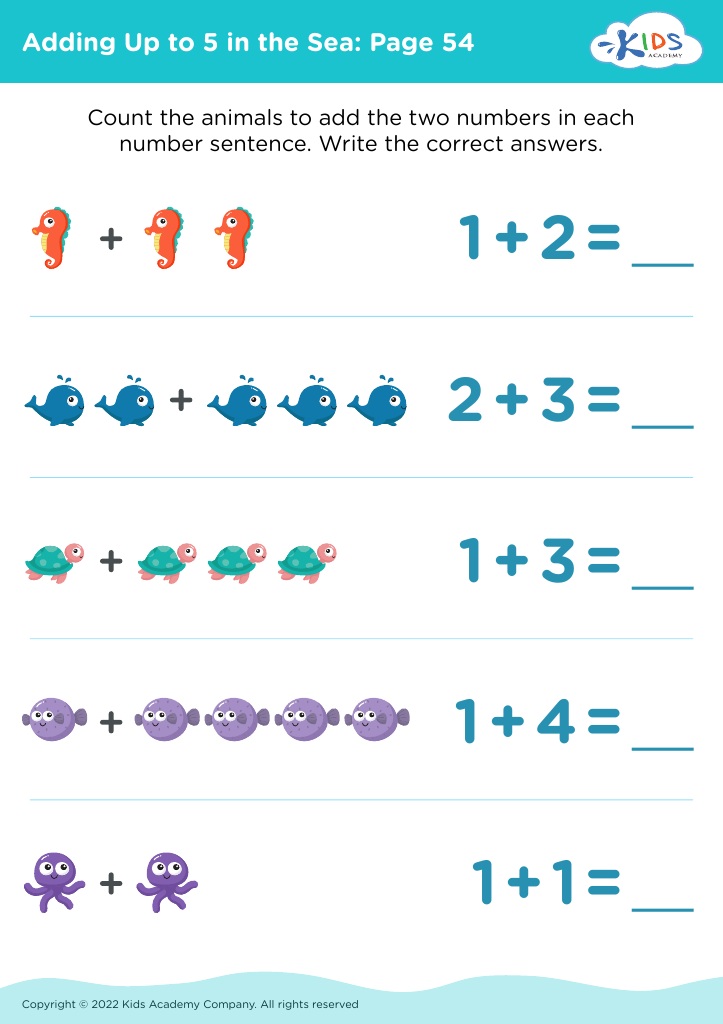
    Adding Up to 5 in the Sea: Page 54
    Adding Up to 5 in the Sea: Page 54
    Adding Up to 5 in the Sea: Page 54
    Worksheet
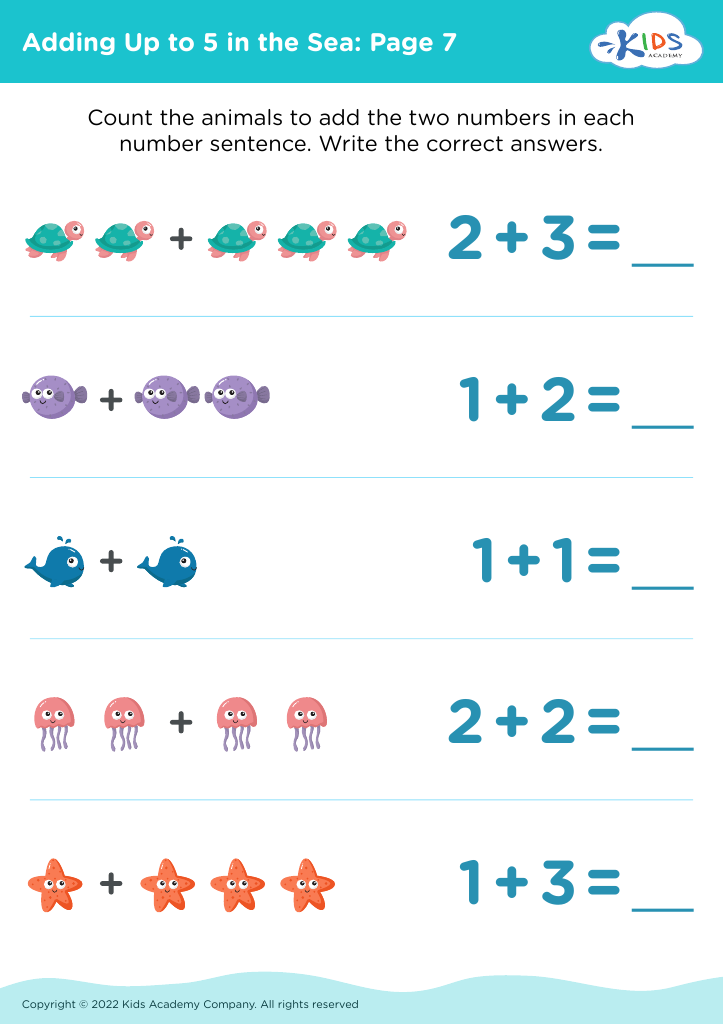
    Adding Up to 5 in the Sea: Page 7
    Adding Up to 5 in the Sea: Page 7

    Adding Up to 5 in the Sea: Page 7

    Adding Up to 5 in the Sea: Page 7
    Worksheet
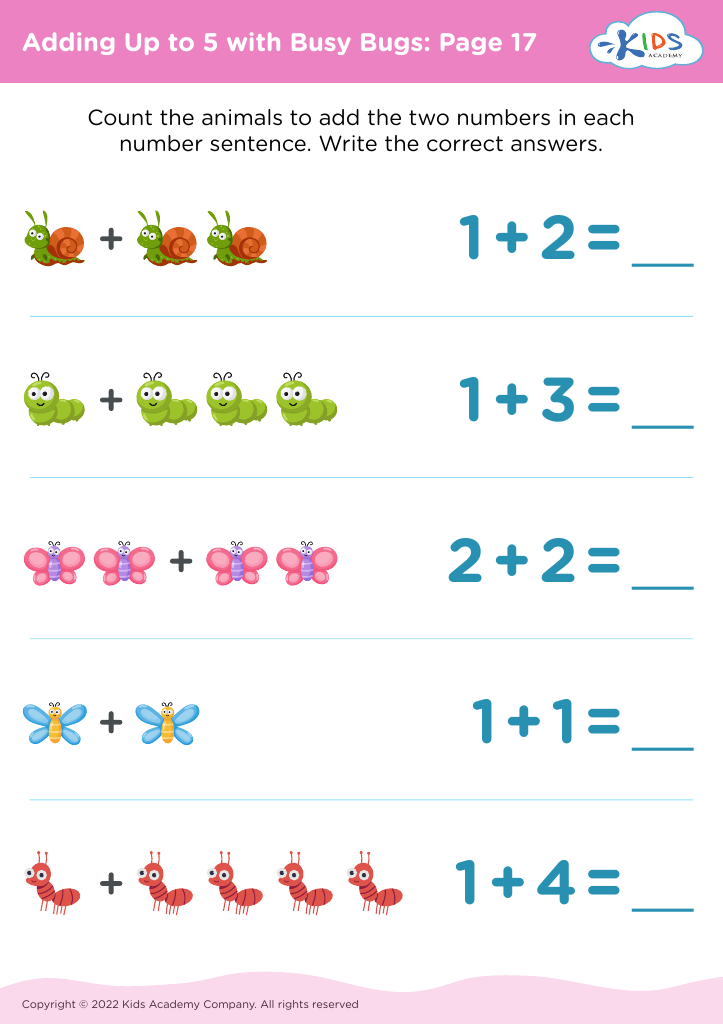
    Adding Up to 5 with Busy Bugs: Page 17
    Adding Up to 5 with Busy Bugs: Page 17
    Adding Up to 5 with Busy Bugs: Page 17
    Worksheet
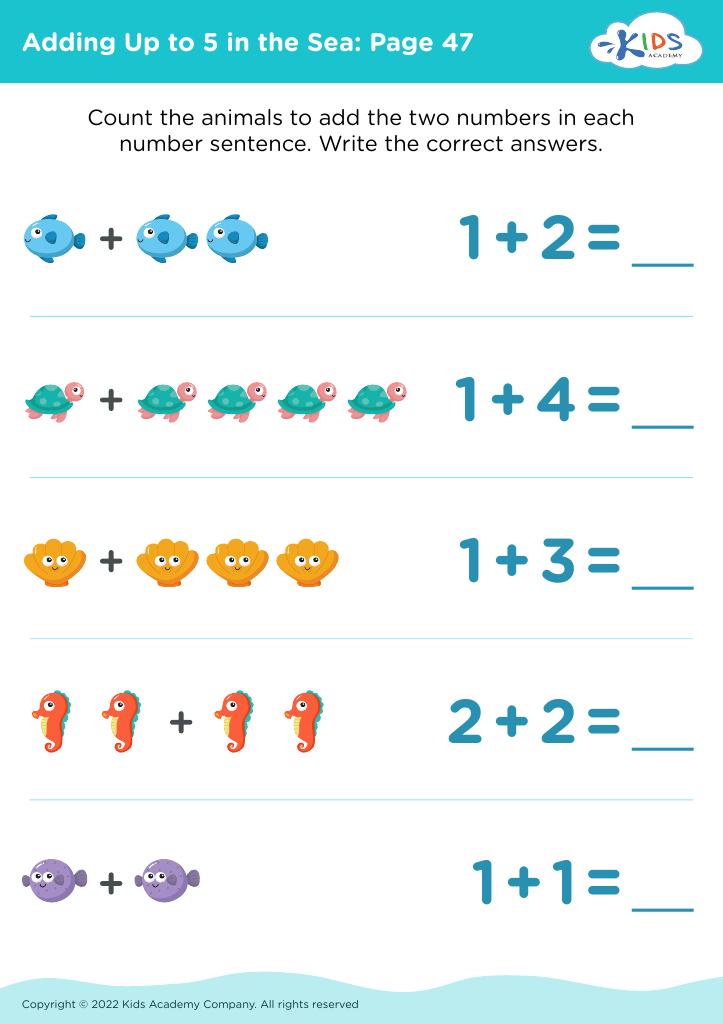
    Adding Up to 5 in the Sea: Page 47
    Adding Up to 5 in the Sea: Page 47
    Adding Up to 5 in the Sea: Page 47
    Worksheet
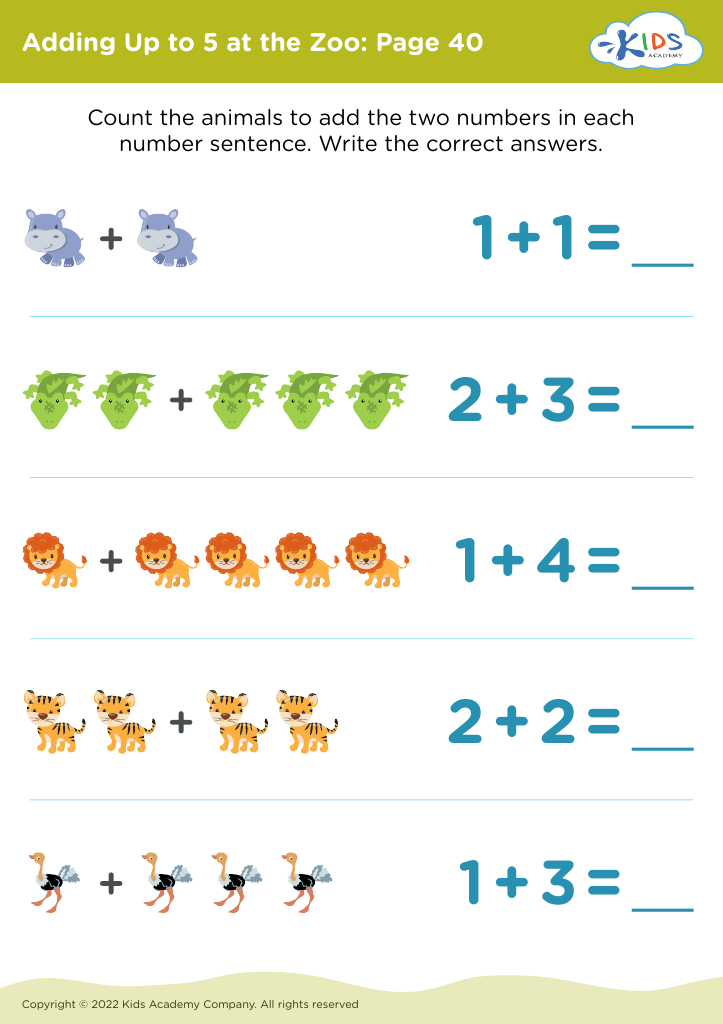
    Adding Up to 5 at the Zoo: Page 40
    Adding Up to 5 at the Zoo: Page 40
    Adding Up to 5 at the Zoo: Page 40
    Worksheet
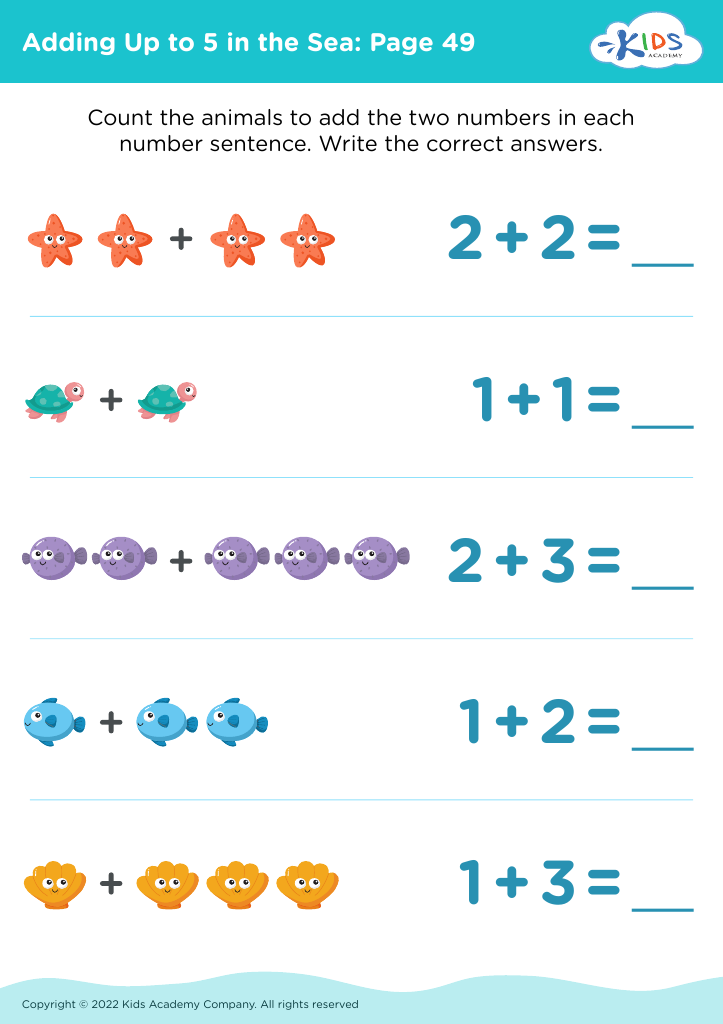
    Adding Up to 5 in the Sea: Page 49
    Adding Up to 5 in the Sea: Page 49
    Adding Up to 5 in the Sea: Page 49
    Worksheet
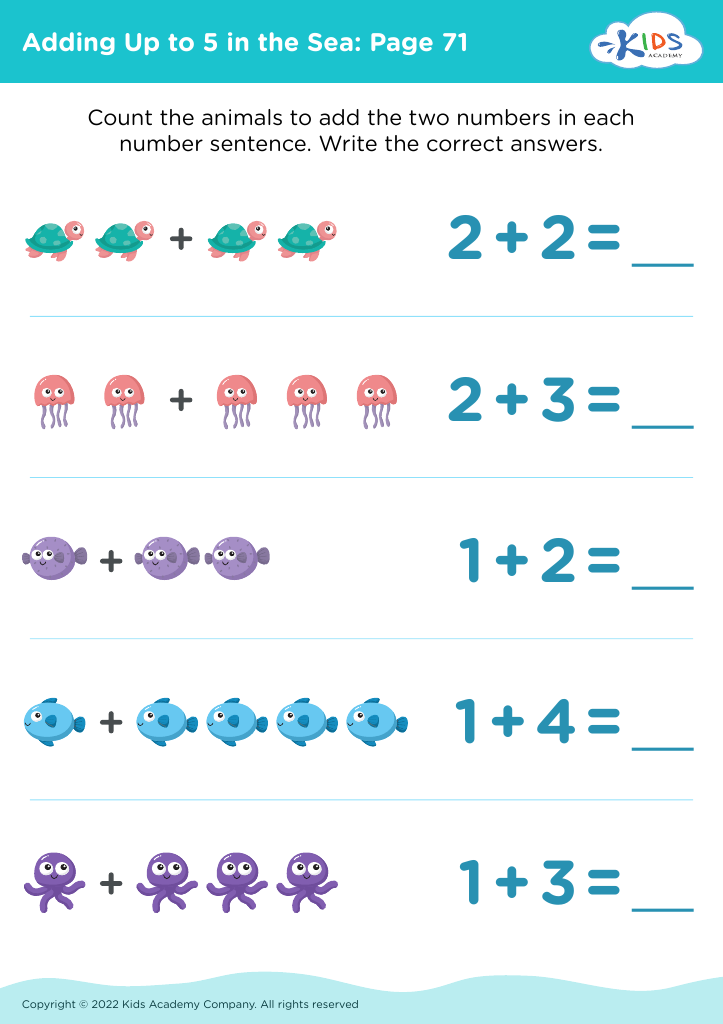
    Adding Up to 5 in the Sea: Page 71
    Adding Up to 5 in the Sea: Page 71
    Adding Up to 5 in the Sea: Page 71
    Worksheet
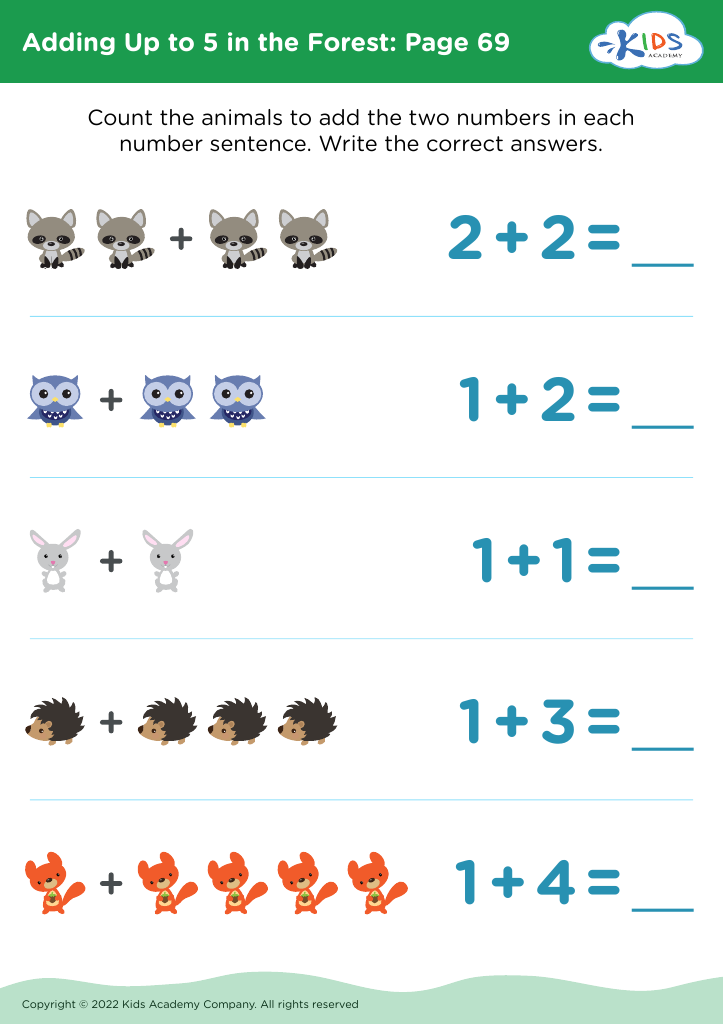
    Adding Up to 5 in the Forest: Page 69
    Adding Up to 5 in the Forest: Page 69
    Adding Up to 5 in the Forest: Page 69
    Worksheet
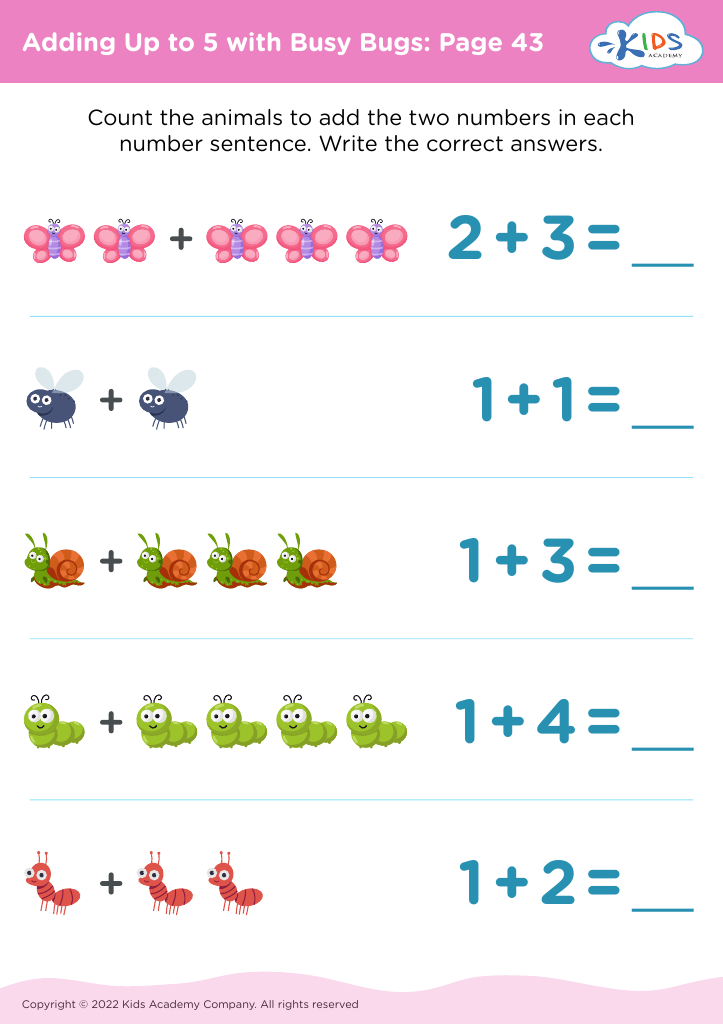
    Adding Up to 5 with Busy Bugs: Page 43
    Adding Up to 5 with Busy Bugs: Page 43
    Adding Up to 5 with Busy Bugs: Page 43
    Worksheet
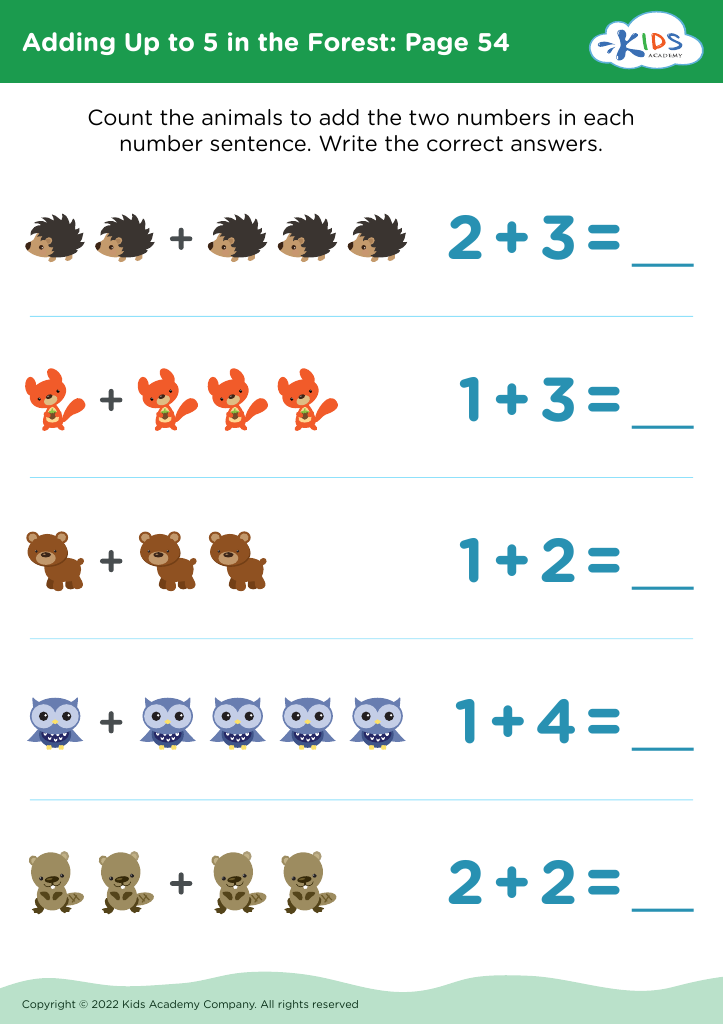
    Adding Up to 5 in the Forest: Page 54
    Adding Up to 5 in the Forest: Page 54
    Adding Up to 5 in the Forest: Page 54
    Worksheet
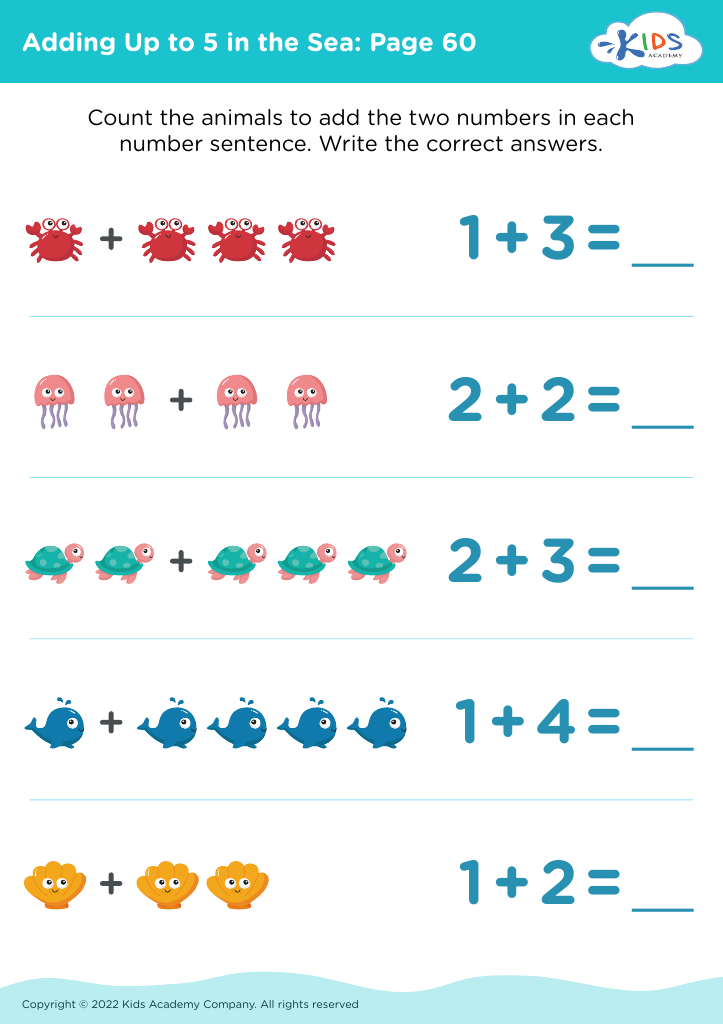
    Adding Up to 5 in the Sea: Page 60
    Adding Up to 5 in the Sea: Page 60
    Adding Up to 5 in the Sea: Page 60
    Worksheet
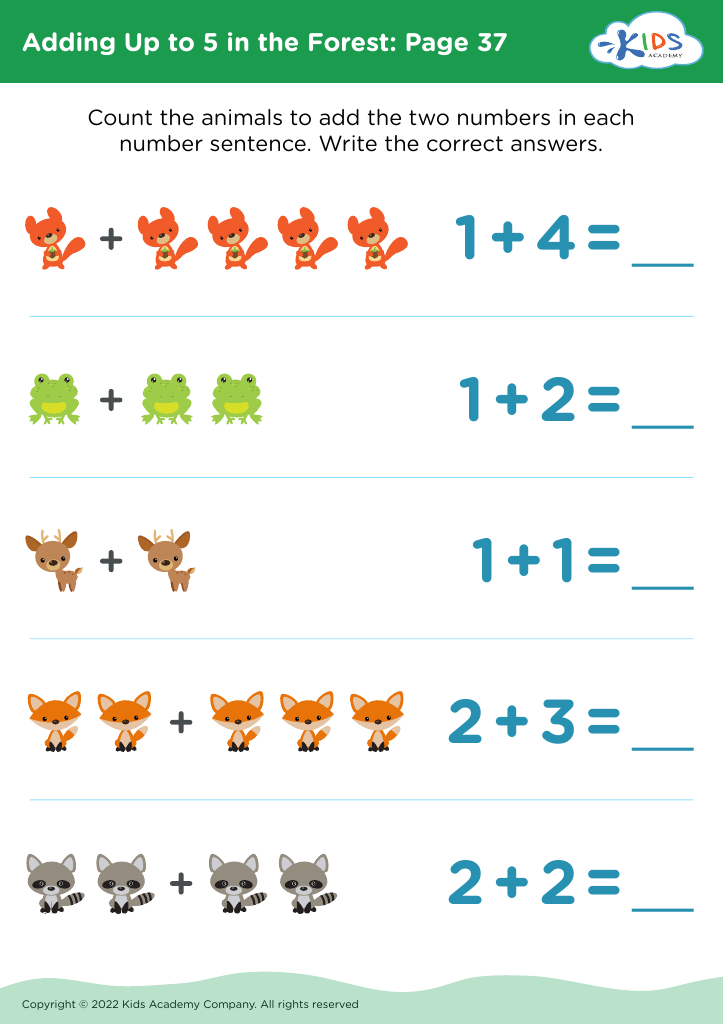
    Adding Up to 5 in the Forest: Page 37
    Adding Up to 5 in the Forest: Page 37
    Adding Up to 5 in the Forest: Page 37
    Worksheet
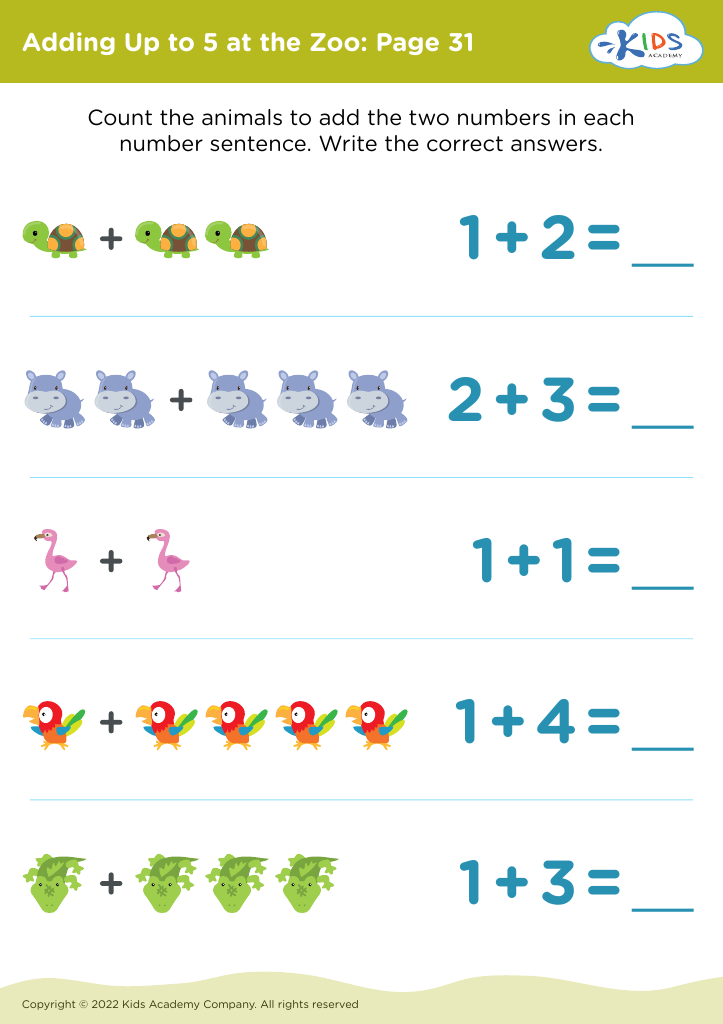
    Adding Up to 5 at the Zoo: Page 31
    Adding Up to 5 at the Zoo: Page 31
    Adding Up to 5 at the Zoo: Page 31
    Worksheet
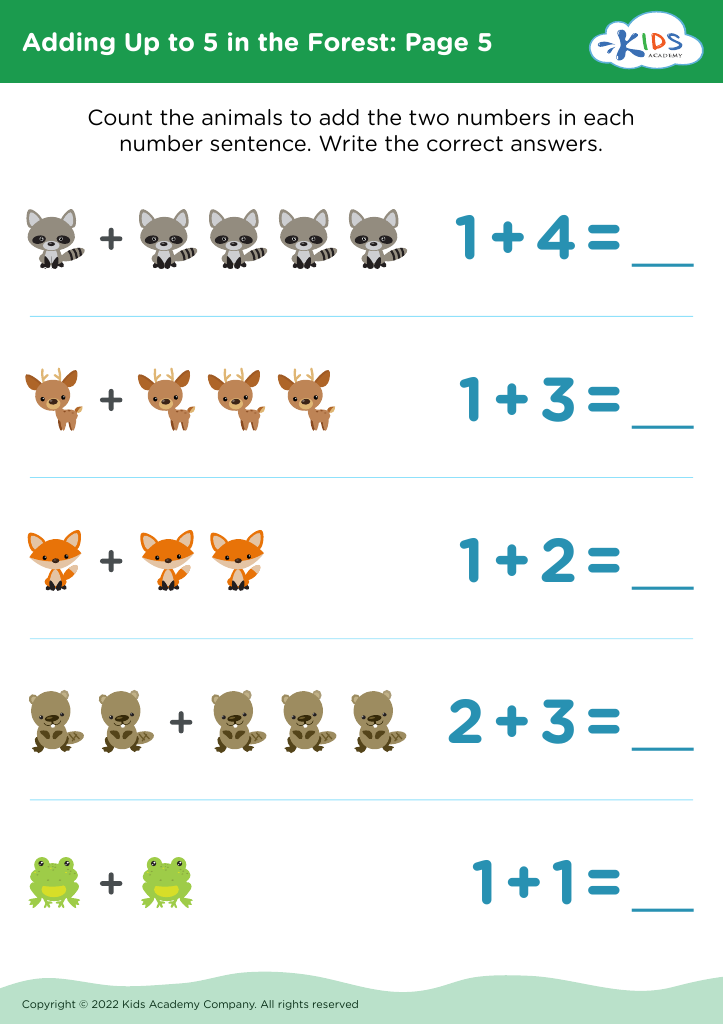
    Adding Up to 5 in the Forest: Page 5
    Adding Up to 5 in the Forest: Page 5
    Adding Up to 5 in the Forest: Page 5
    Worksheet
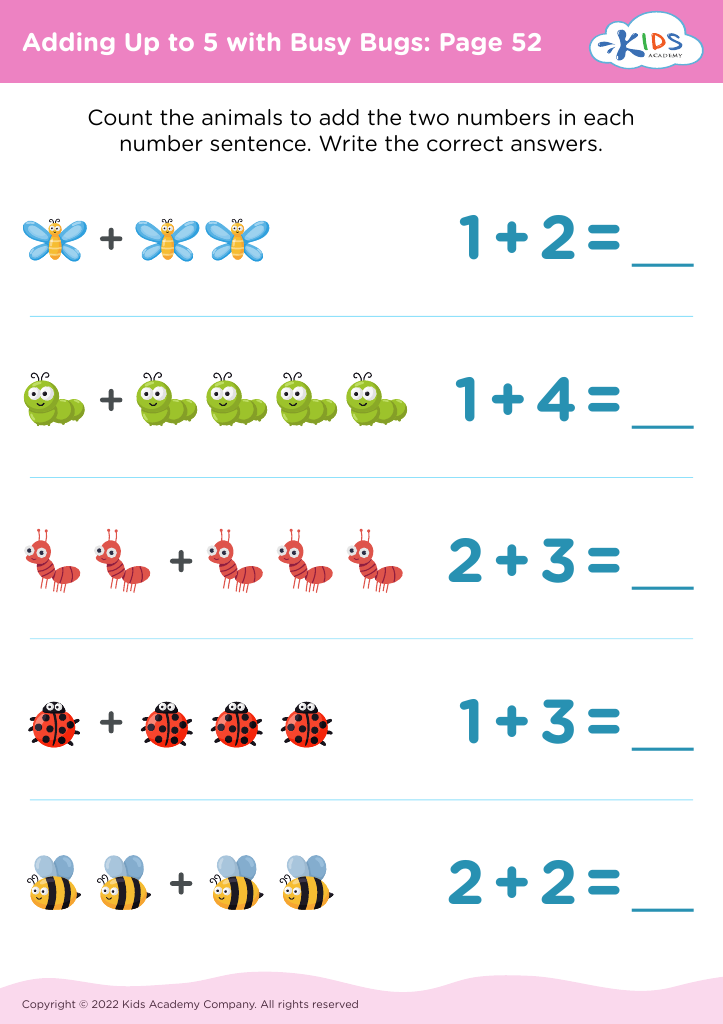
    Adding Up to 5 with Busy Bugs: Page 52
    Adding Up to 5 with Busy Bugs: Page 52
    Adding Up to 5 with Busy Bugs: Page 52
    Worksheet
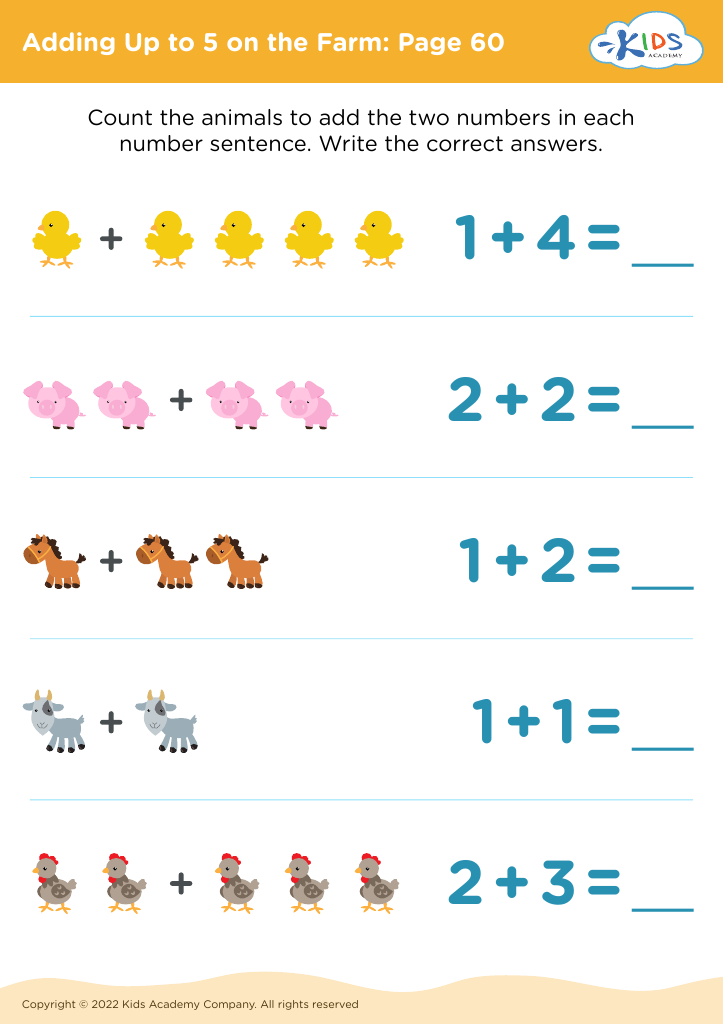
    Adding Up to 5 on the Farm: Page 60
    Adding Up to 5 on the Farm: Page 60
    Adding Up to 5 on the Farm: Page 60
    Worksheet
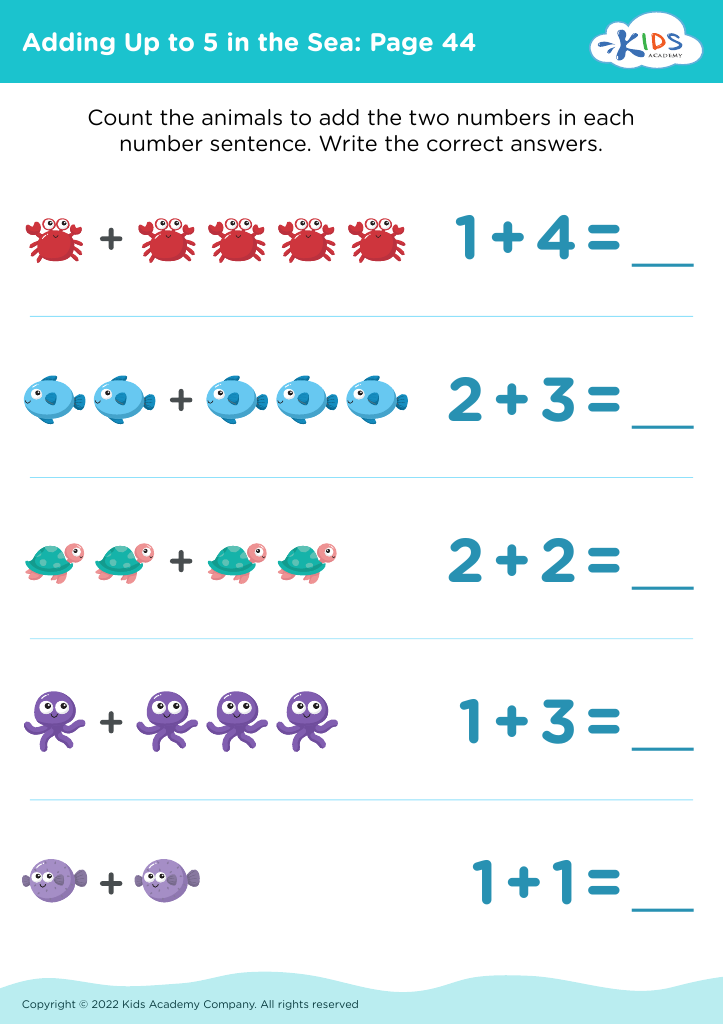
    Adding Up to 5 in the Sea: Page 44
    Adding Up to 5 in the Sea: Page 44
    Adding Up to 5 in the Sea: Page 44
    Worksheet


    ... 3 4

    Cognitive development, particularly in the context of adding numbers up to 5 for children aged 5-9, is crucial for several reasons. First and foremost, developing these foundational math skills is essential for building a child's confidence and competence in mathematics. Early arithmetic abilities serve as a stepping stone for more complex concepts later on, ensuring a stronger mathematical foundation as they progress in school.

    Furthermore, cognitive development in early childhood enhances critical thinking and problem-solving skills. When children engage in simple addition exercises, they learn to analyze and synthesize information, fostering a deeper understanding of relationships between numbers, patterns, and quantities.

    Teachers and parents should also recognize that mastering these foundational skills can positively impact overall academic performance. Proficiency in basic math enhances reading comprehension and reasoning skills, as both disciplines require quick and accurate processing of information.

    Moreover, social and emotional development benefits as children experience success in their learning. Achieving milestones in cognitive tasks boosts self-esteem and encourages a positive attitude towards learning. For all these reasons, investing time and resources into fostering cognitive development through early math education is vital for nurturing a well-rounded learner prepared for future challenges.