Fine motor skills (writing) Adding Up to 5 Worksheets for Ages 5-9 - Page 2
32 filtered results
-
From - To







.jpg)
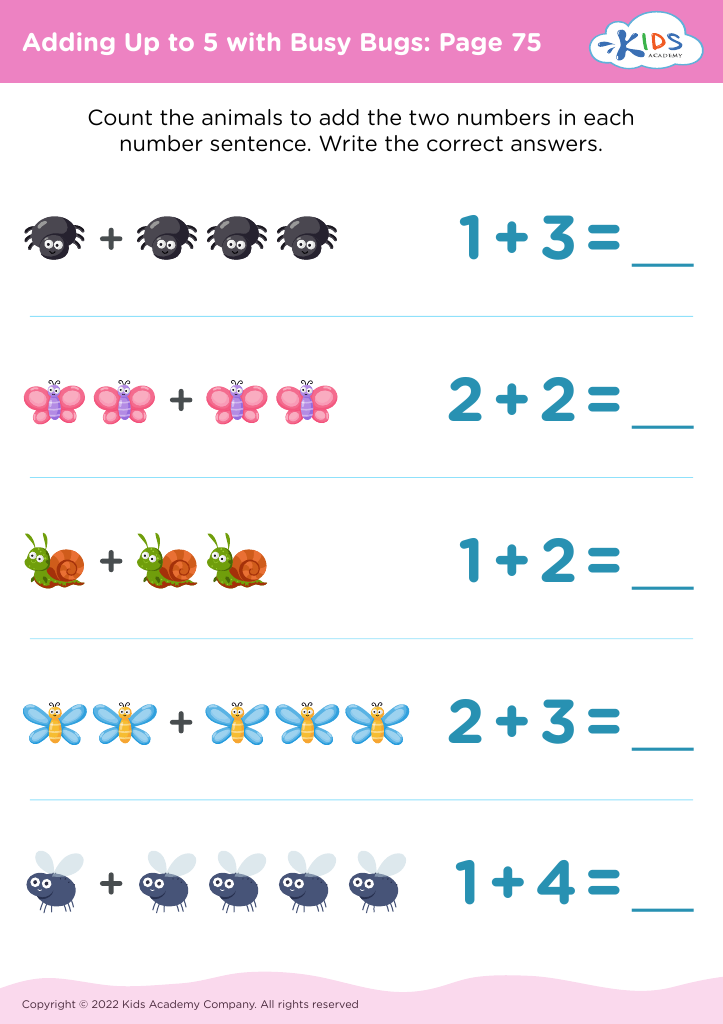
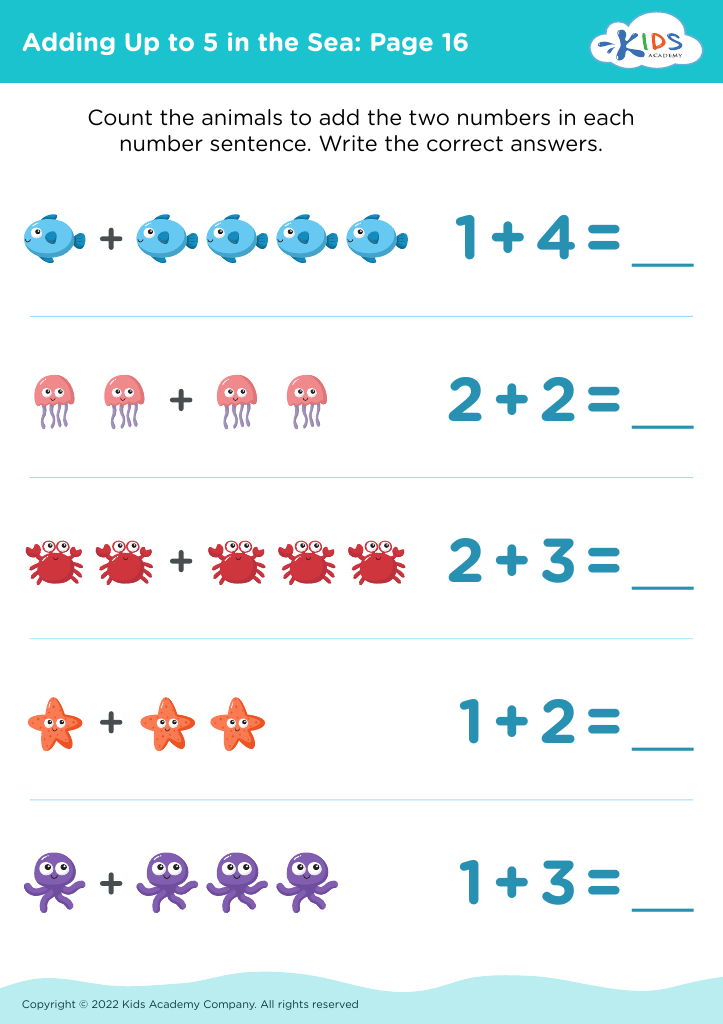
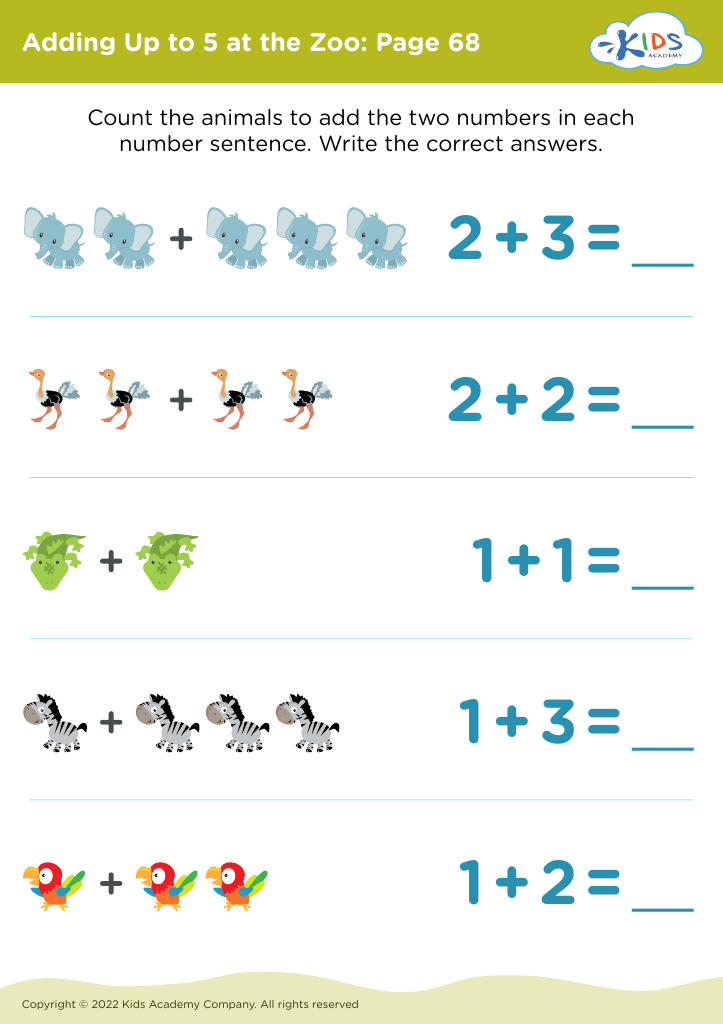
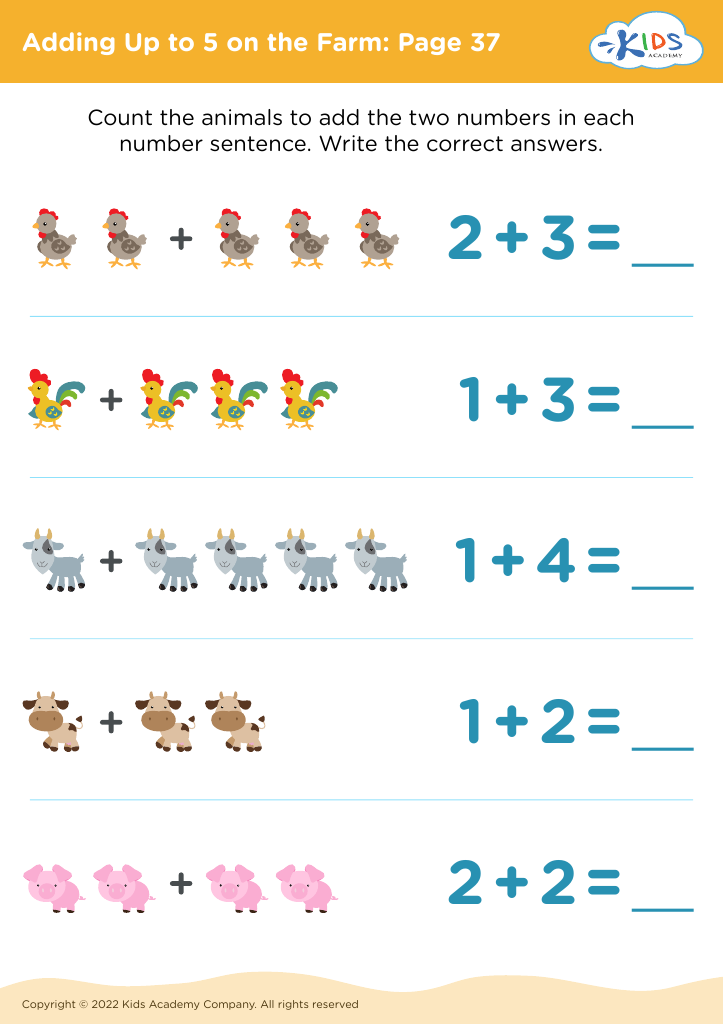
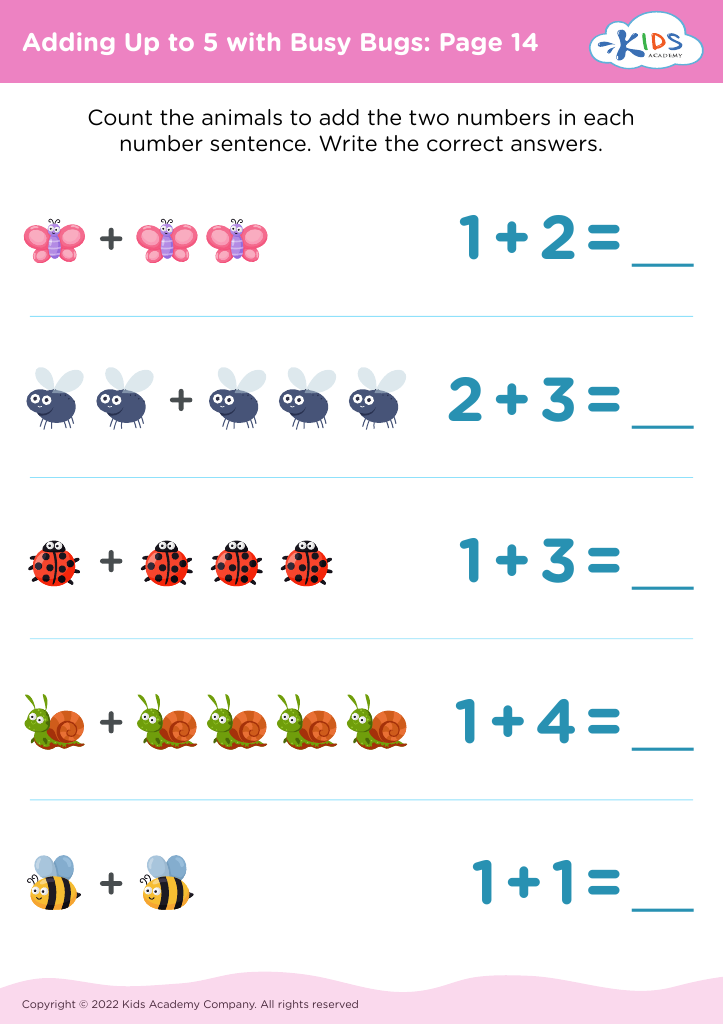
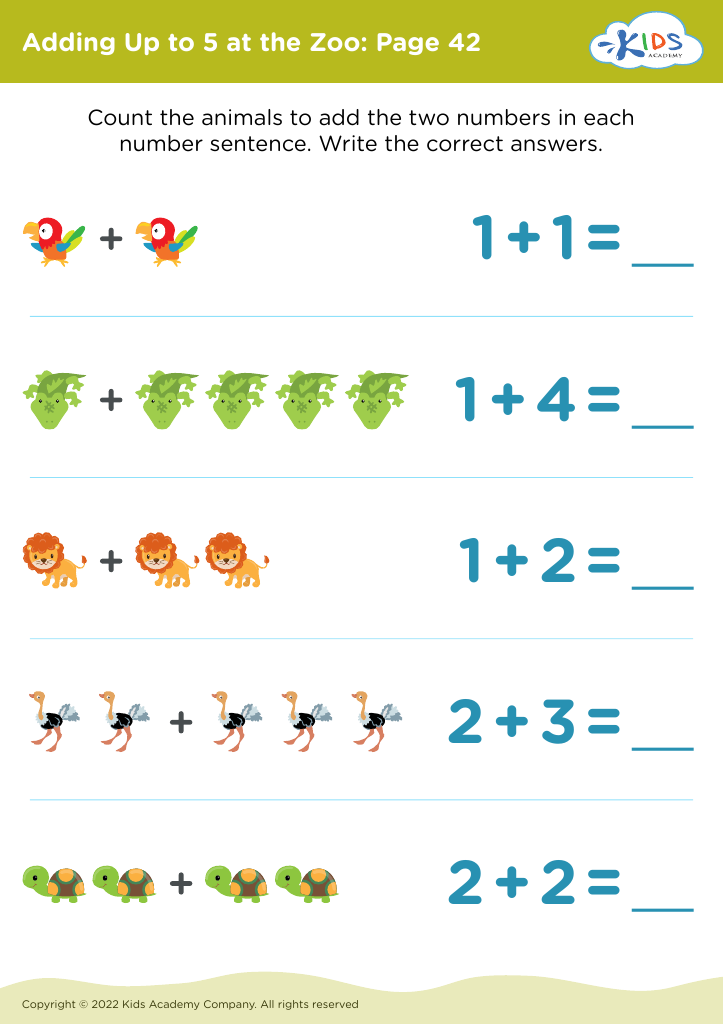
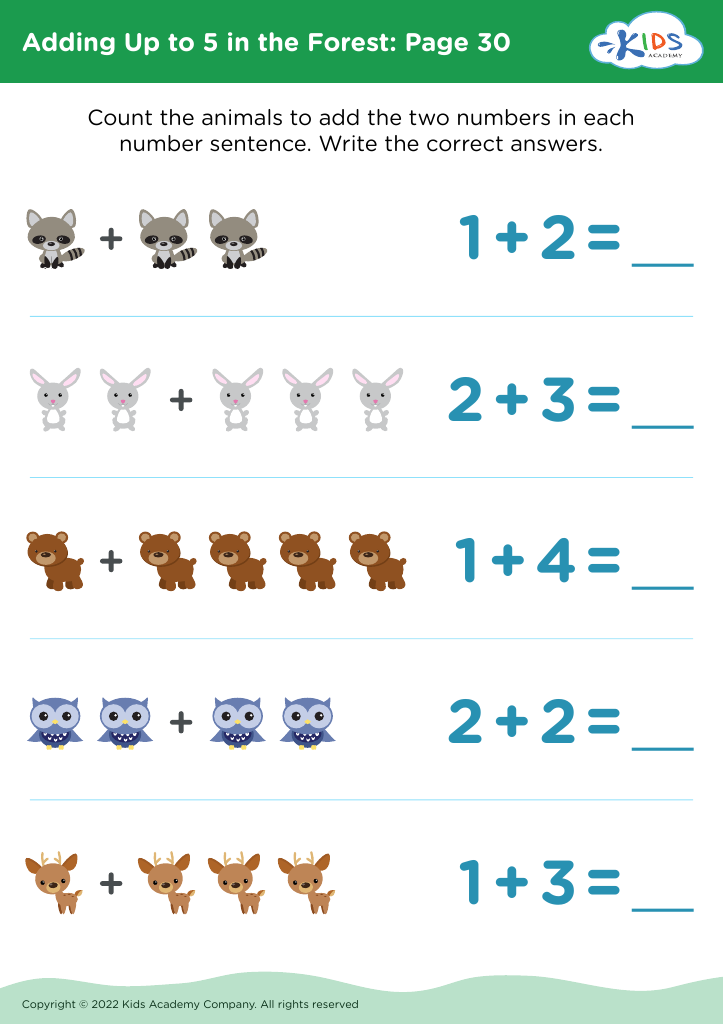
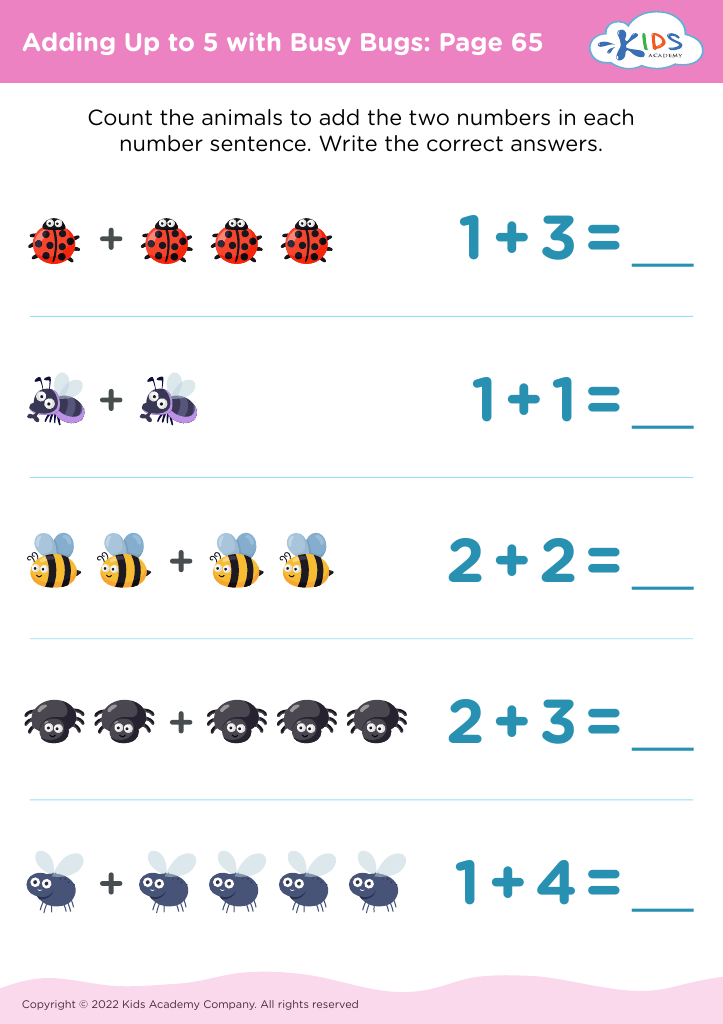
Fine motor skills, particularly in writing and simple arithmetic like adding up to 5, are crucial for children aged 5-9 as they lay the foundation for future learning and daily tasks. Parents and teachers should prioritize the development of these skills because they enable children to express themselves clearly and creatively, fostering confidence in their abilities.
Writing skills improve as children grasp pencil control, which enhances their ability to form letters, numbers, and shapes. This precision not only aids in effective communication but also boosts literacy skills critical for their academic journey. Similarly, mastering basic addition equips children with essential problem-solving abilities, as it lays the groundwork for more complex mathematical concepts.
Moreover, fine motor skills strengthen hand-eye coordination and spatial awareness, contributing to overall cognitive development. Engaging in fun, hands-on activities like drawing and simple counting games motivates children, turning learning into a pleasurable experience. When parents and teachers emphasize these skills, they support holistic development, encouraging children to become confident learners. Ultimately, nurturing fine motor skills empowers children to excel academically and navigate everyday tasks with ease, setting the stage for lifelong skills and success.








