Hand-eye Coordination Adding Up to 5 Worksheets for Ages 5-9
15 filtered results
-
From - To
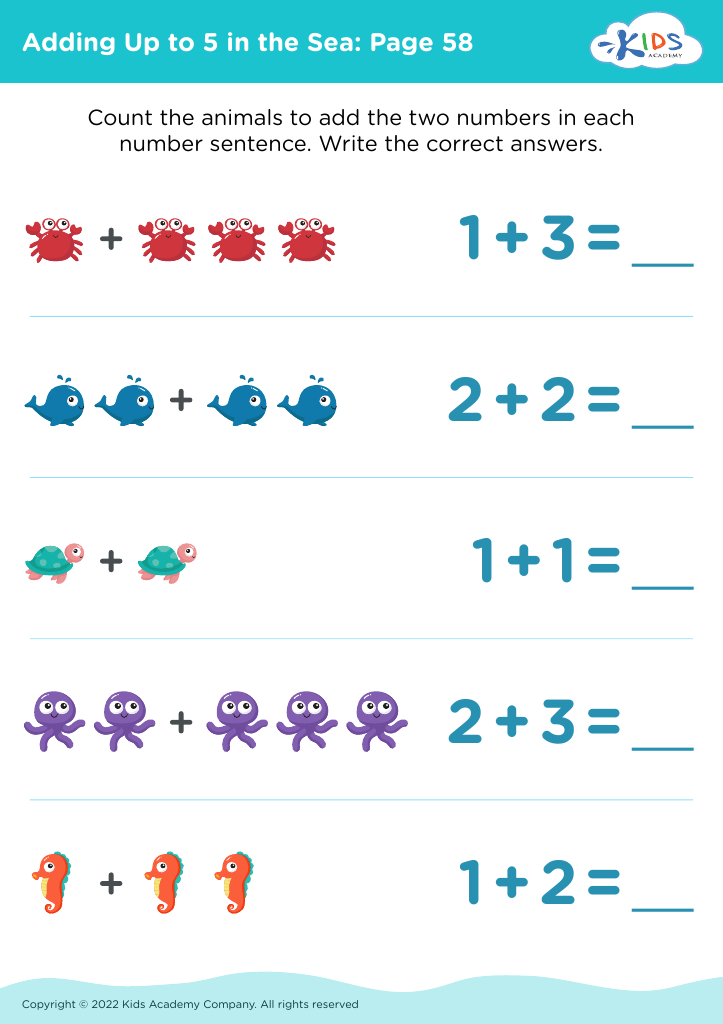
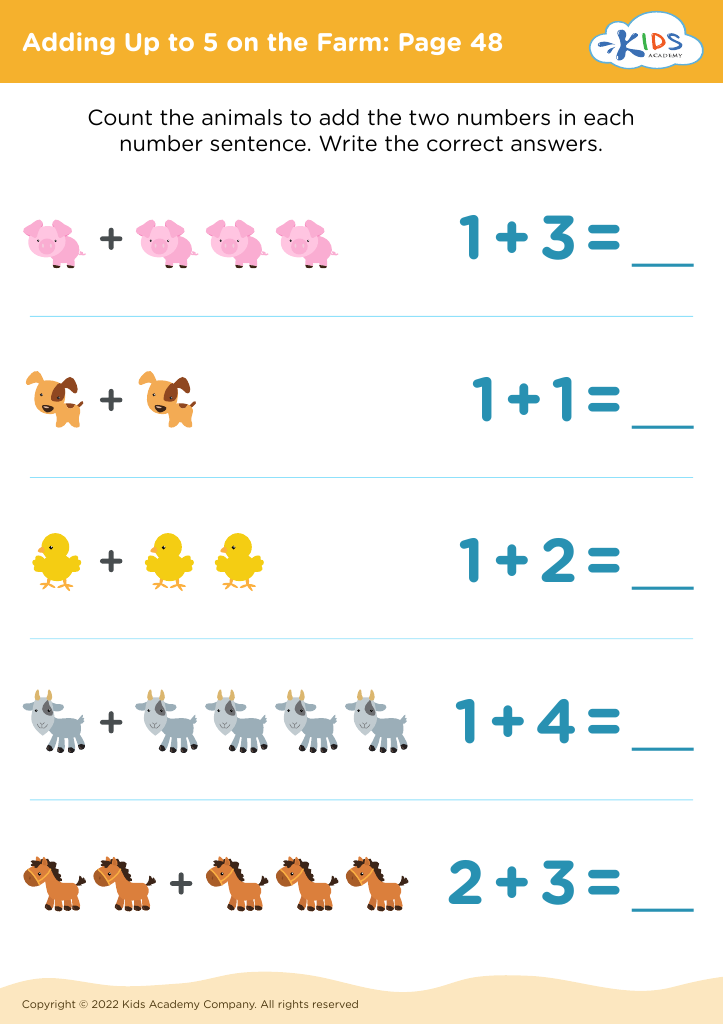
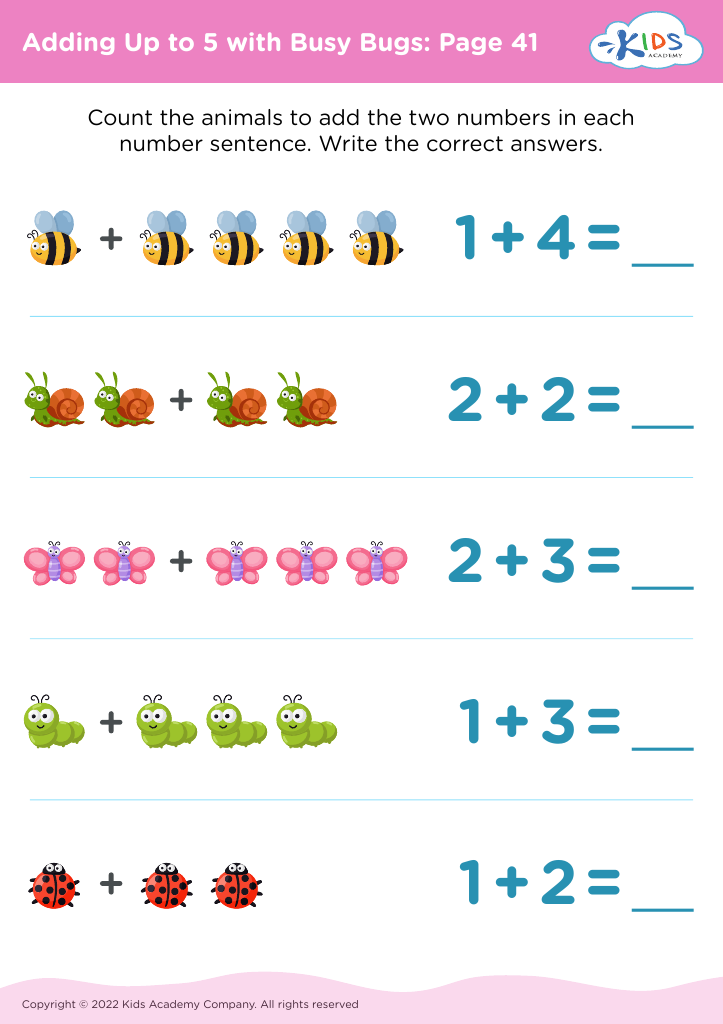
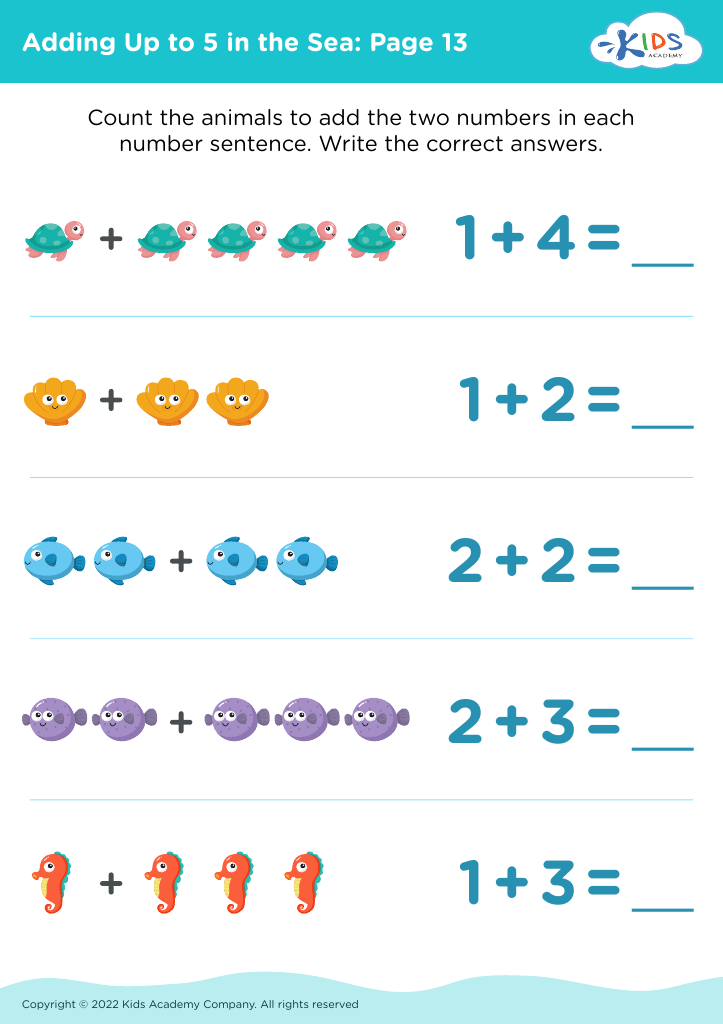
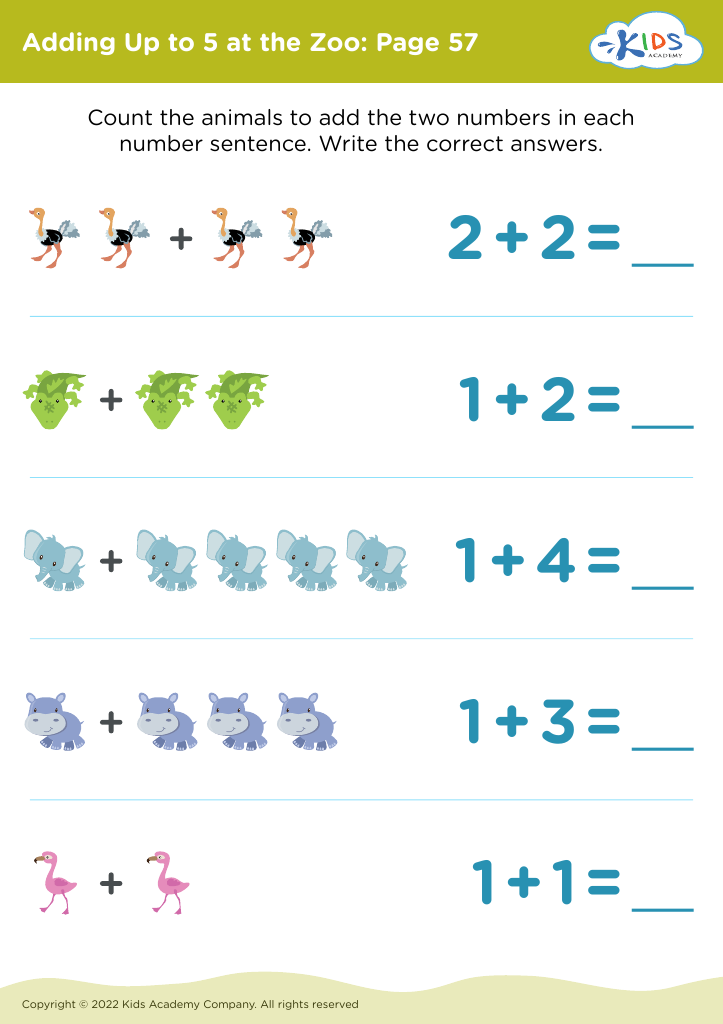
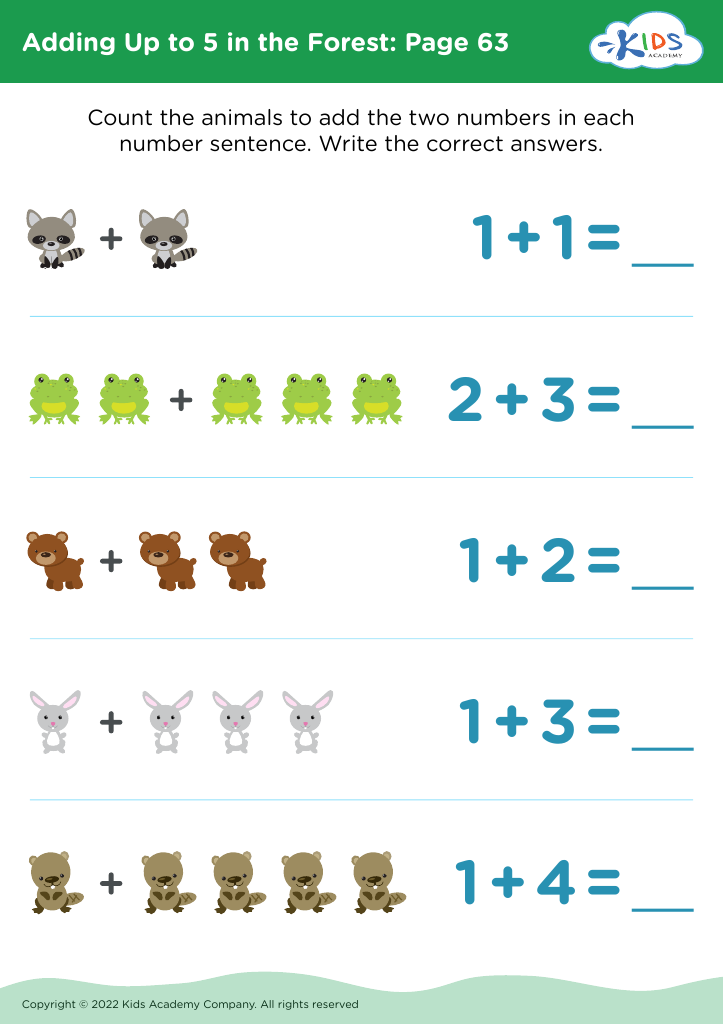
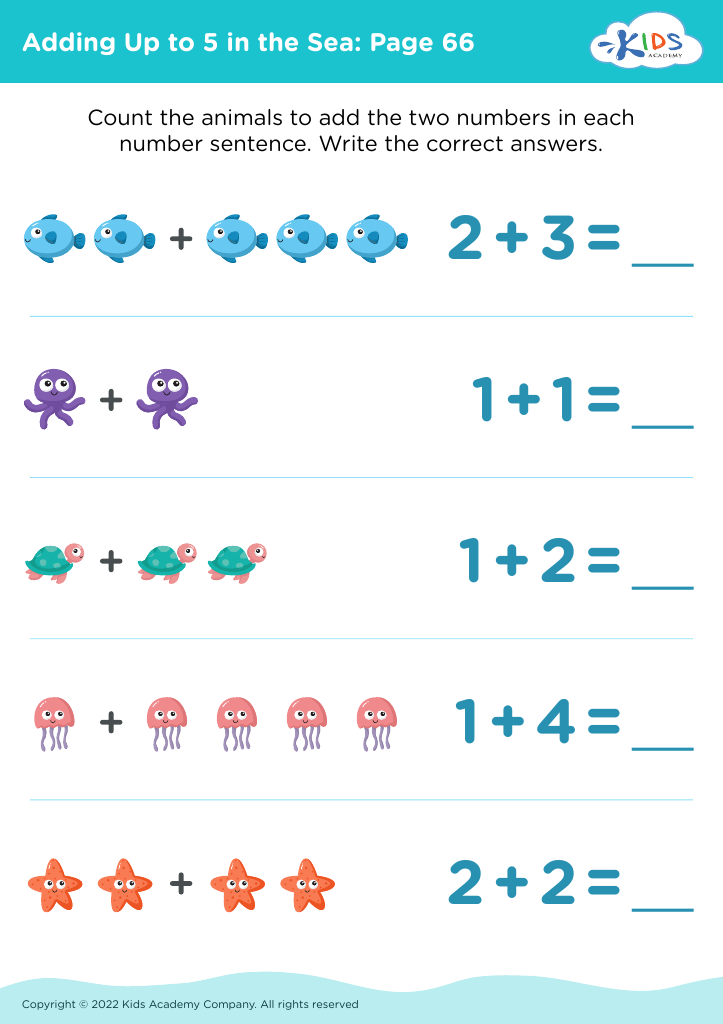
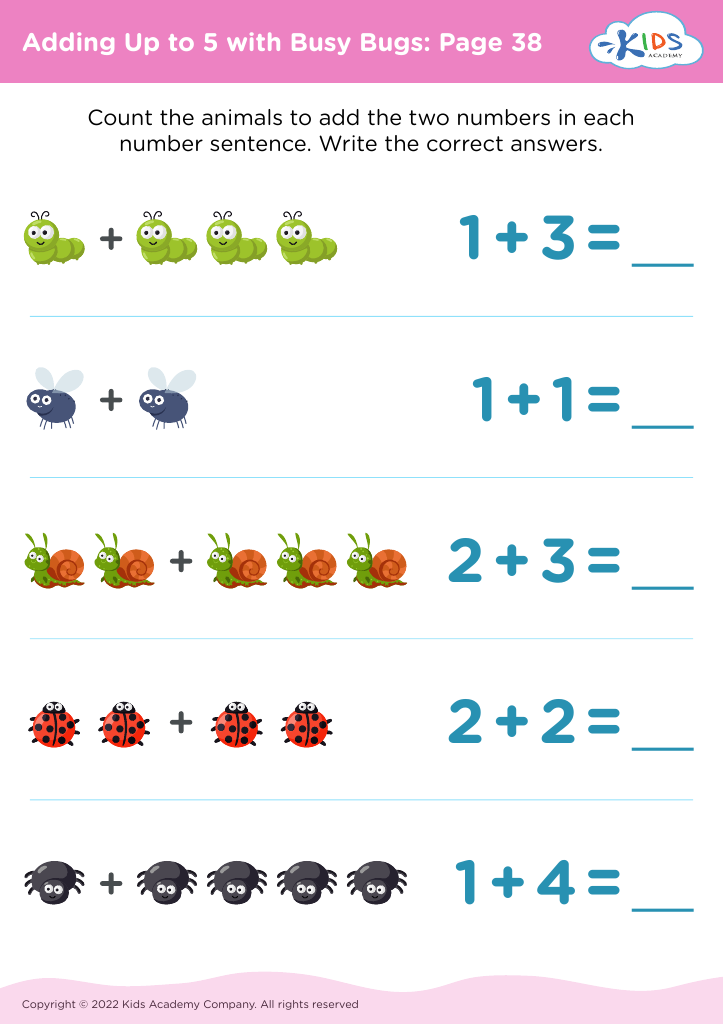
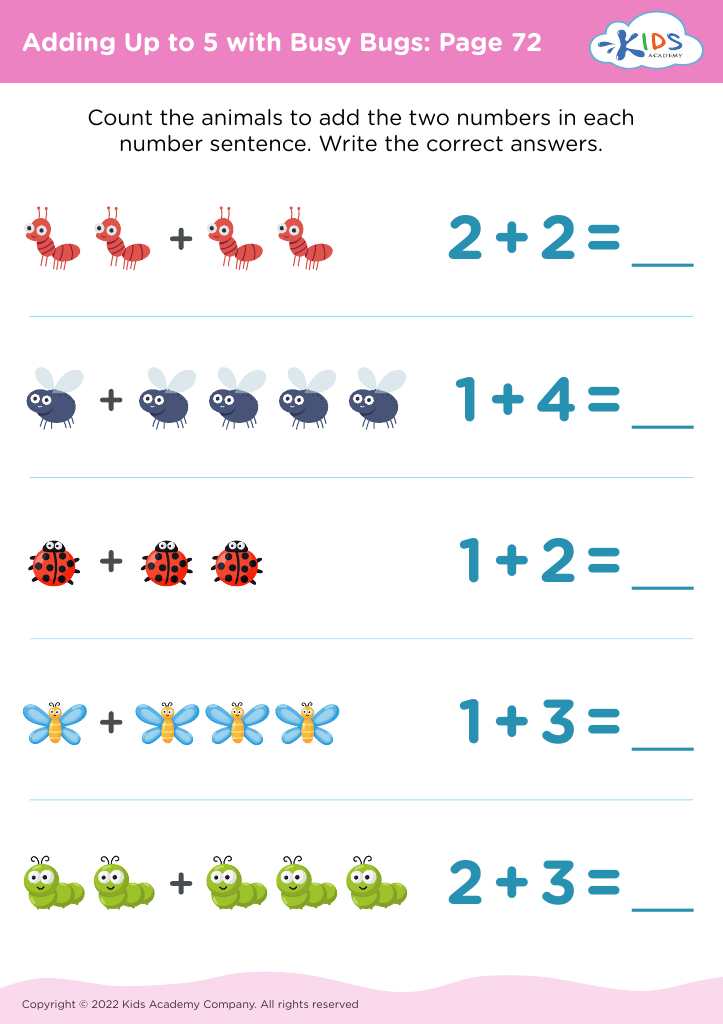
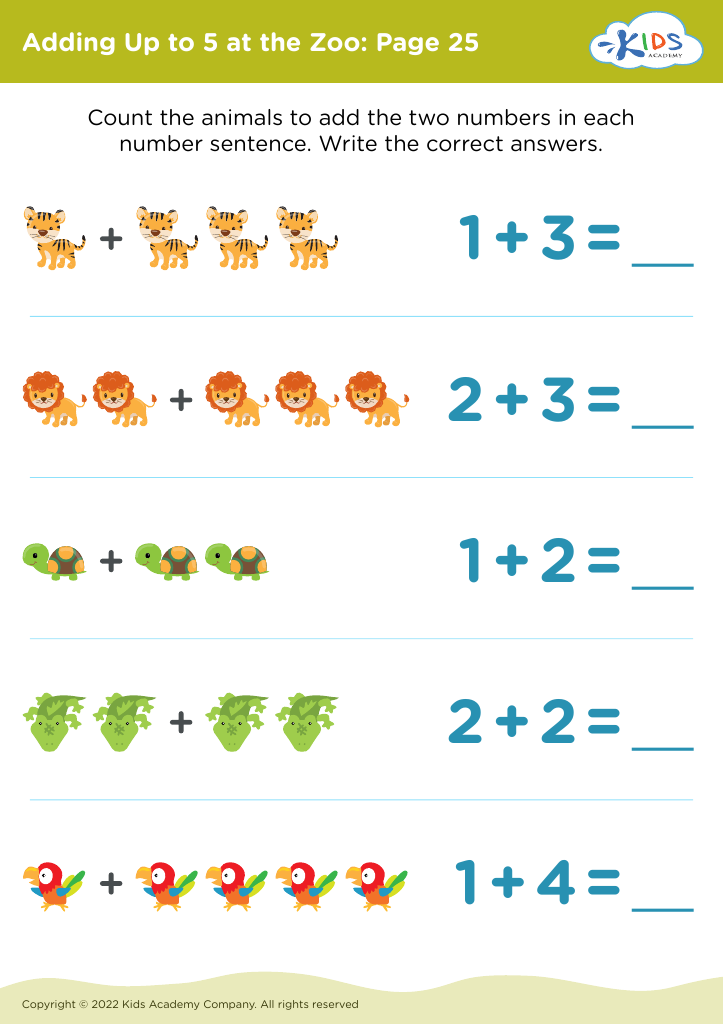
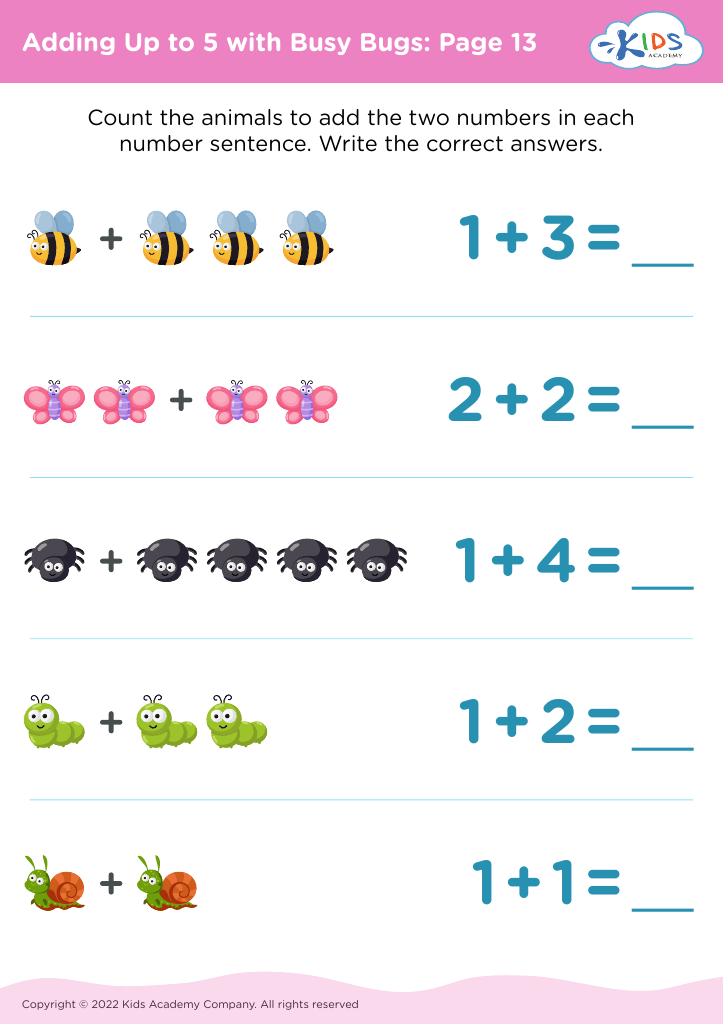
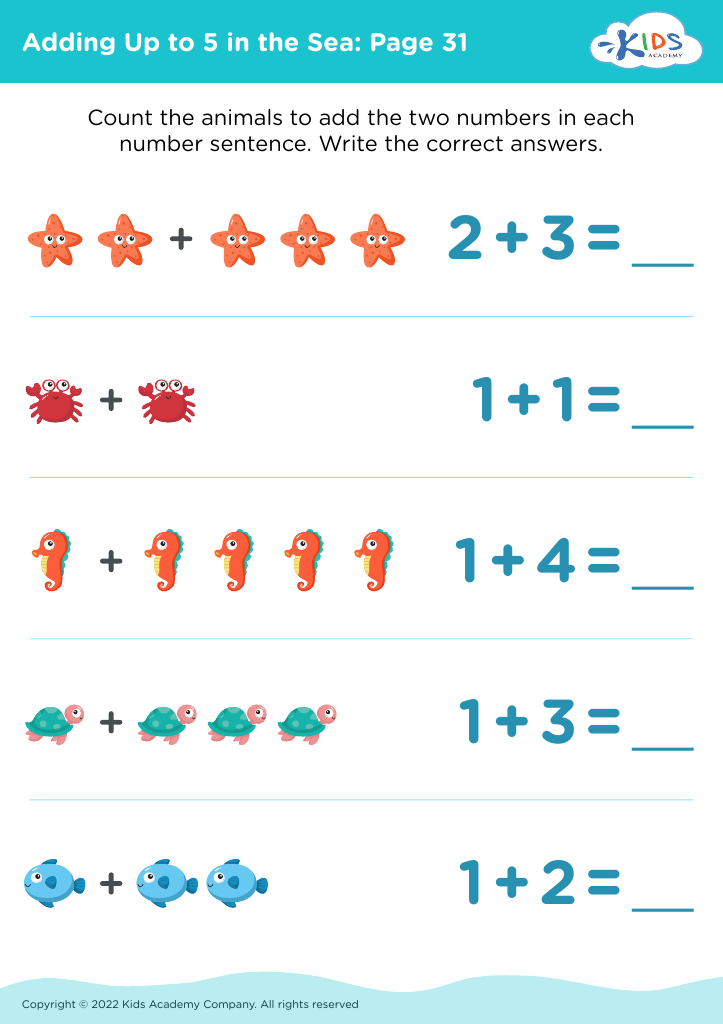
Enhance your child's hand-eye coordination and math skills with our "Hand-eye Coordination Adding Up to 5 Worksheets" designed for ages 5-9. These engaging worksheets combine fun and education, offering exercises that require children to practice addition while improving their fine motor skills. Kids will enjoy various activities that challenge their ability to connect physical actions with cognitive tasks, making learning both enjoyable and effective. Perfect for parents and educators seeking an interactive approach to teaching young learners, our worksheets foster confidence in mathematical concepts while strengthening essential coordination abilities. Download now and watch your child's skills grow!
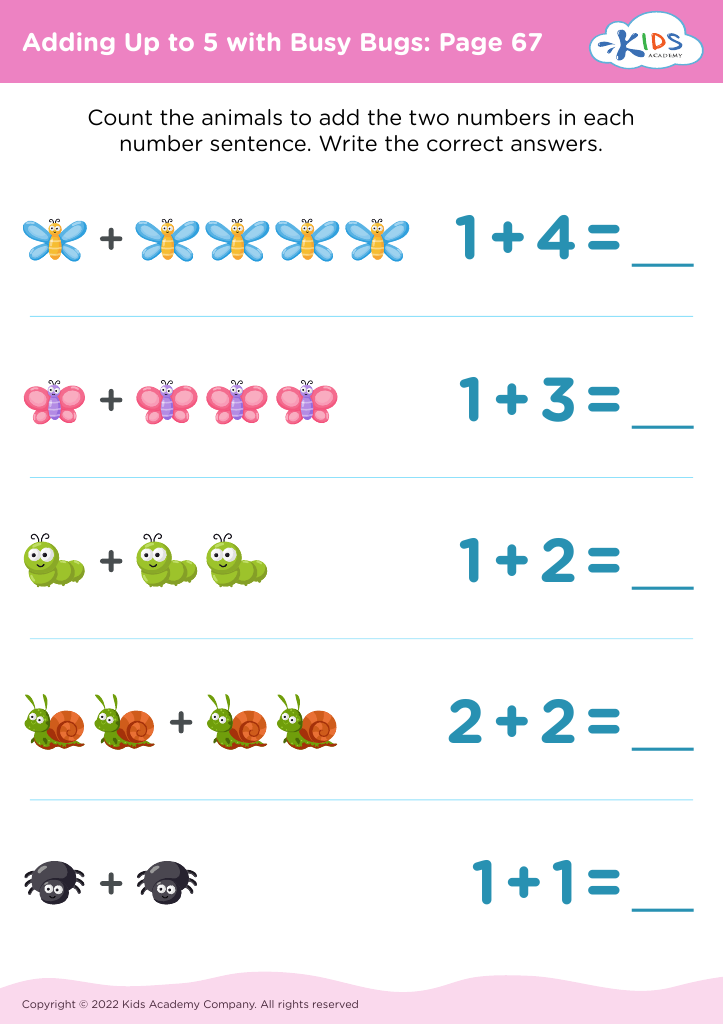
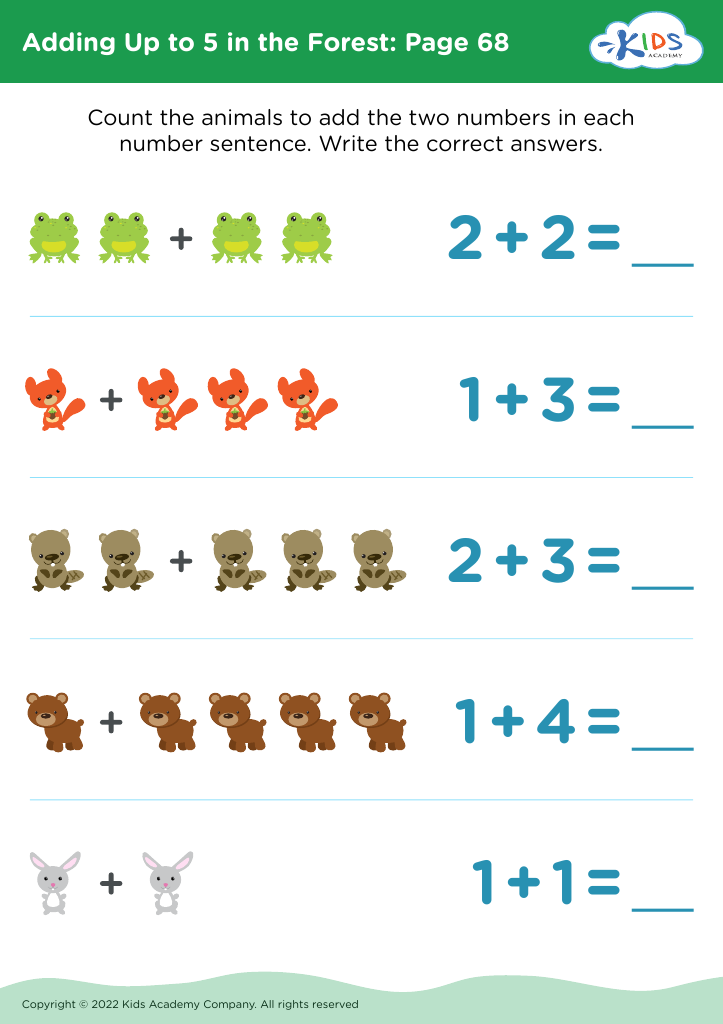
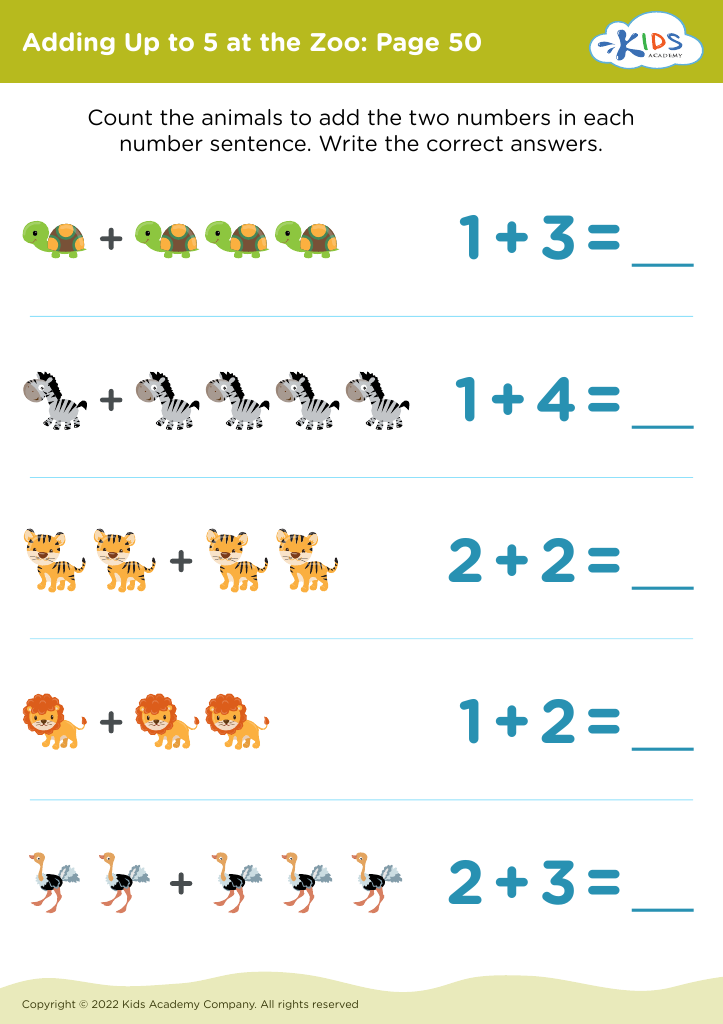



.jpg)
%20(1).jpg)



Hand-eye coordination is a crucial skill for children ages 5-9, as it underpins many everyday tasks and learning activities. For parents and teachers, fostering hand-eye coordination, especially in activities like adding up to 5, enhances not only mathematical skills but also fine motor skills. This age group is pivotal for developing foundational mathematics, requiring simultaneous visual input and manual response. Improved hand-eye coordination allows children to better engage with manipulatives, such as counting blocks or interactive games, which solidifies their understanding of numbers.
Furthermore, mastering hand-eye coordination has broader implications for overall cognitive development. It helps children improve their focus, aids in spatial awareness, and fosters problem-solving abilities—all essential skills as they advance academically. Engaging in activities like simple addition games that require coordination can make learning fun, motivating children to participate without feeling stressed.
In essence, prioritizing these activities can also ease frustrations children may face when learning new concepts, ultimately boosting their confidence and encouraging a lifelong love for learning. Parents and teachers who recognize the importance of hand-eye coordination in early mathematics are equipping children with not only essential academic skills but also crucial developmental tools for their overall growth.








