Nature appreciation Adding Up to 5 Worksheets for Ages 5-9
5 filtered results
-
From - To
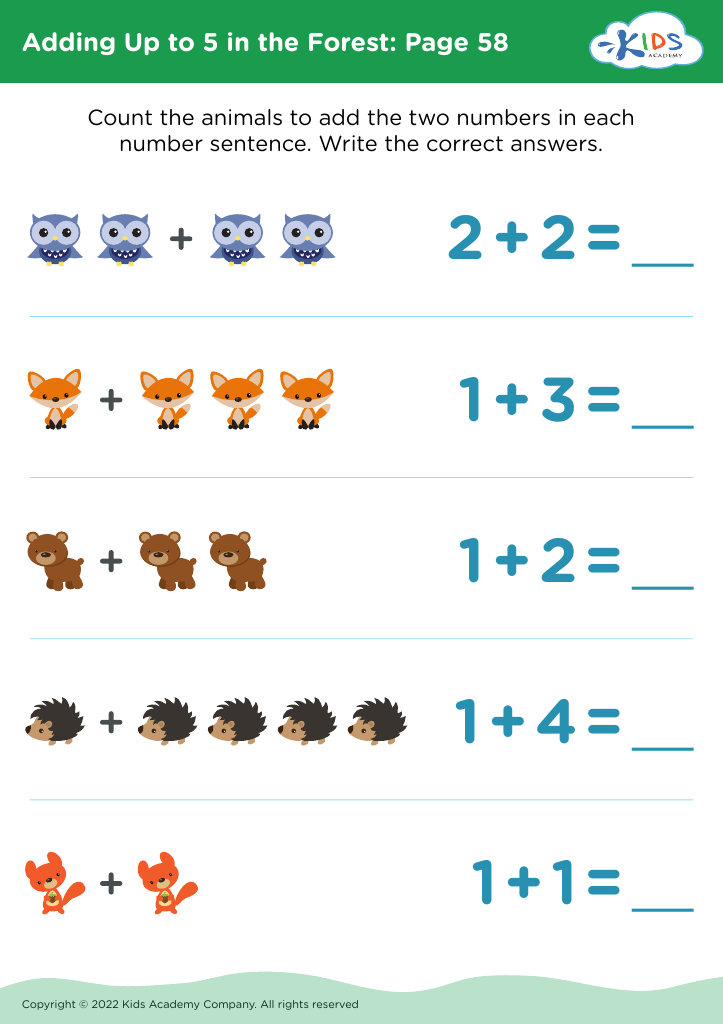
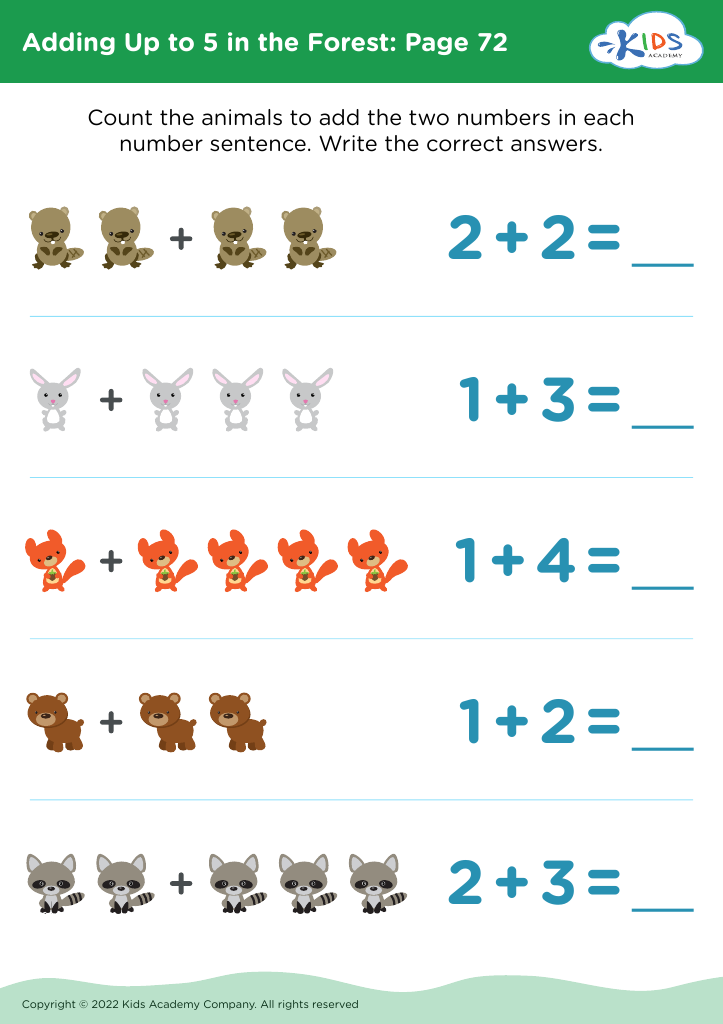
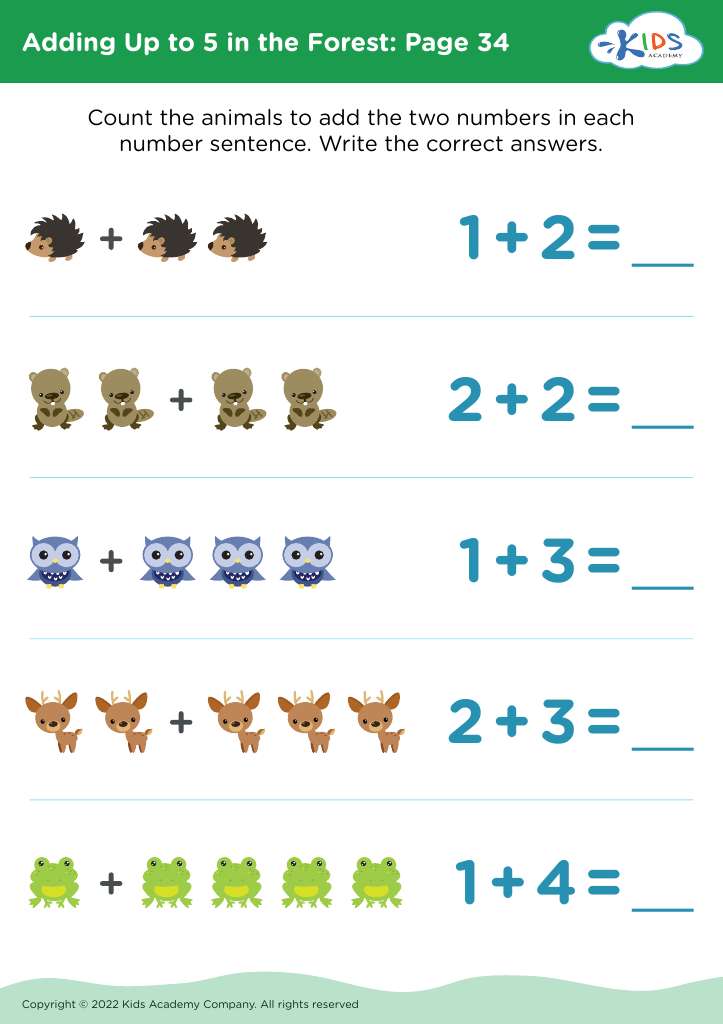
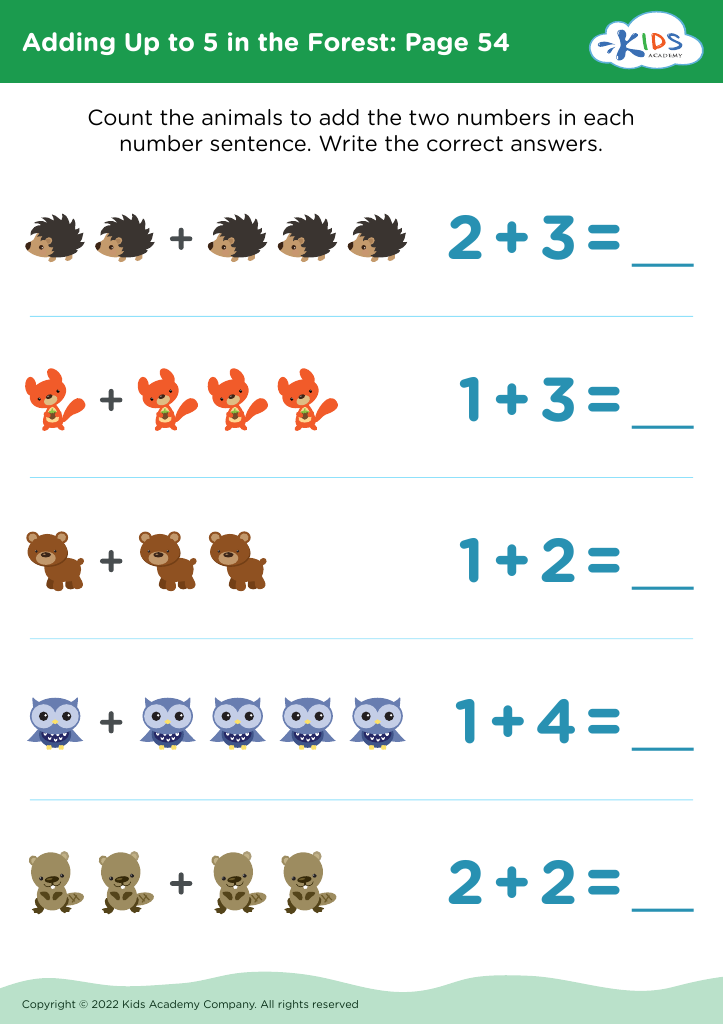
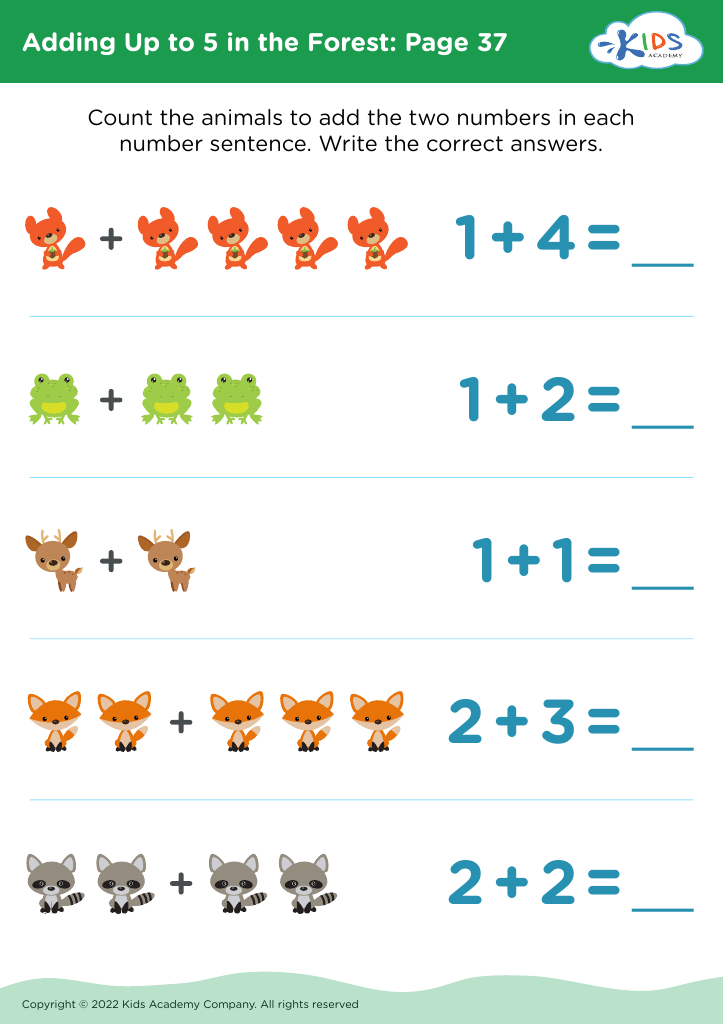
Discover the beauty of nature while enhancing essential math skills with our "Nature Appreciation Adding Up to 5 Worksheets" designed for children ages 5-9. These engaging worksheets combine interactive nature-themed activities with fundamental addition concepts, allowing young learners to explore their surroundings while practicing counting and addition up to 5. Each worksheet features vibrant illustrations and thoughtful prompts that encourage kids to observe different elements of nature, fostering curiosity and appreciation for the environment. Perfect for classroom use or at-home learning, our worksheets create a fun and educational experience that nurtures both mathematical confidence and a love for nature. Explore today!




%20(1).jpg)

.jpg)

Nature appreciation is vital for children aged 5-9, as it fosters a connection between them and the environment. When parents and teachers encourage this appreciation, they help children develop a sense of wonder and respect for the natural world. Here are a few reasons why this matters:
-
Promotes Curiosity: Exploring nature ignites children’s curiosity. By observing plants, animals, and changing seasons, they learn to ask questions and seek answers, enhancing their critical thinking skills.
-
Enhances Learning: Nature can be a powerful classroom. Outdoor experiences can be tied to subjects like science and art, making learning more engaging and memorable. For example, counting leaves or identifying colors in flowers can assist with math and art lessons simultaneously.
-
Boosts Health: Spending time outside promotes physical activity, which is essential for healthy growth and development. Fresh air and sunshine contribute to overall well-being, helping reduce stress and anxiety.
-
Fosters Environmental Stewardship: By appreciating nature, children learn the importance of taking care of the environment, instilling values of sustainability and responsibility for future generations.
Through nurturing nature appreciation, parents and teachers play a crucial role in shaping well-rounded, compassionate individuals who cherish our planet.








