Understanding number relationships Adding Up to 5 Worksheets for Ages 5-9
3 filtered results
-
From - To
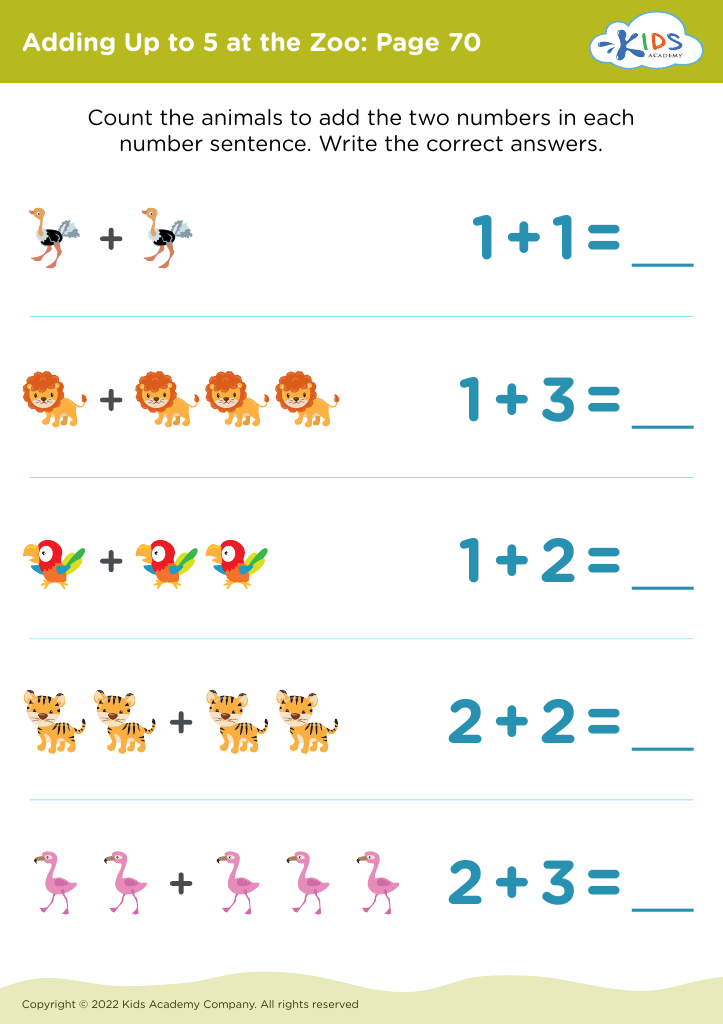
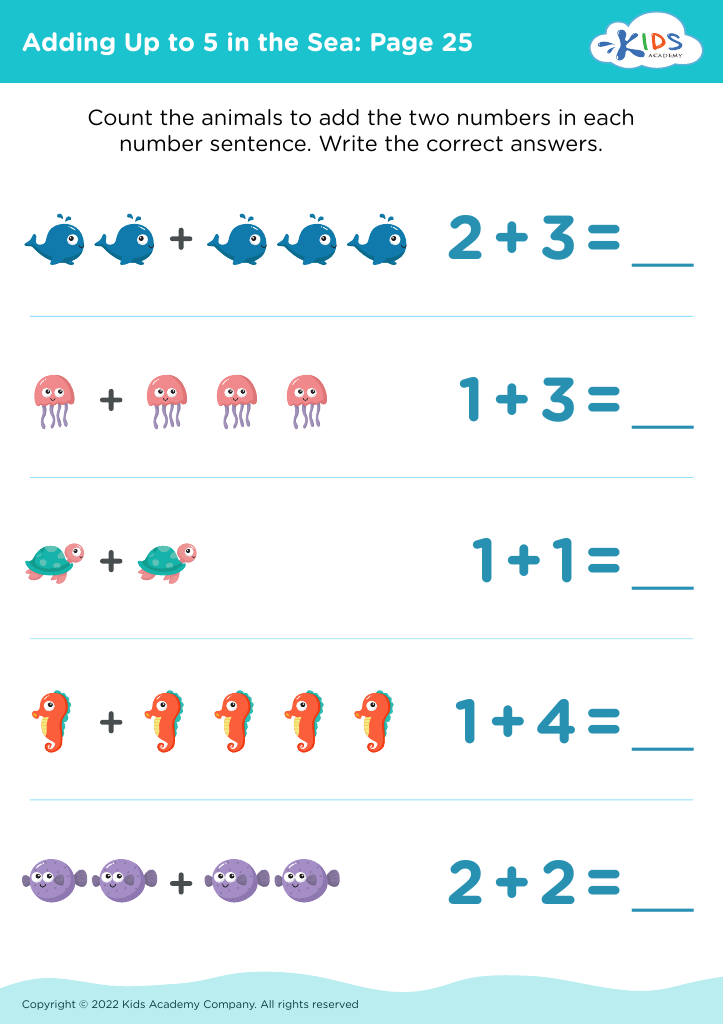
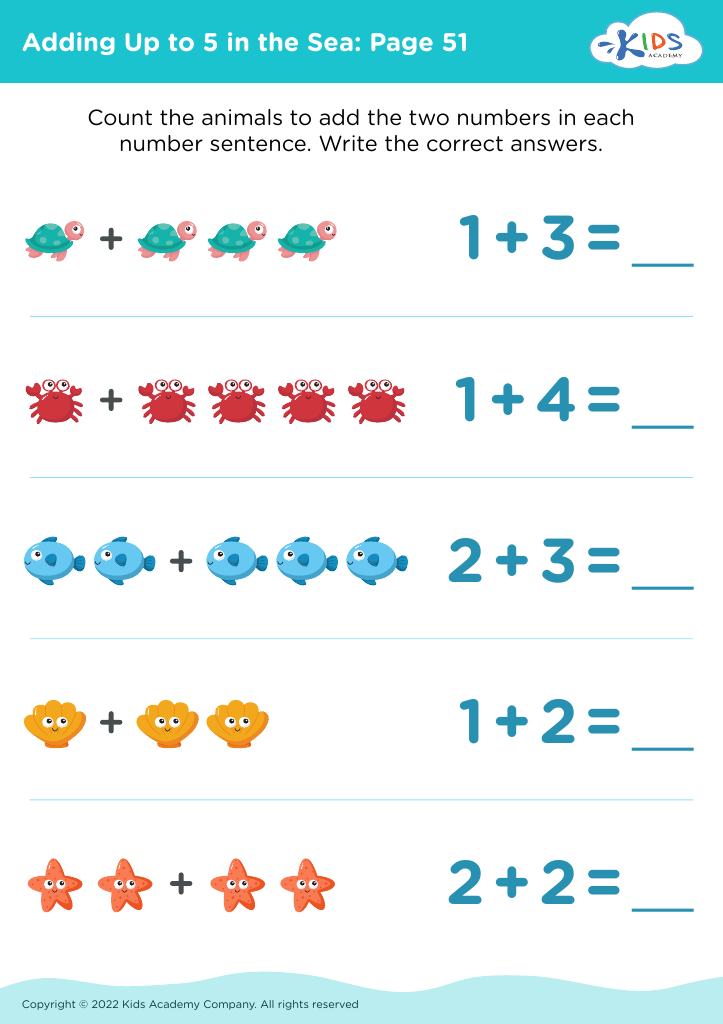
Unlock the world of math with our "Understanding Number Relationships: Adding Up to 5 Worksheets" designed for children ages 5-9! These engaging, interactive worksheets focus on building foundational numeric skills while helping young learners grasp the concept of addition. Through fun activities, kids will explore number relationships, develop problem-solving abilities, and discover how numbers combine to make five. Ideal for both classroom and home use, these worksheets promote hands-on learning and enhance early math comprehension. Download the worksheets today, and watch your child's confidence and curiosity in numbers grow as they embark on this educational adventure!







.jpg)
Understanding number relationships, especially numbers adding up to 5, is crucial for children aged 5-9 as it lays the foundation for their mathematical thinking and overall academic success. At this age, children are developing their number sense, which helps them recognize patterns and relationships among numbers. When children grasp the concept that various combinations can form 5—such as 2 + 3, 1 + 4, or 0 + 5—they gain a deeper understanding of addition and develop mental math skills.
For teachers and parents, supporting this learning can transform how children perceive mathematics. It encourages critical thinking and problem-solving abilities, empowering them to tackle more complex math concepts in the future. Furthermore, understanding number relationships fosters confidence in academic abilities, promoting a positive attitude towards learning.
Additionally, these skills can be directly applied to real-world situations, such as sharing snacks or sorting objects, enhancing a child's everyday experiences. By focusing on this foundational concept, teachers and parents not only prepare children for future math challenges but also instill a love for learning in general. Thus, emphasizing number relationships at a young age is essential for nurturing well-rounded, capable learners.








