Visual perception improvement Adding Up to 5 Worksheets for Ages 5-9
5 filtered results
-
From - To
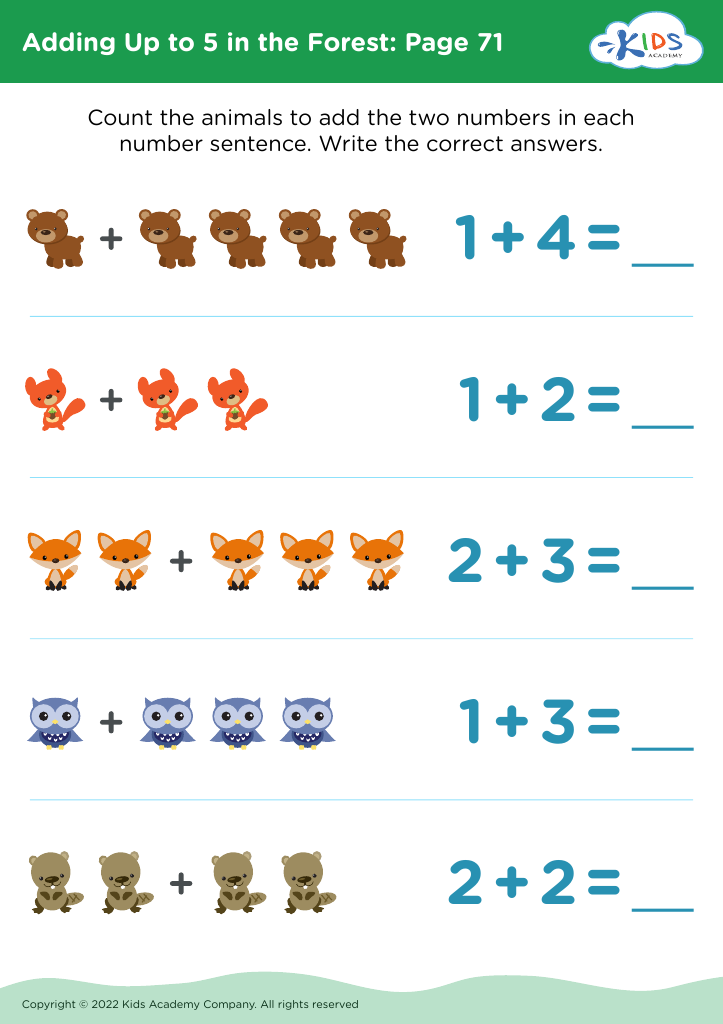
Our "Visual Perception Improvement Adding Up to 5 Worksheets" are meticulously designed for children ages 5-9. These engaging, colorful worksheets not only enhance basic addition skills, encouraging kids to add numbers up to 5, but also focus on developing visual perception abilities. As children solve each problem, they’ll sharpen their ability to distinguish numbers and patterns, boosting their confidence. Ideal for early learners, these activities provide a fun and interactive way to build foundational math skills. Ensure your child's success with our expertly crafted resources, purpose-built to support and improve their visual and cognitive development.
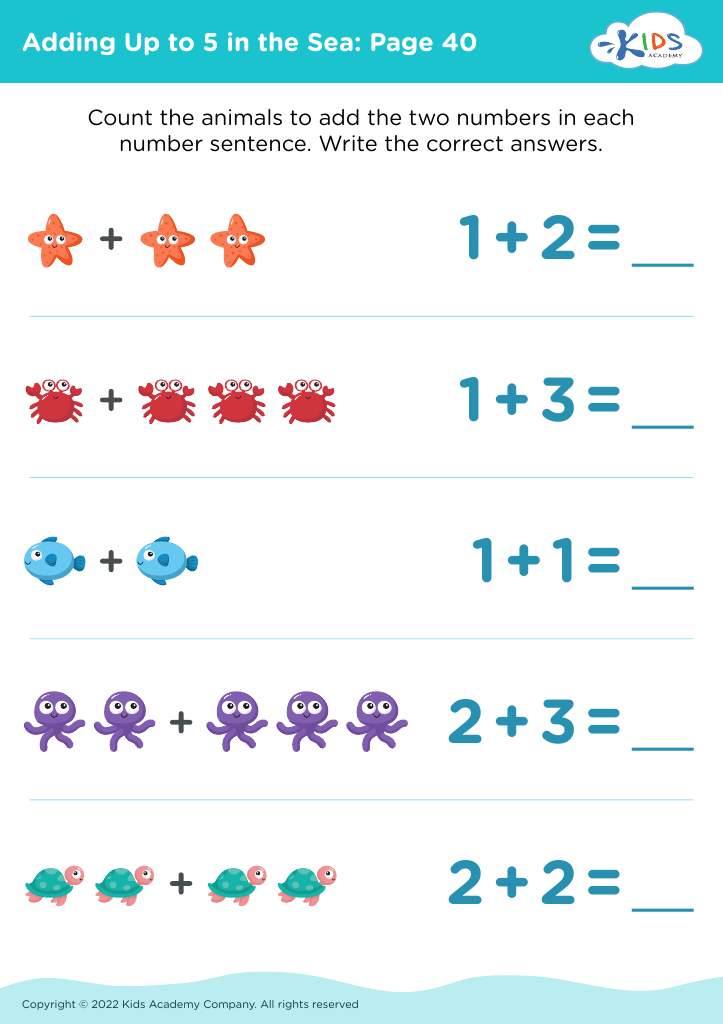
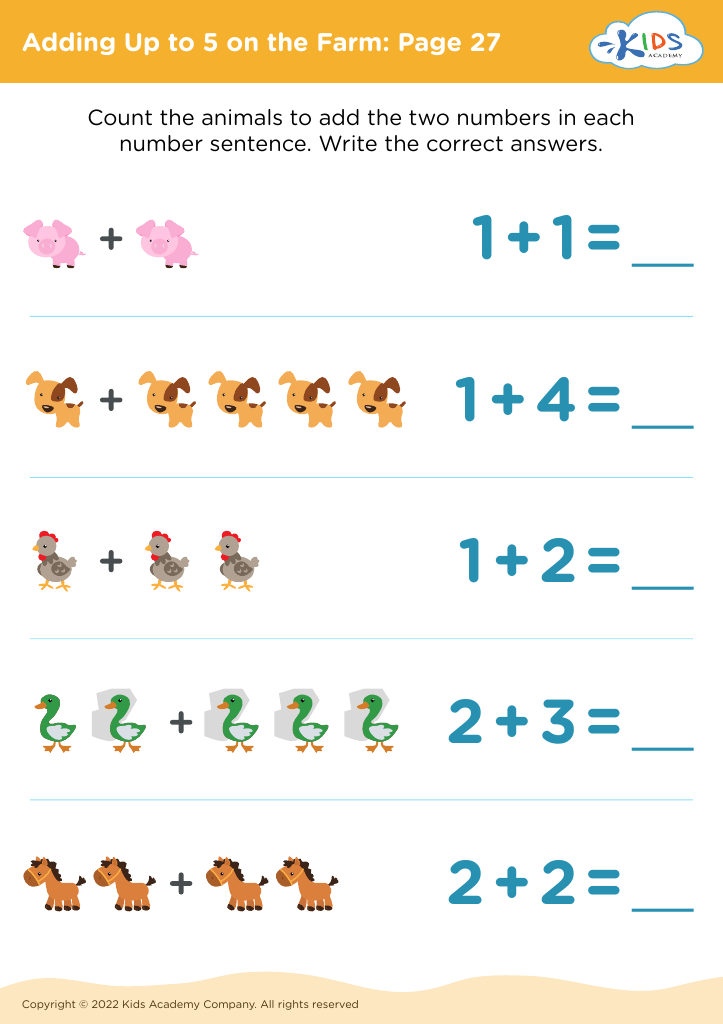
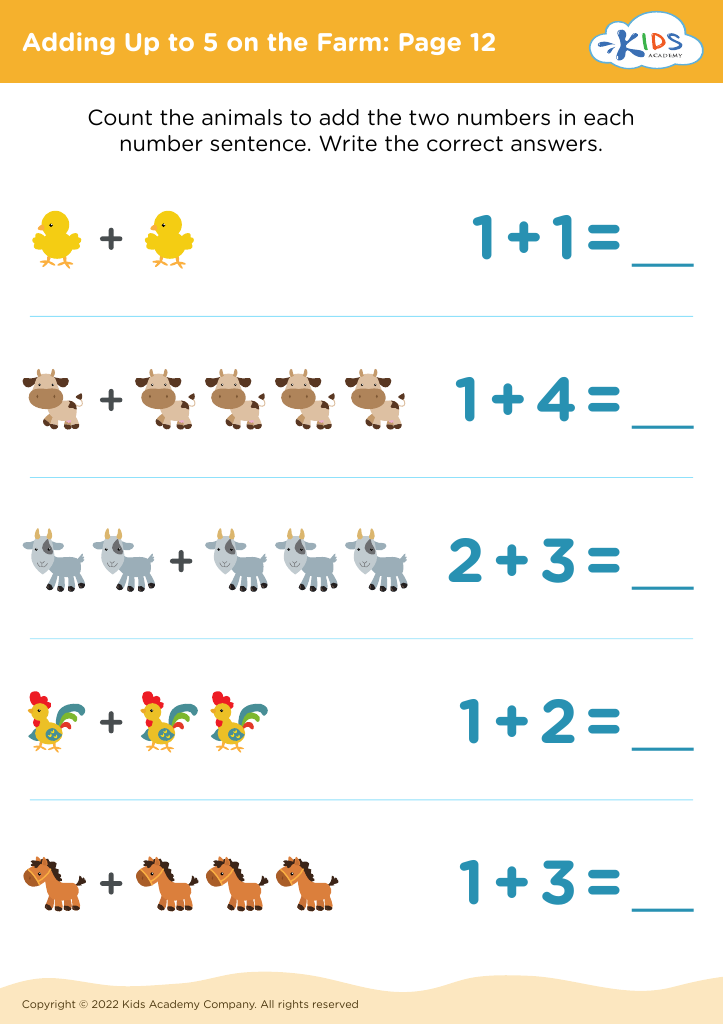
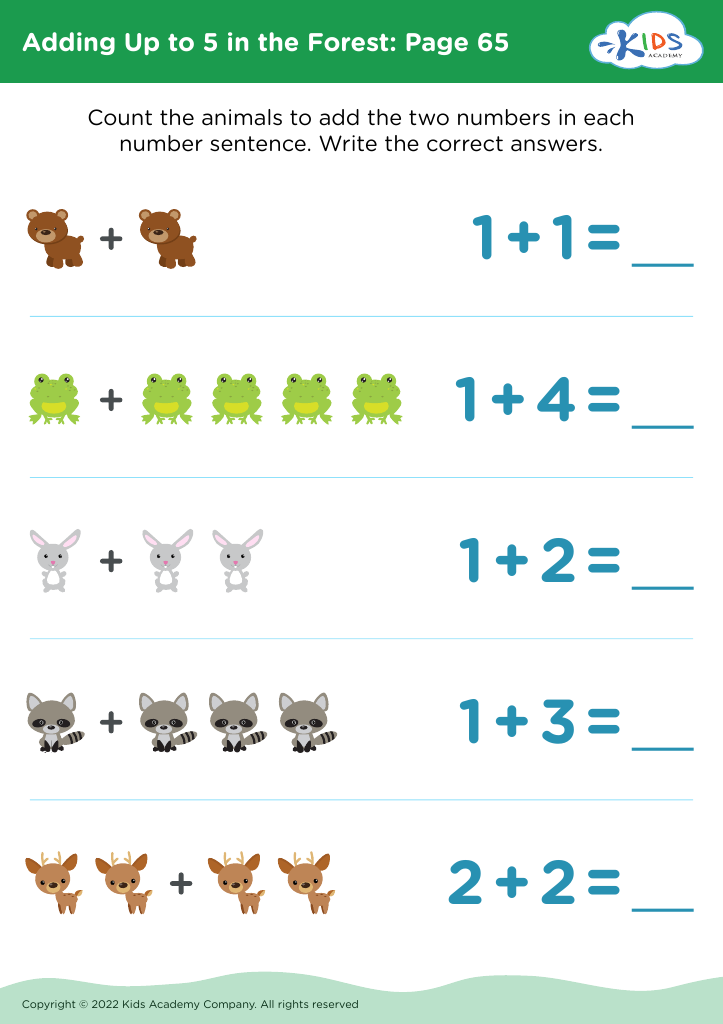







.jpg)
Visual perception is crucial for young children, especially between the ages of 5-9, as it directly impacts their ability to learn and understand the world around them. Fostering visual perception skills, such as the ability to add up to five, enhances children’s cognitive development, including attention to detail, pattern recognition, and spatial awareness.
Parents and teachers should prioritize these skills because they lay the foundation for fundamental math literacy, an essential part of the early education curriculum. Adding up to five helps children grasp the basics of numbers, addition, and arithmetic operations. These early math skills are pivotal as they influence a child's confidence and success in future math learning and overall academic achievement.
Moreover, visual perception is tied to problem-solving and critical thinking abilities. By integrating visual perception exercises, children will enhance their capability to interpret and analyze visual data, aiding in diverse tasks ranging from reading charts to daily activities that rely on spatial orientation.
In summary, visual perception improvement activities such as adding up to five are essential because they nurture children's math skills, cognitive development, and critical thinking. This proactive approach aligns with preparing them for advanced educational challenges and everyday problem-solving, contributing to their broader intellectual growth.








