Filters

34 filtered results

Clear all filters
Favorites
With answer key
Interactive

34 filtered results

Difficulty Level

Grade


Check out this FREE Trial Lesson on Adding with Busy Bugs for age 5-9!

D

Favorites
With answer key
Interactive
  • 5-9
  • Basic Addition Skills
  • Adding with Busy Bugs
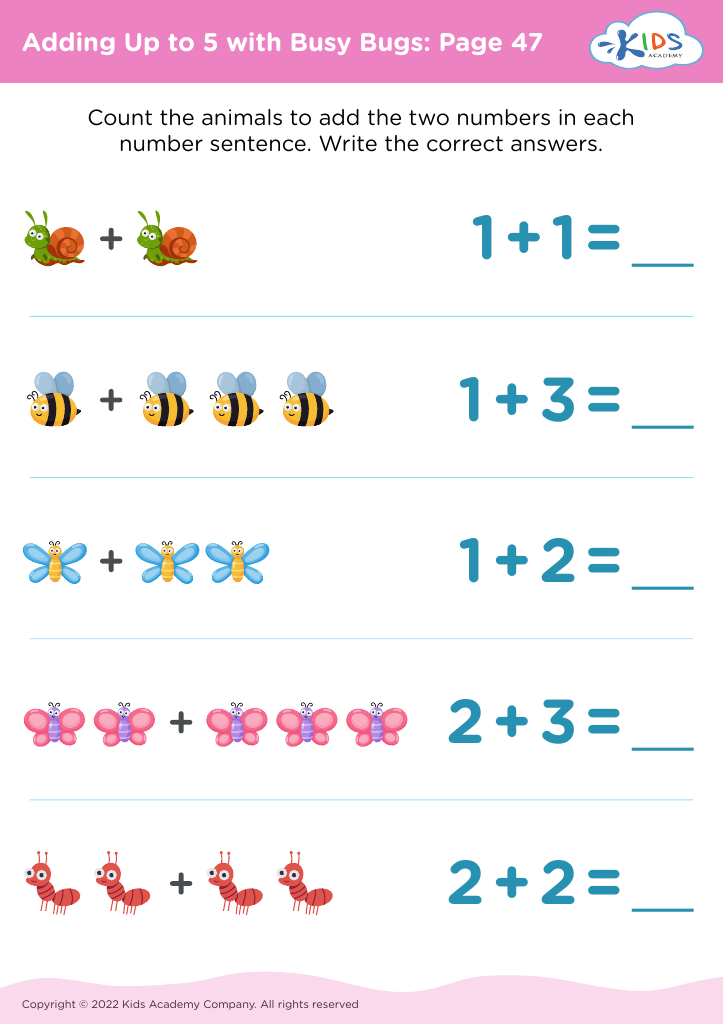
Adding Up to 5 with Busy Bugs: Page 47
Worksheet
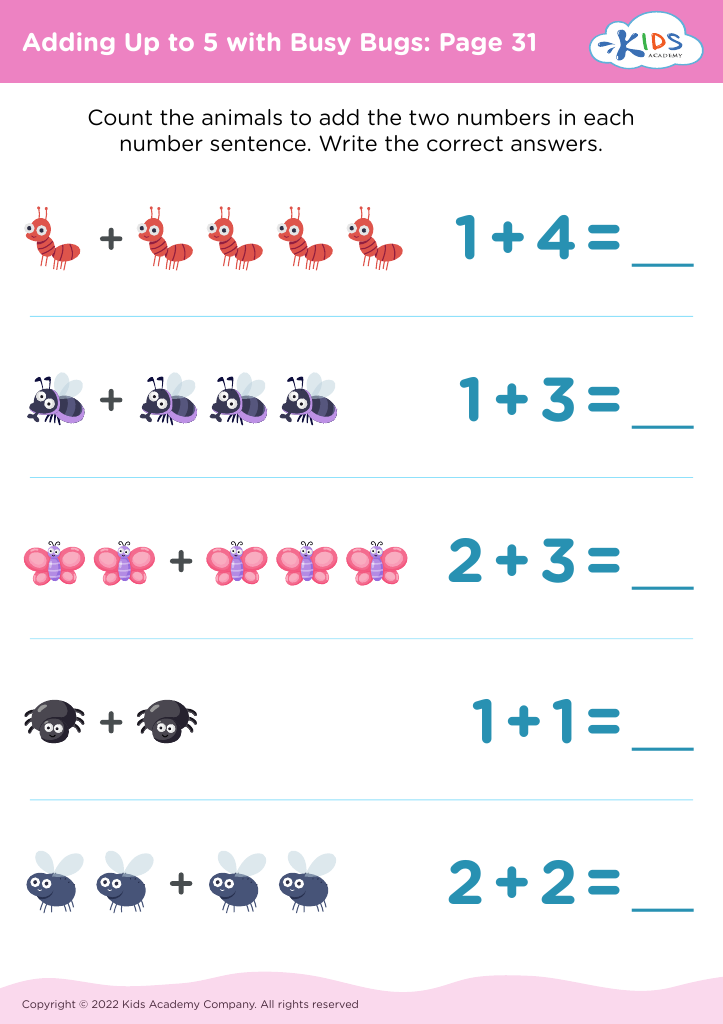
Adding Up to 5 with Busy Bugs: Page 31
Worksheet
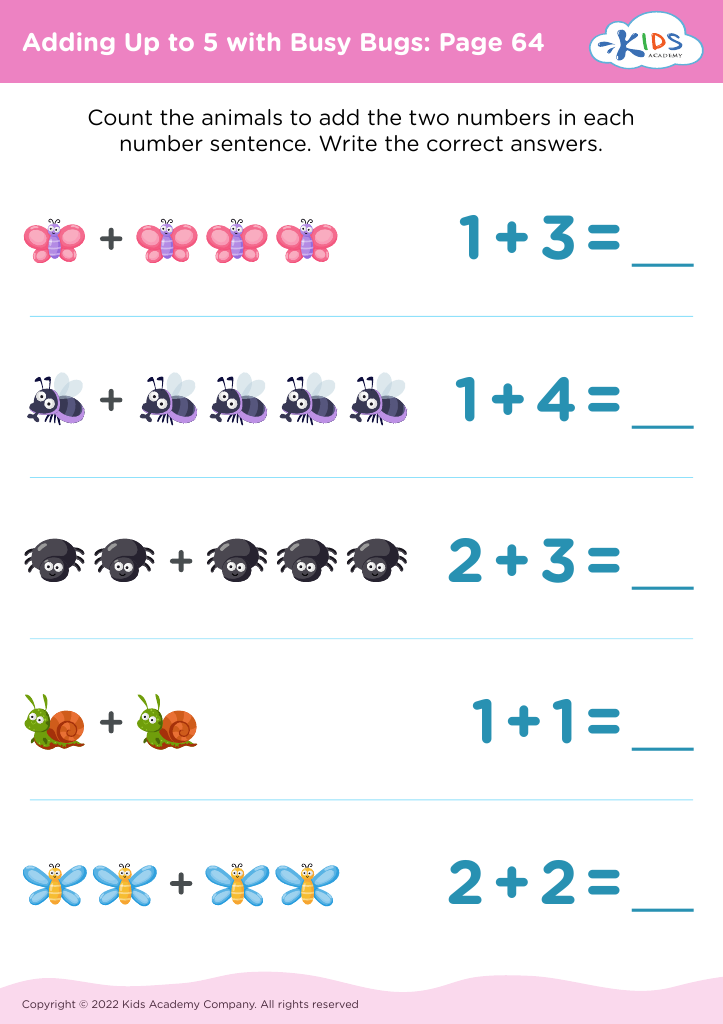
Adding Up to 5 with Busy Bugs: Page 64
Worksheet
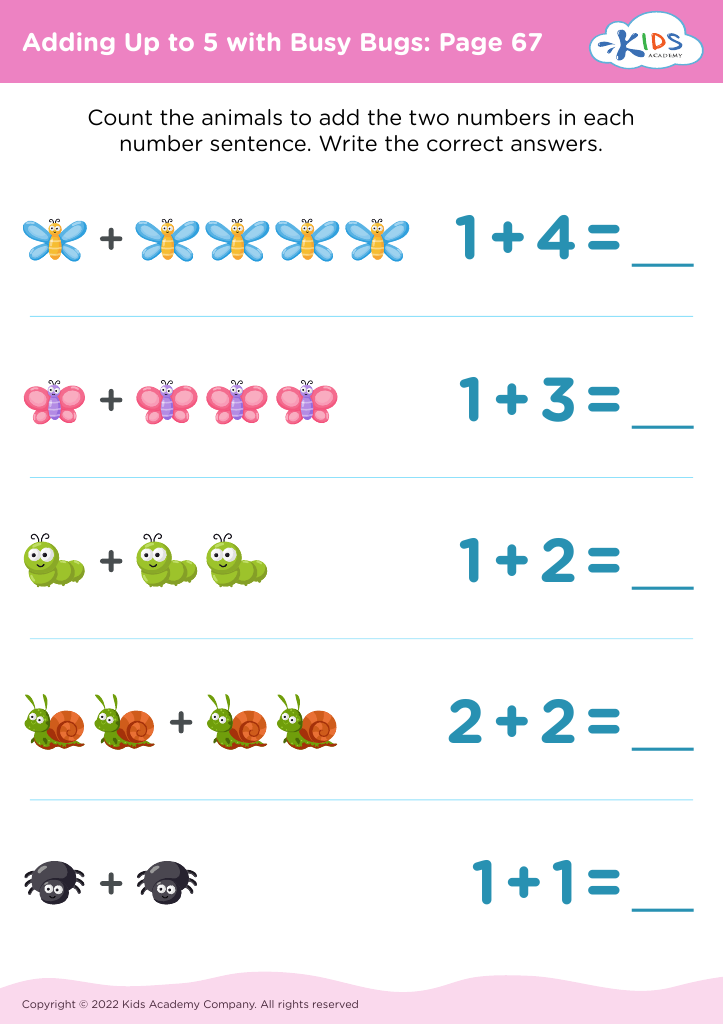
Adding Up to 5 with Busy Bugs: Page 67
Worksheet
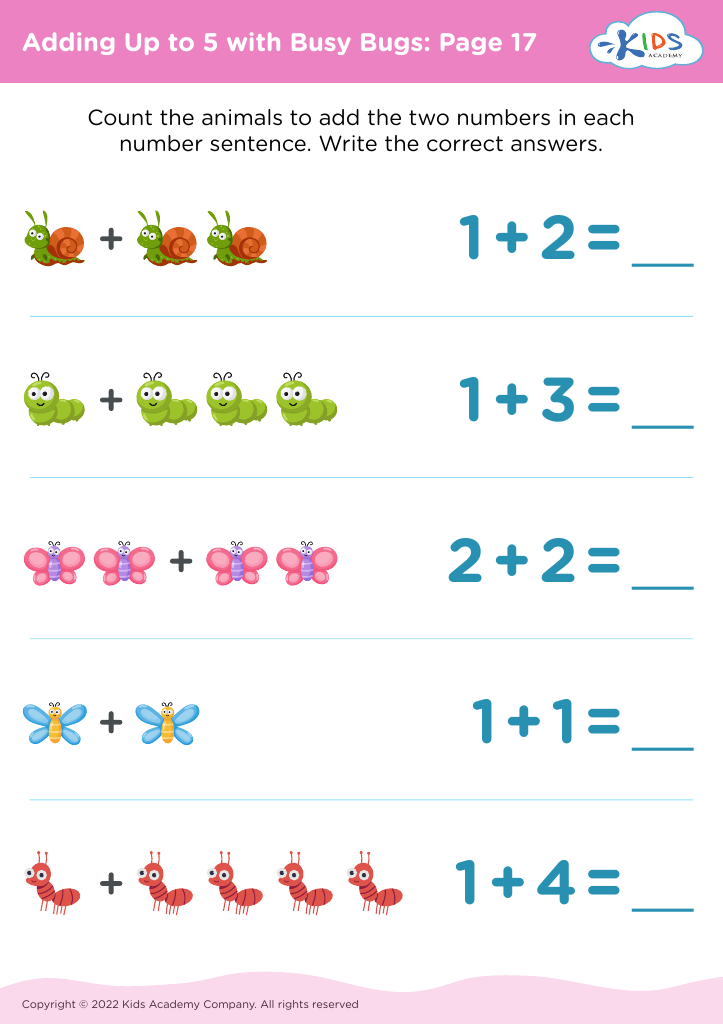
Adding Up to 5 with Busy Bugs: Page 17
Worksheet
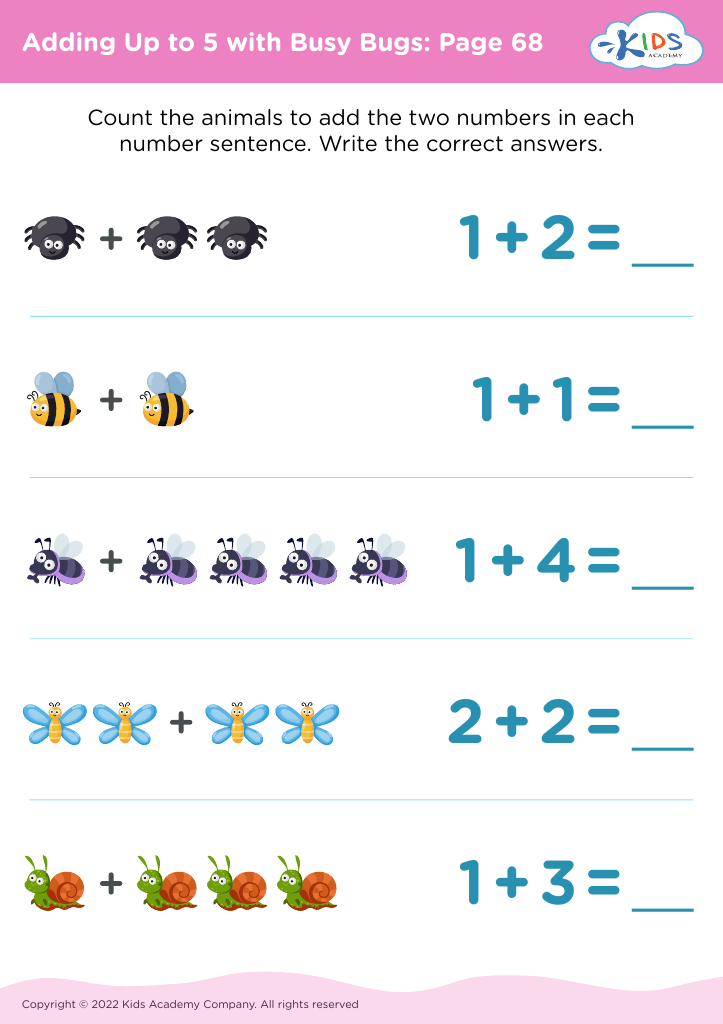
Adding Up to 5 with Busy Bugs: Page 68
Worksheet
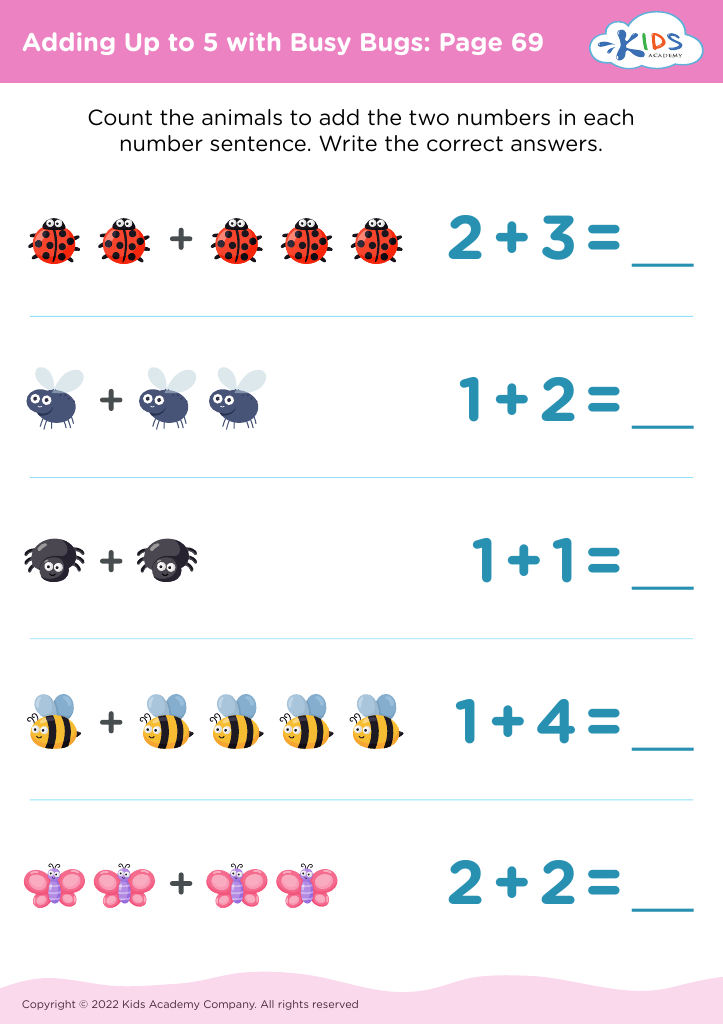
Adding Up to 5 with Busy Bugs: Page 69
Worksheet
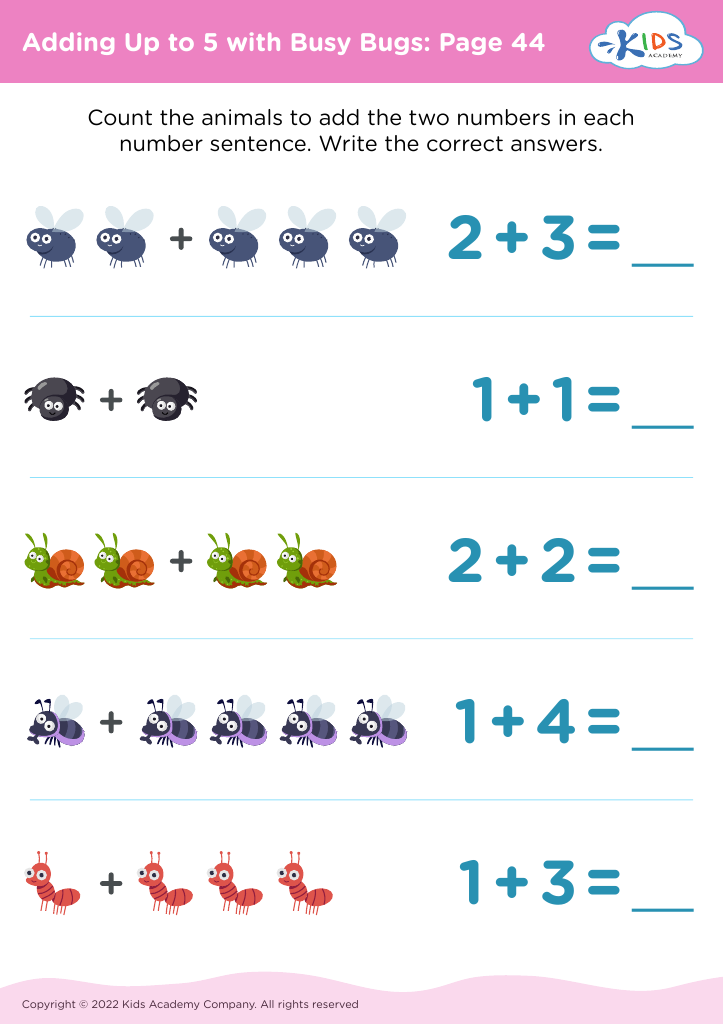
Adding Up to 5 with Busy Bugs: Page 44
Worksheet
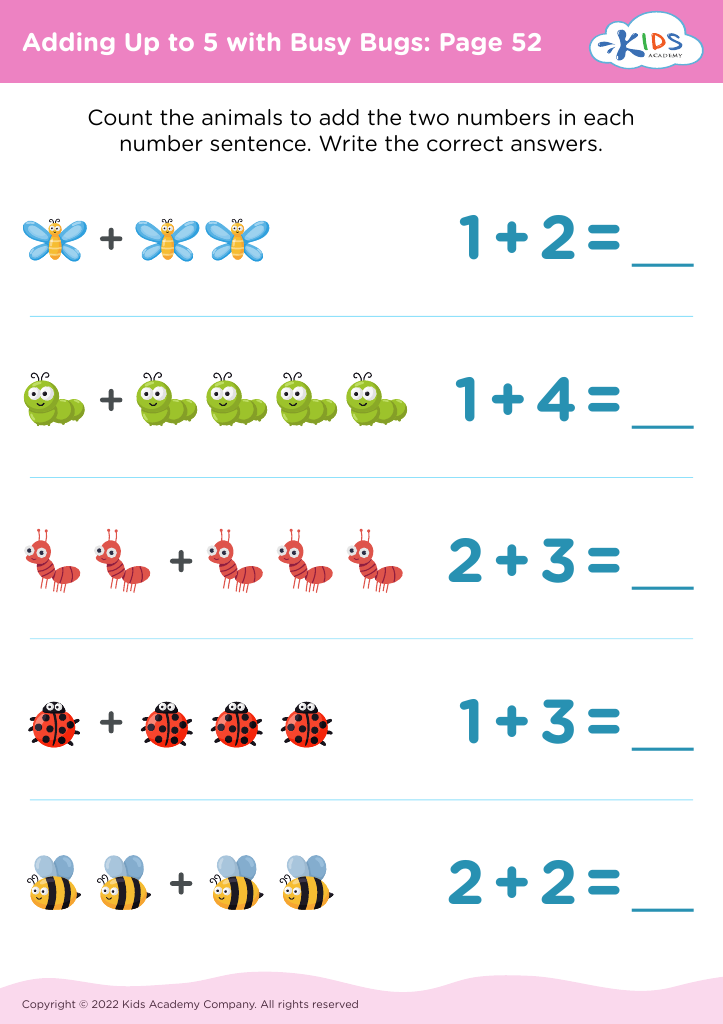
Adding Up to 5 with Busy Bugs: Page 52
Worksheet
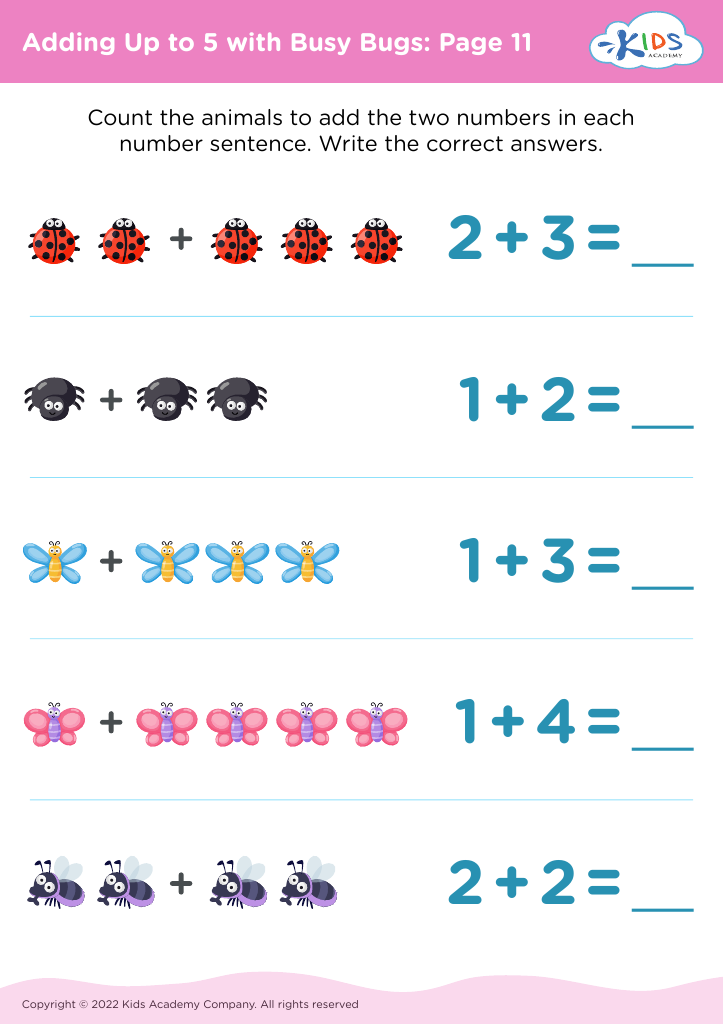
Adding Up to 5 with Busy Bugs: Page 11
Worksheet


Parents and teachers should care about "Basic Addition Skills Adding with Busy Bugs" for children ages 5-9 because it provides a foundational understanding of mathematics in an engaging and interactive manner. Early arithmetic is crucial for cognitive development, setting the stage for more complex mathematical concepts. The vibrant imagery and playful format of the "Busy Bugs" program make learning fun, which is essential for young children, as it fosters a positive attitude towards math.

Incorporating games and visual aids helps children grasp abstract concepts more easily by relating them to real-world scenarios they can see and touch. This visual and hands-on approach ensures that children can retain information more effectively. Additionally, engaging activities can hold a child's attention for longer periods, promoting better concentration and focus, which are critical skills not just in math but in all areas of learning.

Lastly, early success in math builds confidence. When children master basic addition, they are more likely to approach further mathematical challenges with enthusiasm and persistence. By prioritizing programs like "Busy Bugs," parents and teachers are laying the groundwork for future academic achievement and a lifelong appreciation of learning.