Animal recognition Addition & Subtraction Worksheets for Ages 5-9
99 filtered results
-
From - To
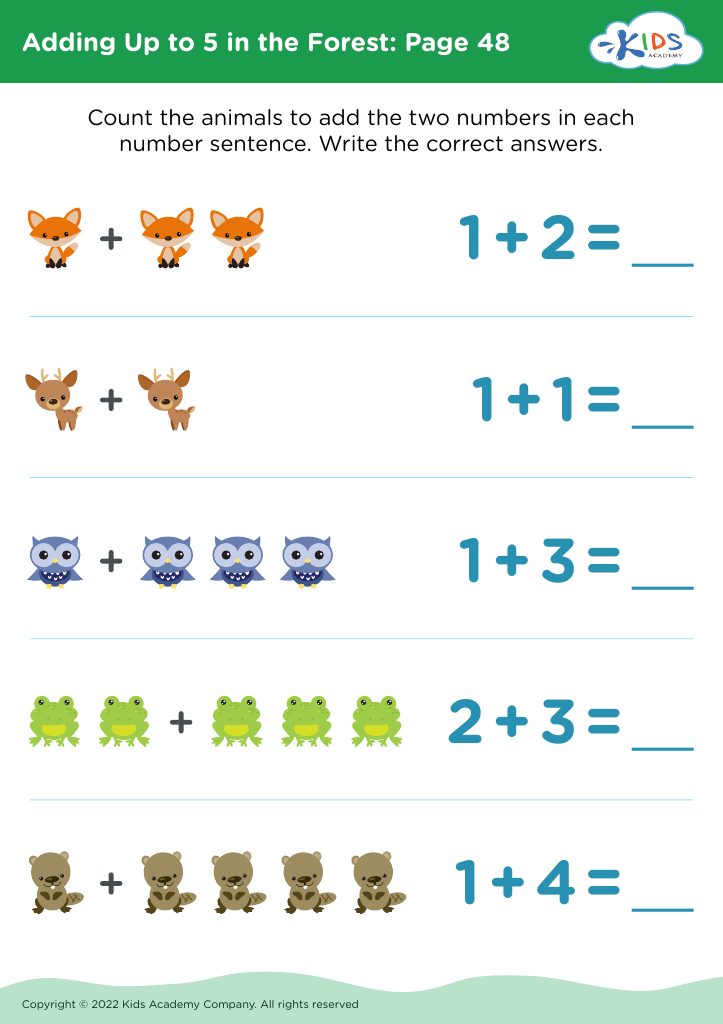
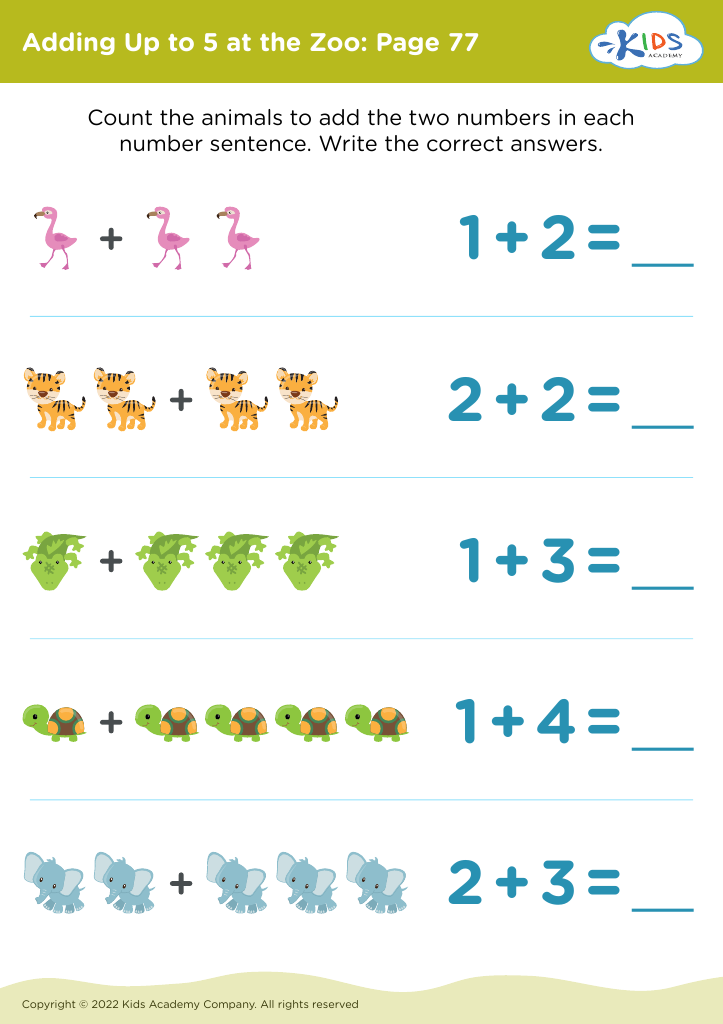
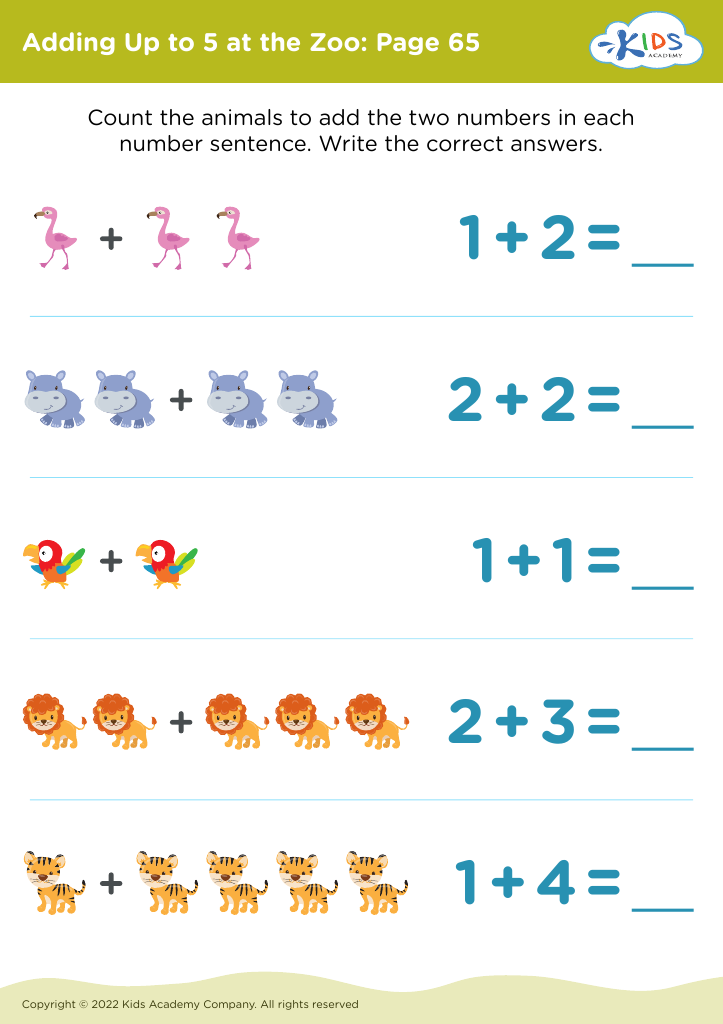
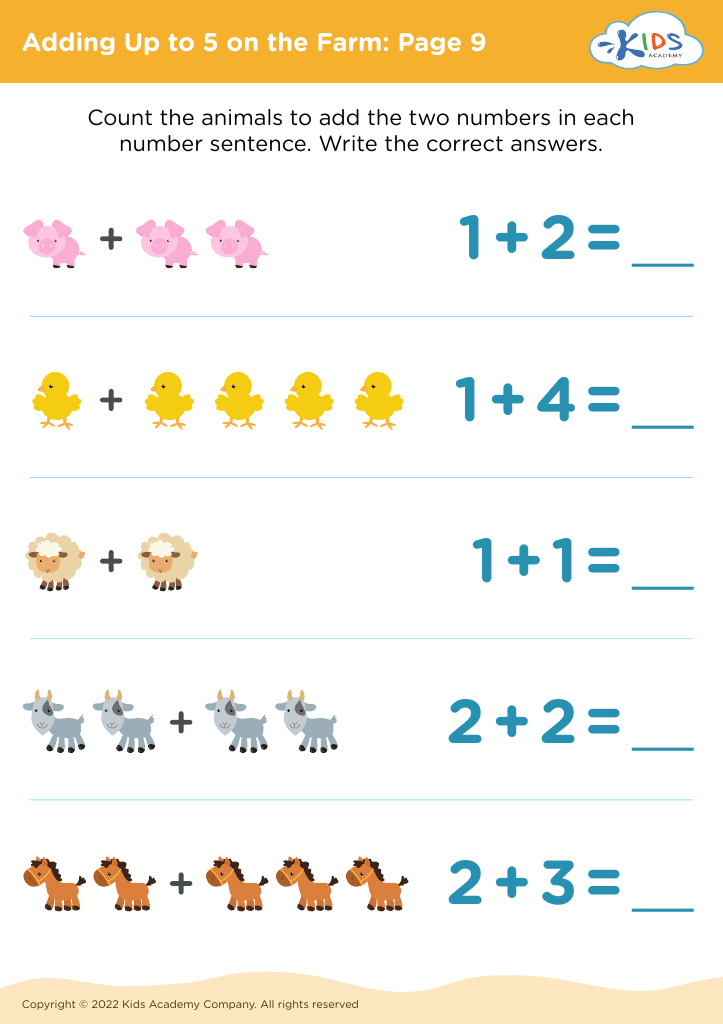
Discover our engaging Animal Recognition Addition and Subtraction Worksheets designed for children aged 5-9! These fun and colorful activities not only help young learners develop their math skills but also promote animal recognition in an exciting way. Each worksheet features captivating illustrations of various animals, allowing kids to practice fundamental addition and subtraction concepts while fostering their curiosity about wildlife. Perfect for classrooms or at-home learning, these resources create an interactive experience that keeps children motivated and eager to learn. Give your child the joy of math as they explore the animal kingdom while mastering essential skills!
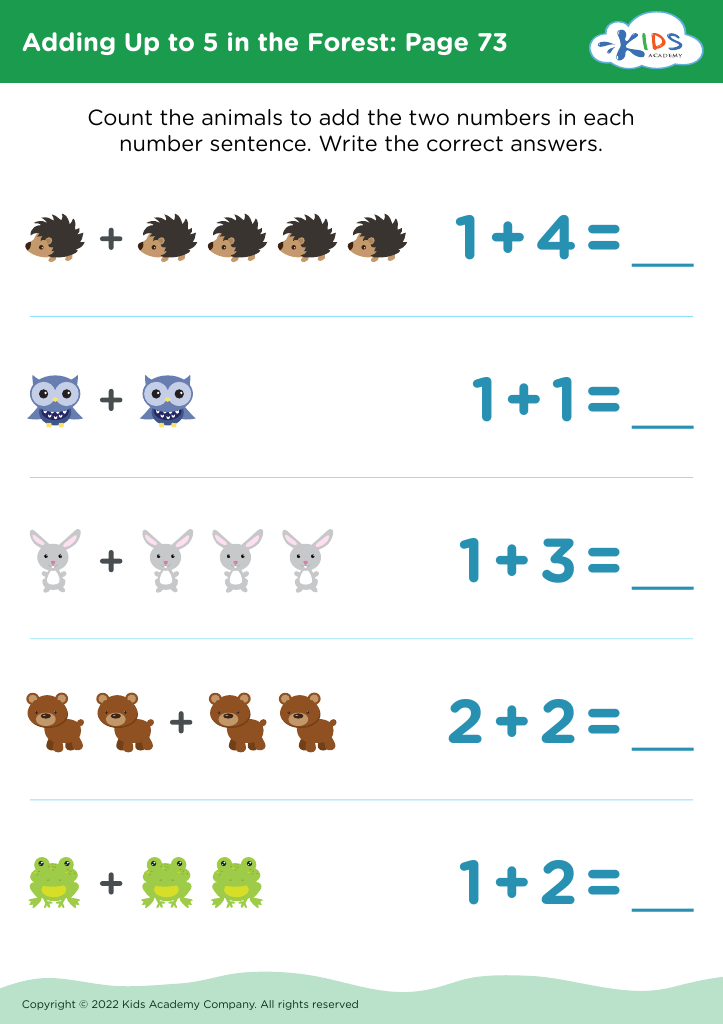
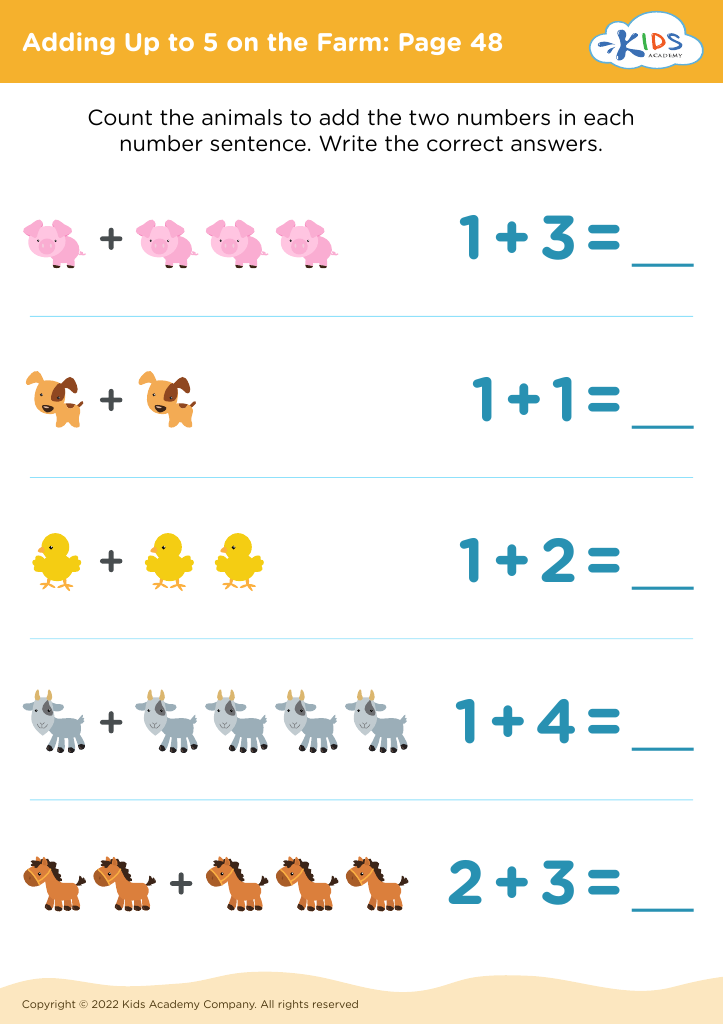
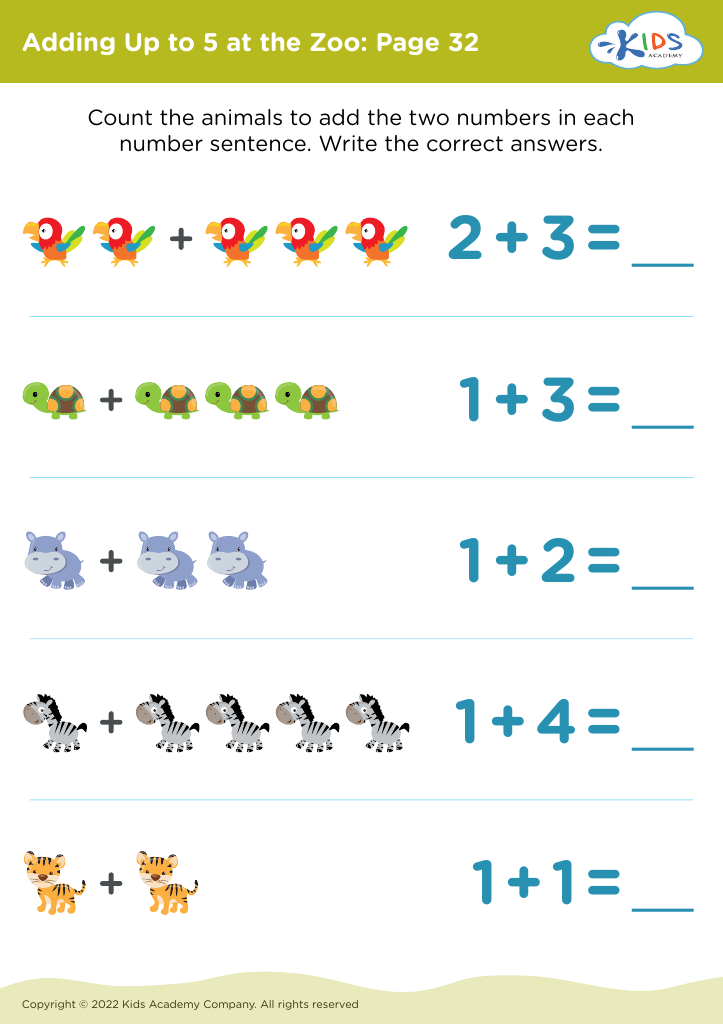
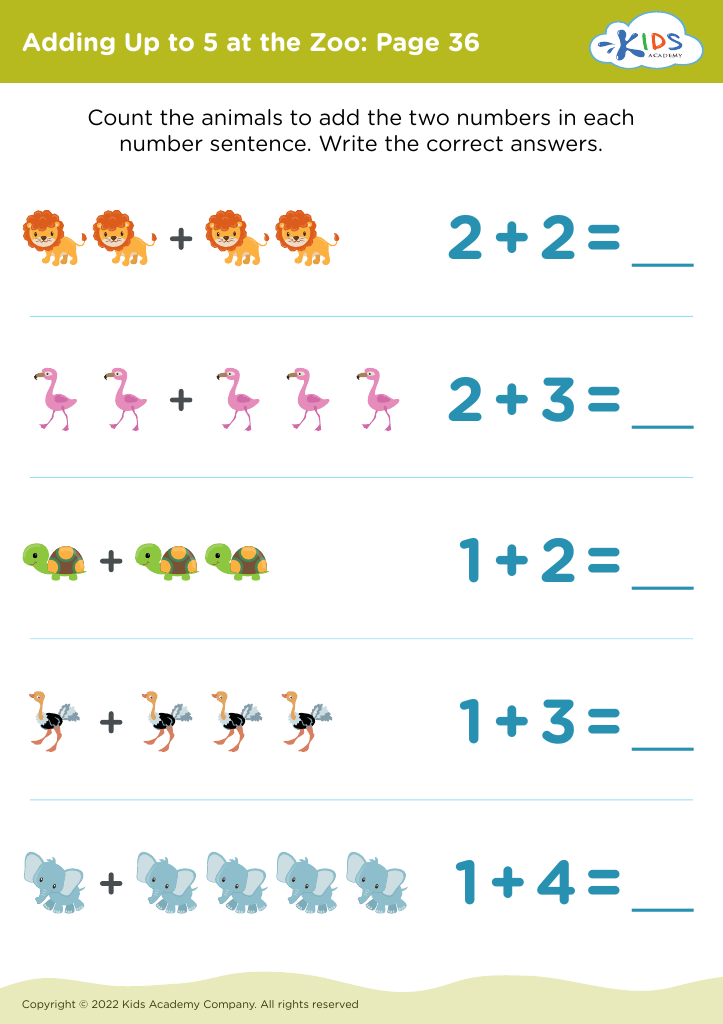
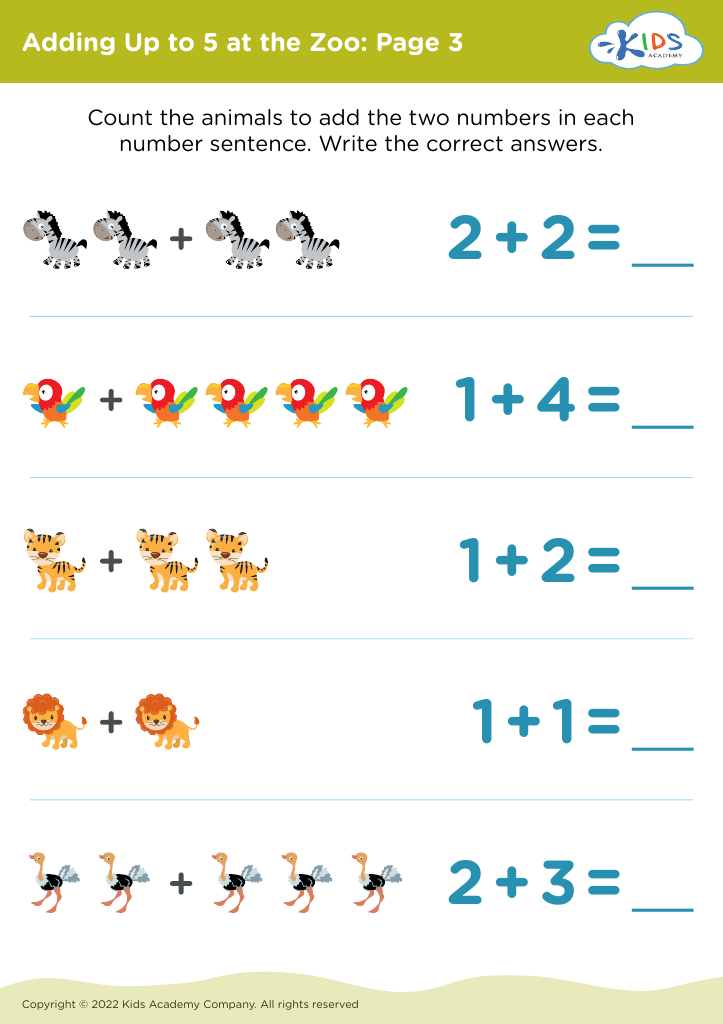
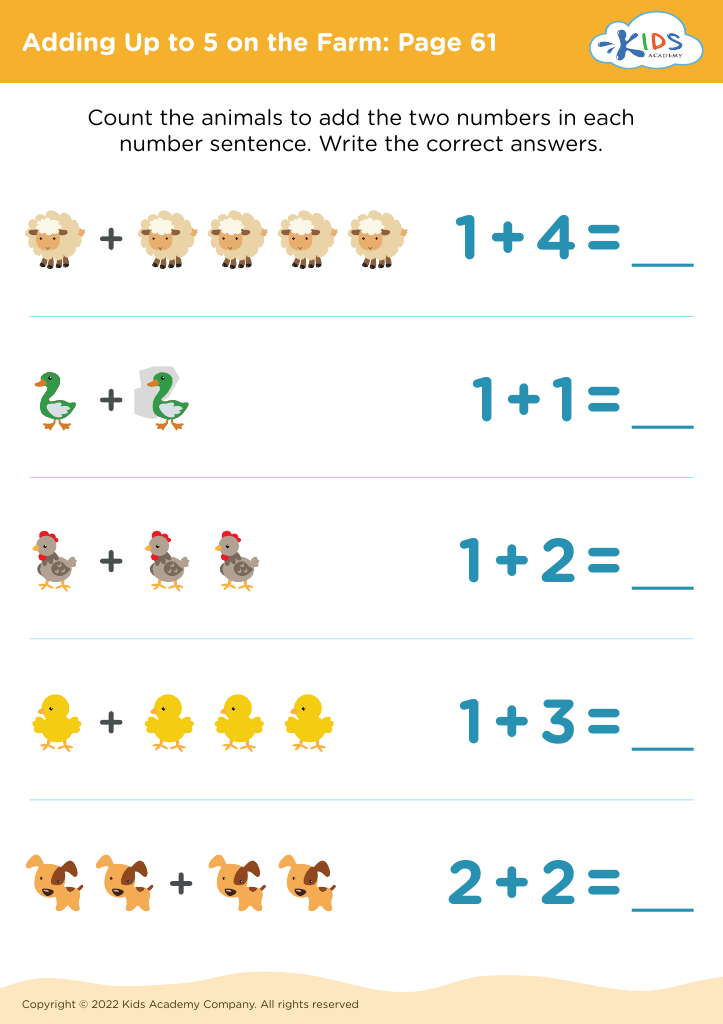
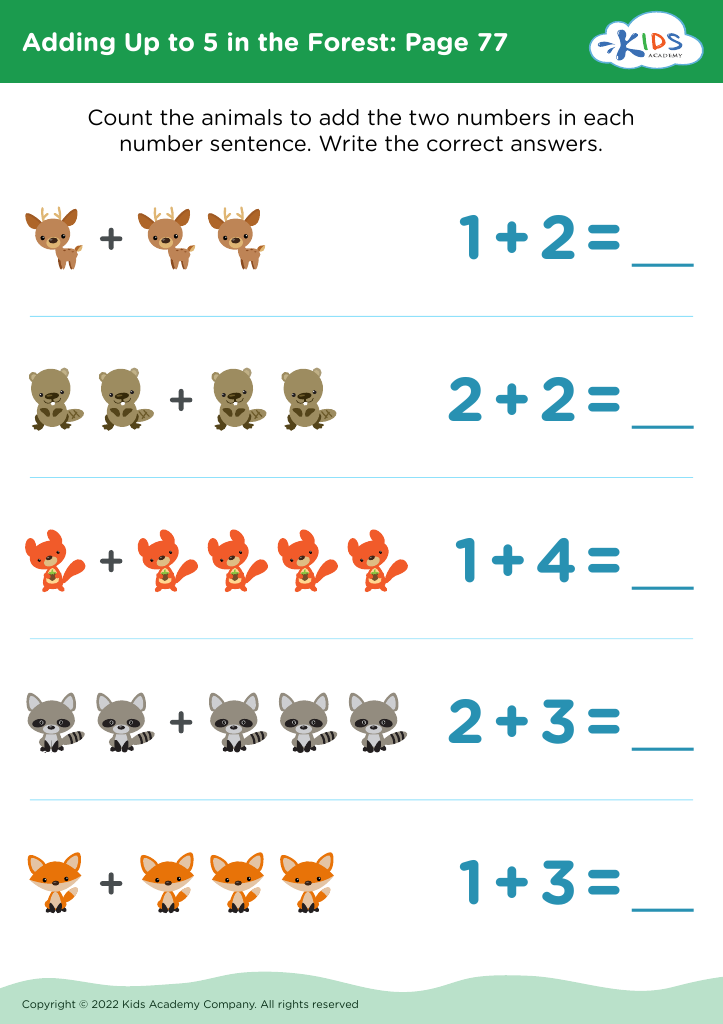
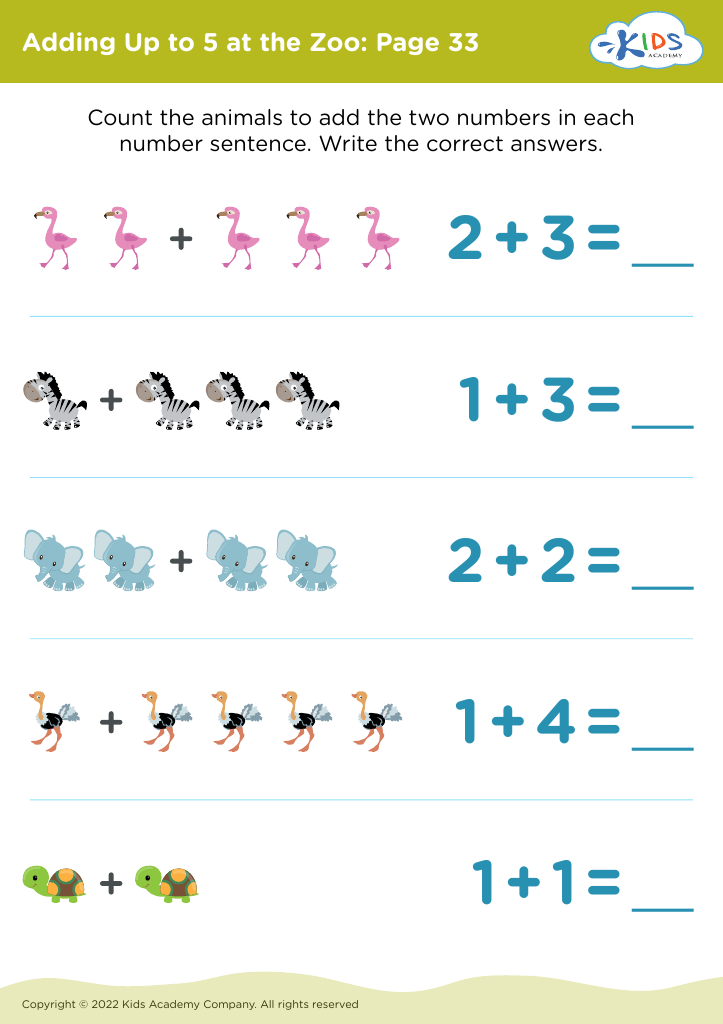
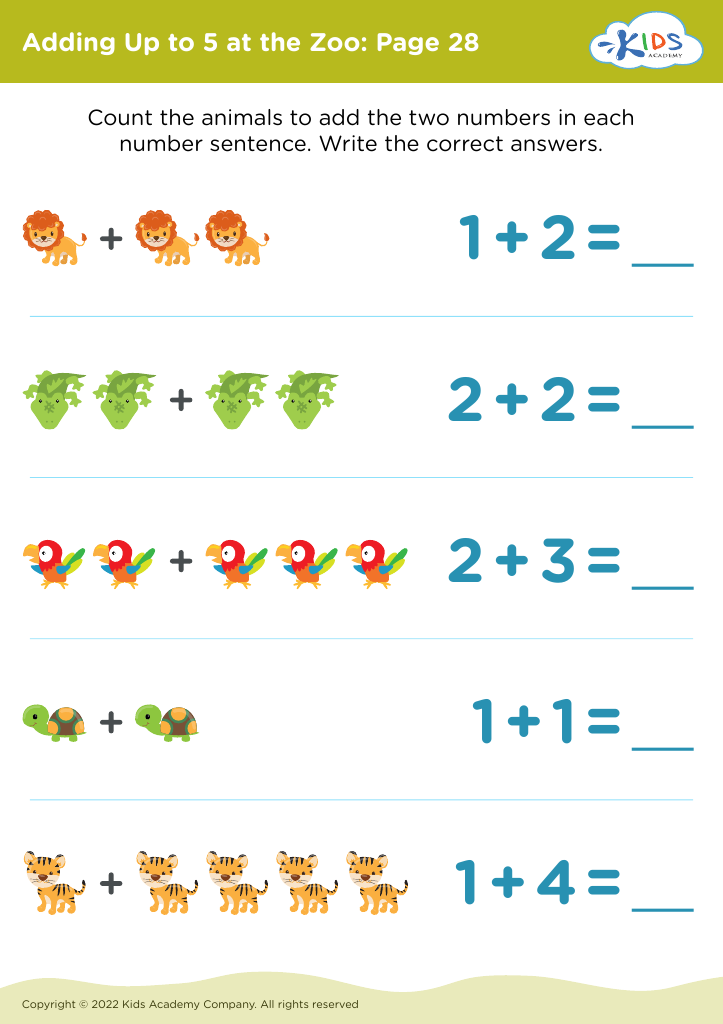
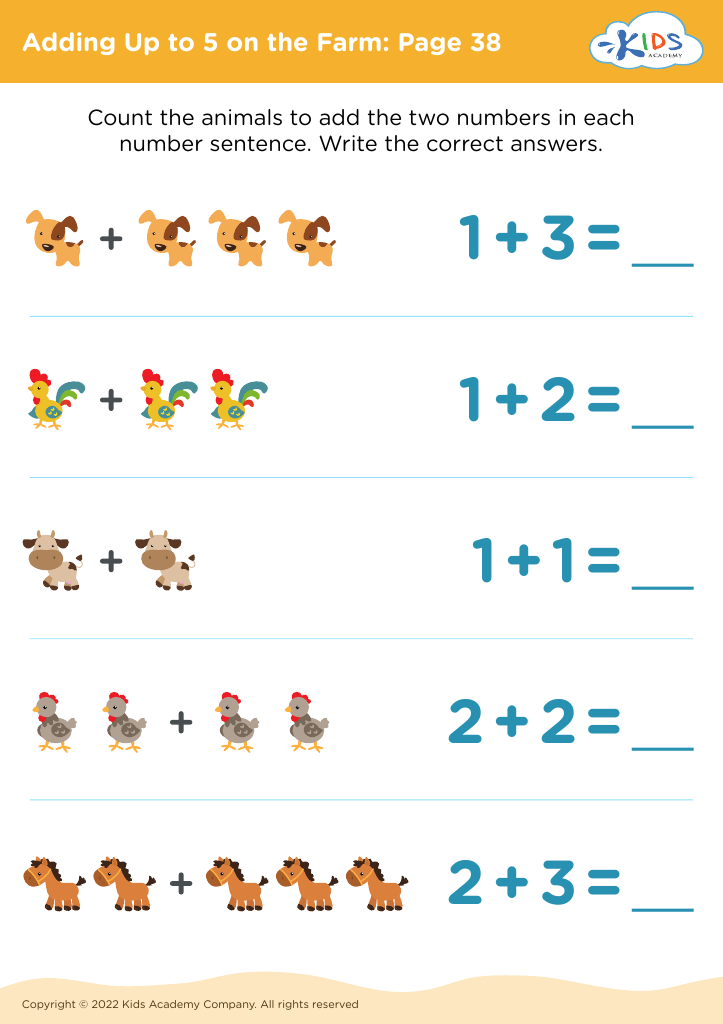
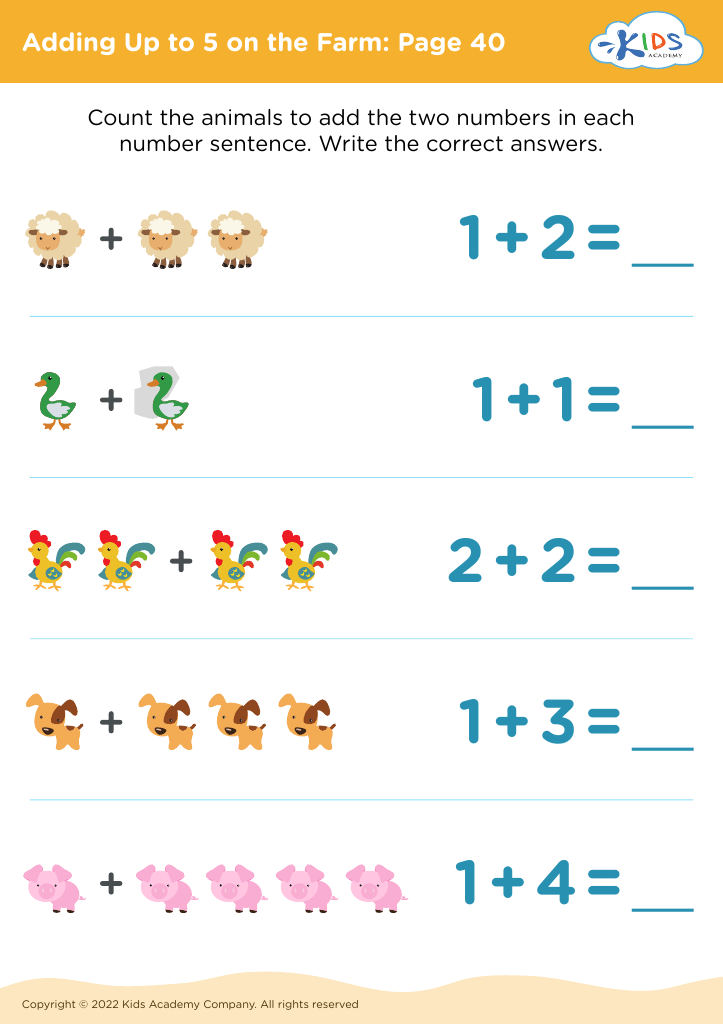
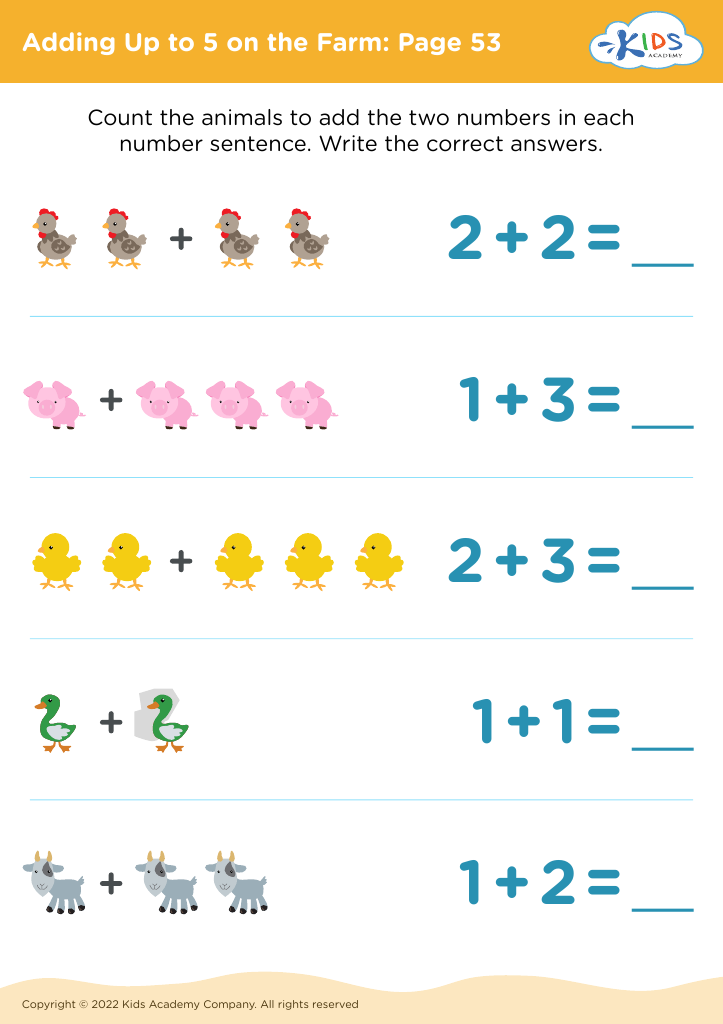
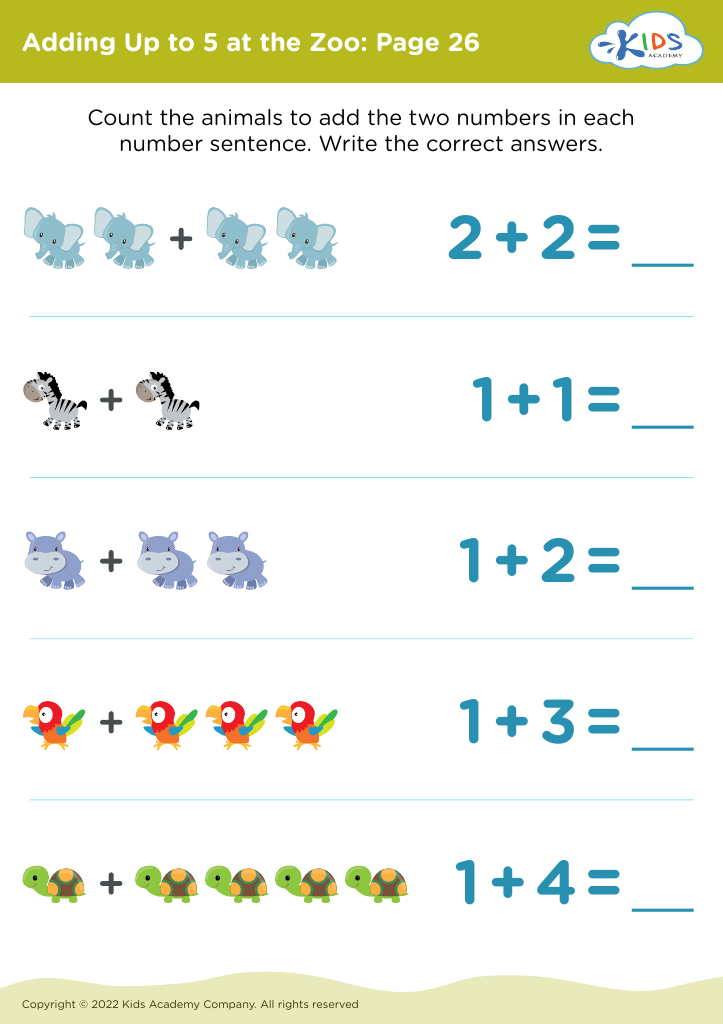
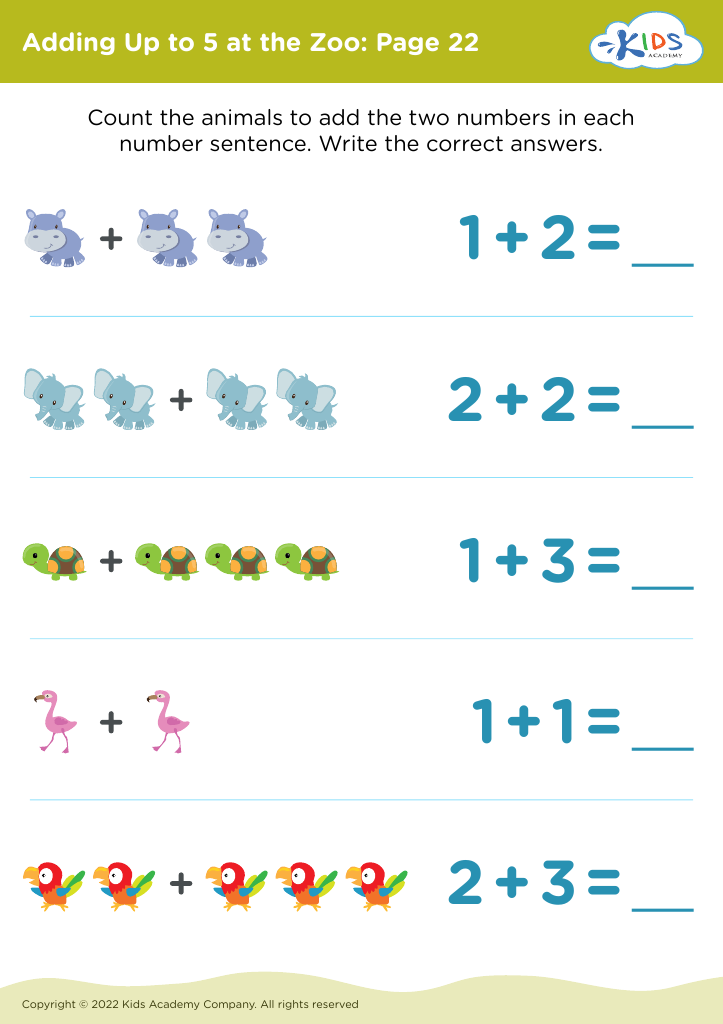
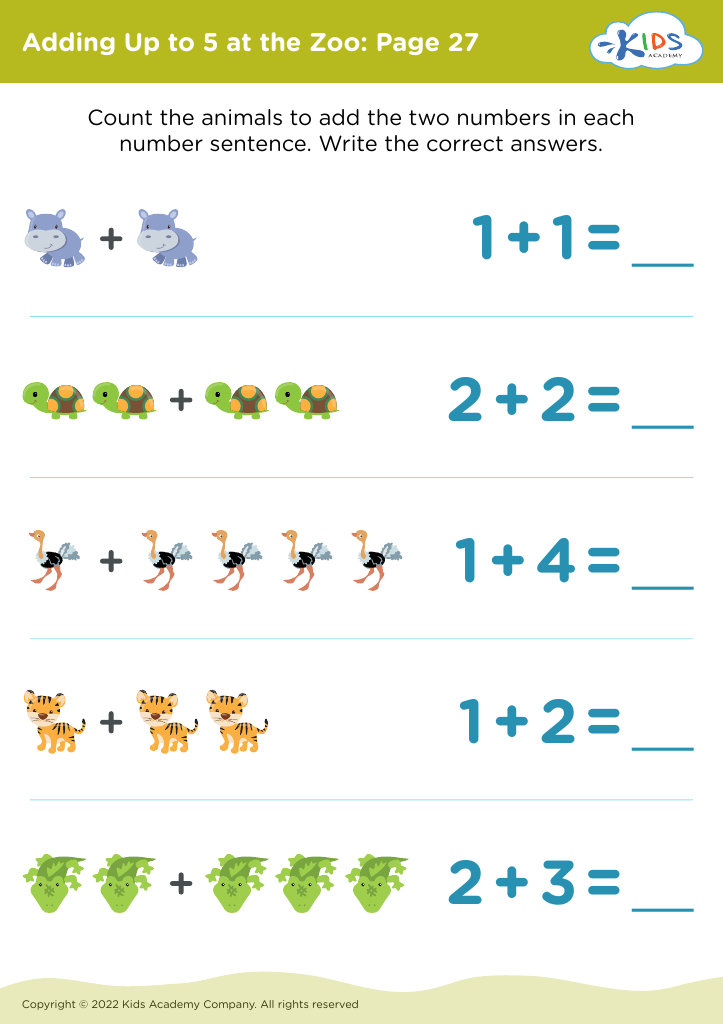
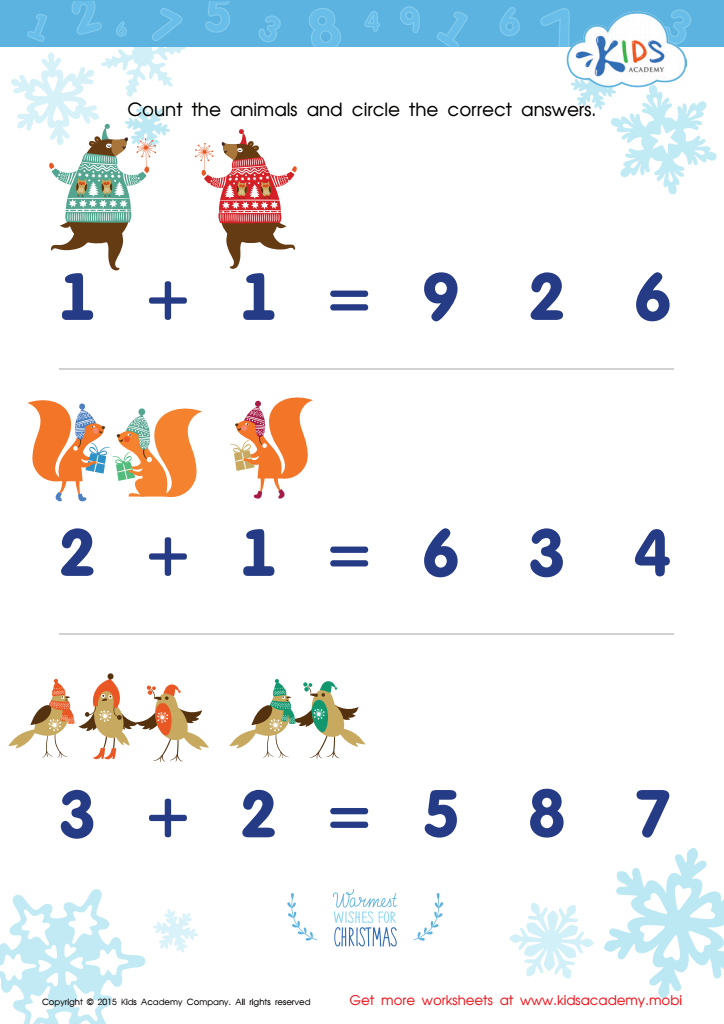
Count Funny Animals Worksheet
 Assign to My Students
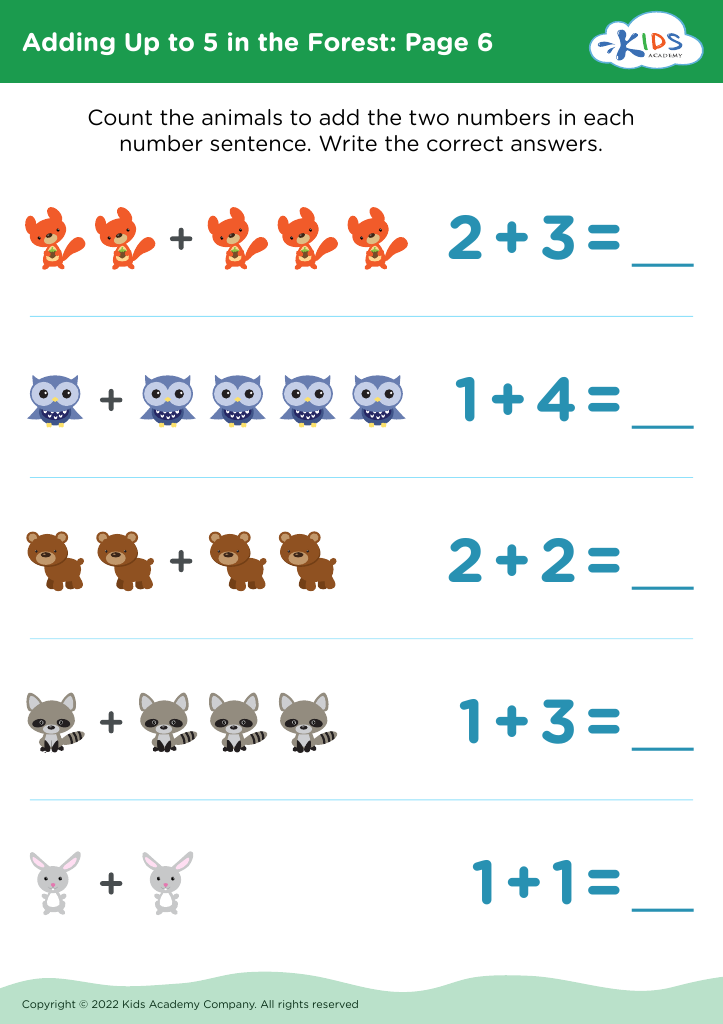
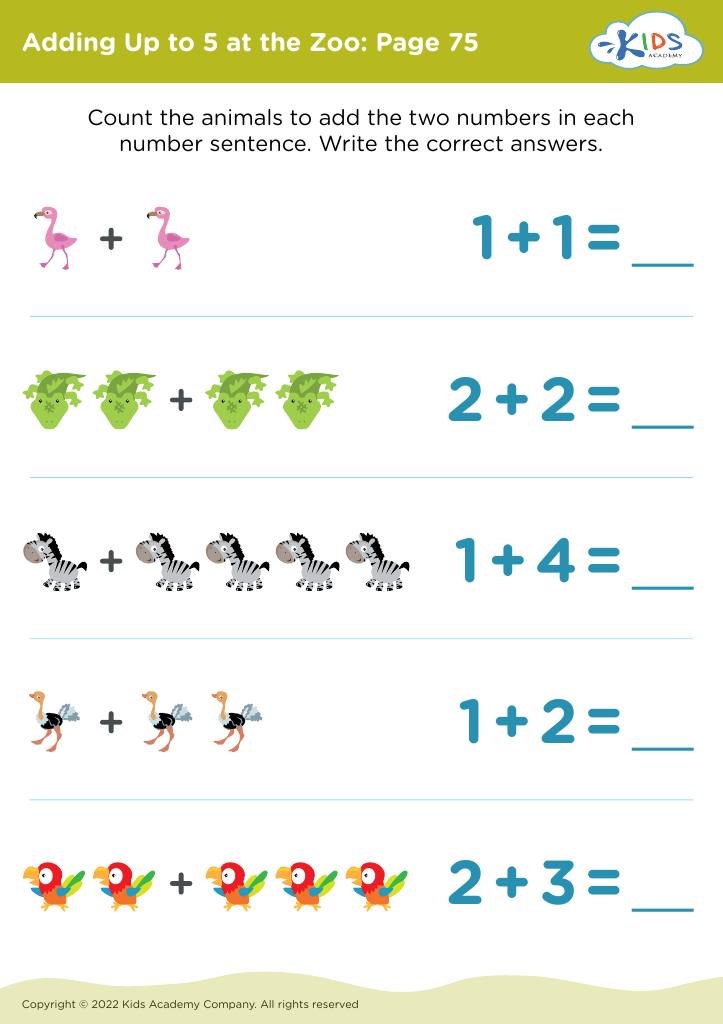
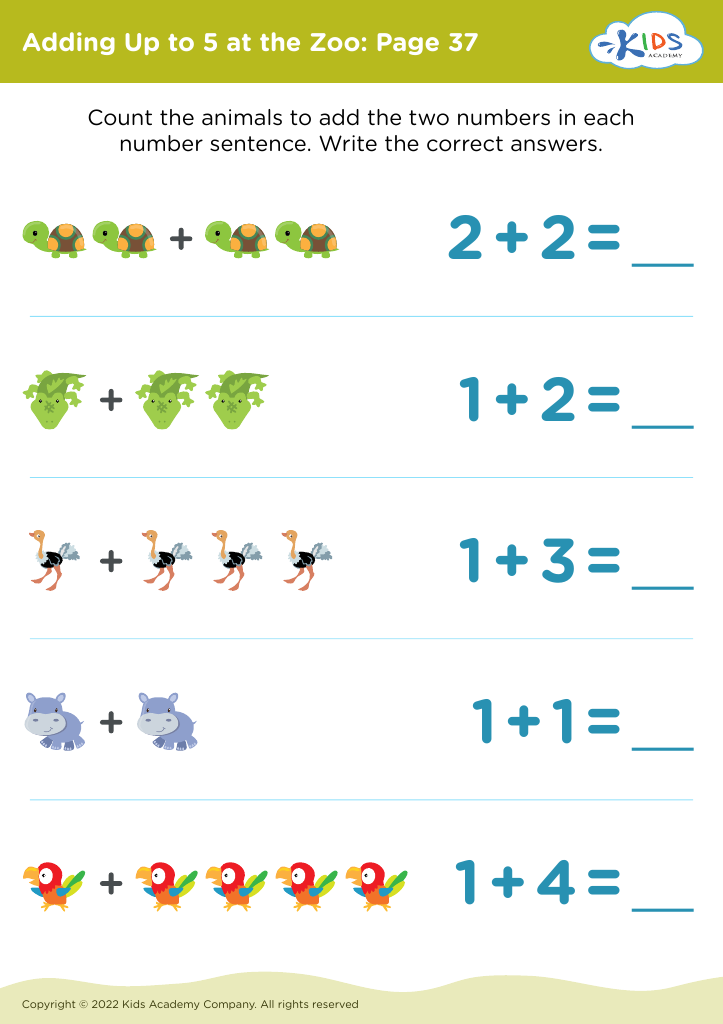
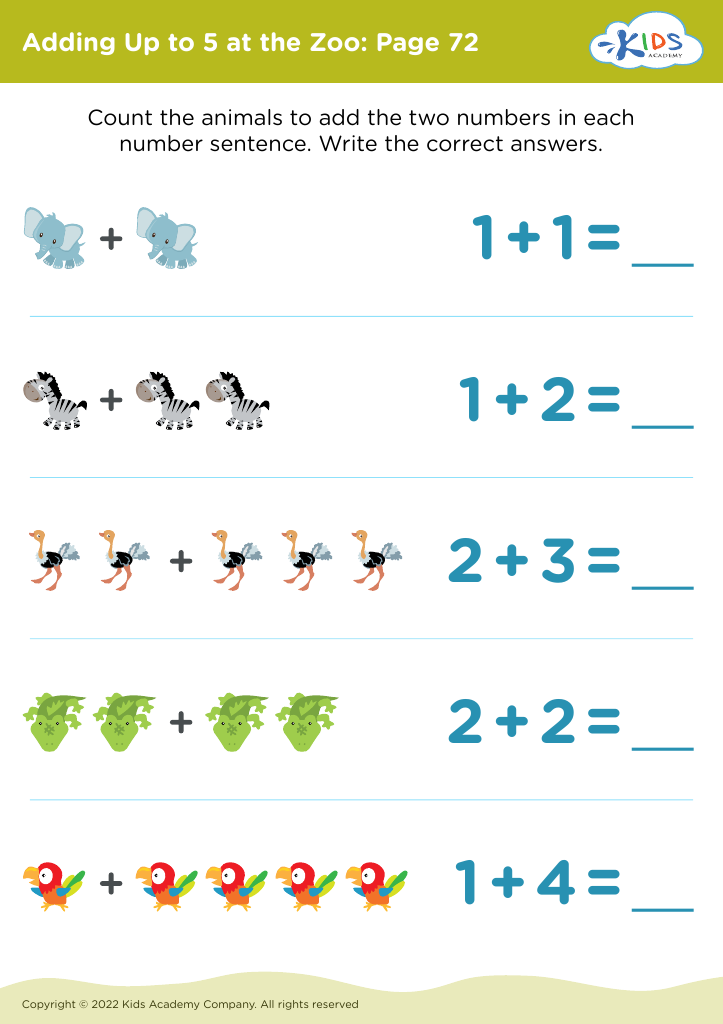








Animal recognition addition and subtraction is a crucial developmental tool for children aged 5-9. Engaging with animals in math promotes a relatable and enjoyable educational experience. Children are naturally curious about animals, and incorporating them into math concepts can enhance motivation and retention.
Using animals for addition and subtraction allows children to visualize mathematical operations in a fun and interactive way. For instance, if a lesson involves counting cats or dogs, children can easily connect with the concept through familiar images or stories. This not only strengthens their arithmetic skills but also improves their critical thinking as they learn to solve problems contextually.
Moreover, integrating animal themes prepares children for more complex ideas later by fostering analytical skills and spatial awareness. Recognizing different animals also introduces basic biology and encourages environmental awareness, making learning cross-disciplinary.
Additionally, it offers opportunities for social-emotional development. Discussing animal welfare or conservation teaches empathy and responsibility. For parents and teachers, understanding the significance of animal recognition addition and subtraction could lead to more holistic lesson planning, ensuring children develop both academically and socially. Therefore, such learning strategies benefit not just math proficiency but overall child development.








