Comparing Fractions Addition & Subtraction Worksheets for Ages 5-9
87 filtered results
-
From - To
Unlock your child's mathematical potential with our "Comparing Fractions Addition & Subtraction Worksheets for Ages 5-9." These engaging printable resources make learning fractions interactive and fun, offering exercises tailored for young learners. Watch your child confidently compare, add, and subtract fractions through visually appealing worksheets that simplify complex concepts. Perfect for both classroom use and home practice, our worksheets align with curriculums and support varied learning styles. Help build a strong foundation in math, enhance critical thinking skills, and foster a love for numbers. Start your child’s journey to fraction mastery today with Kids Academy!
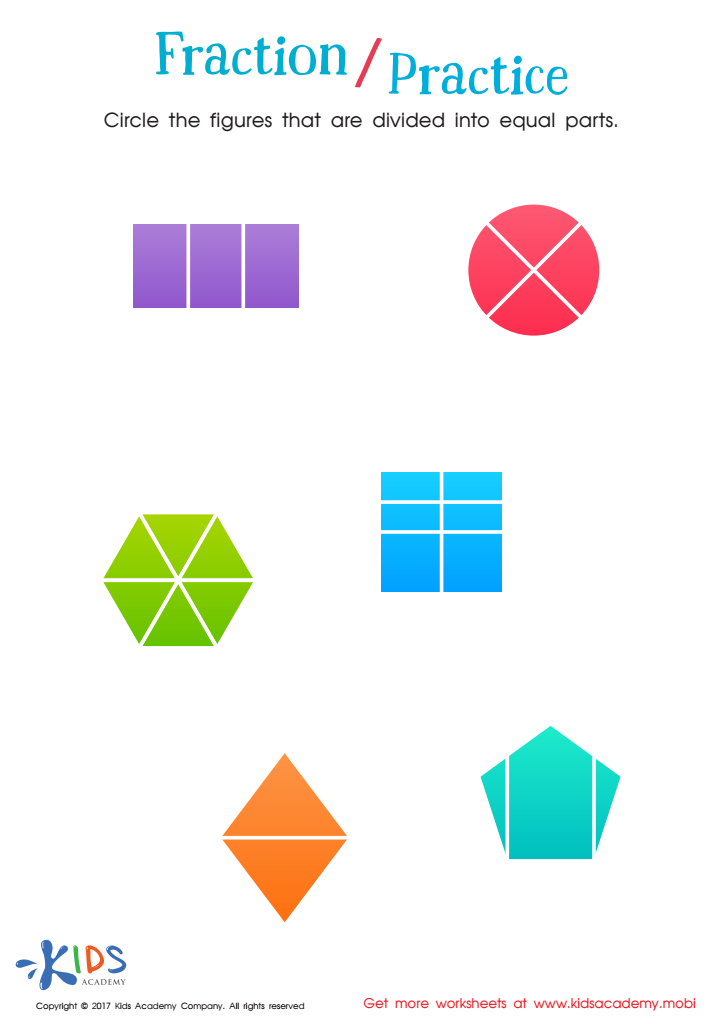
Fractions: Shapes Worksheet
 Assign to My Students
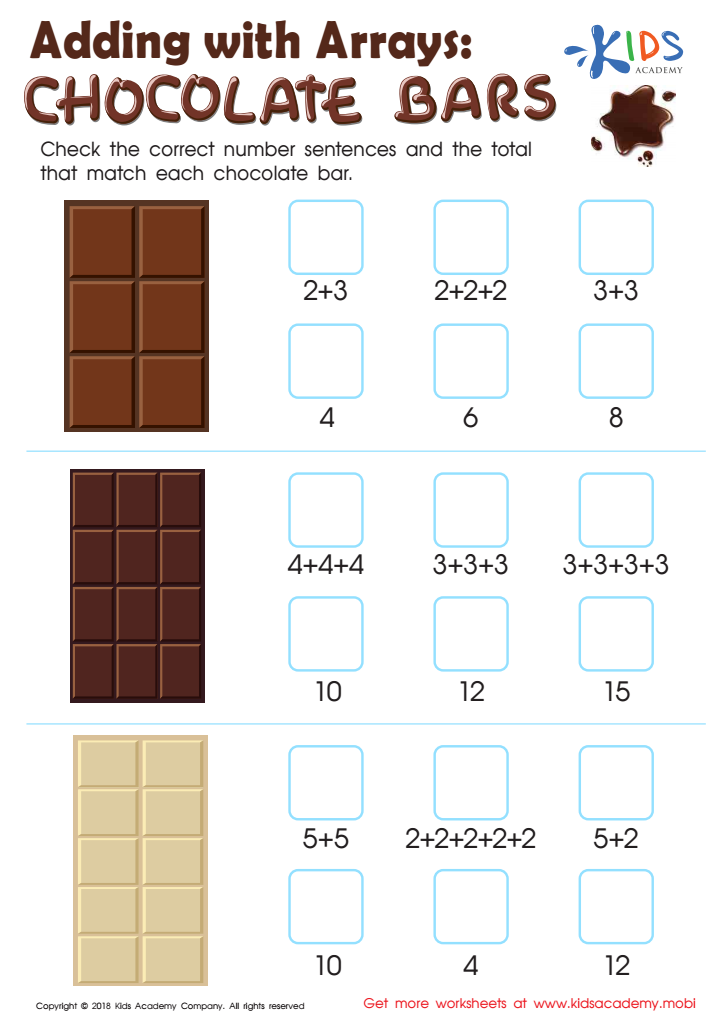
Adding with Arrays: Chocolate Bars Worksheet
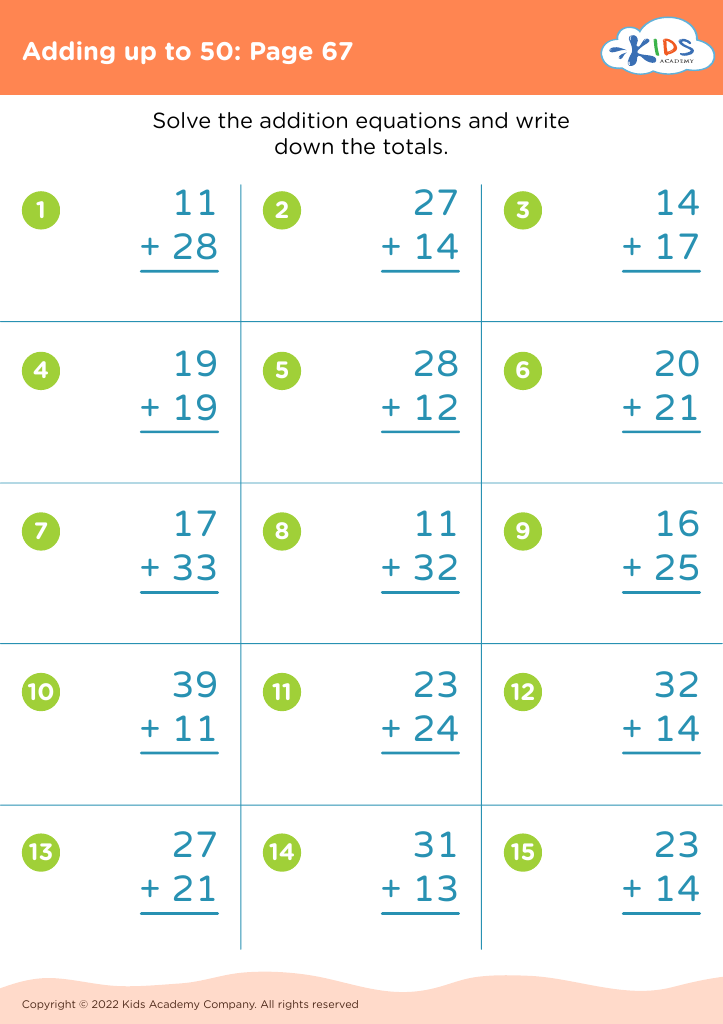
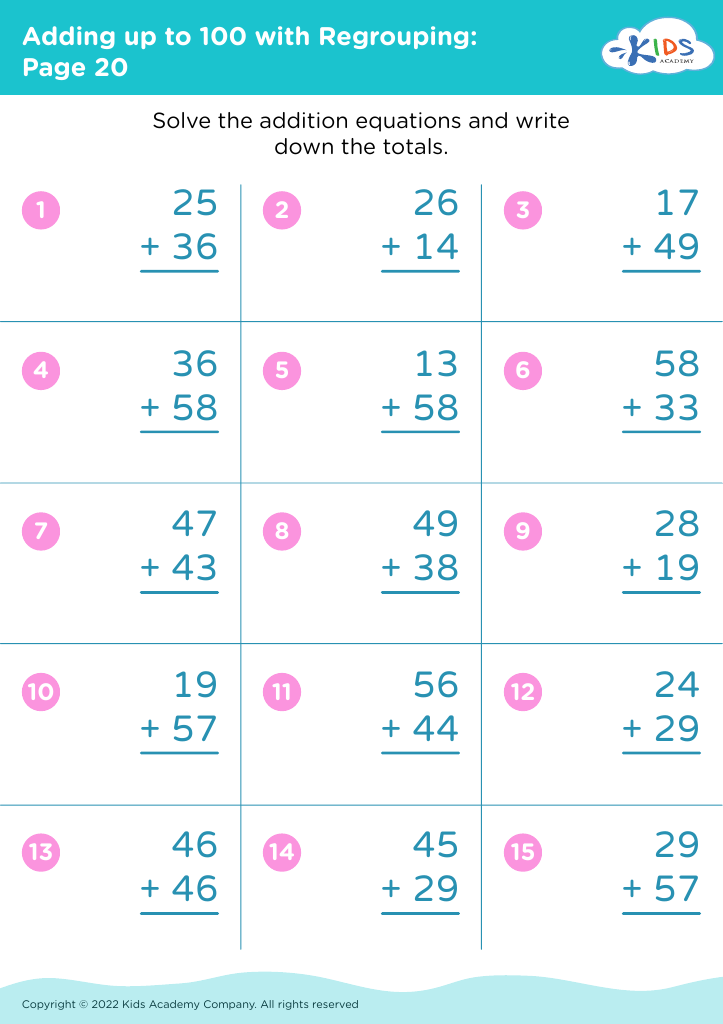
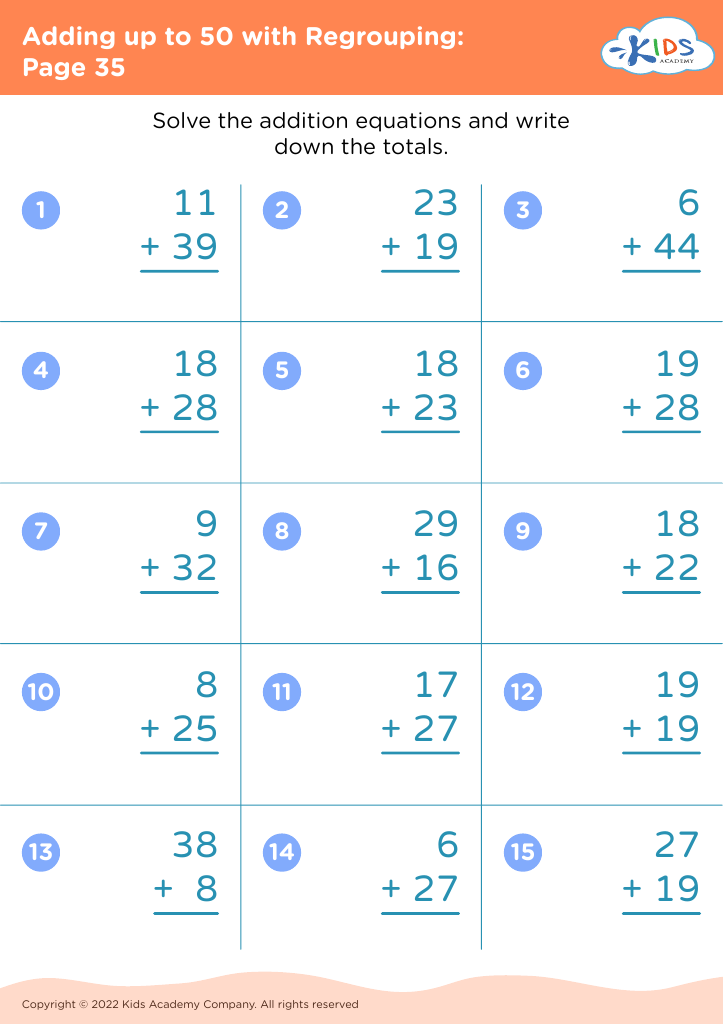
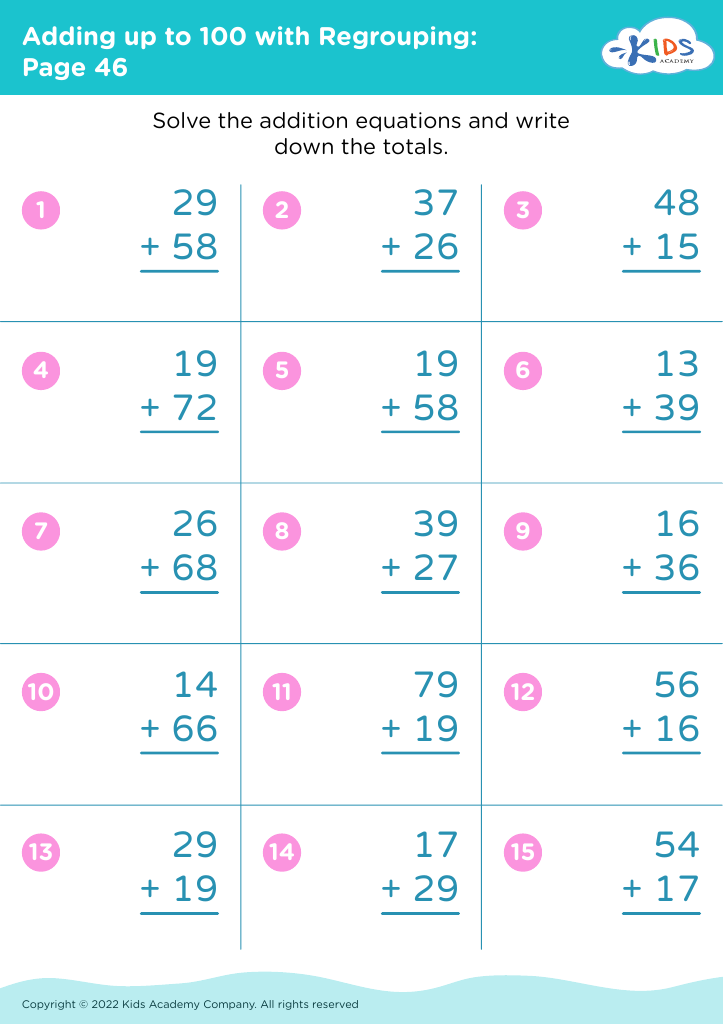








Understanding the addition and subtraction of fractions is foundational to developing strong mathematical skills in young learners, aged 5-9. At this early stage, mastering these concepts will aid their ability to solve more complex problems later in their academic journey. By comparing and operating on fractions, children enhance their number sense, an essential skill that extends beyond the classroom into practical, real-world scenarios like cooking or dividing tasks.
Developing an early grasp of fractions initiates critical thinking and analytical skills. It encourages learners to recognize patterns and relationships between numbers, fostering a deeper comprehension of mathematical principles. Furthermore, when parents and teachers invest time in teaching these concepts, they help children become more confident with numbers, reducing math anxiety as they progress through their education.
Equally important is the development of the language of math. Comparing fractions involves terms like 'numerator' and 'denominator,' which helps children build a math-specific vocabulary. This sets a solid foundation for future learning in disciplines such as algebra and geometry.
In ensuring children aged 5-9 understand and can apply fraction operations, both parents and teachers provide a critical support system that underscores the importance of sustained learning and intellectual curiosity.








