Comparing lengths Addition & Subtraction Worksheets for Ages 5-9
3 filtered results
-
From - To
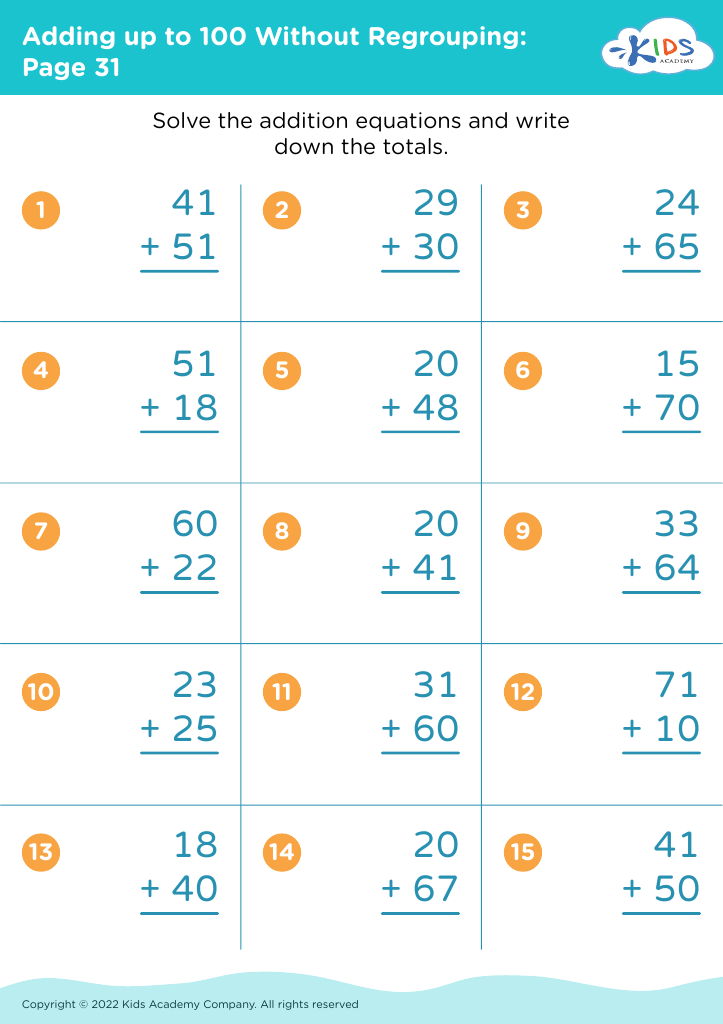
Discover engaging "Comparing Lengths Addition & Subtraction Worksheets" designed for children ages 5-9. These worksheets encourage young learners to explore the concepts of length through fun addition and subtraction problems. By comparing lengths, students enhance their measurement skills while developing essential math abilities. Each worksheet features colorful illustrations and varied exercises, ensuring a playful yet educational experience. Perfect for classroom use or at-home learning, these worksheets provide invaluable practice in understanding and applying basic math concepts. Help your child build confidence and proficiency in math with our tailored resources that make learning enjoyable and interactive! Start comparing lengths today!
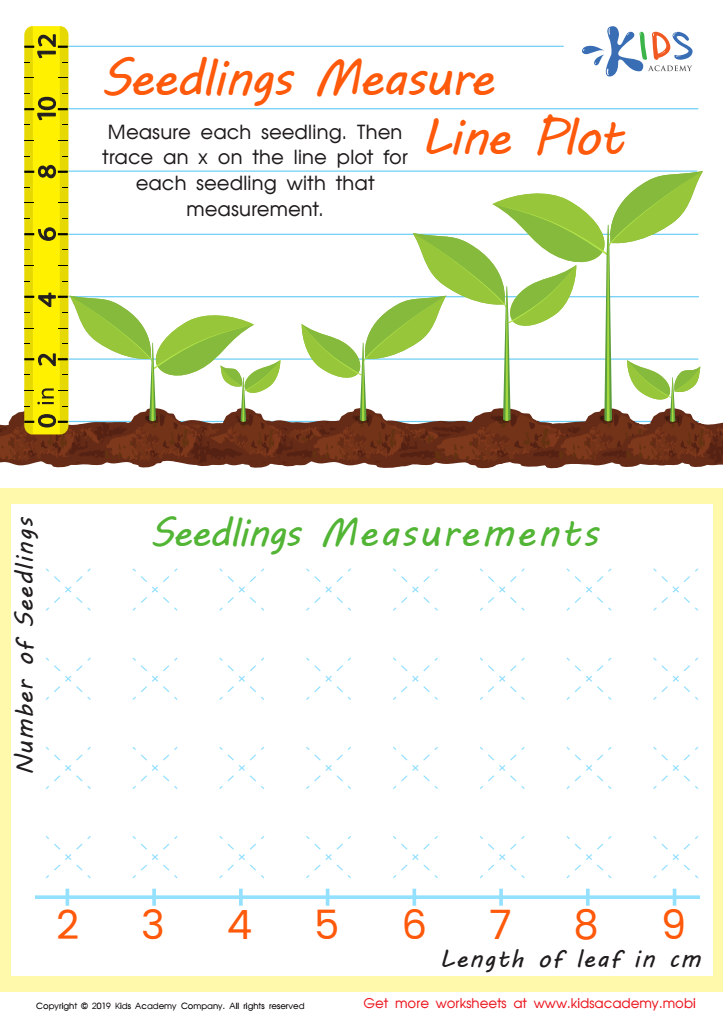
Seedling Measure Line Plot Worksheet
 Assign to My Students
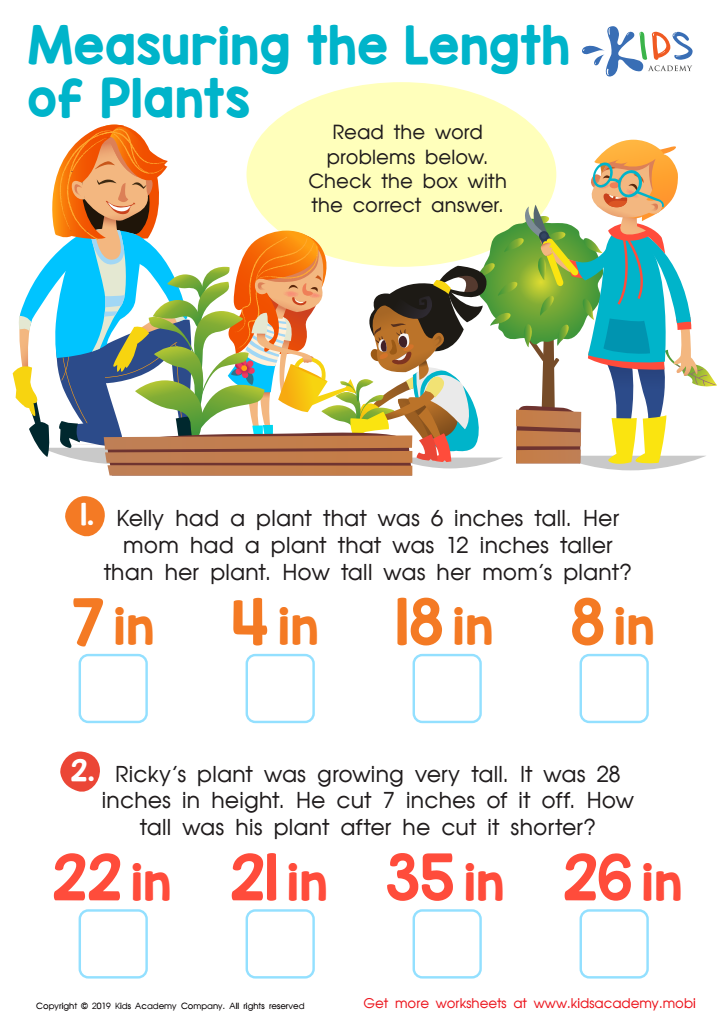
Measuring the Length of Plants Worksheet








Understanding comparing lengths, addition, and subtraction is essential for children ages 5-9 as it lays the groundwork for their mathematical development. At this age, children are naturally curious and begin to grasp the concepts of measurement, which influence their ability to solve problems and make real-world assessments.
When parents and teachers focus on comparing lengths, children learn to visualize differences and develop spatial awareness, skills that are vital in everyday situations such as measuring ingredients for cooking or determining how long a trip will take. Engaging in hands-on activities that incorporate measurement fosters critical thinking and enhances their understanding of addition and subtraction through tangible examples.
Moreover, mastering addition and subtraction is fundamental to building a solid numerical foundation. These mathematical operations help children develop their reasoning skills. Understanding how to combine and separate quantities through stories or physical objects prepares them to tackle more complex mathematical concepts in the future.
By nurturing these skills early on, parents and teachers can not only strengthen children’s math capabilities but also boost their confidence and interest in learning, encouraging a lifelong appreciation for mathematics and problem-solving.








