Comparing numbers Addition & Subtraction Worksheets for Ages 5-9
4 filtered results
-
From - To
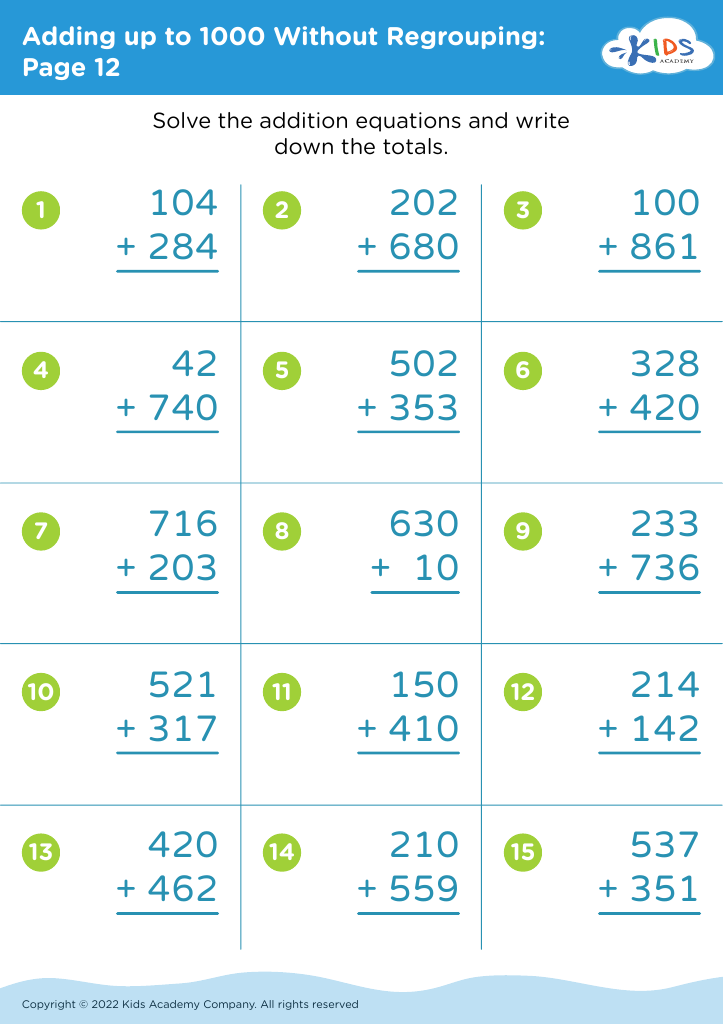
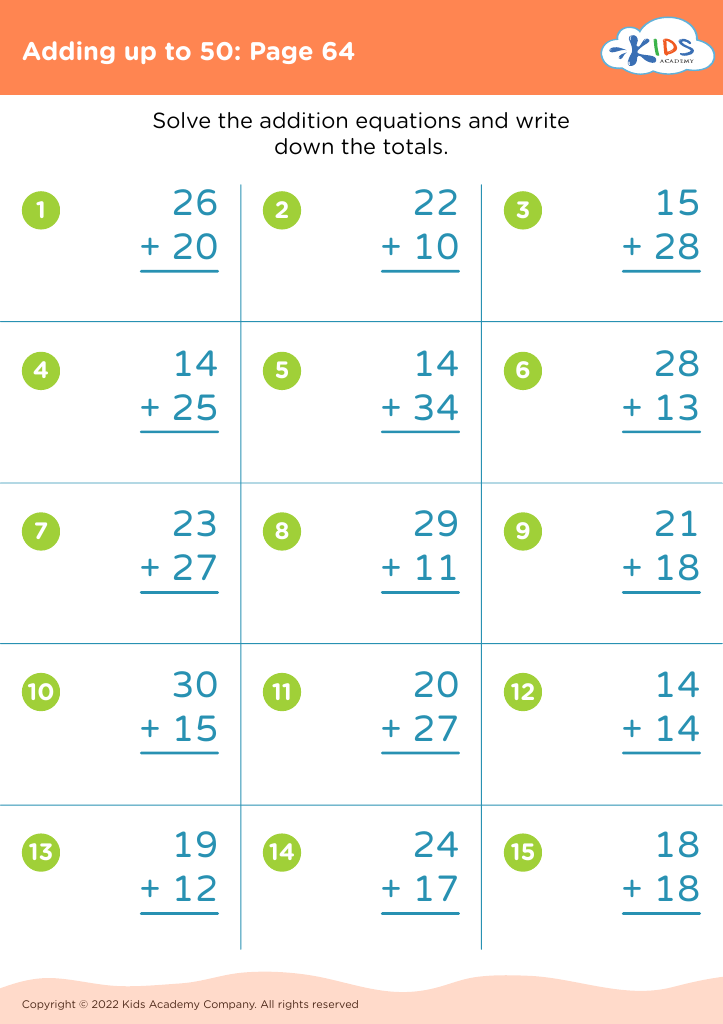
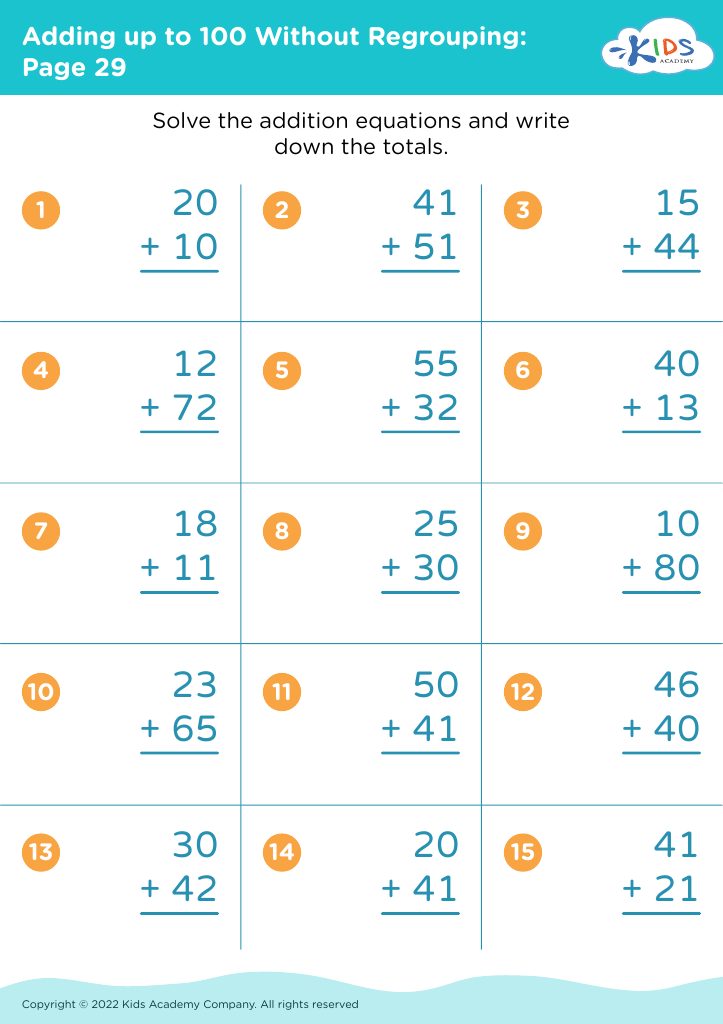
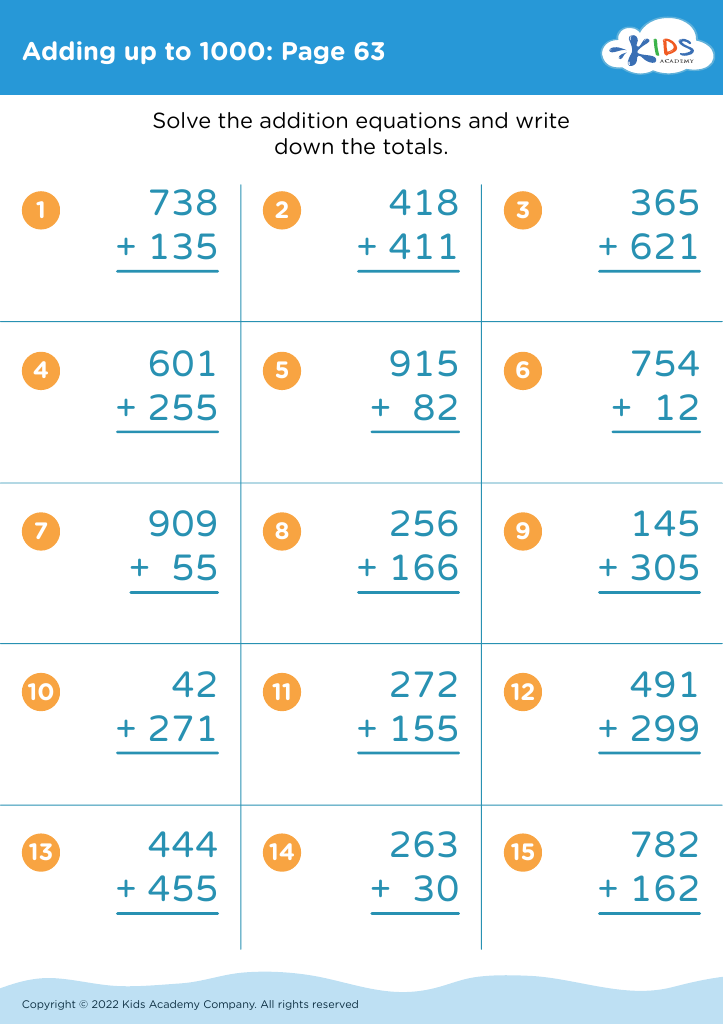
Unlock your child's mathematical potential with our engaging "Comparing Numbers Addition & Subtraction Worksheets for Ages 5-9". These printable resources are expertly designed to strengthen foundational math concepts and enhance critical thinking skills. Each worksheet offers fun, interactive exercises to help young learners confidently compare numbers while practicing addition and subtraction. Perfectly tailored for kids aged 5-9, our collection encourages hands-on learning and independent problem-solving. Whether in a classroom or at home, our worksheets provide an excellent opportunity for students to experience success in math through engaging, thoughtfully structured activities. Empower your child today with Kids Academy’s dynamic math worksheets!








Parents and teachers should prioritize teaching comparing numbers, addition, and subtraction for children aged 5-9 because these foundational math skills significantly influence their overall academic success and cognitive development. Understanding how to compare numbers helps children grasp concepts of quantity, order, and value, which are essential for more advanced mathematical operations.
Addition and subtraction are the building blocks of arithmetic. Mastery of these operations strengthens a child's number sense, promoting mental math skills and problem-solving abilities. These competencies are not only crucial for higher-level mathematics but also for everyday tasks such as making purchases, telling time, and dividing items among groups.
Engaging with these concepts early on fosters a positive attitude towards math, encouraging persistence and curiosity. When children are confident in their basic math skills, they are more likely to approach challenges with resilience and creativity.
Moreover, integrating these math skills into various activities enhances interdisciplinary learning. For instance, reading word problems improves literacy, while measuring ingredients in cooking ties in practical, real-world applications.
Overall, a solid grasp of comparing numbers, addition, and subtraction equips young children with critical thinking and analytical skills necessary for lifelong learning and successful adaptation to a rapidly changing world.








