Nature appreciation Addition & Subtraction Worksheets for Ages 5-9
5 filtered results
-
From - To
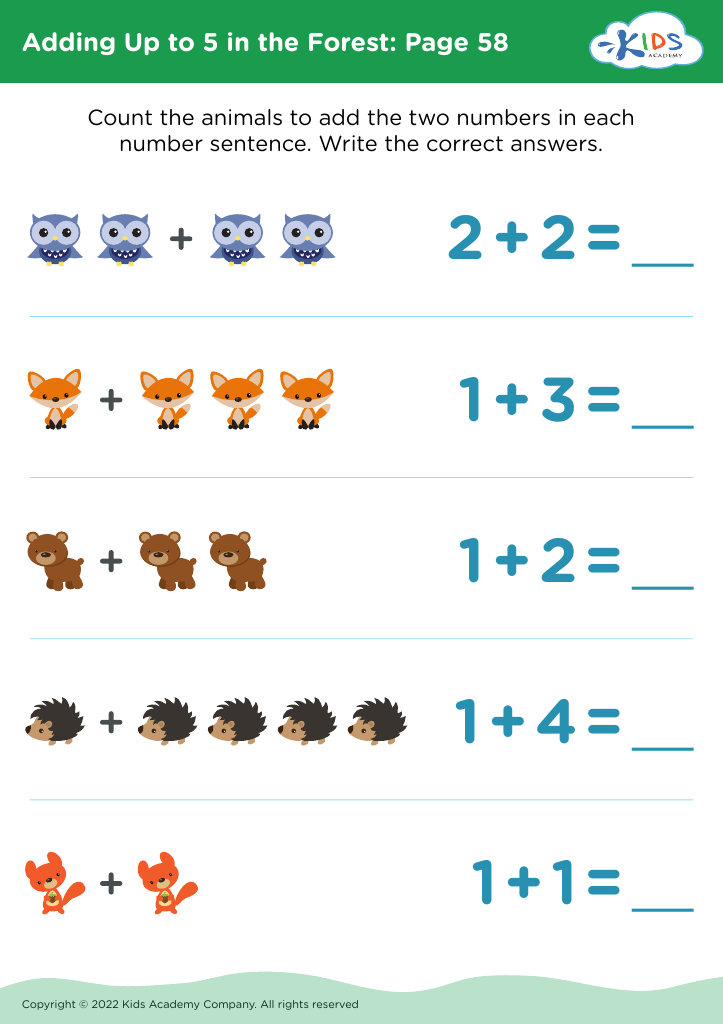
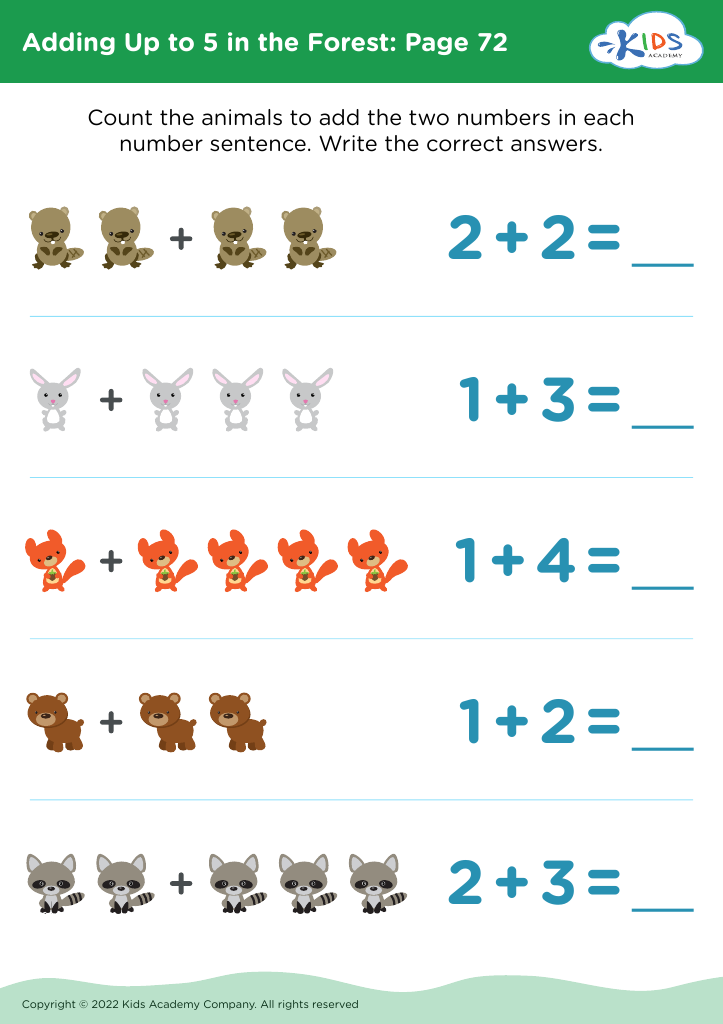
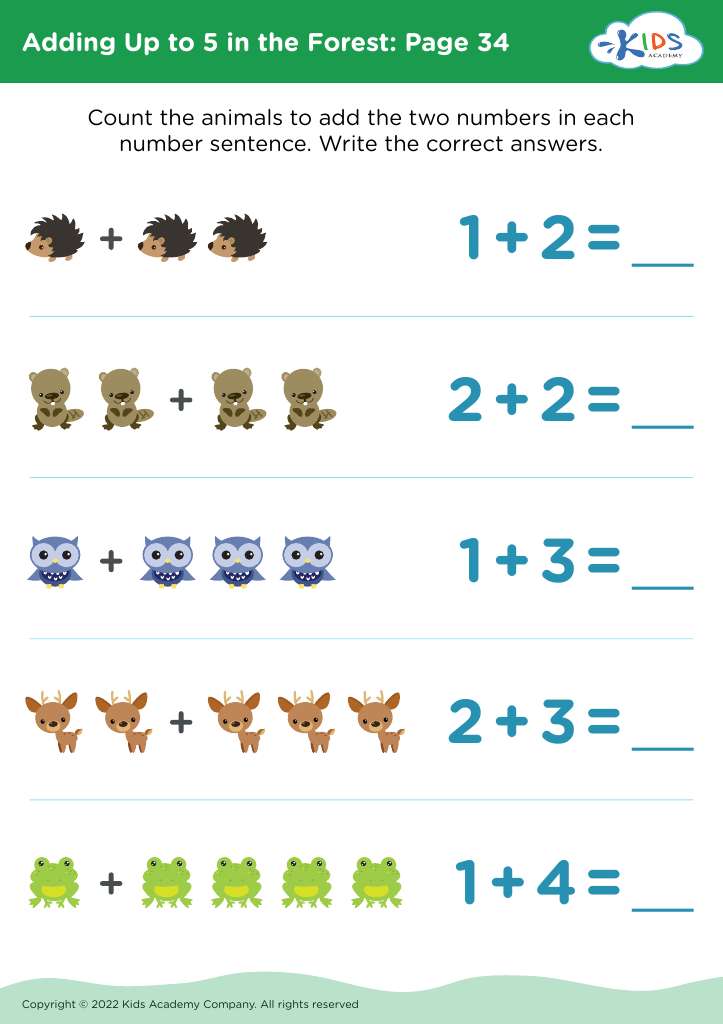
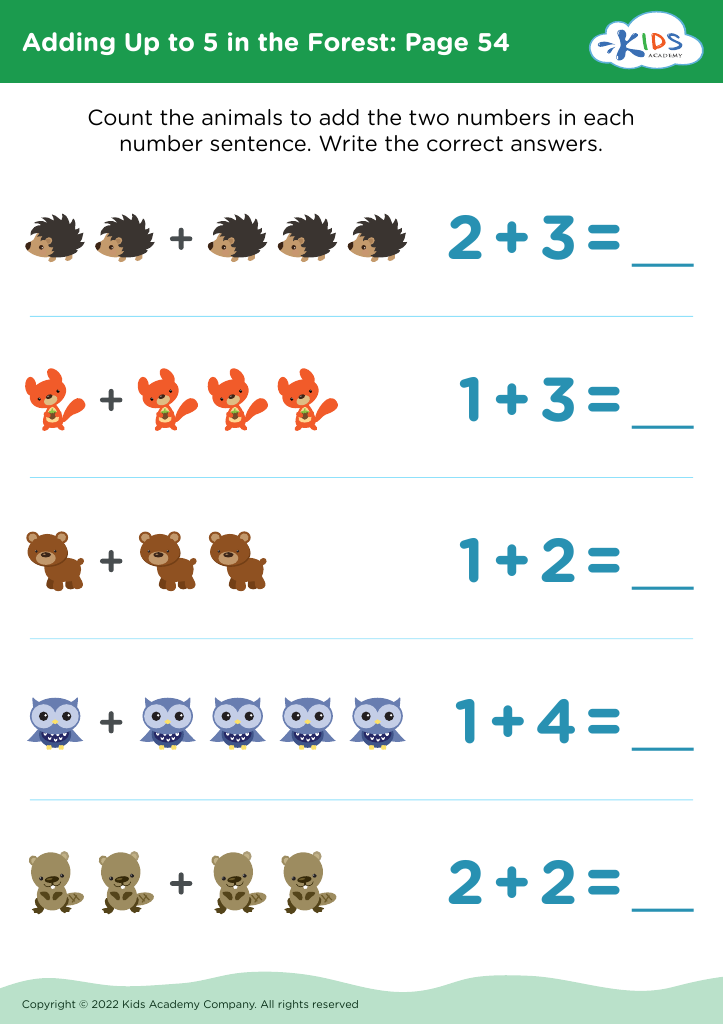
Discover the joy of learning with our Nature Appreciation Addition and Subtraction Worksheets designed for children ages 5-9! These engaging, printable worksheets combine essential math skills with the wonders of nature, fostering both numerical understanding and environmental awareness. Kids will enjoy solving problems that encourage exploration of the great outdoors, from counting trees to adding up various animals. Our colorful and interactive worksheets make learning addition and subtraction fun and accessible, promoting a love for both math and the environment. Perfect for home or classroom use, these resources help ignite curiosity while developing foundational math skills in your young learners.
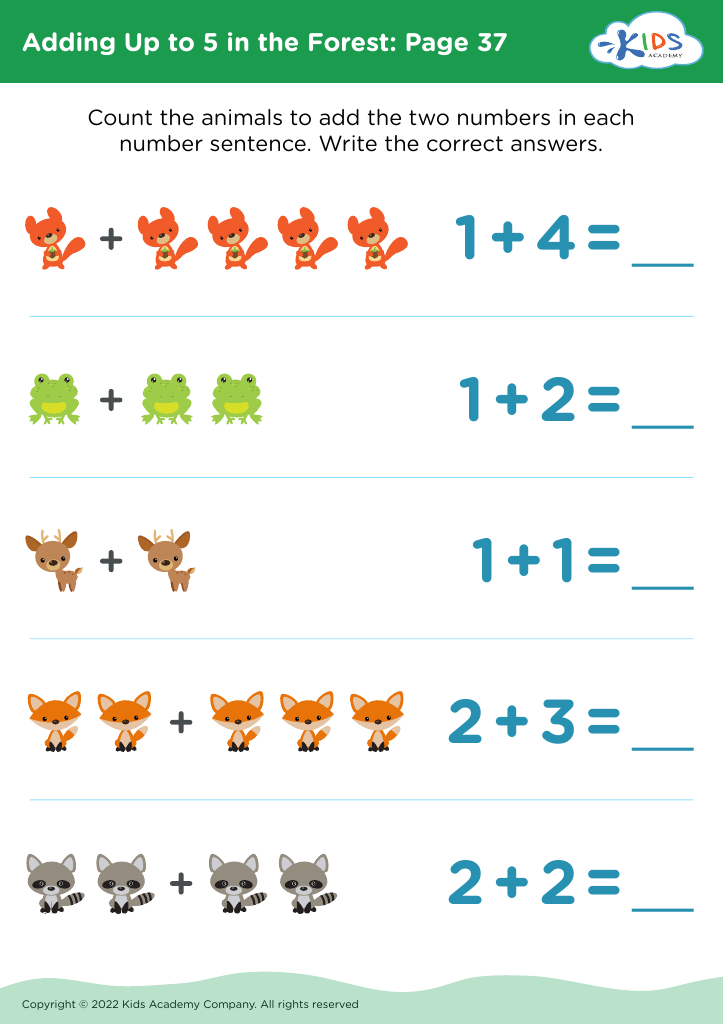








Nature appreciation combined with addition and subtraction offers a unique and engaging way to enhance learning for children aged 5-9. This interdisciplinary approach fosters a love for both mathematics and the natural world, helping children develop important skills in an enjoyable context.
Firstly, engaging with nature encourages curiosity and exploration, which can enhance cognitive development. When children apply addition and subtraction to real-world scenarios, such as counting leaves, identifying animal tracks, or measuring plants, they experience mathematics in action. This makes mathematical concepts more relatable and easier to grasp, promoting a deeper understanding.
Additionally, nature appreciation teaches kids about environmental stewardship and the importance of preserving their surroundings. Bringing math into outdoor settings aligns with experiential learning, which is often more impactful than traditional worksheets. Through guided activities, like counting insects or measuring tree heights, children can see firsthand the relevance of math in everyday life.
In summary, parents and teachers should care about integrating nature appreciation with addition and subtraction because it creates holistic learning experiences. This approach strengthens mathematical skills while simultaneously fostering a sense of responsibility towards the environment, ultimately helping to cultivate well-rounded, informed individuals.








