Filters

570 filtered results

Clear all filters
Favorites
With answer key
Interactive

570 filtered results

Difficulty Level

Grade


Check out this FREE Trial Lesson on Addition & Subtraction for age 5-9!

Making 11

Favorites
With answer key
Interactive
  • 5-9
  • Number Recognition
  • Addition & Subtraction
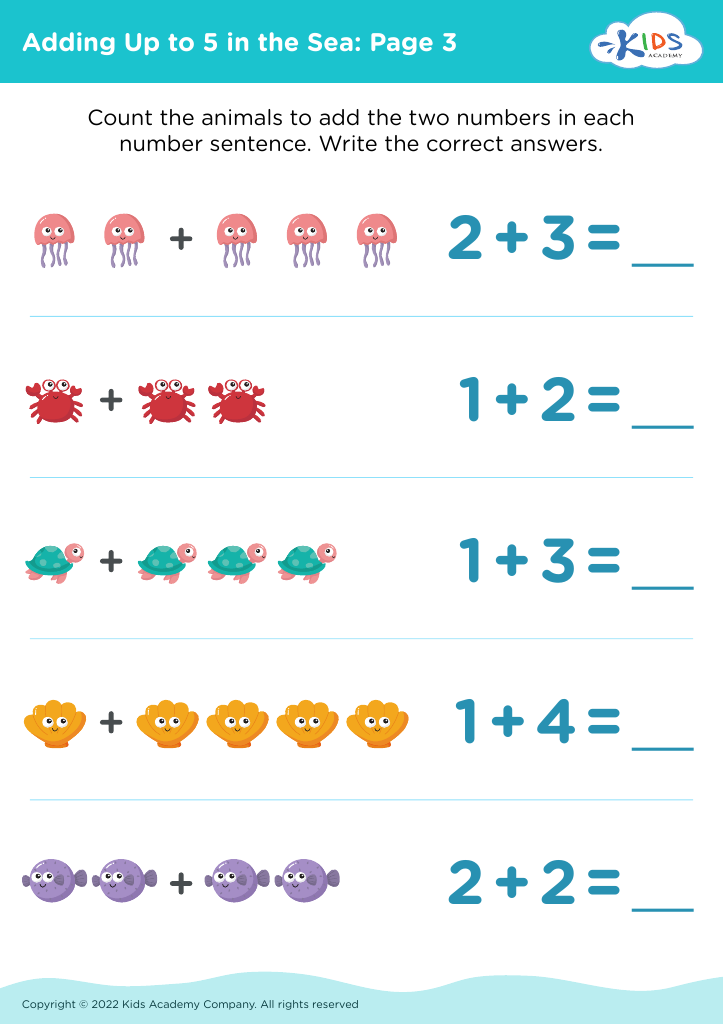
Adding Up to 5 in the Sea: Page 3

Adding Up to 5 in the Sea: Page 3

Adding Up to 5 in the Sea: Page 3
Worksheet
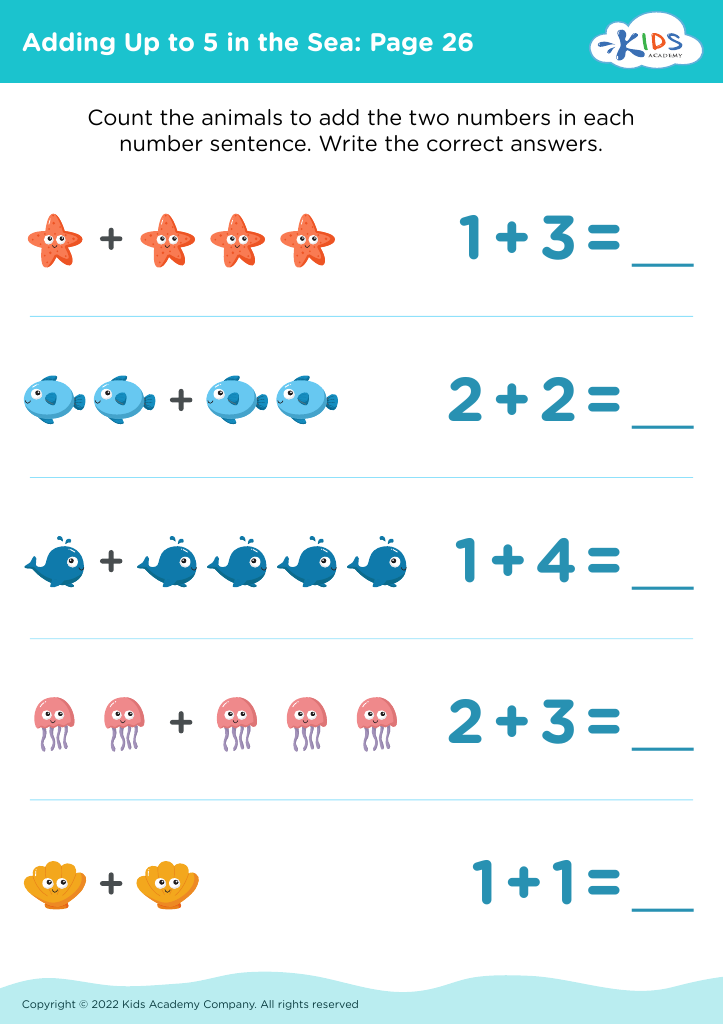
Adding Up to 5 in the Sea: Page 26
Worksheet
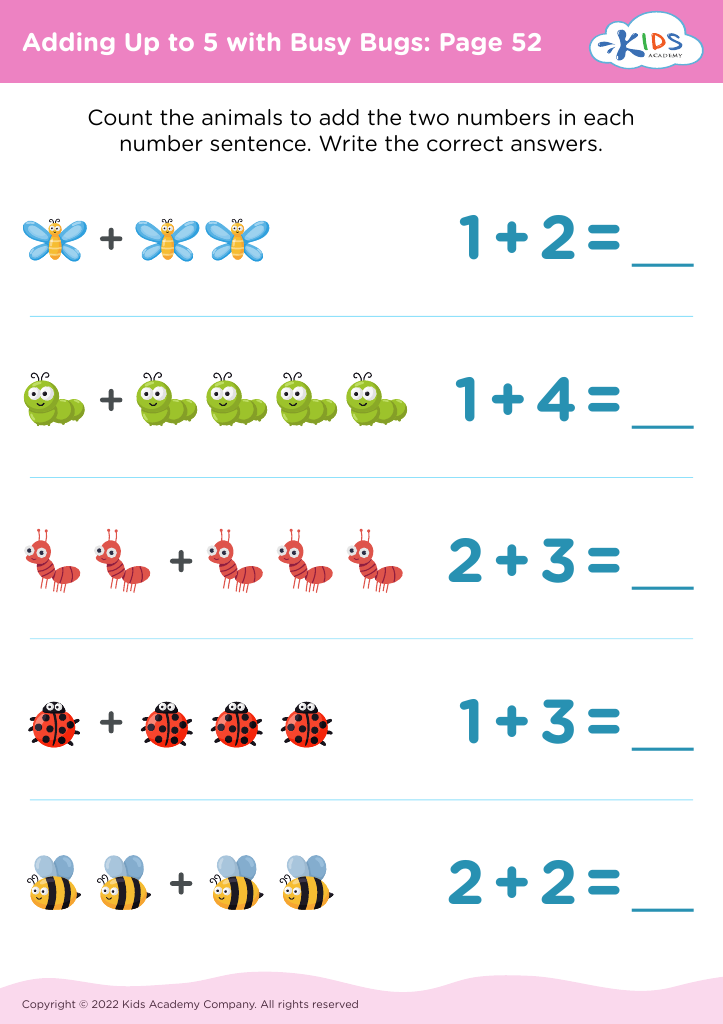
Adding Up to 5 with Busy Bugs: Page 52
Worksheet
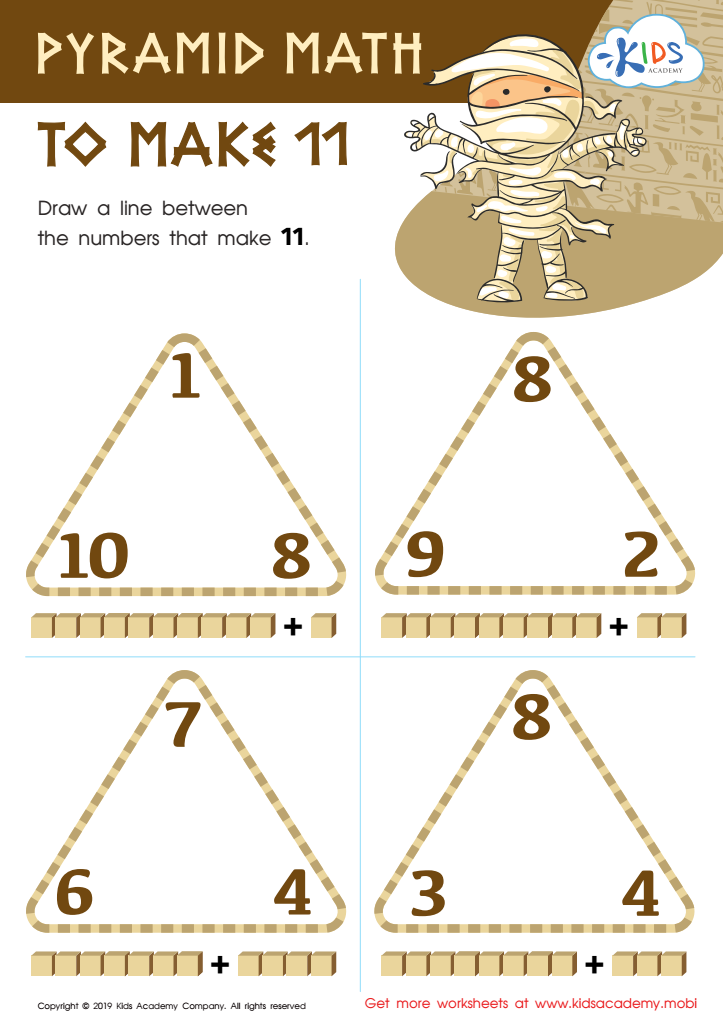
Pyramid Math to Make 11 Worksheet

Pyramid Math to Make 11 Worksheet

Have your kids look at the picture of the Egyptian pyramids and tell you what they see. Then, help them do simple math by adding up the numbers in the pyramids and connecting those that make 11. This worksheet is perfect for teaching your kids about history, mathematics, and problem-solving.
Pyramid Math to Make 11 Worksheet
Worksheet
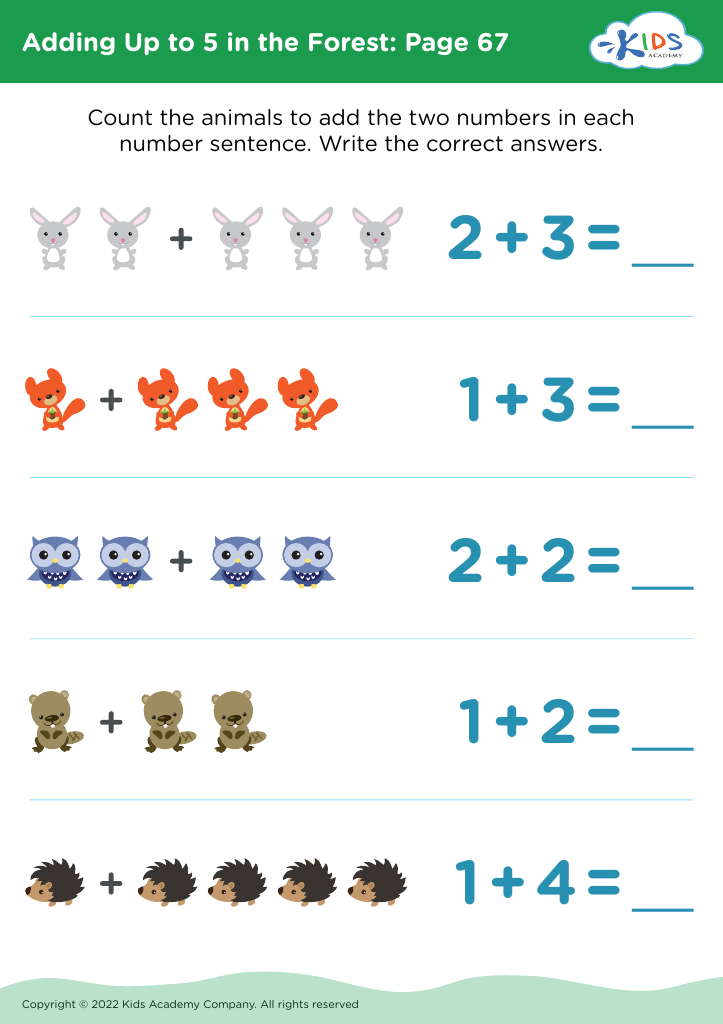
Adding Up to 5 in the Forest: Page 67
Worksheet
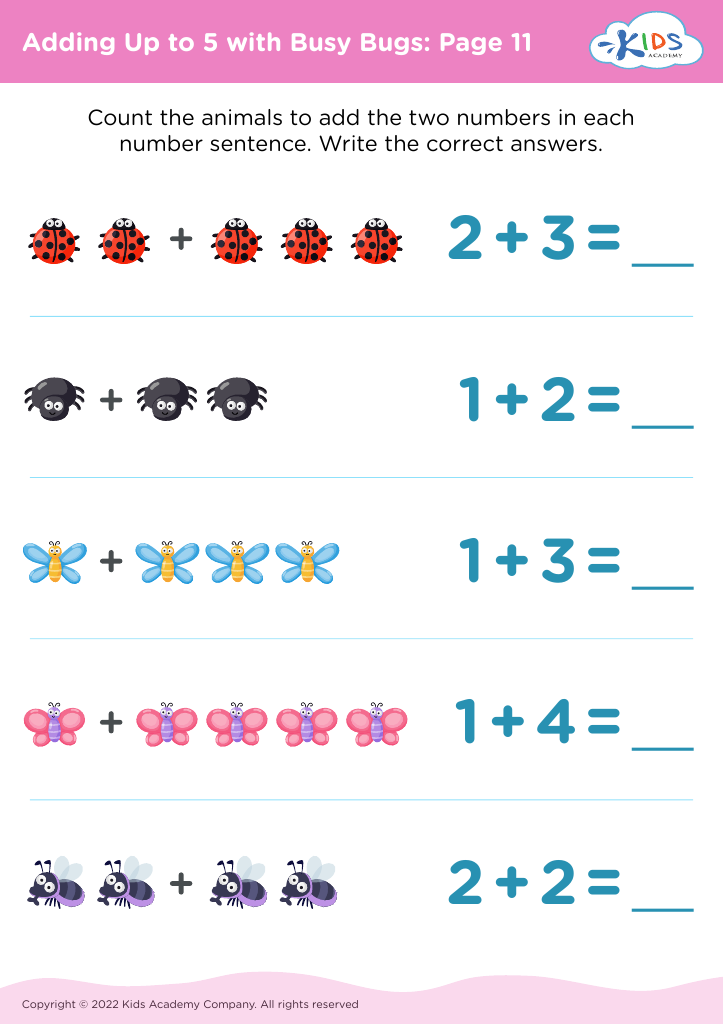
Adding Up to 5 with Busy Bugs: Page 11
Worksheet
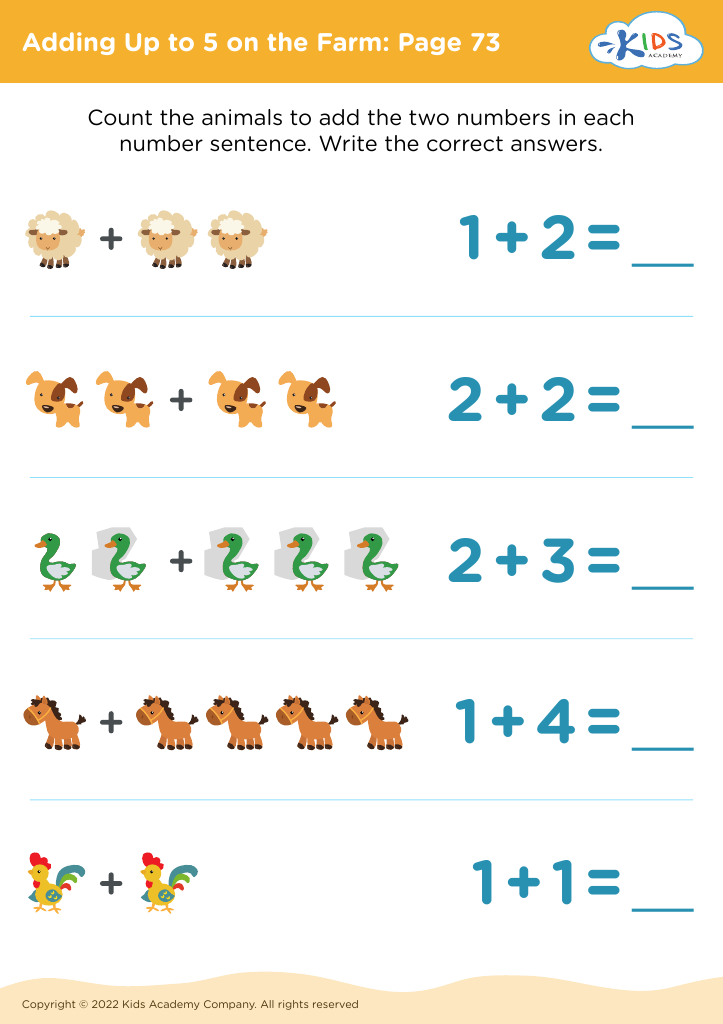
Adding Up to 5 on the Farm: Page 73
Worksheet
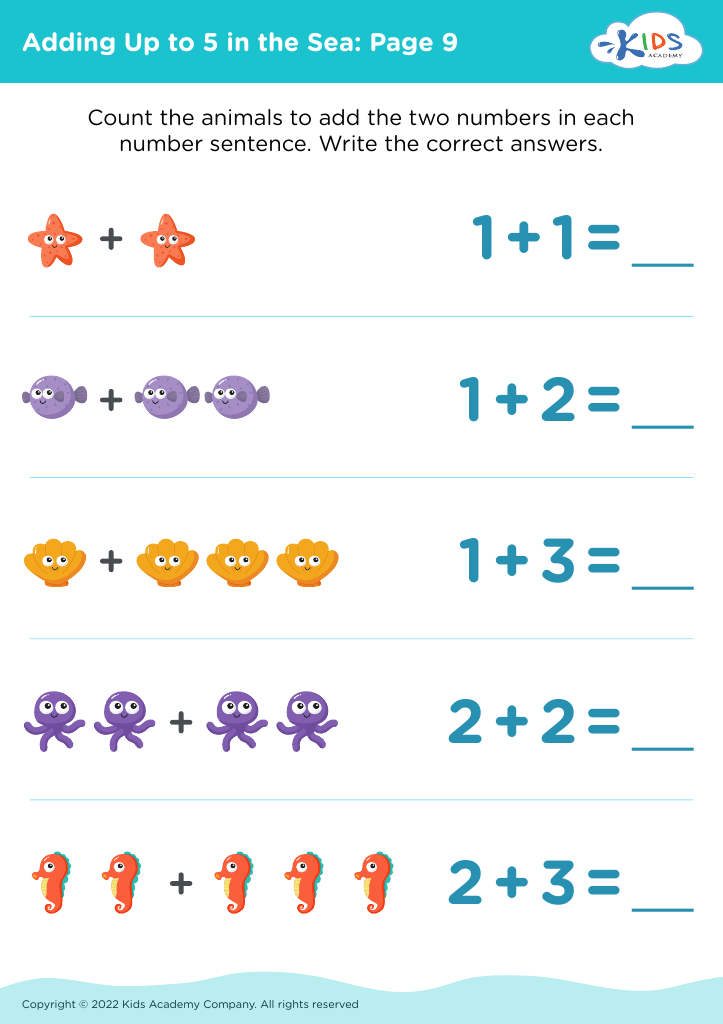
Adding Up to 5 in the Sea: Page 9

Adding Up to 5 in the Sea: Page 9

Adding Up to 5 in the Sea: Page 9
Worksheet
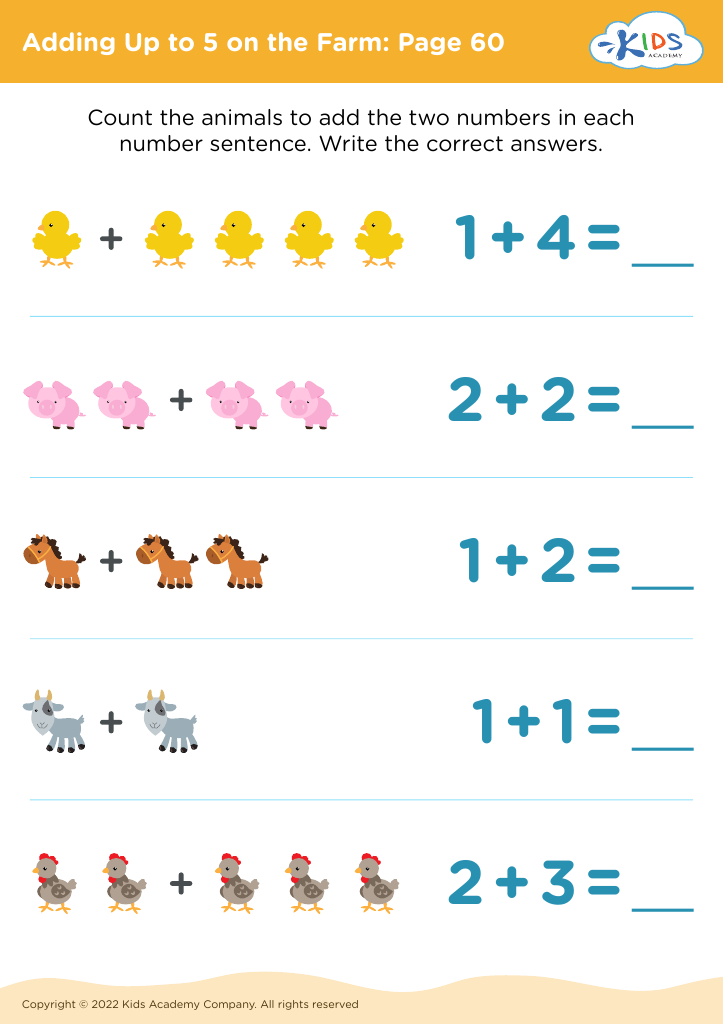
Adding Up to 5 on the Farm: Page 60
Worksheet
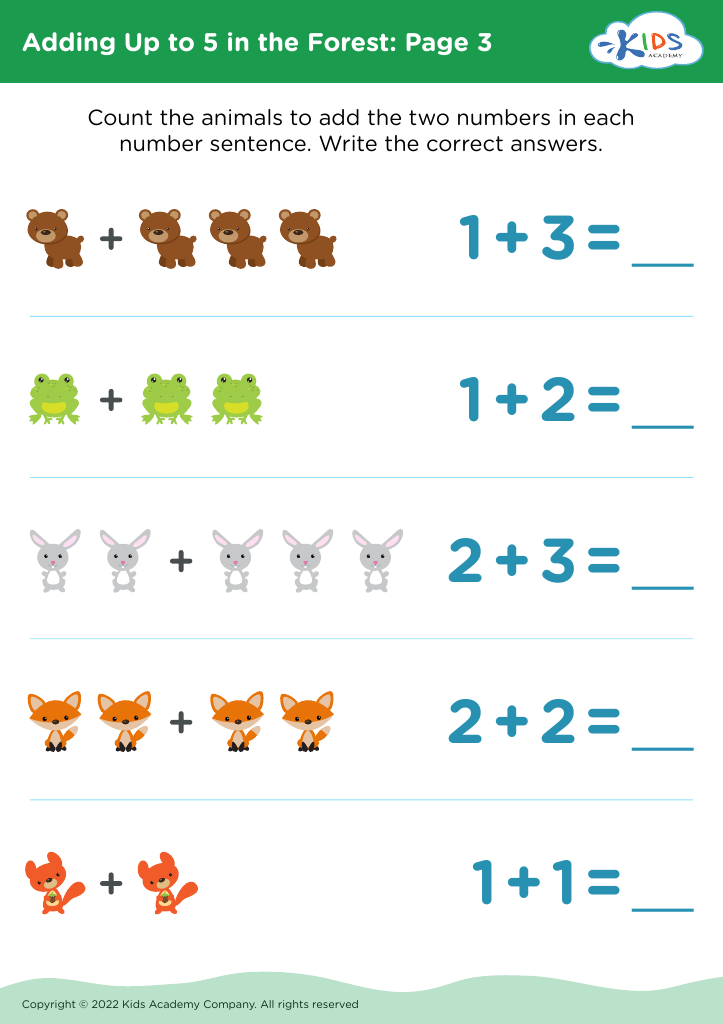
Adding Up to 5 in the Forest: Page 3
Worksheet
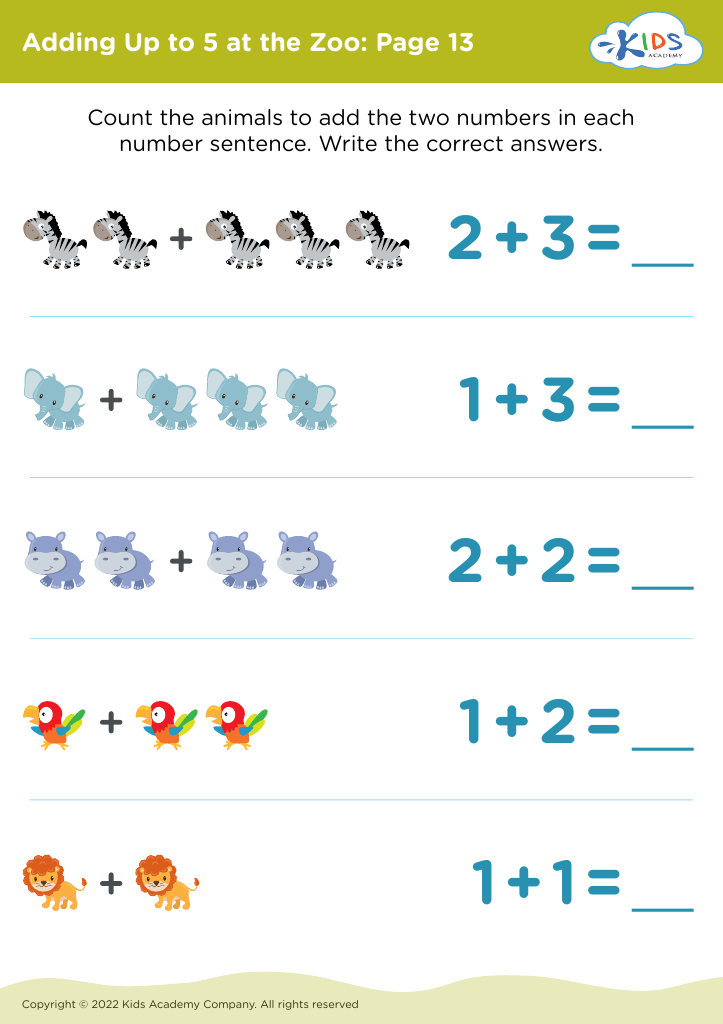
Adding Up to 5 at the Zoo: Page 13
Worksheet
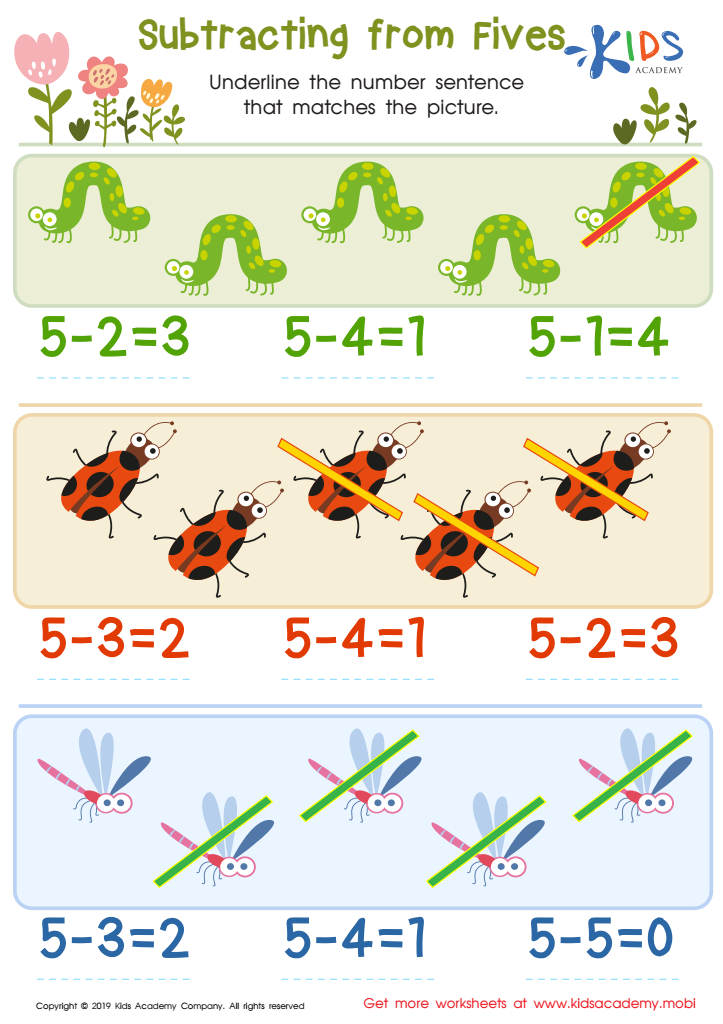
Subtracting From Fives Worksheet
Subtracting From Fives Worksheet
Help your kids practice subtraction with this fun worksheet! Have them identify the insects, then solve the equations and find the matching number sentence. It's a great way to give them an edge in math and enjoy doing it!
Subtracting From Fives Worksheet
Worksheet
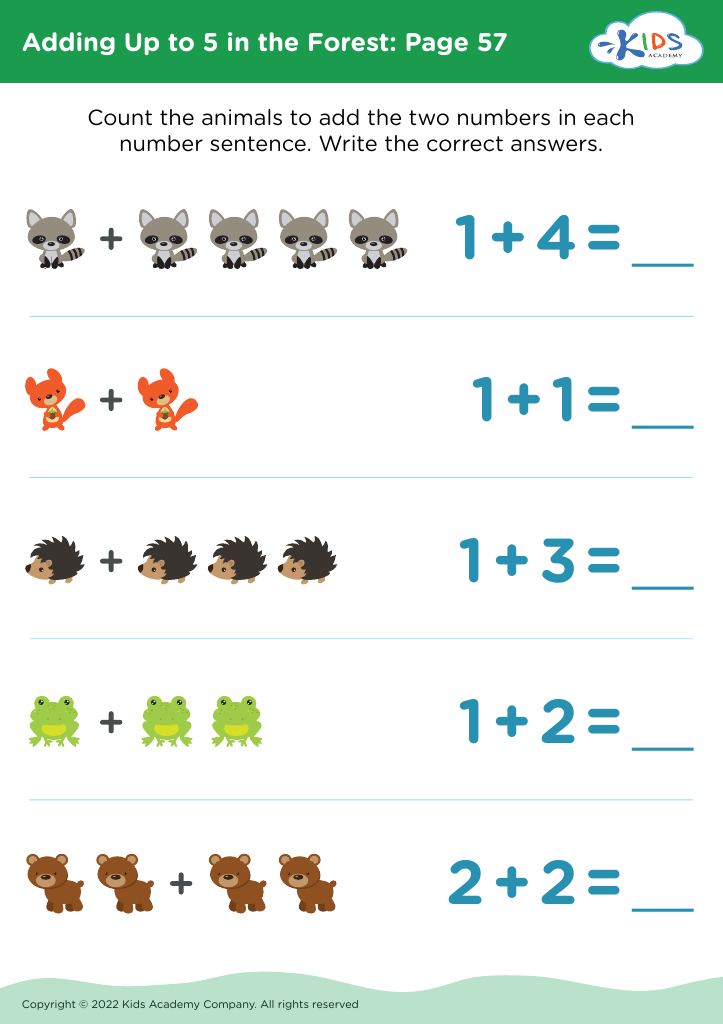
Adding Up to 5 in the Forest: Page 57
Worksheet
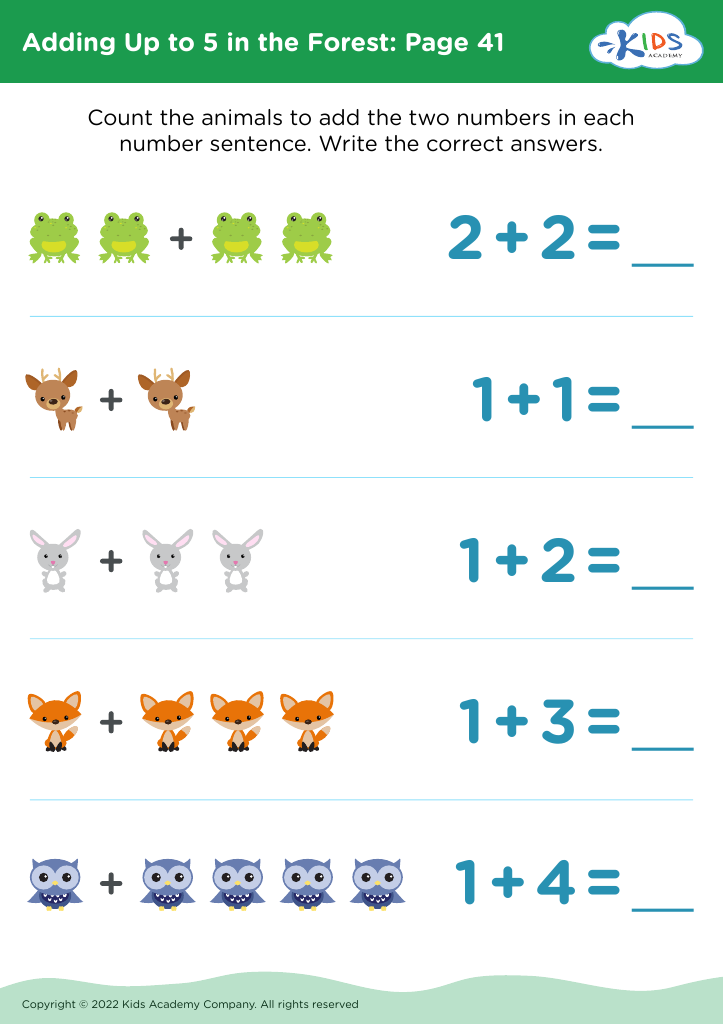
Adding Up to 5 in the Forest: Page 41
Worksheet
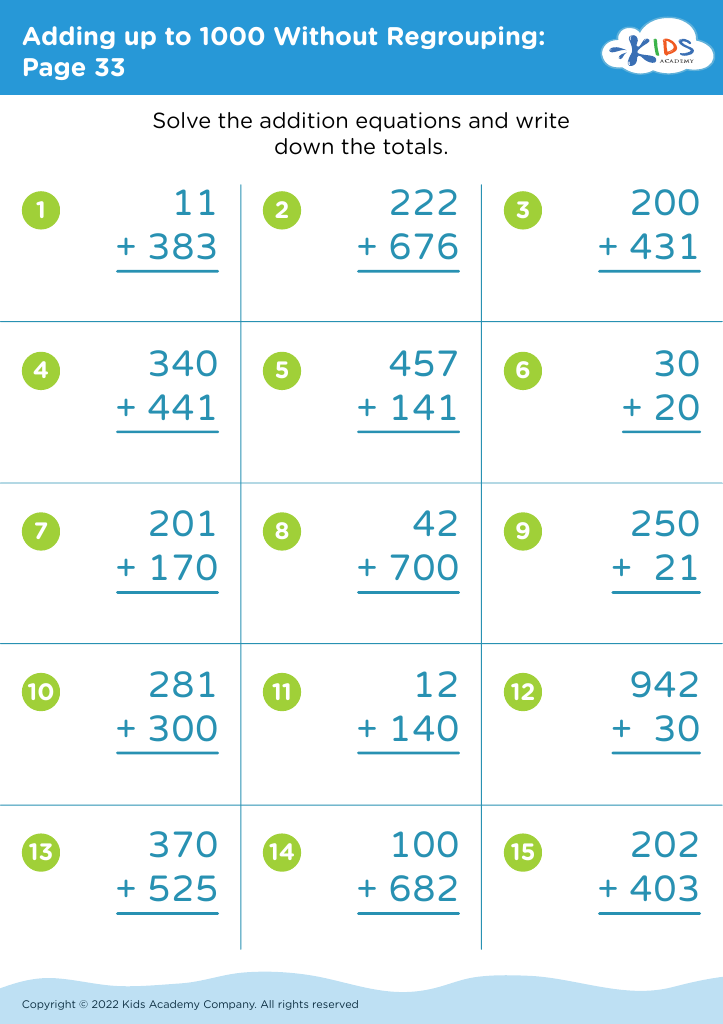
Adding up to 1000 Without Regrouping: Page 33
Worksheet
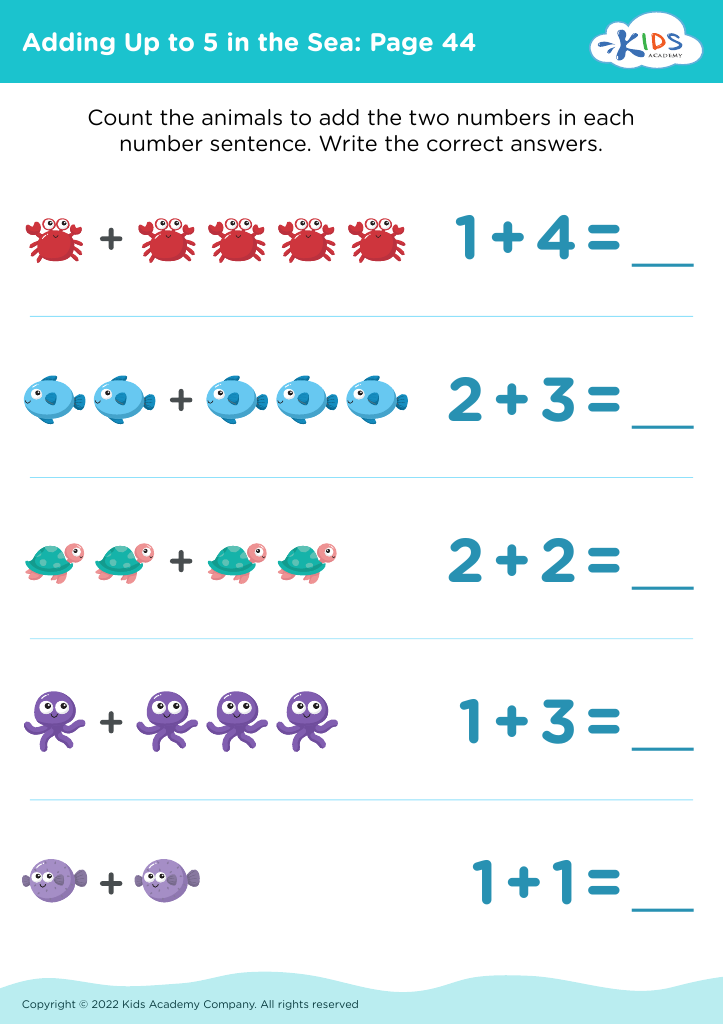
Adding Up to 5 in the Sea: Page 44
Worksheet
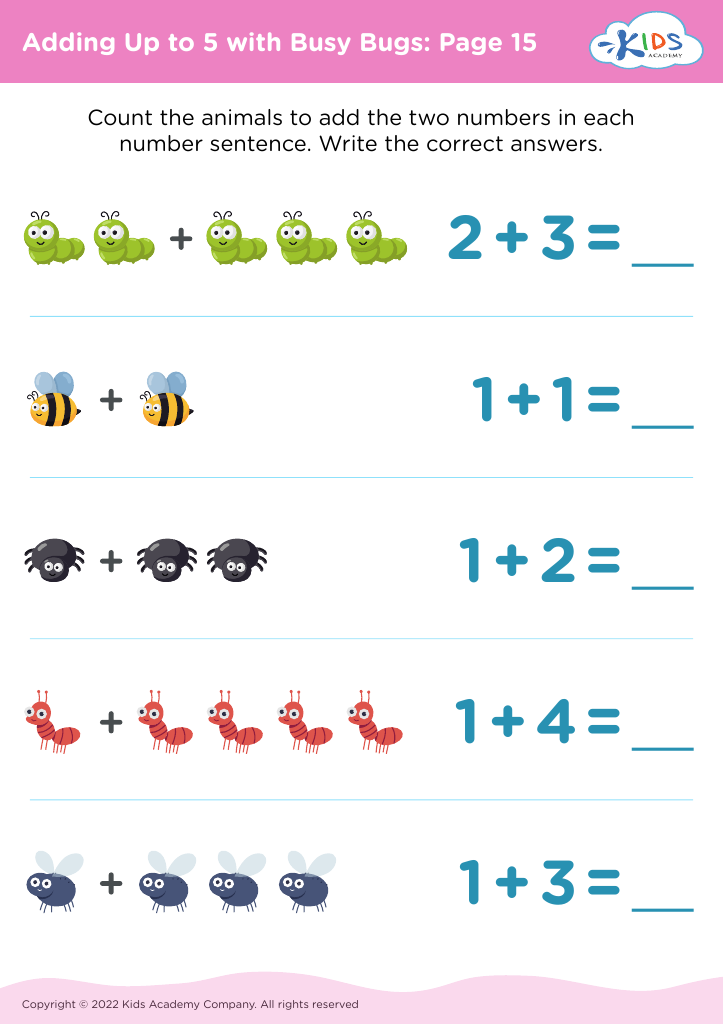
Adding Up to 5 with Busy Bugs: Page 15
Worksheet
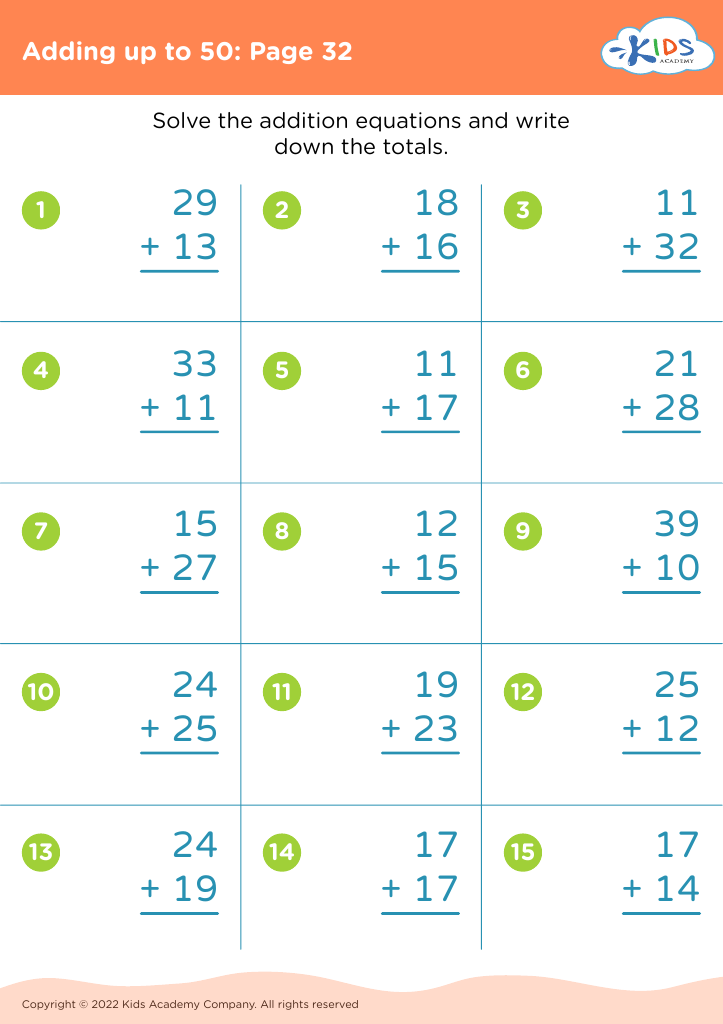
Adding up to 50: Page 32

Adding up to 50: Page 32

Adding up to 50: Page 32
Worksheet


... 23 24

Number recognition, addition, and subtraction are foundational skills for children aged 5-9 that profoundly affect their academic journey and daily life. Firstly, number recognition is the building block for all later arithmetic understanding; knowing numbers enables children to progress to more complex mathematical concepts.

Addition and subtraction introduce the concepts of quantifying changes and relationships between numbers—skills essential for higher mathematical operations such as multiplication and fractions. Mastery in these areas enhances problem-solving abilities, critical thinking, and logical reasoning. When children feel confident in basic math, it fosters a positive attitude toward learning overall, boosting their self-esteem and willingness to tackle challenges.

Teachers and parents play crucial roles in ensuring these foundational skills are solidified. By prioritizing number recognition, addition, and subtraction, they set up children for academic success and improved life skills, as an understanding of basic math concepts is often applied in everyday experiences like shopping, cooking, and time management.

Moreover, it’s been proven that early proficiency in math correlates with better performance in other academic areas, thus promoting a well-rounded educational development. Providing the right support and resources during these early years equates to investing in a child’s future, equipping them with tools that will serve them throughout their education and beyond.