Practice counting Addition & Subtraction Worksheets for Ages 5-9
6 filtered results
-
From - To
Elevate your child's math skills with our engaging "Practice Counting Addition & Subtraction Worksheets" designed for ages 5-9. These printable worksheets provide a fun and interactive way for young learners to master counting while developing their addition and subtraction abilities. Featuring colorful illustrations and age-appropriate exercises, these resources cater to different learning styles and ensure a well-rounded understanding of essential math concepts. As children practice counting and solving problems, they'll build confidence and proficiency, setting a solid foundation for future mathematical success. Explore our variety of worksheets that make learning math enjoyable and effective, perfect for home or classroom use!
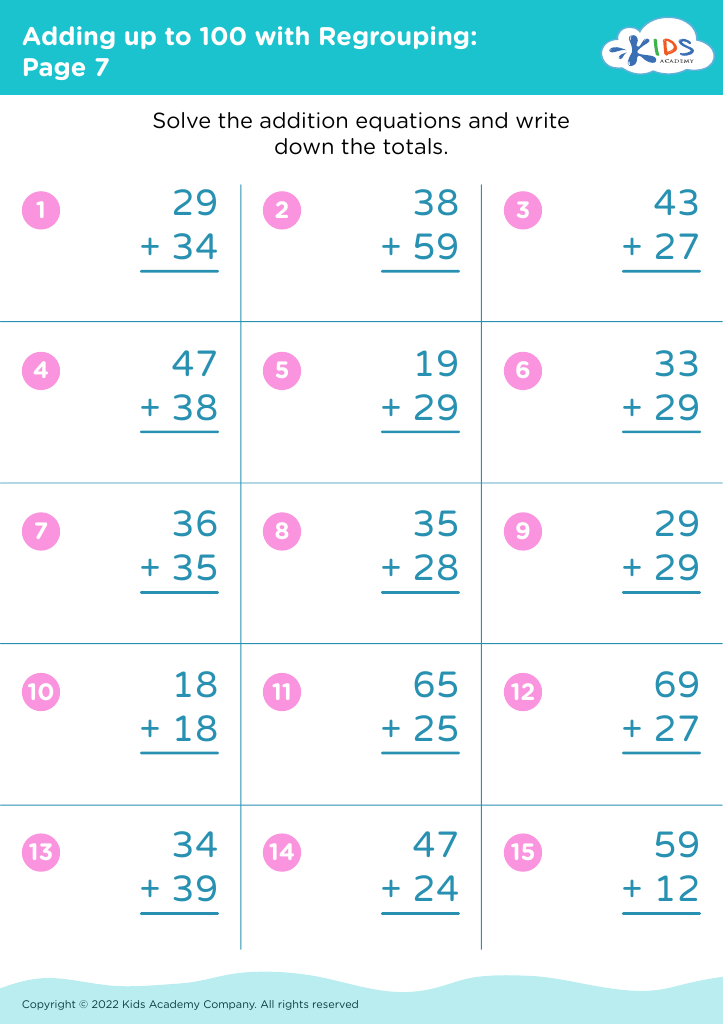
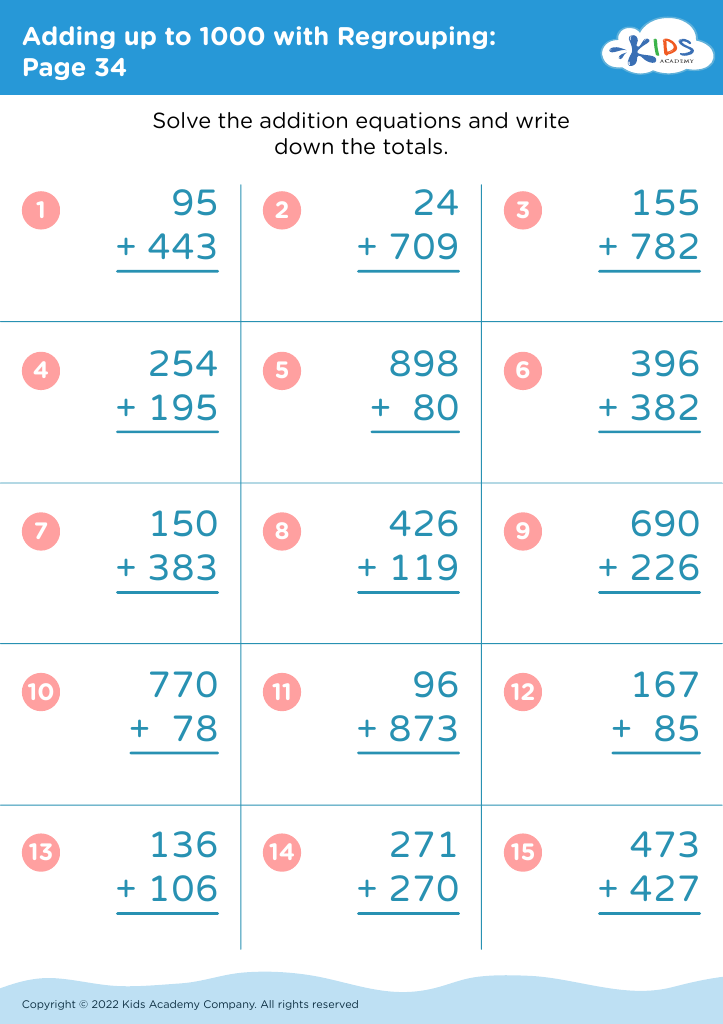
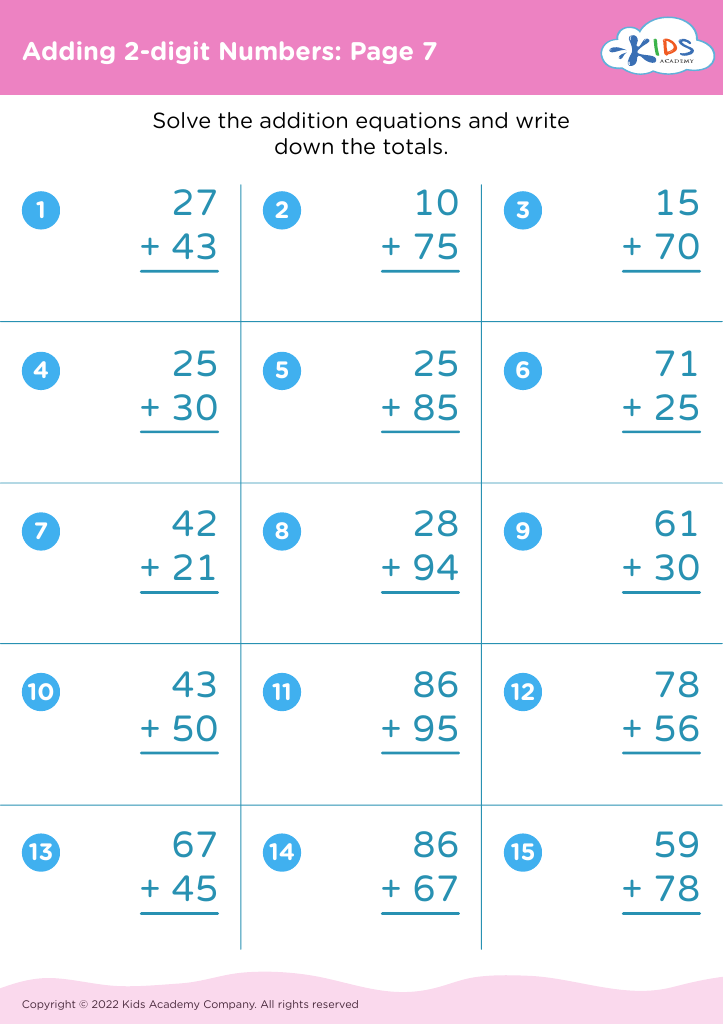
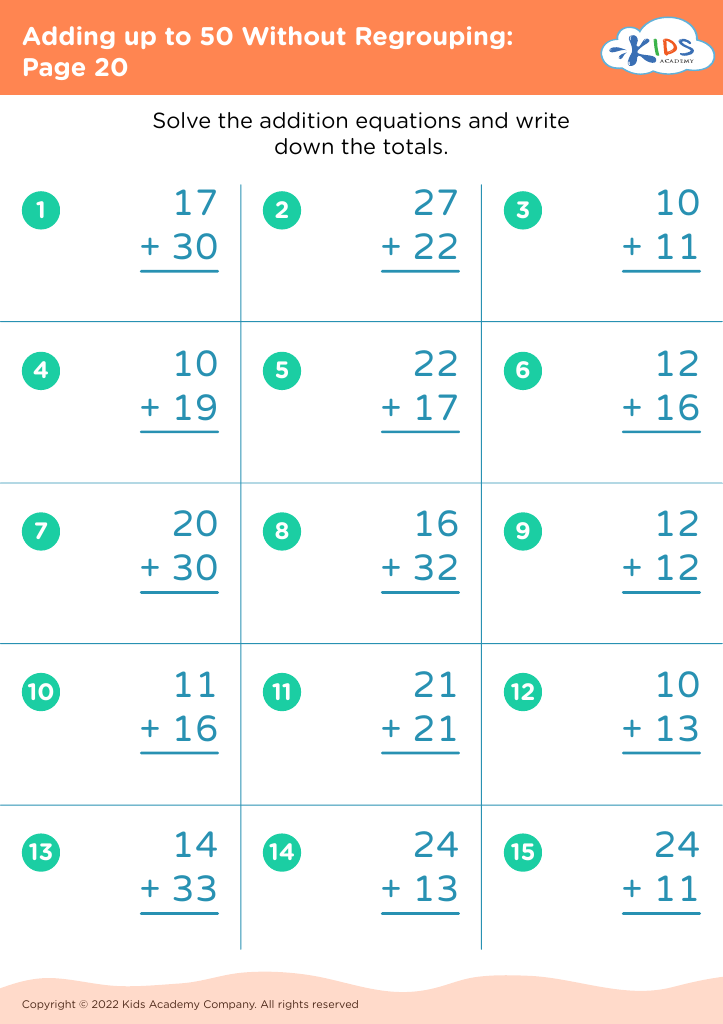
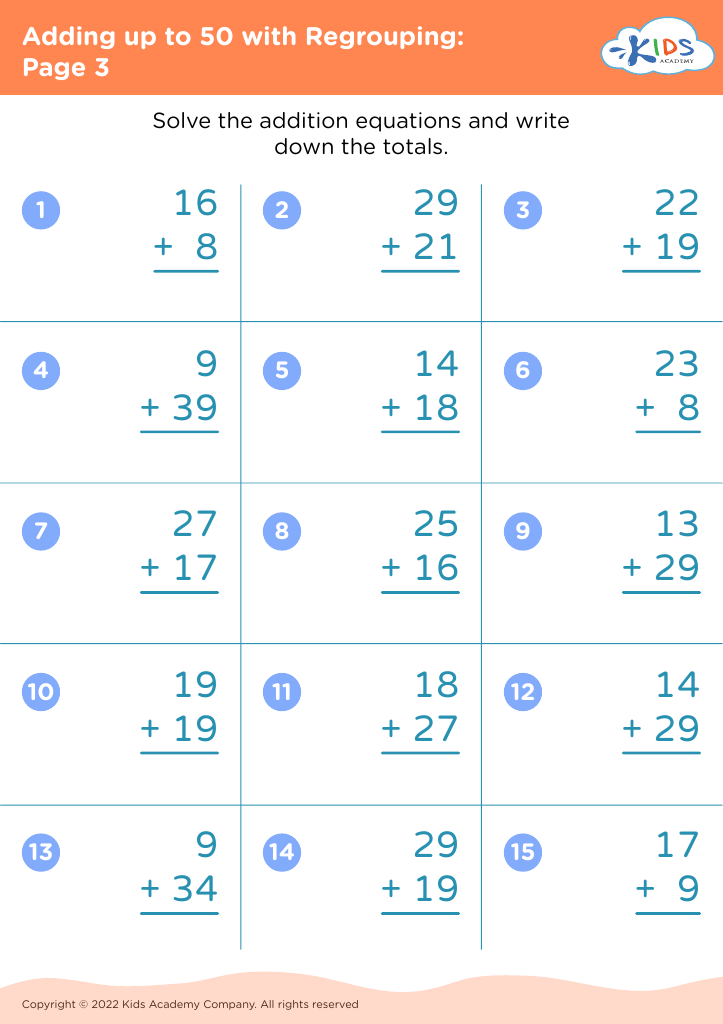
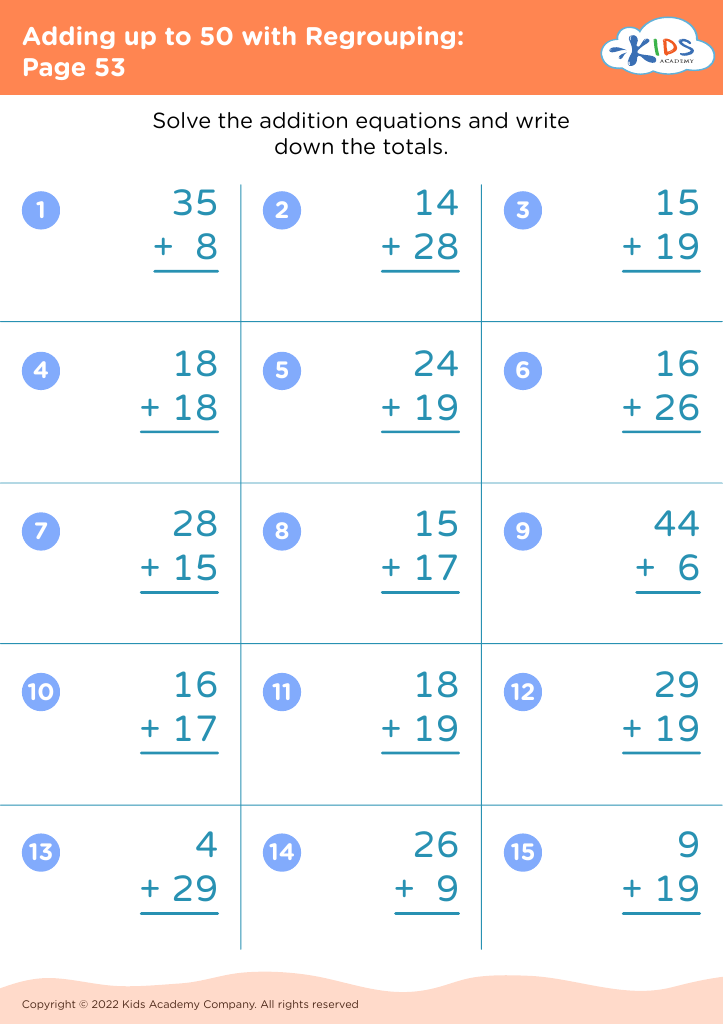








Practice counting, addition, and subtraction for children ages 5-9 is crucial for several reasons. First and foremost, these fundamental skills form the foundation for more advanced math concepts. By mastering basic counting and arithmetic, children develop numeracy skills that aid in problem-solving and logical thinking. For instance, understanding how to add and subtract sets of objects fosters a sense of quantity and comparison, essential for making sense of the world around them.
Additionally, practice in these areas promotes cognitive development. As children engage in counting and simple operations, they enhance their memory, attention, and concentration. Encouragement from parents and teachers can also help build confidence, which is vital for a positive mindset toward learning. A strong mathematical foundation not only supports academic success but also translates into everyday life, enabling children to manage finances, measure ingredients in cooking, or understand time.
Furthermore, consistency and practice yield fluency in these skills, making future calculations easier. Building a positive attitude towards math at an early age can deter math anxiety in later years. Therefore, it’s essential for parents and teachers to prioritize and support practice in counting, addition, and subtraction for young learners.








