Understanding directions Addition & Subtraction Worksheets for Ages 5-9
3 filtered results
-
From - To
Boost your child's math skills with our "Understanding Directions Addition & Subtraction Worksheets" designed for ages 5-9. These engaging worksheets help young learners grasp key mathematical concepts including following directions, addition, and subtraction. Each colorful, interactive sheet provides fun exercises that challenge kids to solve equations while honing their ability to understand and implement multiple steps. Created by educational experts, these worksheets are perfect for classroom or home use to support foundational math skills. Encourage your child's development, confidence, and mastery in mathematics with carefully crafted exercises tailored to their learning needs. Explore today for better math comprehension tomorrow!
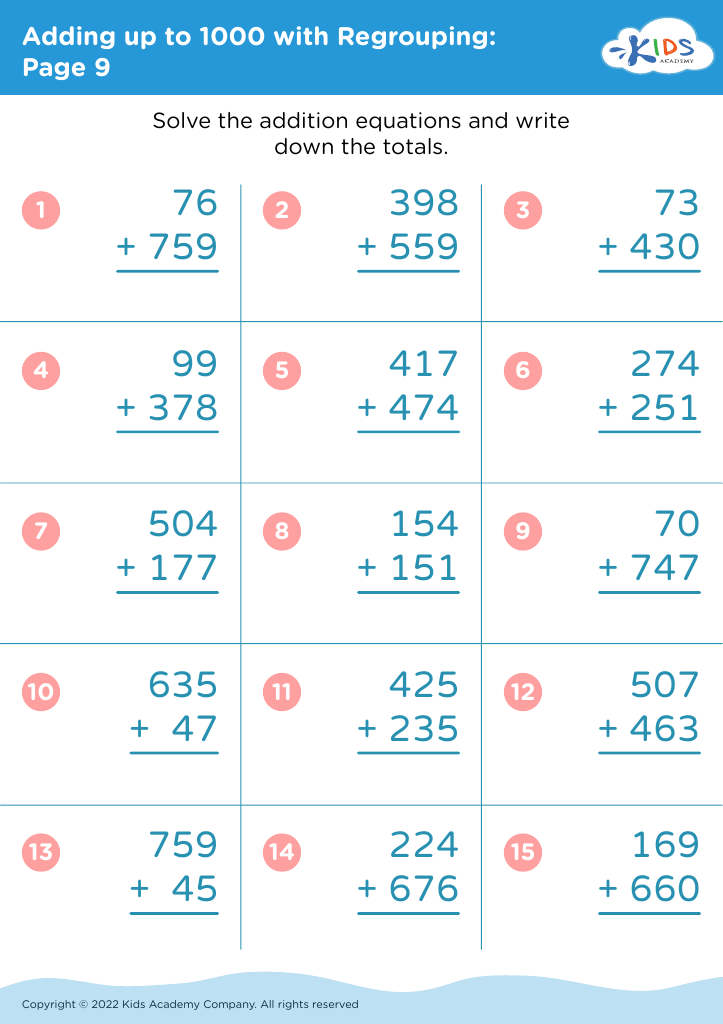
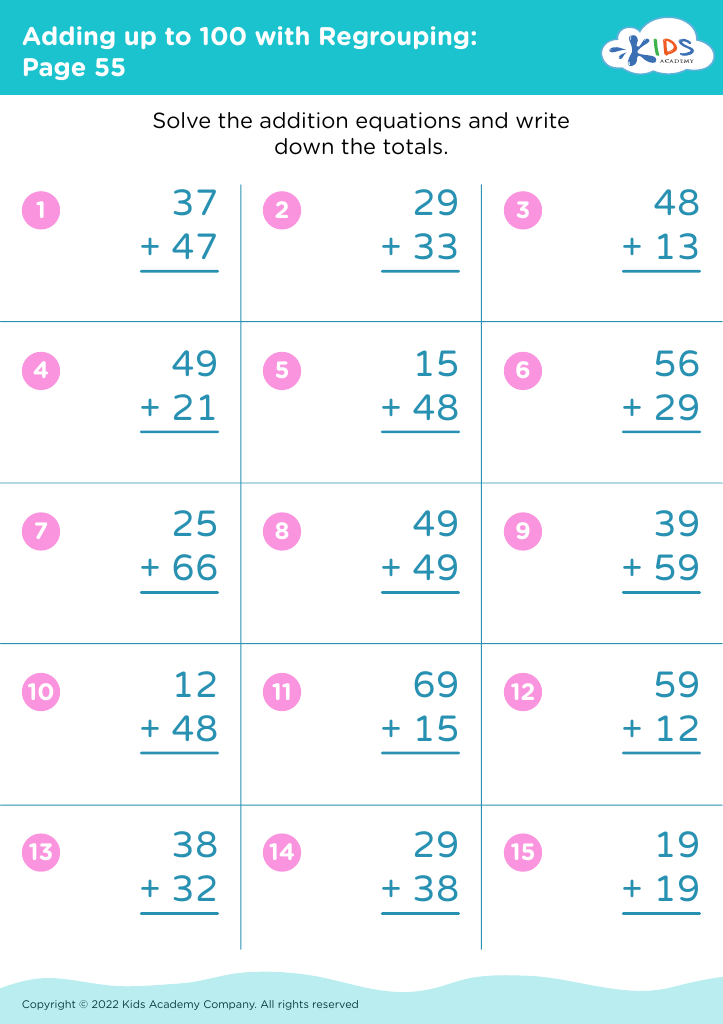
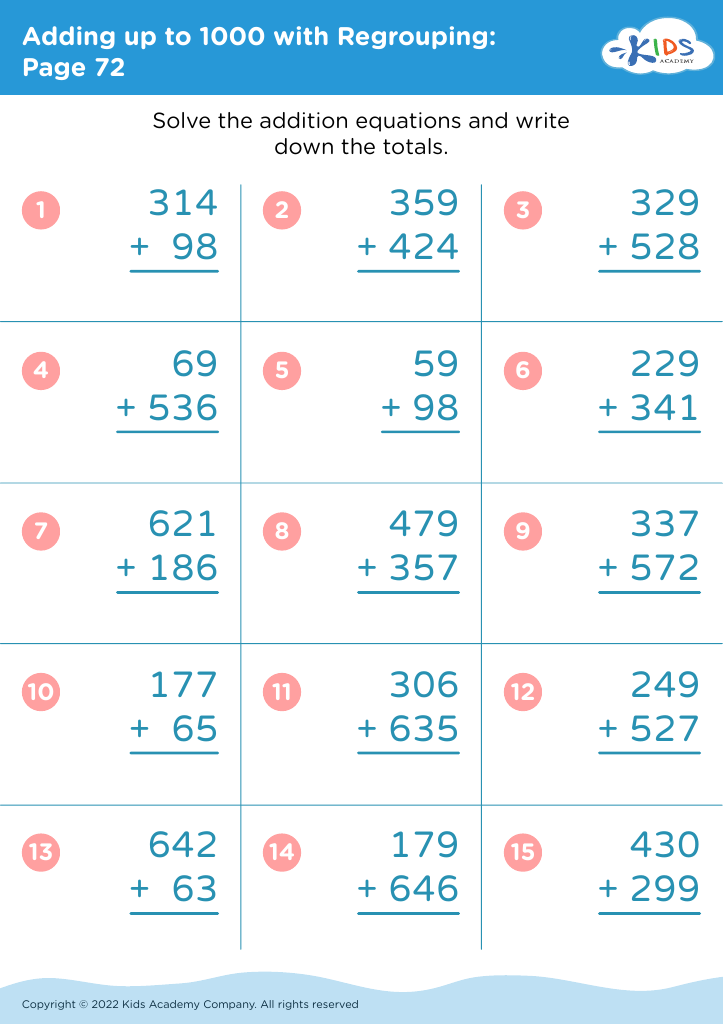








Understanding directions, addition, and subtraction for children ages 5-9 is crucial as these foundational skills underpin their everyday functioning and future academic success. For parents and teachers, investing time in fostering these skills pays long-term dividends.
Directions aren't just relevant in the context of navigation; they include following instructions, organizing tasks, and understanding concepts like "left" and "right." These skills are essential for classroom management and learning activities, helping children to develop better spatial awareness and logical sequencing, which extends to reading and writing processes. Poor understanding may lead to confusion, misplaced items, or mistakes in following procedures, impacting children's overall learning experiences.
Addition and subtraction are fundamental mathematical skills essential for higher-level math and daily problem-solving activities. Mastery of these operations boosts students' confidence in their numerical abilities. These arithmetic skills are used in countless real-life situations, from buying items with pocket money to understanding time. Early proficiency helps children to smoothly transition to more complex mathematical concepts taught in later grades.
Ultimately, developing these skills early sets a robust foundation for other educational pursuits and life tasks. Parents and teachers working together to build these competencies equip children with critical tools needed for their overall development, promoting lifelong learning and adaptability.








