Understanding number relationships Addition & Subtraction Worksheets for Ages 5-9
8 filtered results
-
From - To
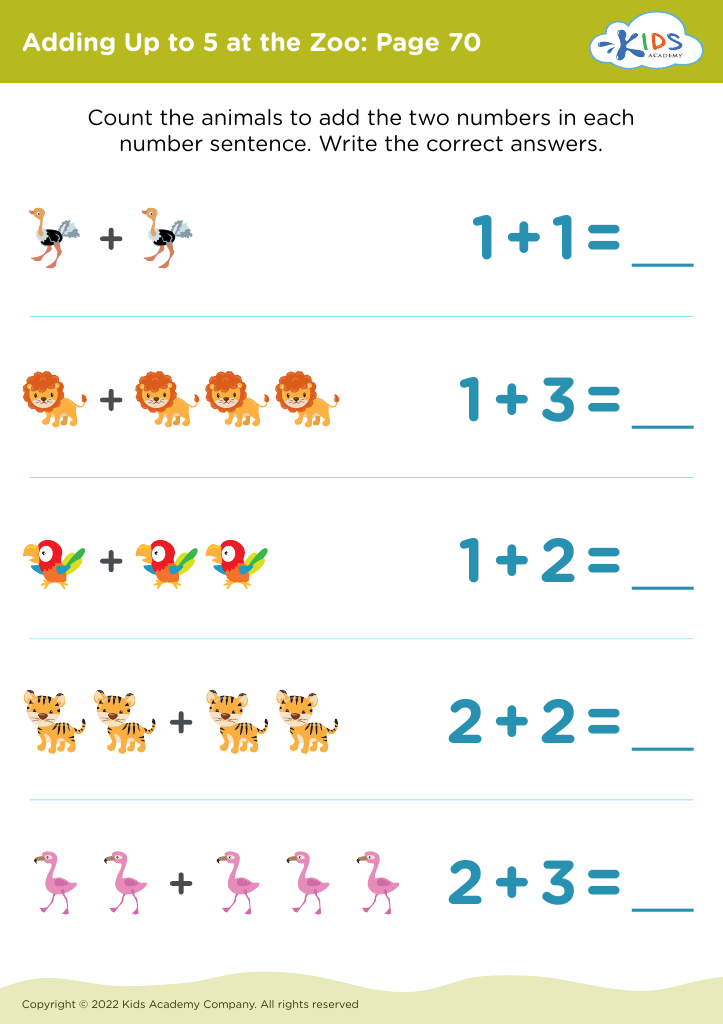
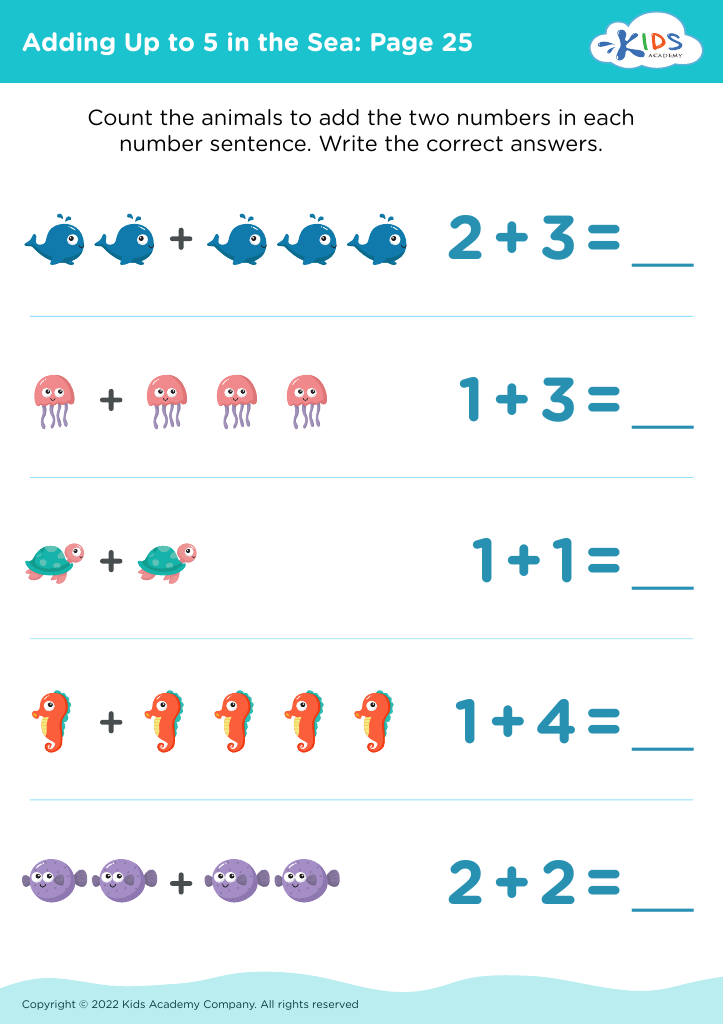
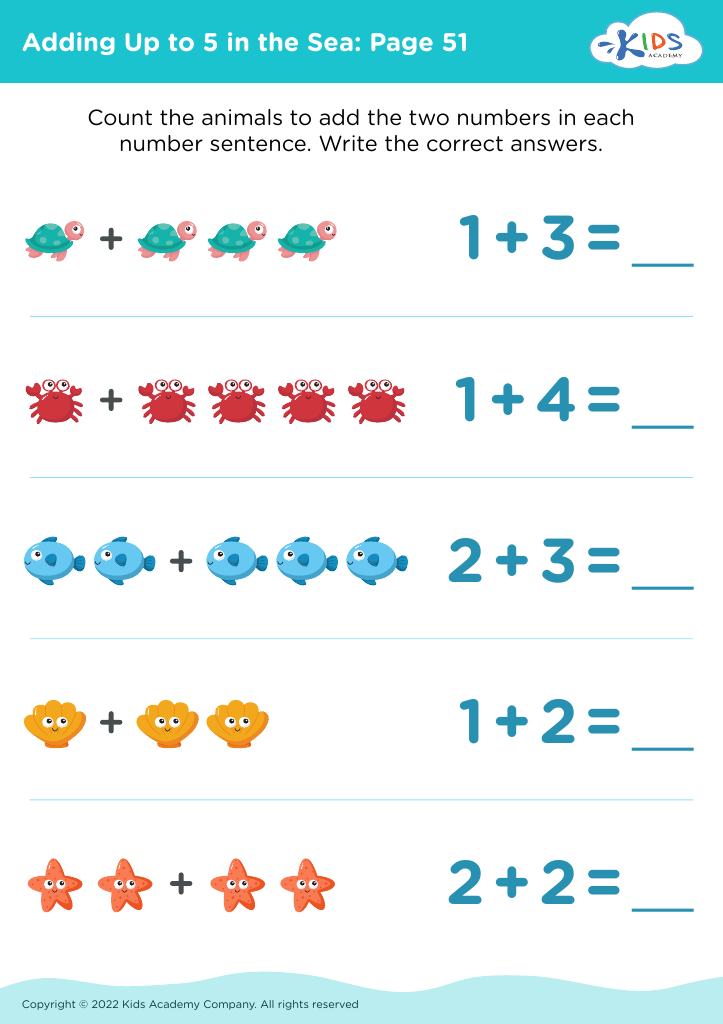
Enhance your child's math skills with our "Understanding Number Relationships: Addition & Subtraction Worksheets" designed for ages 5-9. These engaging activities foster comprehension of number relationships through interactive exercises that enhance logical thinking and problem-solving abilities. Perfect for home or classroom use, our worksheets cover a variety of addition and subtraction scenarios to help young learners build foundational math skills with confidence. Download today to support your child's mathematical journey and transform learning into a fun, rewarding experience. Discover more at Kids Academy and empower your youngster with the tools for academic success.
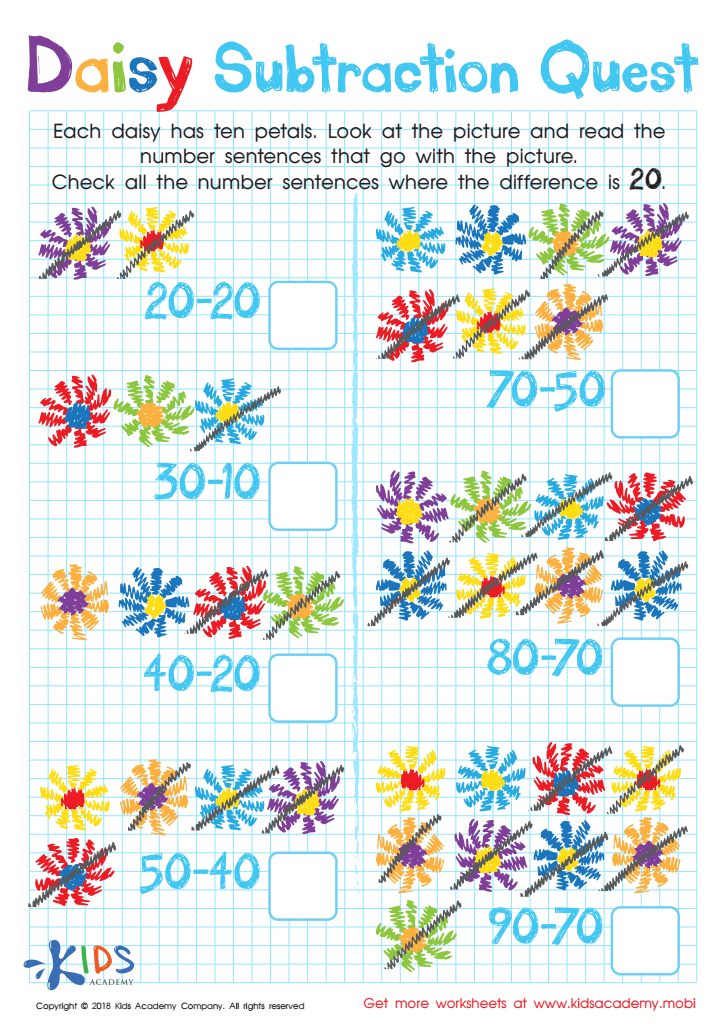
Daisy Subtraction Quest Worksheet
 Assign to My Students
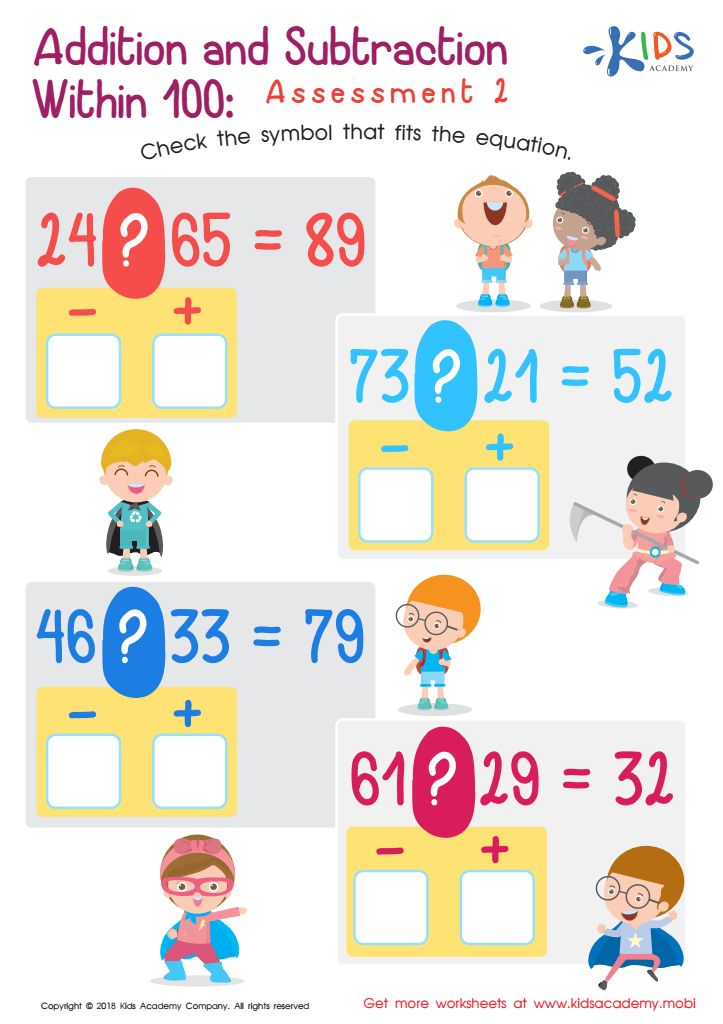
Addition and Subtraction Within 1: Assessment 2 Worksheet
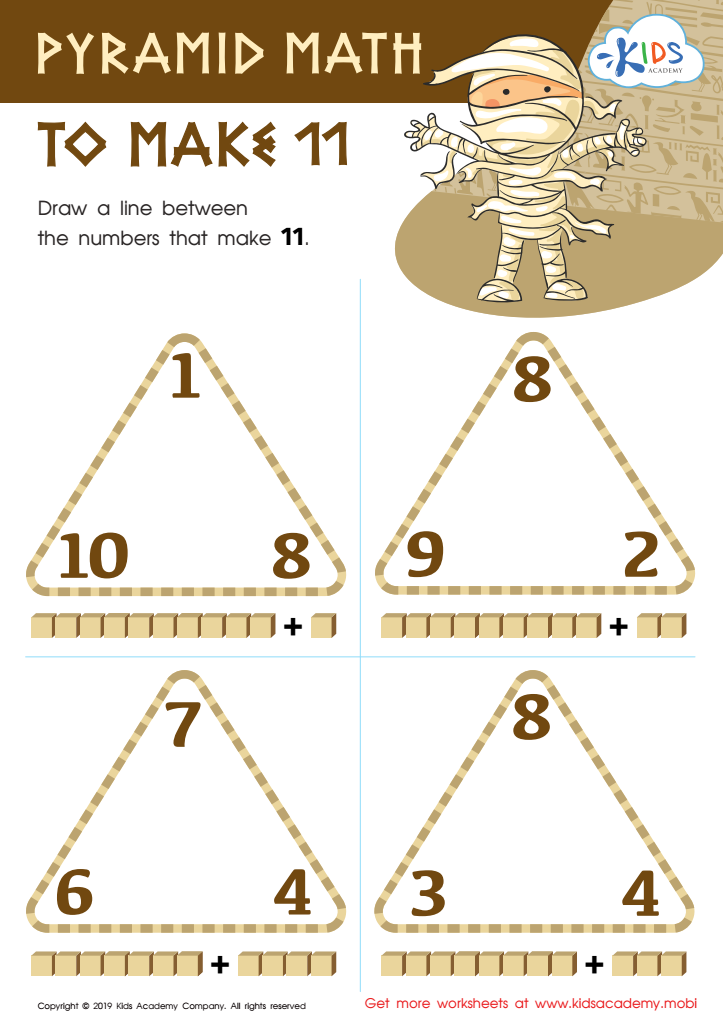
Pyramid Math to Make 11 Worksheet








Understanding number relationships, addition, and subtraction is crucial for children aged 5-9 for several reasons. Firstly, these fundamental concepts form the building blocks of more advanced mathematical skills. At this early age, children are developing their number sense, which is essential for comprehending more complex operations like multiplication and division later on.
Secondly, a strong grasp of addition and subtraction helps children in their day-to-day activities. Whether it's sharing toys, distributing snacks, or understanding the concept of time, real-life applications of these mathematical skills are everywhere. Thus, proficiency in these areas makes it easier for children to navigate and make sense of their world.
For parents and teachers, encouraging an early understanding promotes cognitive development. Engaging children in activities that involve counting, joining, and separating sets can boost their problem-solving and reasoning skills. Plus, a positive attitude towards math from an early age can help prevent math anxiety later in school, ensuring that children remain confident and enthusiastic learners.
Furthermore, early success in math can enhance self-esteem and provide a strong foundation for future academic achievement. Understanding these number relationships is not just about learning math; it's about setting children up for success in various aspects of their education and life.








