Filters

34 filtered results

Clear all filters
Favorites
With answer key
Interactive

34 filtered results

Difficulty Level

Grade


Check out this FREE Trial Lesson on Addition & Subtraction for age 5-9!

Sorting Objects into 3 Categories

Favorites
With answer key
Interactive
  • 5-9
  • Understanding patterns
  • Addition & Subtraction
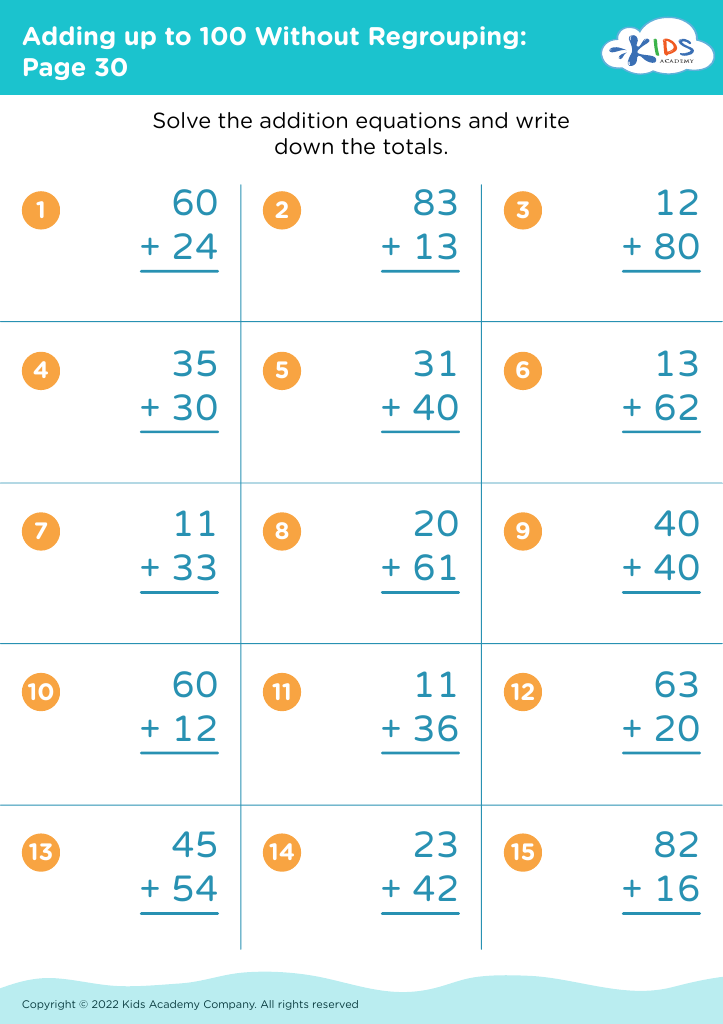
Adding up to 100 Without Regrouping: Page 30
Worksheet
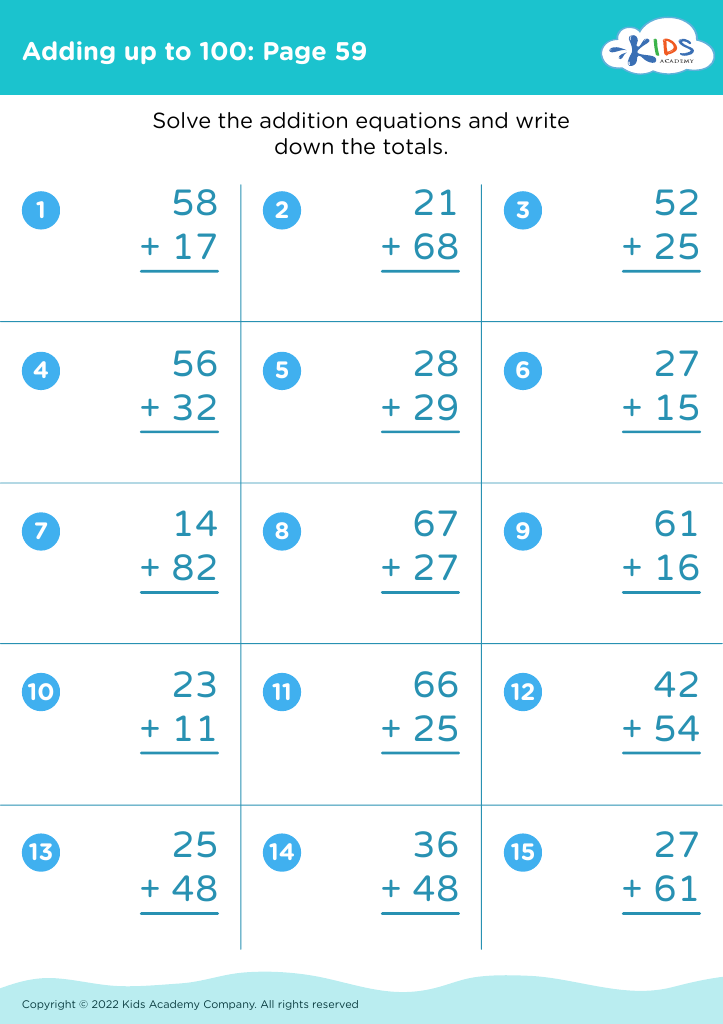
Adding up to 100: Page 59

Adding up to 100: Page 59

Adding up to 100: Page 59
Worksheet
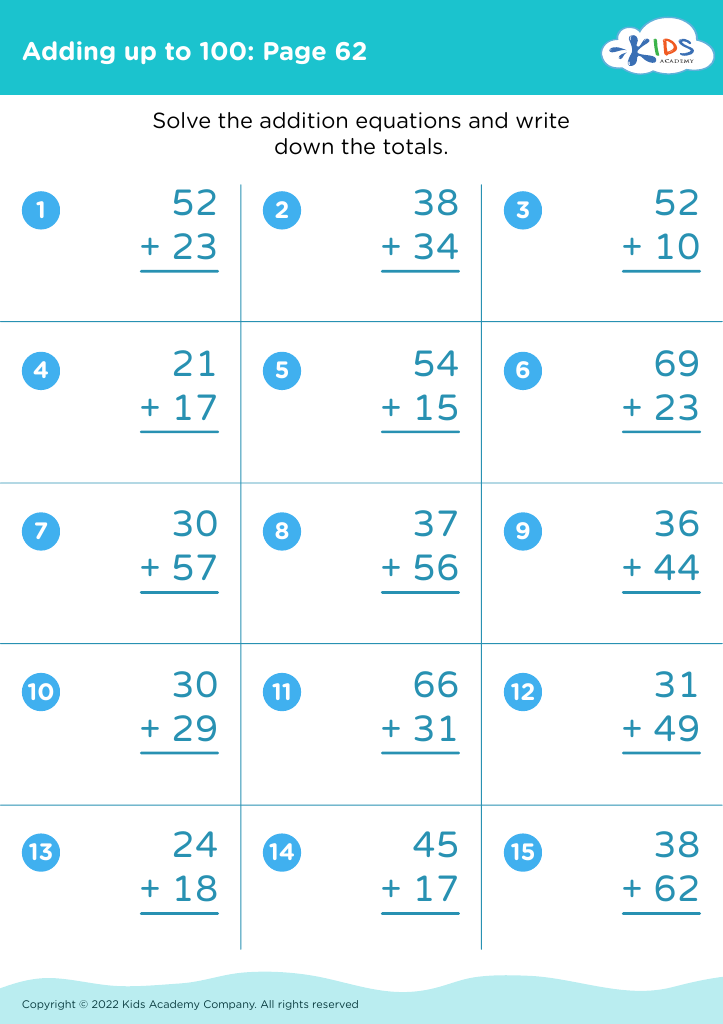
Adding up to 100: Page 62

Adding up to 100: Page 62

Adding up to 100: Page 62
Worksheet
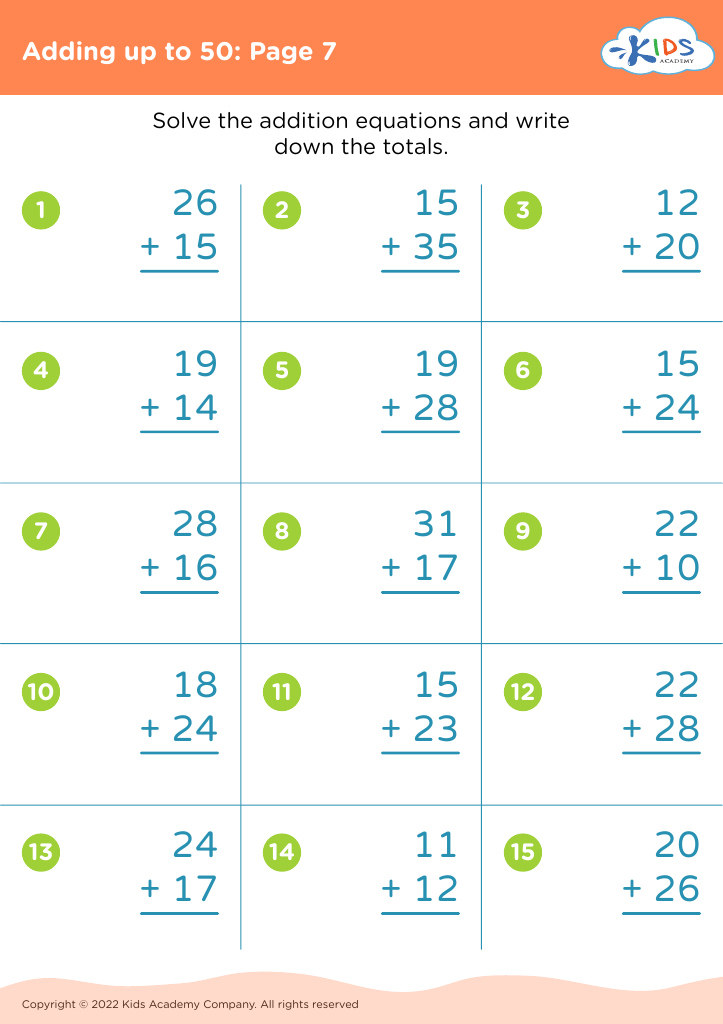
Adding up to 50: Page 7

Adding up to 50: Page 7

Adding up to 50: Page 7
Worksheet
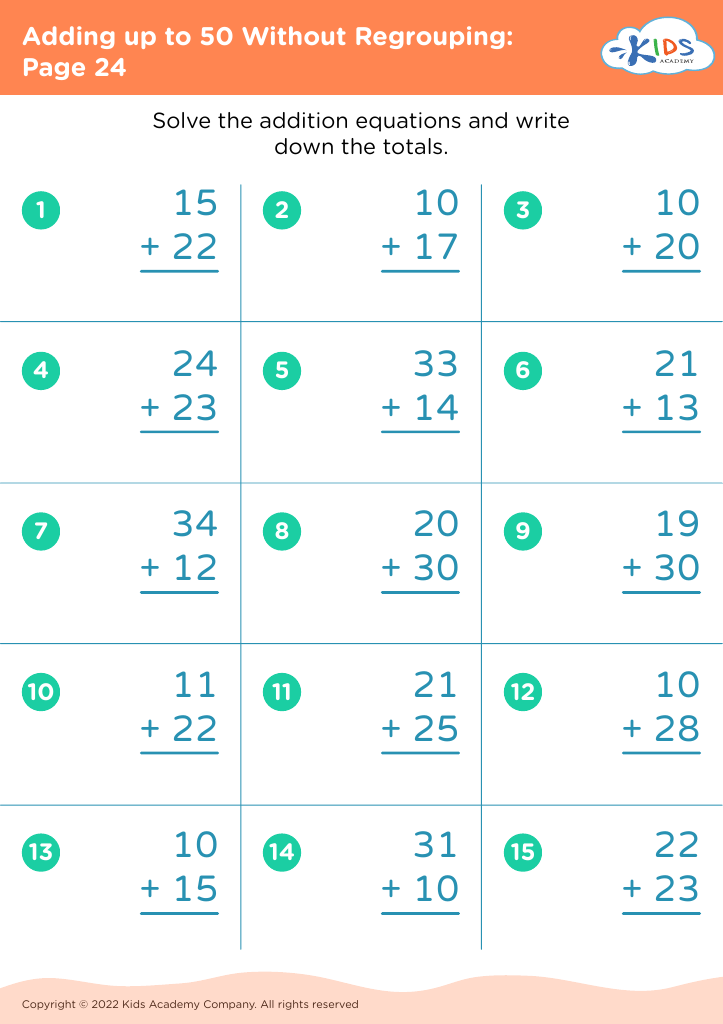
Adding up to 50 Without Regrouping: Page 24
Worksheet
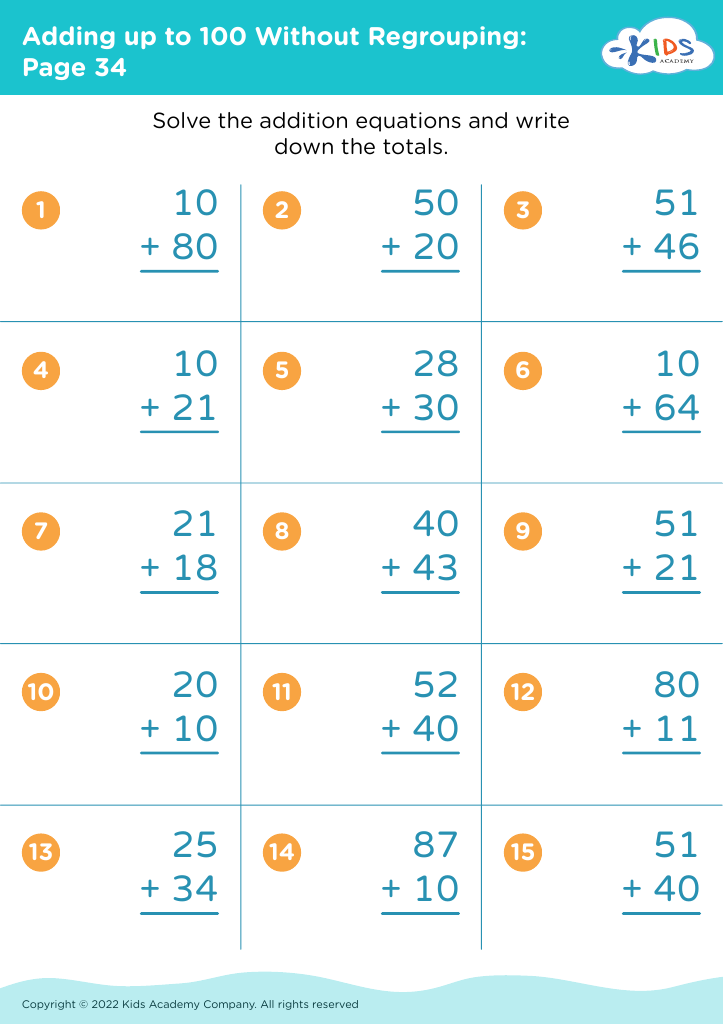
Adding up to 100 Without Regrouping: Page 34
Worksheet
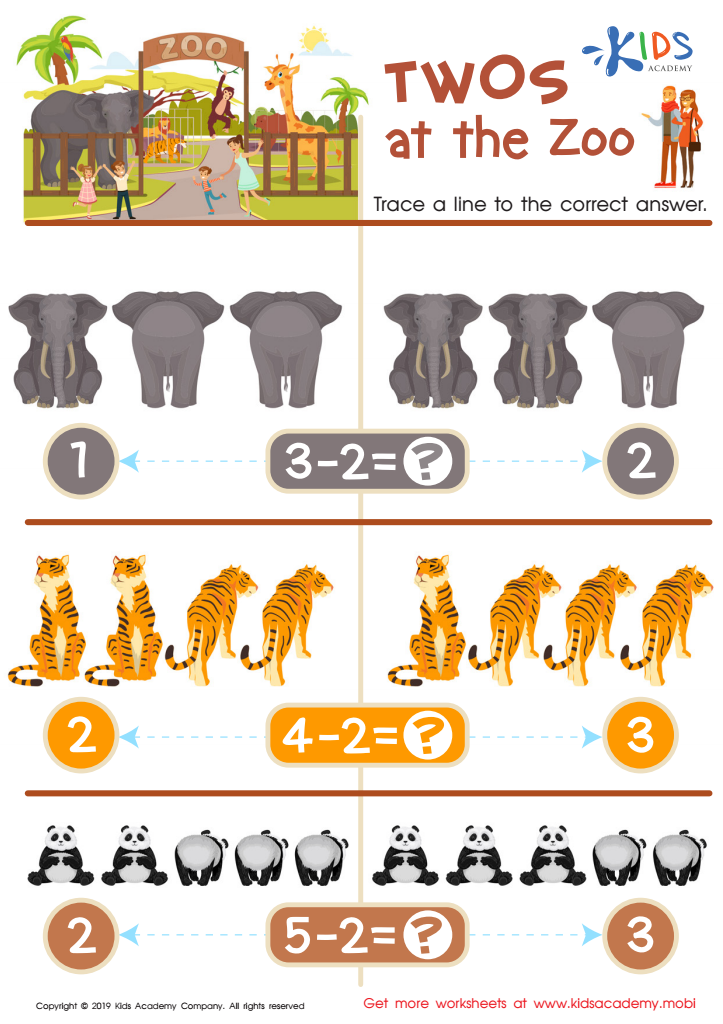
Twos at the Zoo Worksheet

Twos at the Zoo Worksheet

At the zoo, your kids can have fun with animals. Ask them to name their favorite ones and identify them in the printout. Count animals in each group together, then help your kids solve the equations and trace a line to the answer. It's an enjoyable way to combine learning and exploration!
Twos at the Zoo Worksheet
Worksheet
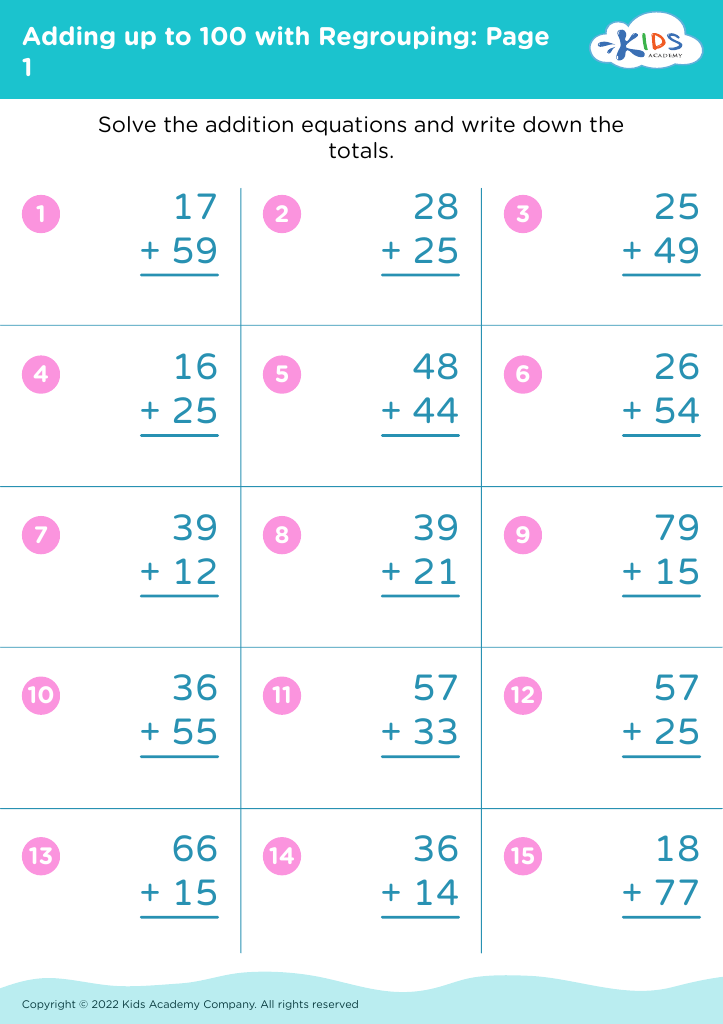
Adding up to 100 with Regrouping: Page 1
Worksheet
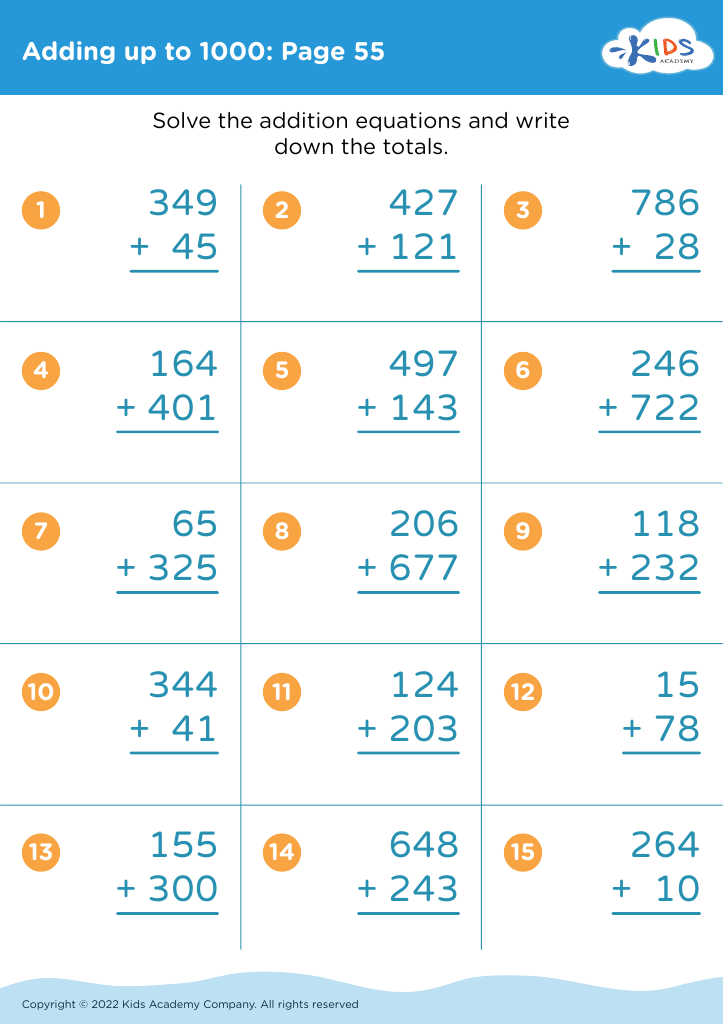
Adding up to 1000: Page 55

Adding up to 1000: Page 55

Adding up to 1000: Page 55
Worksheet
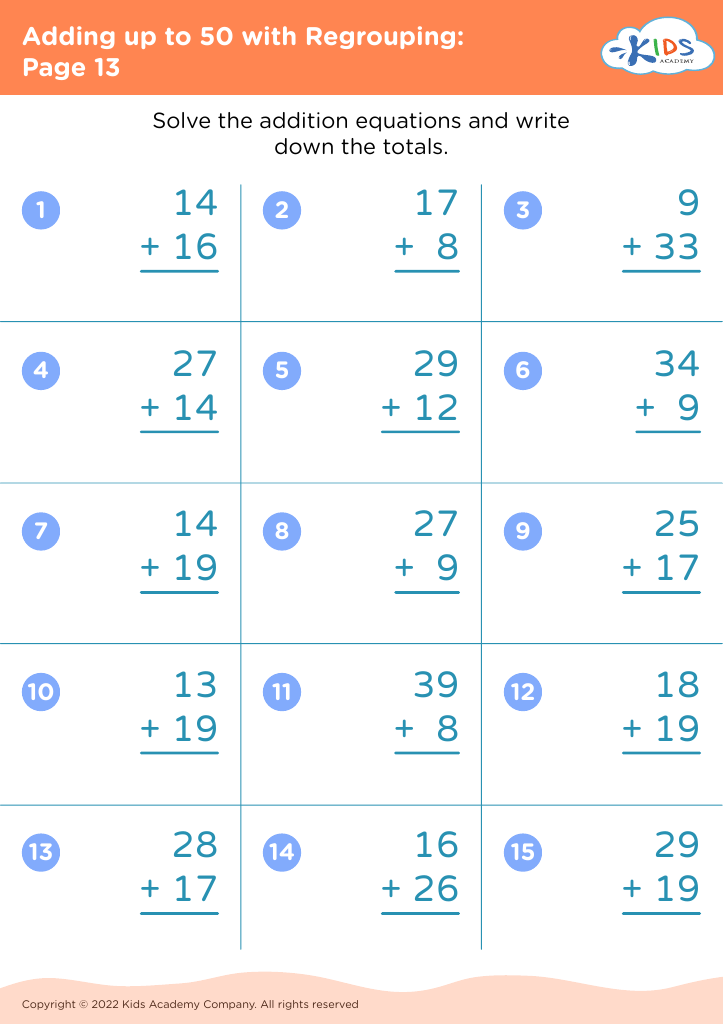
Adding up to 50 with Regrouping: Page 13
Worksheet


Understanding patterns in addition and subtraction is crucial for children aged 5-9 as it lays the foundation for their mathematical development. When children grasp the concept of patterns, they learn to recognize relationships between numbers, enabling them to predict outcomes and solve problems more efficiently. For instance, understanding patterns can help children identify that adding or subtracting a number consistently yields similar results, reinforcing their operational skills.

Moreover, pattern recognition enhances critical thinking and analytical skills. As children discern mathematical patterns, they become more comfortable with concepts like skip counting and eventually advance toward more complex mathematics, including multiplication and division. Patterns also encourage logical reasoning, as students learn to articulate their thought processes when working through problems.

Furthermore, incorporating pattern exercises into learning makes math fun and engaging. This playful approach fosters a positive attitude toward math, reducing anxiety associated with the subject. For parents and teachers, nurturing this understanding not only boosts confidence in children but also equips them with essential skills needed for future academic success. Ultimately, caring about this foundational aspect of math enables educators and parents to guide children toward becoming proficient and enthusiastic learners.