Visual learning enhancement Addition & Subtraction Worksheets for Ages 5-9
7 filtered results
-
From - To
Boost your child's math skills with our engaging Visual Learning Enhancement Addition & Subtraction Worksheets! Tailored for ages 5-9, these worksheets use vibrant visuals and interactive elements to make learning arithmetic fun and effective. Designed to support diverse learning styles, they help young learners grasp fundamental concepts through captivating images and clear, step-by-step instructions. Our resources aim to promote confidence and understanding in basic math while adhering to educational standards. Ideal for both classroom and at-home learning, these worksheets ensure that children not only practice addition and subtraction but also develop a love for math. Start your child’s journey to math mastery today!
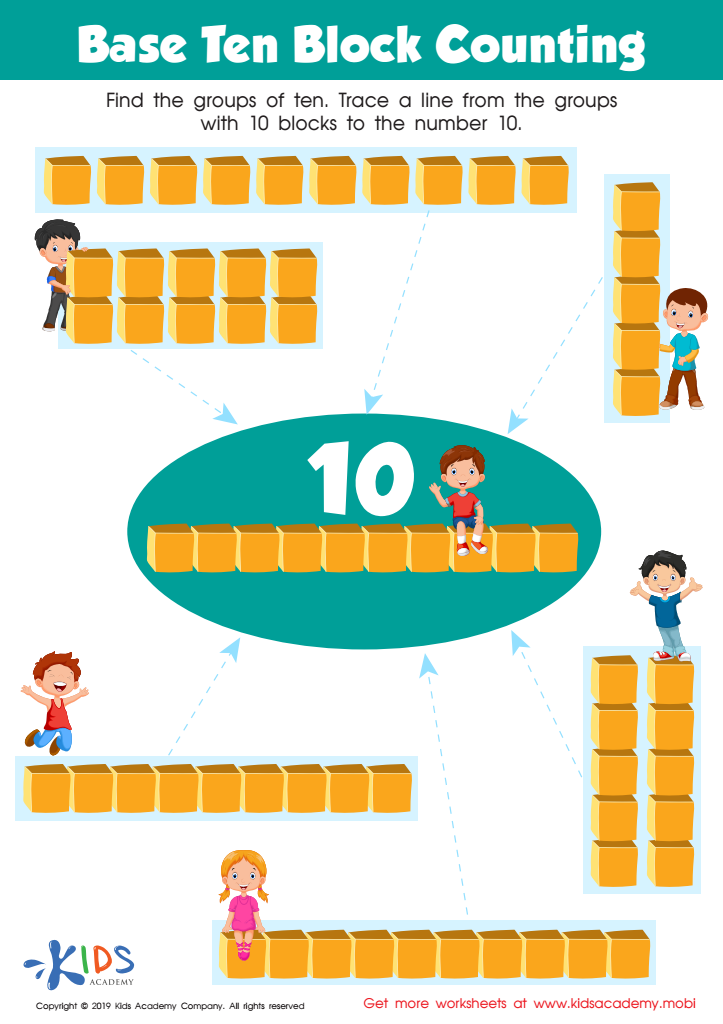
Base Ten Block Counting Worksheet
 Assign to My Students
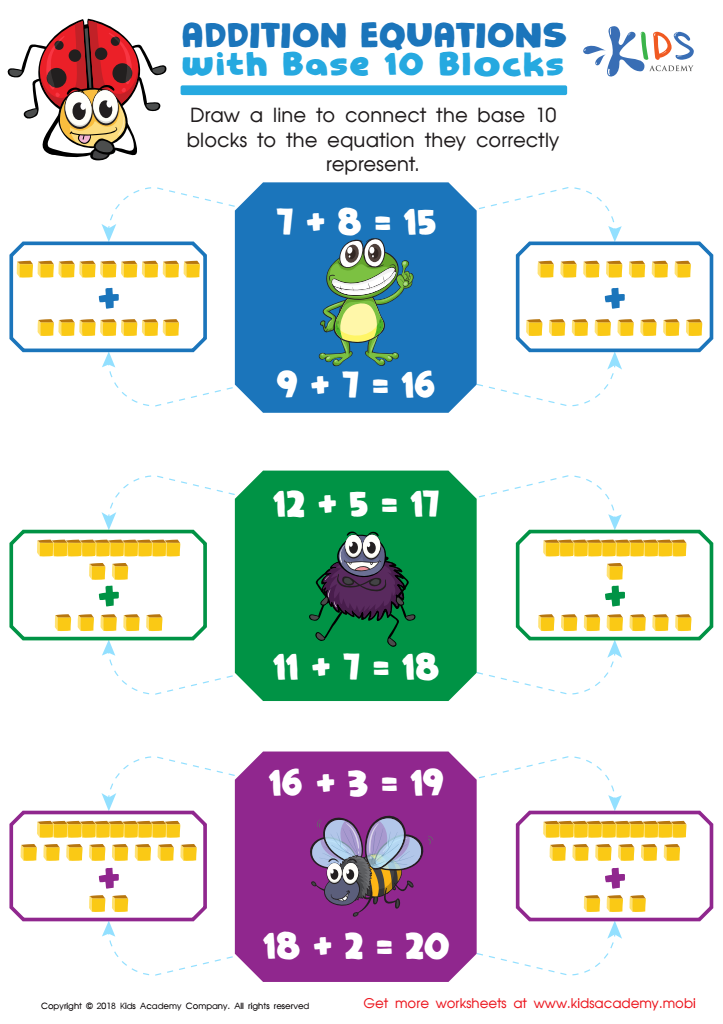
Addition Equations With Base 10 Blocks Worksheet
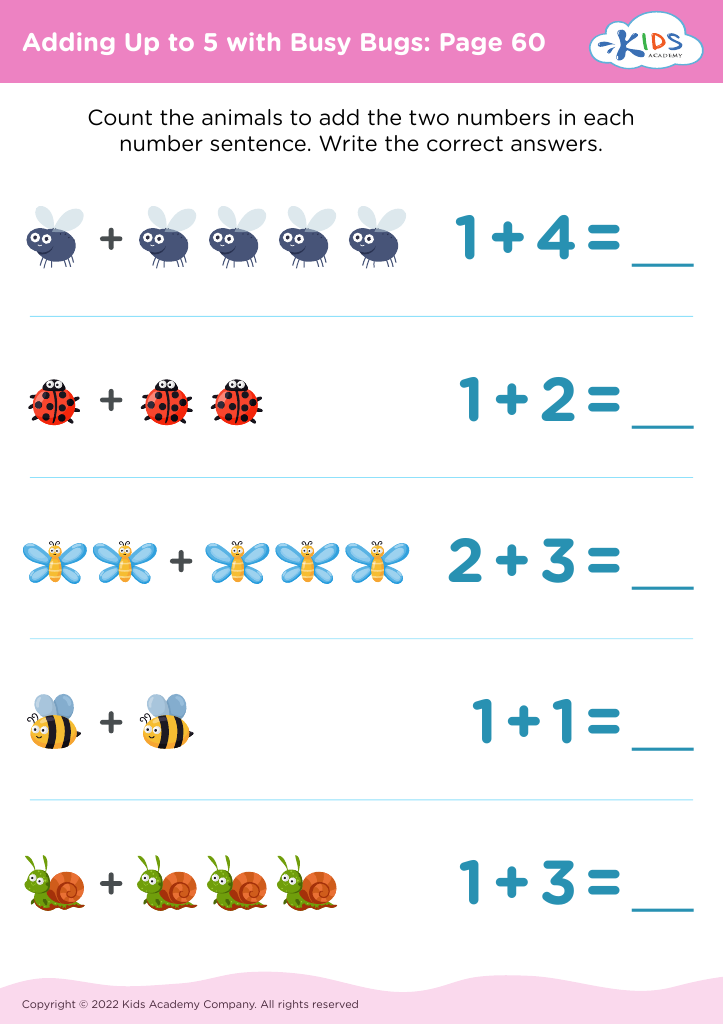
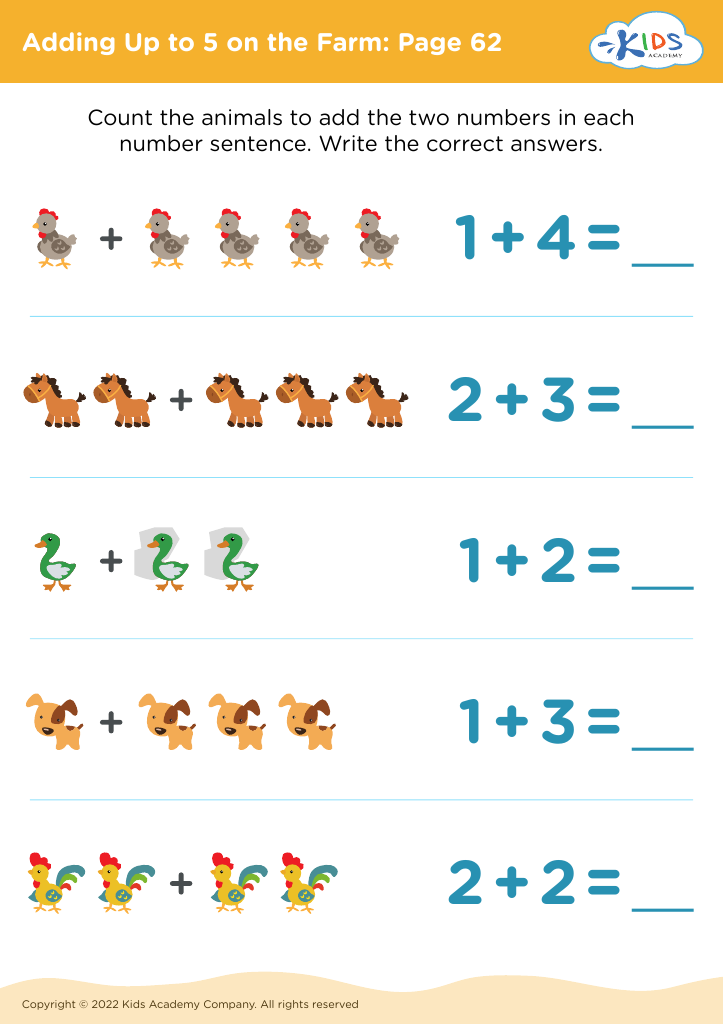
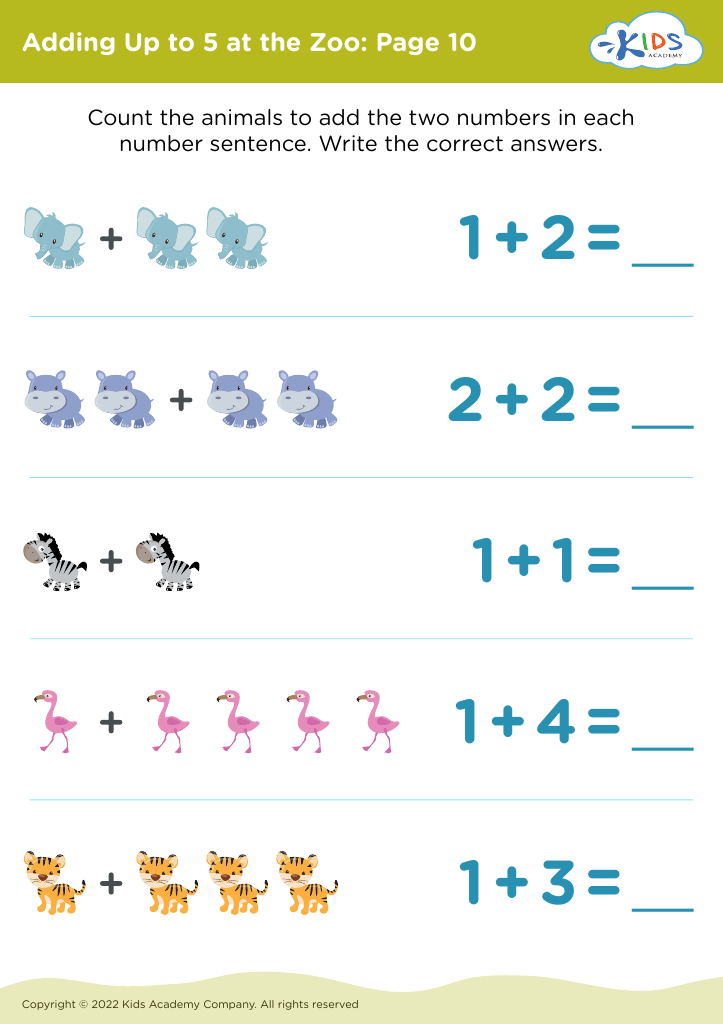
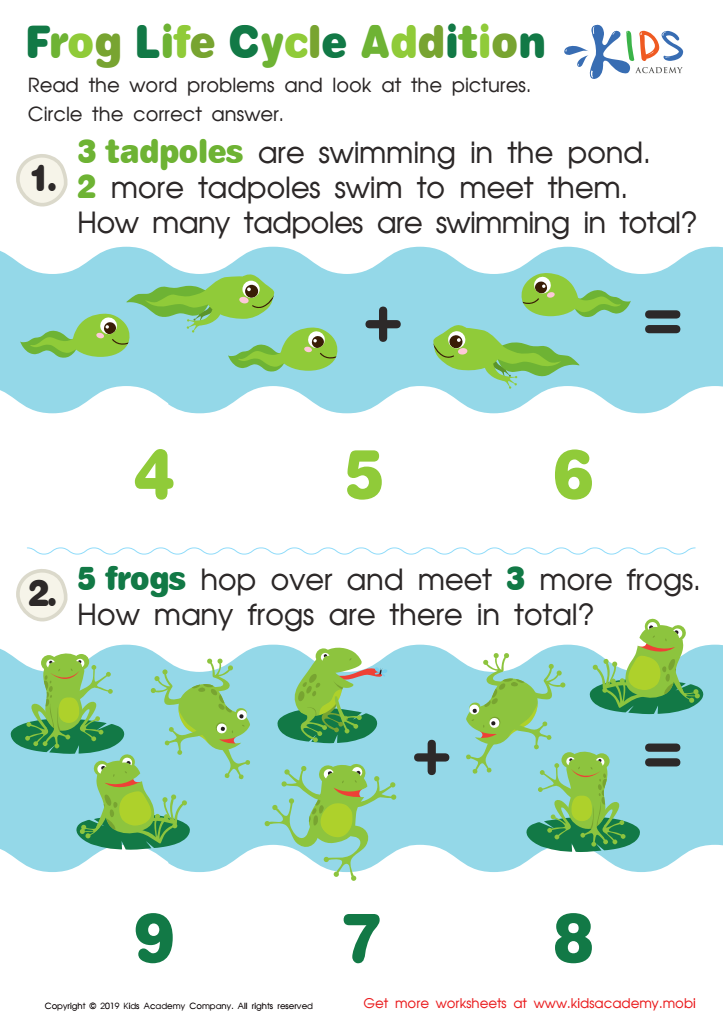
Frog Life Cycle Addition Worksheet
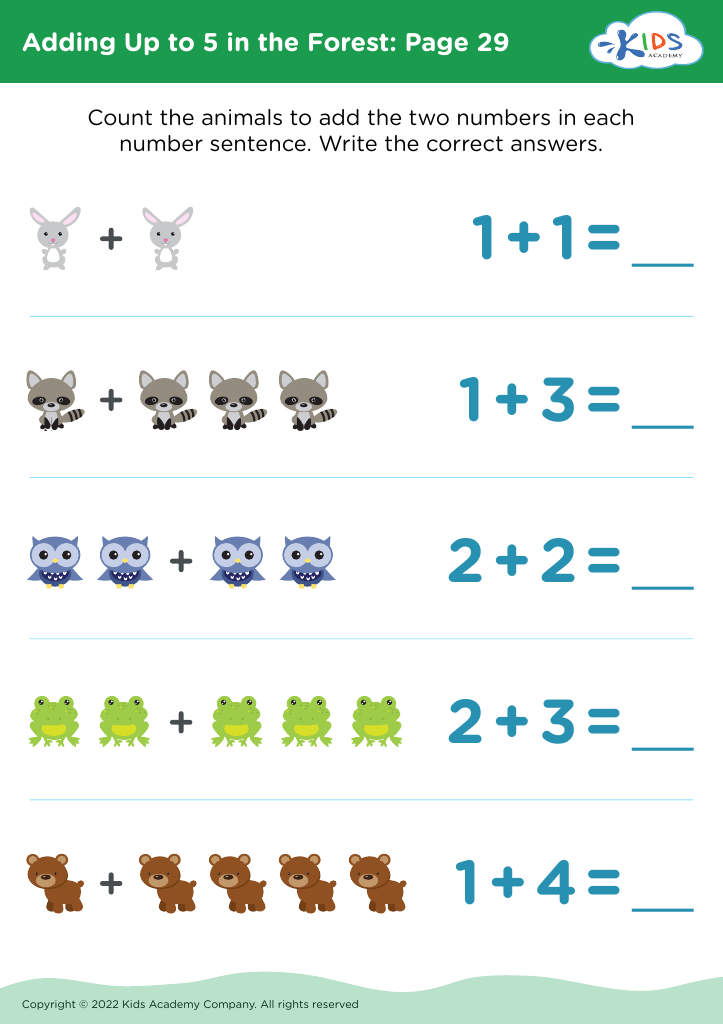








Parents and teachers should prioritize visual learning enhancement in teaching addition and subtraction to children aged 5-9 because it aligns with the natural ways young children learn. Visual aids, such as counters, number lines, and pictorial representations, can simplify complex mathematical concepts, making them more accessible and engaging for young learners. This approach helps children grasp the foundational principles of math by allowing them to visualize processes rather than relying solely on abstract numbers and symbols.
Moreover, visual learning supports various learning styles, catering to different needs among students. By incorporating visuals, teachers and parents can foster a deeper understanding and retention of addition and subtraction concepts, reducing math anxiety and building confidence.
Effective visual learning tools can spark curiosity and motivate children, making math enjoyable rather than intimidating. As children succeed with these foundational skills, they build a strong mathematical foundation for future learning. Advocating for visual learning enhancement also encourages interactive and collaborative study habits, where kids can work together while exploring math concepts.
In summary, embracing visual learning for addition and subtraction not only promotes comprehension but also nurtures a positive attitude towards math, laying the groundwork for successful lifelong learning.








