Filters

18 filtered results

Clear all filters
Favorites
With answer key
Interactive

18 filtered results

Difficulty Level

Grade


Welcome to our Basic Addition Practice Worksheets, designed specifically for children ages 5-9! These engaging and interactive worksheets provide a fun and effective way for young learners to master basic addition skills. With a variety of colorful, age-appropriate exercises, students will build their confidence in solving simple addition problems. Each worksheet focuses on key concepts and reinforces learning through repetition and practice. Perfect for classroom use or at-home learning, these resources support foundational math skills essential for academic success. Ensure your child develops a strong understanding of addition with our carefully curated worksheets that make learning enjoyable and rewarding!
Check out this FREE Trial Lesson on Addition for age 5-9!

X

Favorites
With answer key
Interactive
  • 5-9
  • Basic addition practice
  • Addition
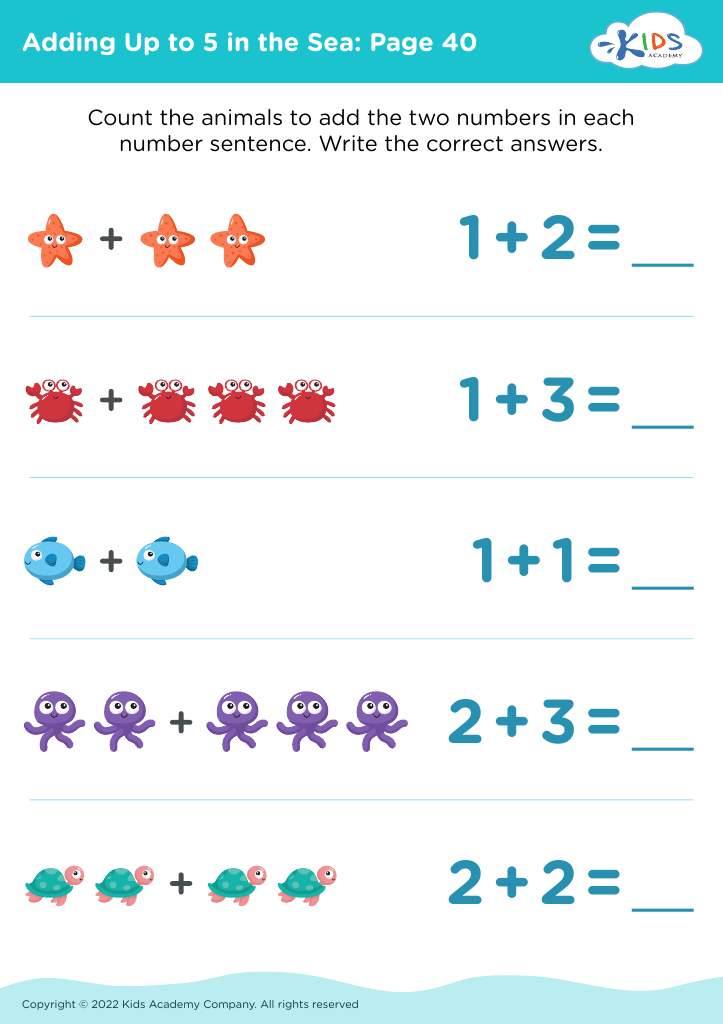
Adding Up to 5 in the Sea: Page 40
Worksheet
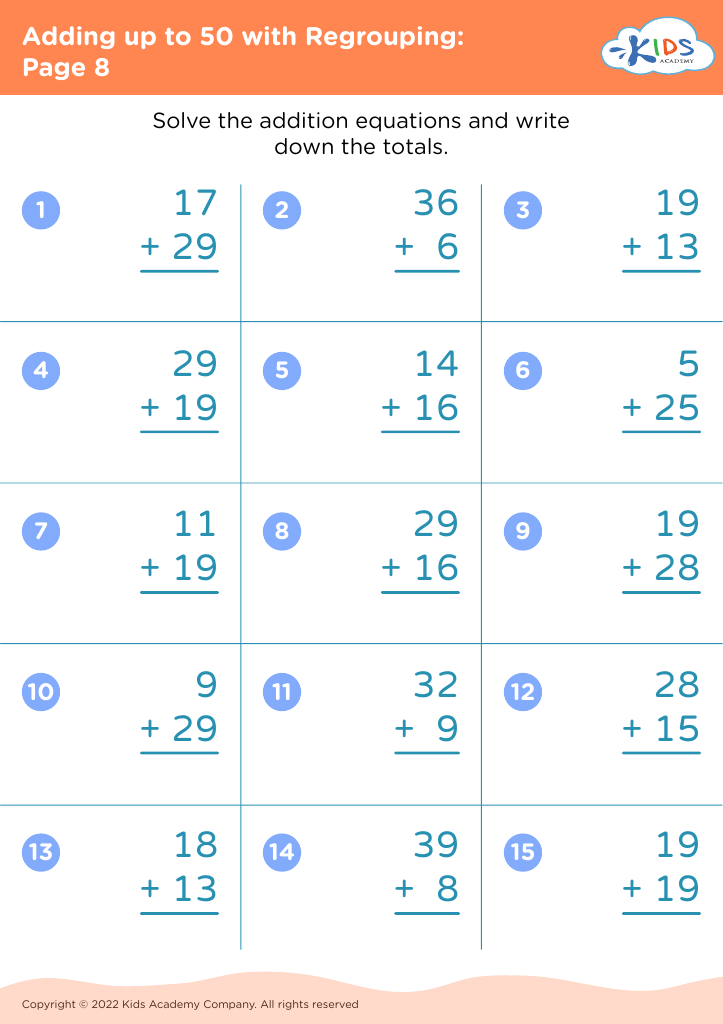
Adding up to 50 with Regrouping: Page 8
Worksheet
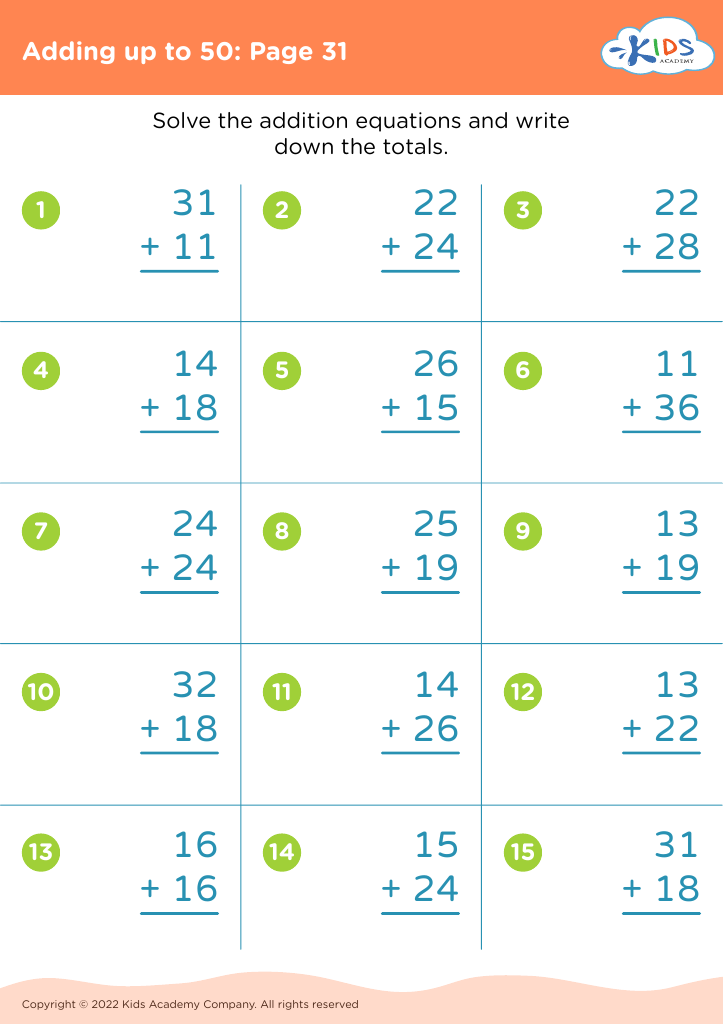
Adding up to 50: Page 31

Adding up to 50: Page 31

Adding up to 50: Page 31
Worksheet
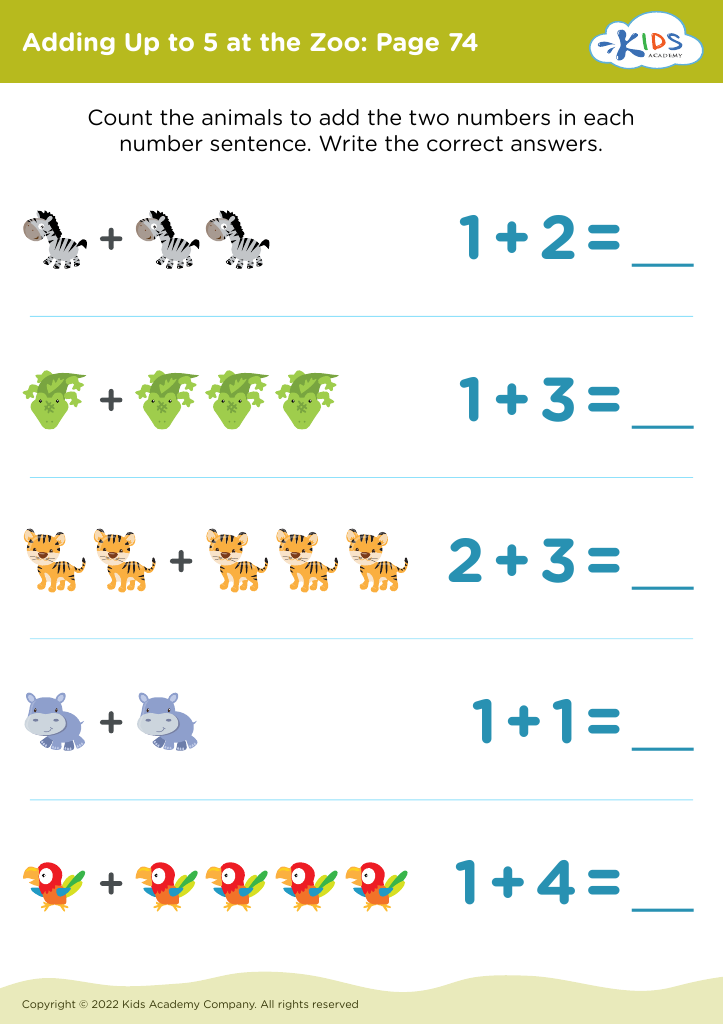
Adding Up to 5 at the Zoo: Page 74
Worksheet
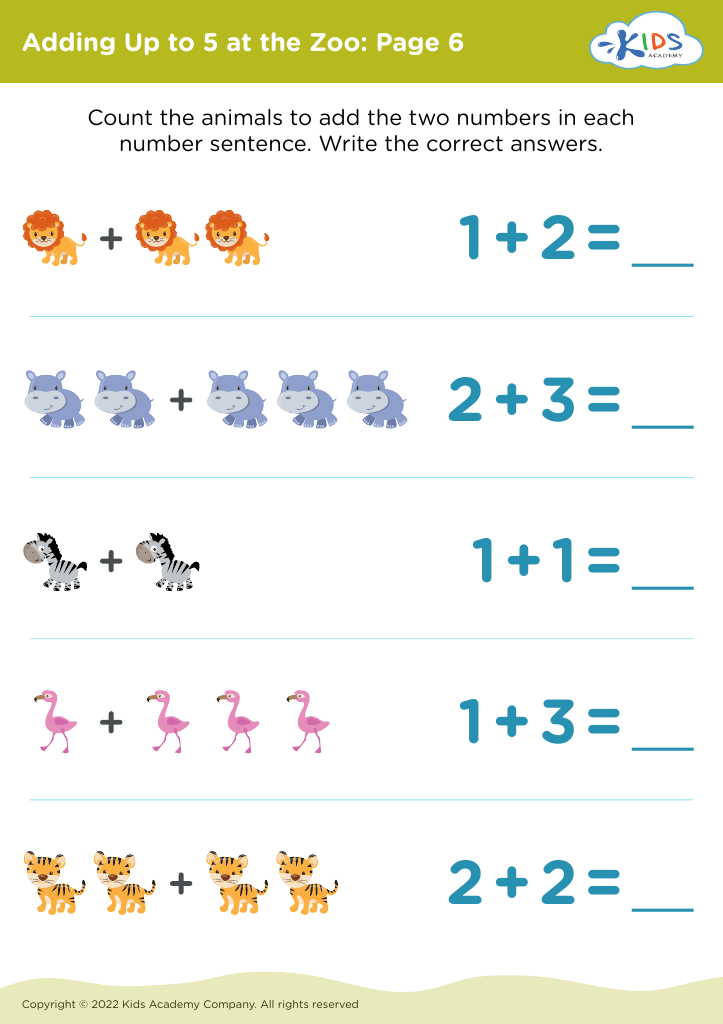
Adding Up to 5 at the Zoo: Page 6

Adding Up to 5 at the Zoo: Page 6

Adding Up to 5 at the Zoo: Page 6
Worksheet
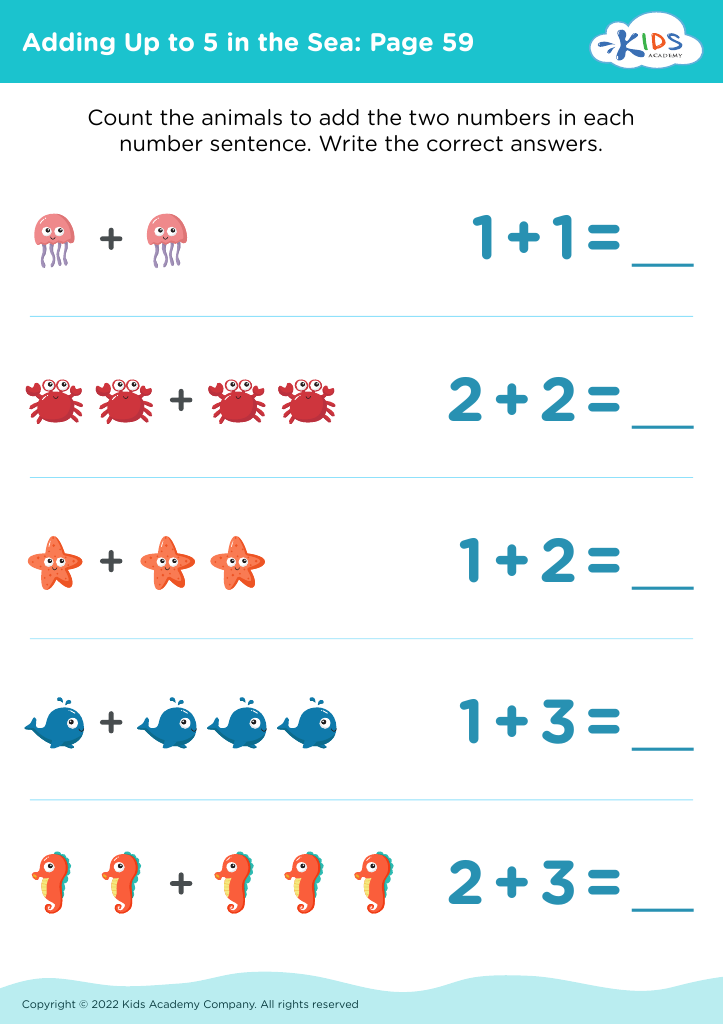
Adding Up to 5 in the Sea: Page 59
Worksheet
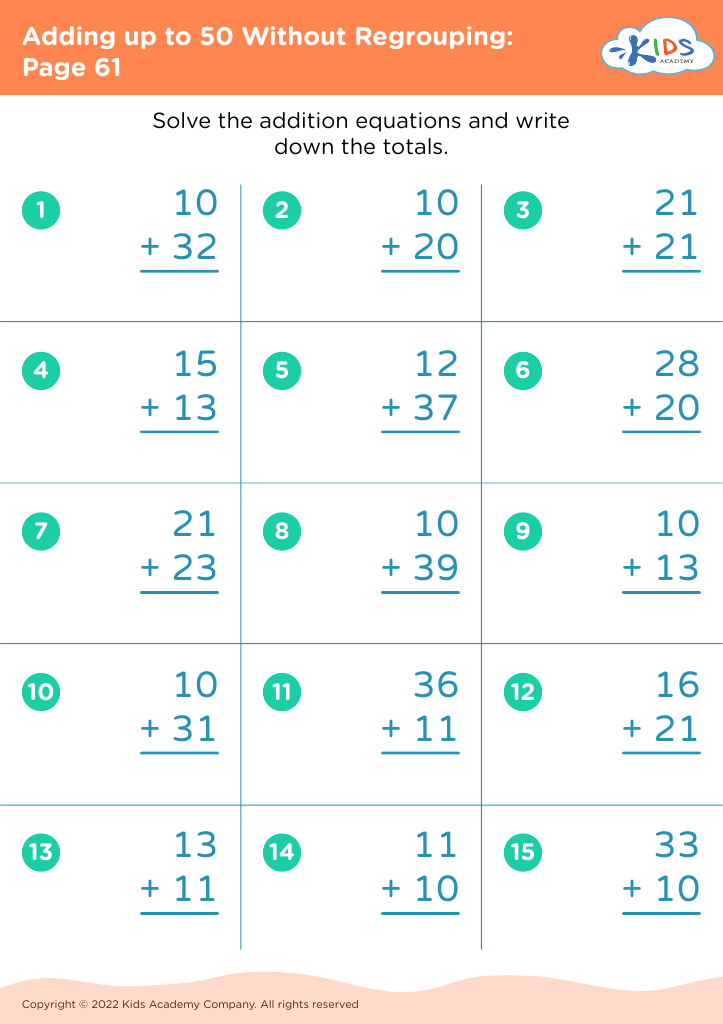
Adding up to 50 Without Regrouping: Page 61
Worksheet
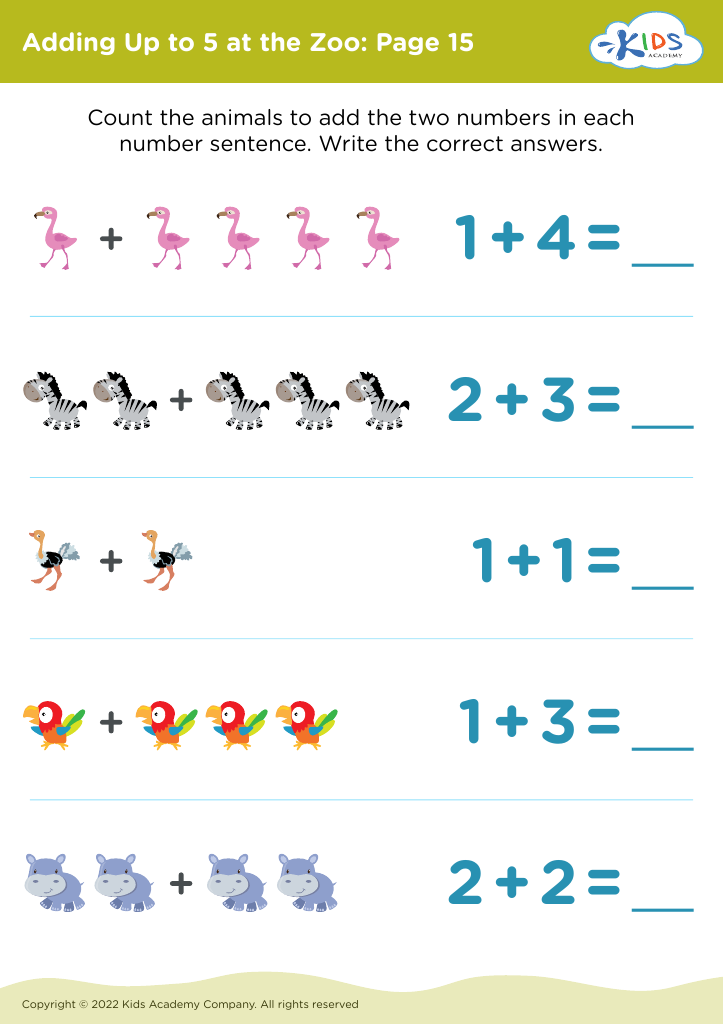
Adding Up to 5 at the Zoo: Page 15
Worksheet
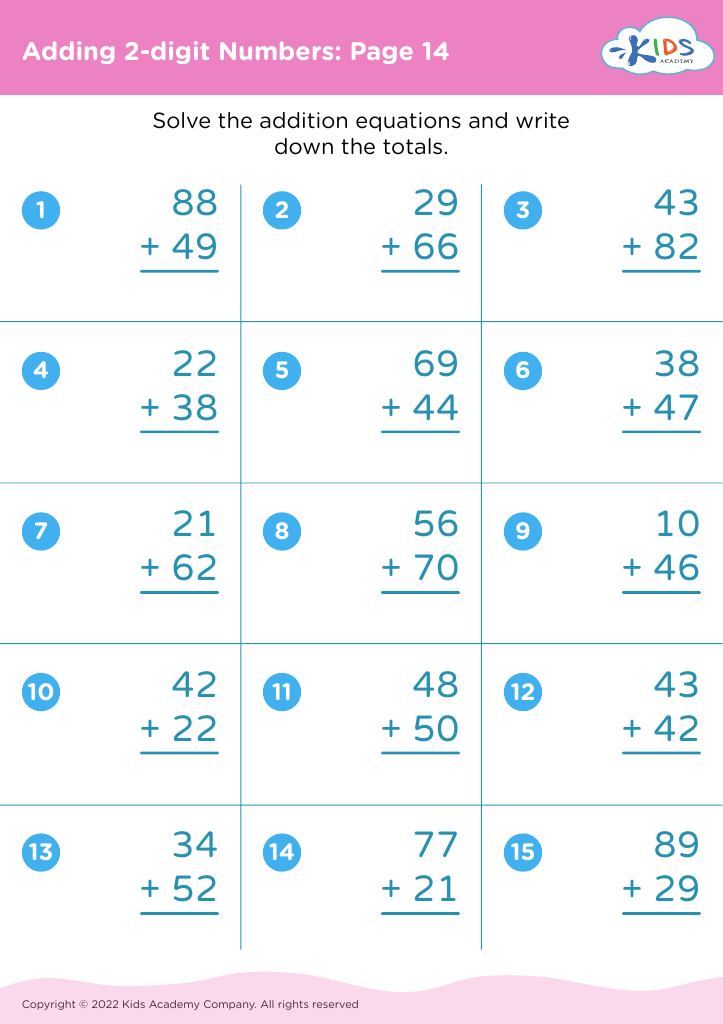
Adding 2-digit Numbers: Page 14

Adding 2-digit Numbers: Page 14

Adding 2-digit Numbers: Page 14
Worksheet
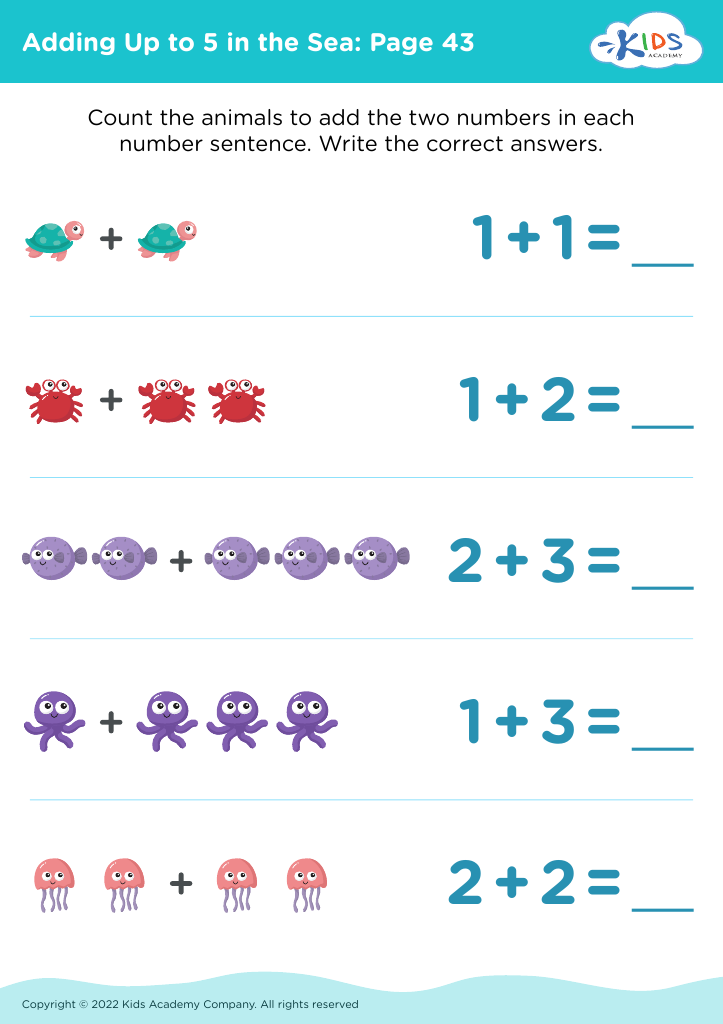
Adding Up to 5 in the Sea: Page 43
Worksheet
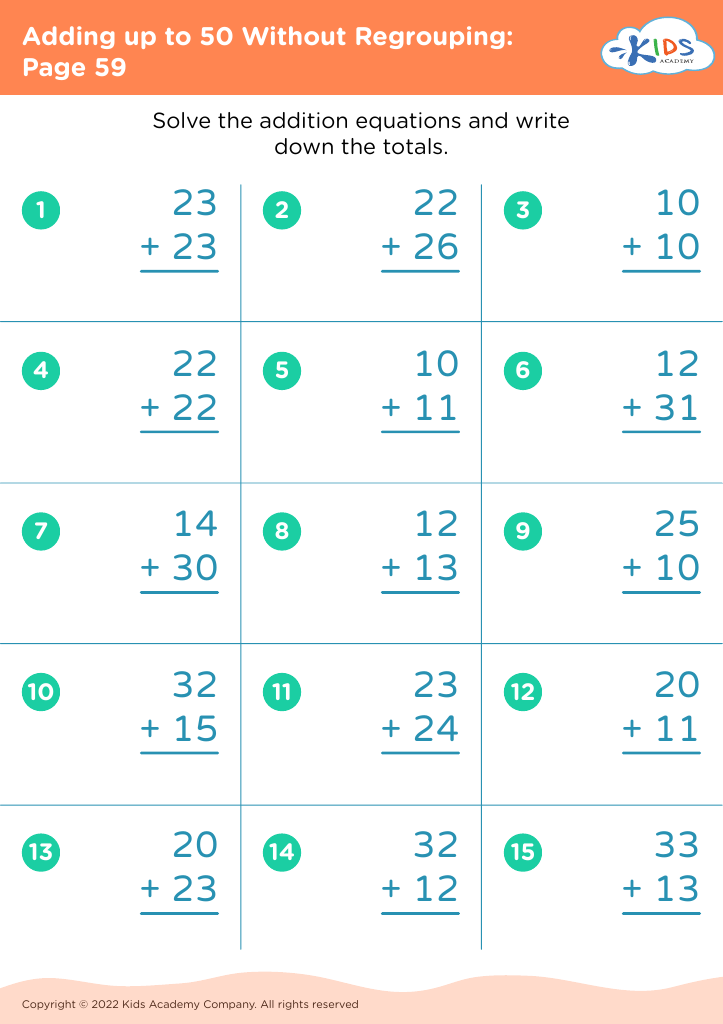
Adding up to 50 Without Regrouping: Page 59
Worksheet
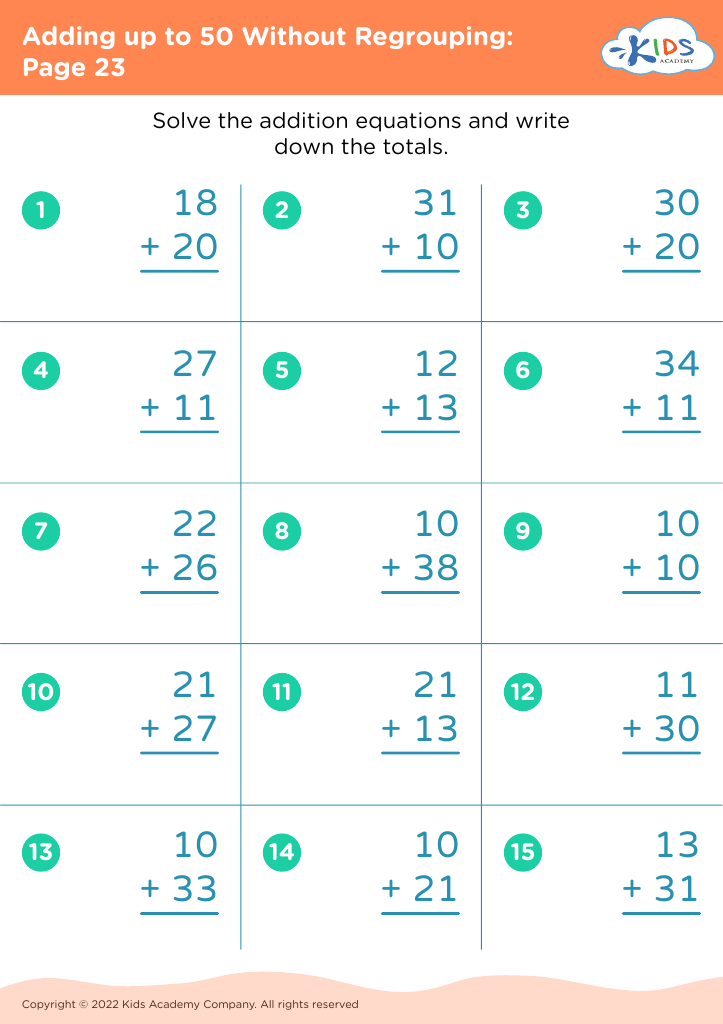
Adding up to 50 Without Regrouping: Page 23
Worksheet
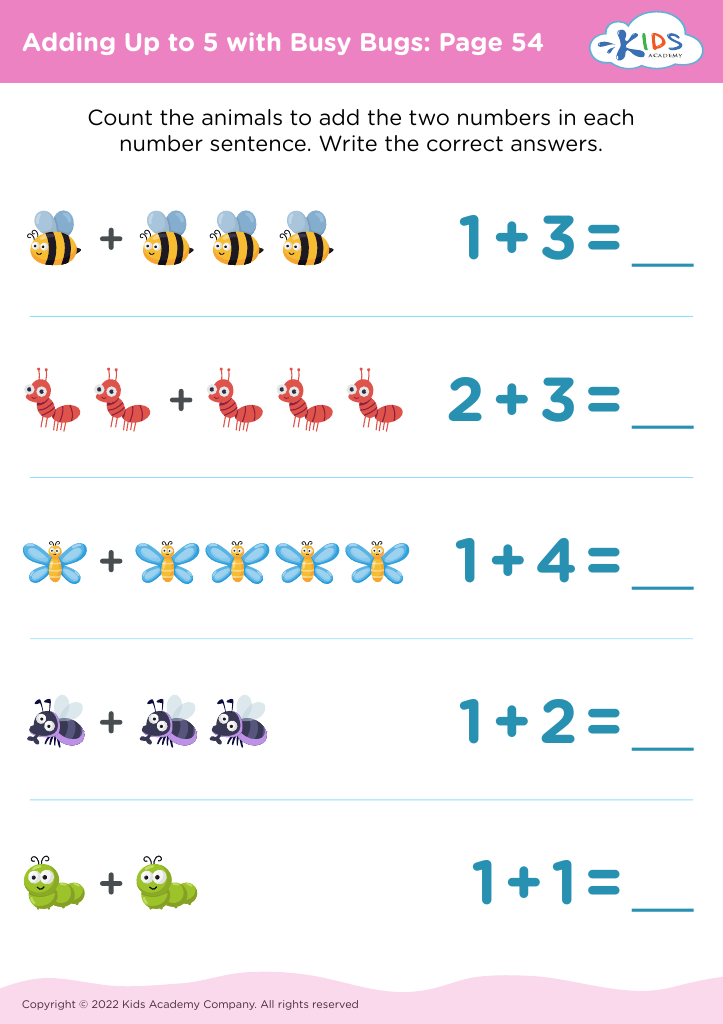
Adding Up to 5 with Busy Bugs: Page 54
Worksheet
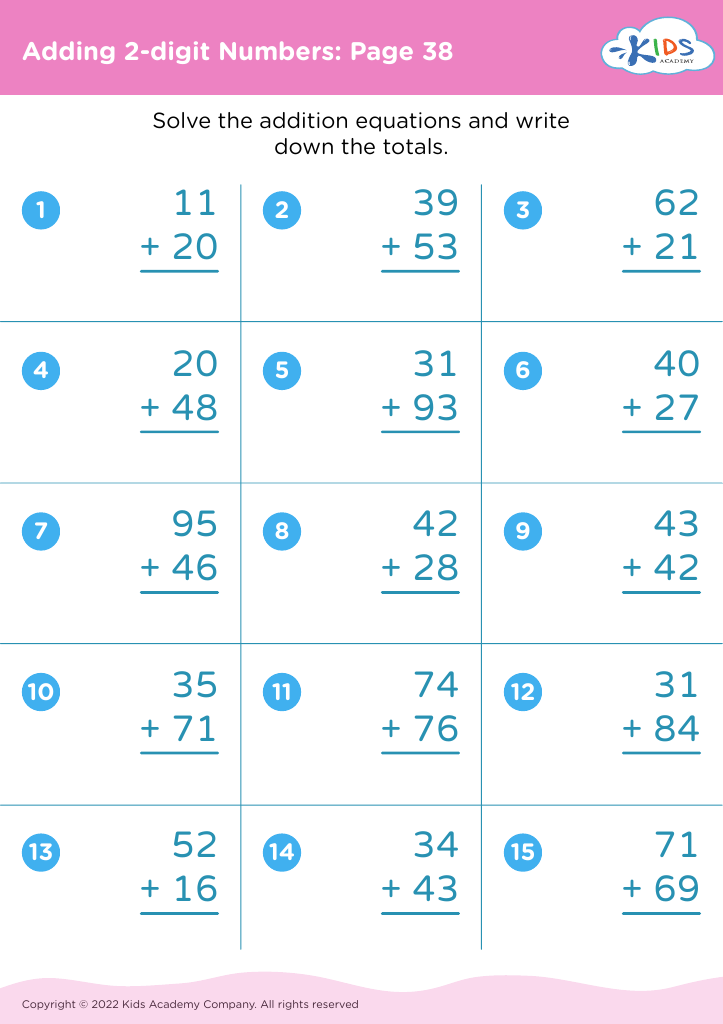
Adding 2-digit Numbers: Page 38

Adding 2-digit Numbers: Page 38

Adding 2-digit Numbers: Page 38
Worksheet
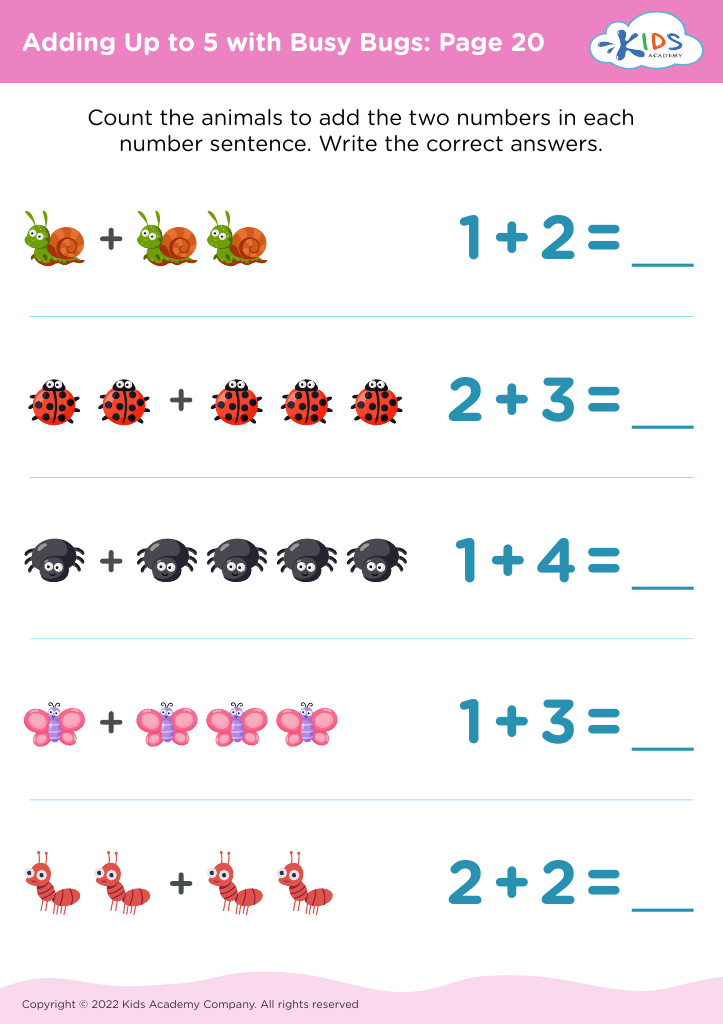
Adding Up to 5 with Busy Bugs: Page 20
Worksheet
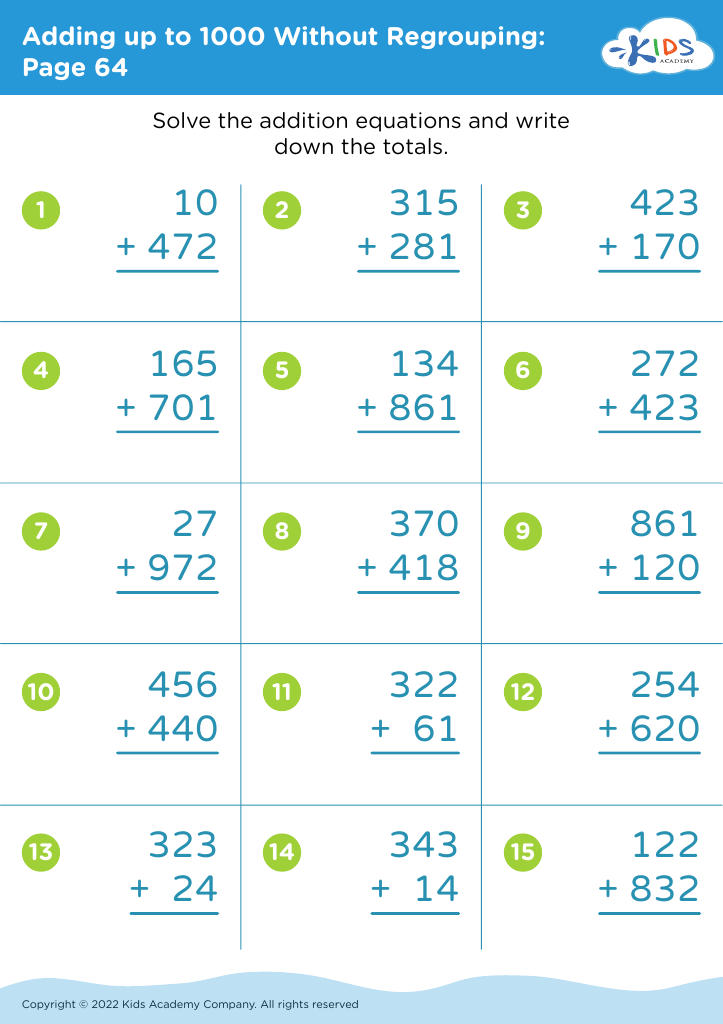
Adding up to 1000 Without Regrouping: Page 64
Worksheet
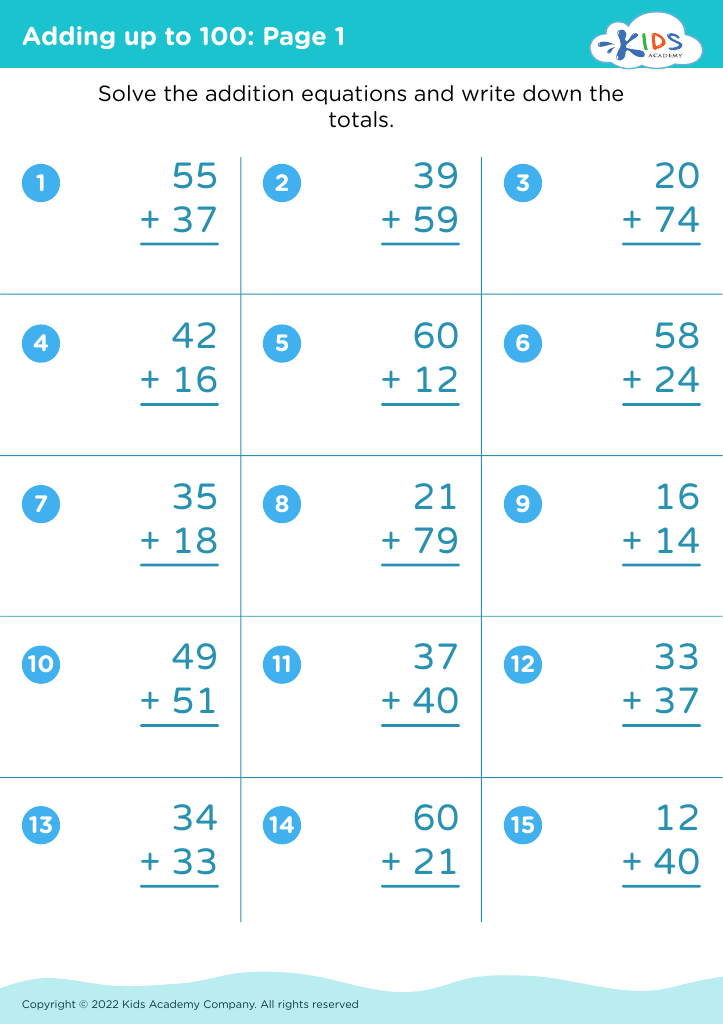
Adding up to 100: Page 1

Adding up to 100: Page 1

Adding up to 100: Page 1
Worksheet
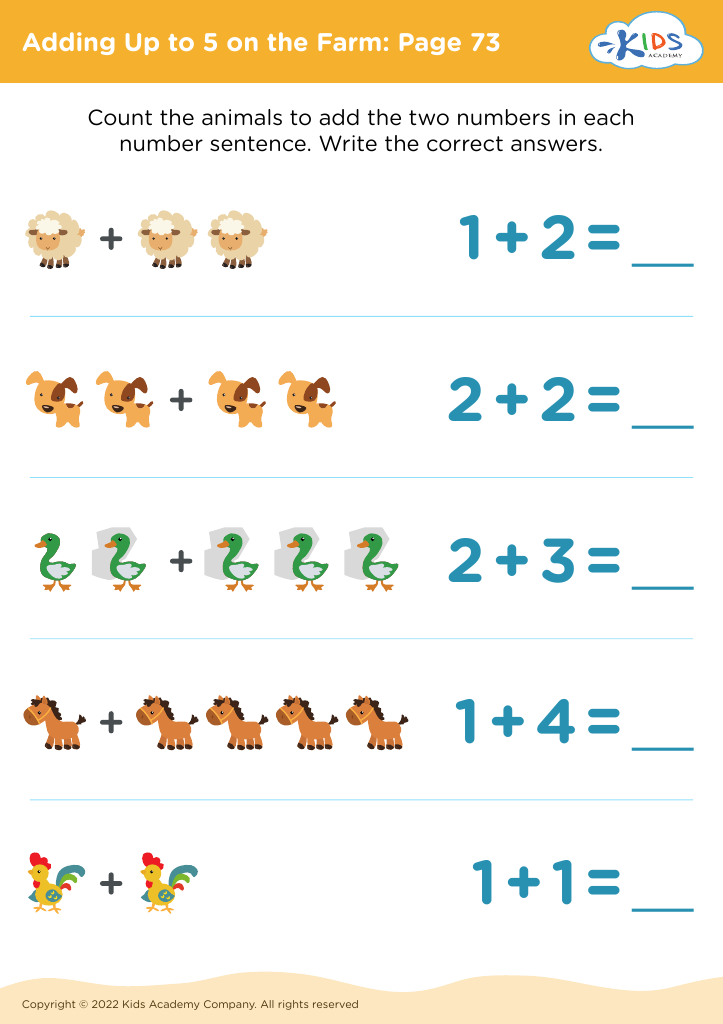
Adding Up to 5 on the Farm: Page 73
Worksheet


Basic addition practice is crucial for children aged 5-9 as it forms the foundation for their mathematical understanding and future academic success. At this age, students are not just learning to add; they are developing essential cognitive skills like problem-solving, critical thinking, and numerical reasoning. Mastery of basic addition is necessary for more complex operations, such as subtraction, multiplication, and division, which they will encounter in later grades.

Engaging in regular addition practice helps improve a child's confidence in their math skills. When children become proficient in basic math, they are more likely to participate actively in class and take on new challenges without fear of failure. Additionally, math skills are not isolated; they are integrated into everyday activities such as budgeting, cooking, and even during play.

For parents, encouraging basic addition practice can foster a positive attitude towards learning and teamwork. It can be a bonding experience when they work with their child to solve problems. For teachers, implementing various interactive methods can accommodate diverse learning styles, making math enjoyable and accessible. Therefore, investing time in basic addition practice is essential for nurturing well-rounded, confident learners.