Basic Addition Skills Addition Worksheets for Ages 5-9 - Page 12
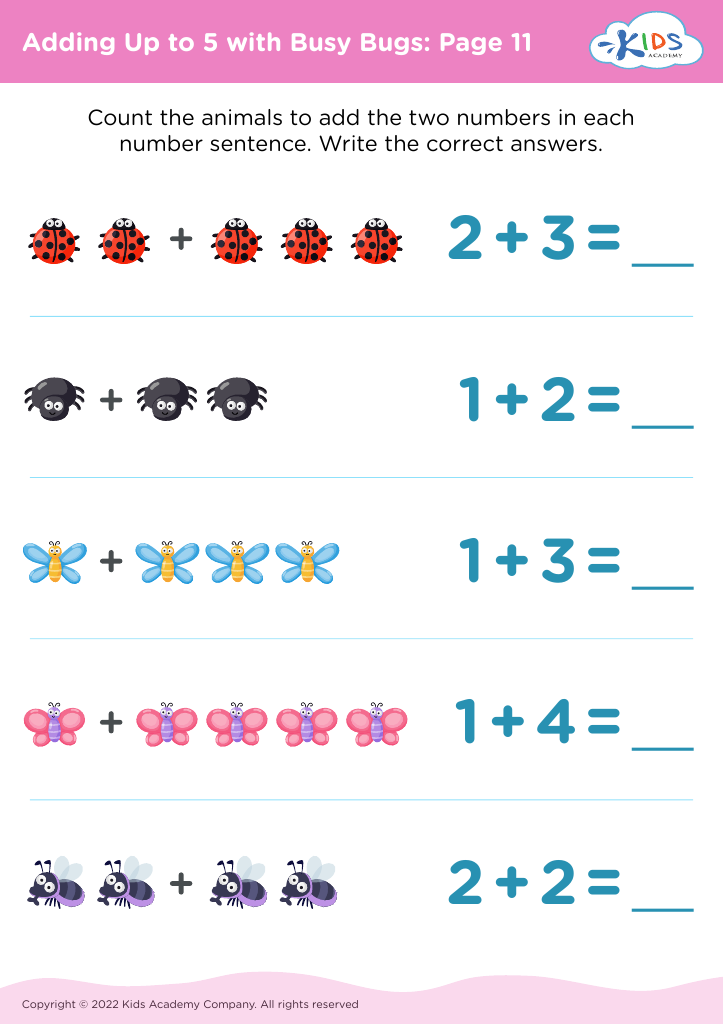
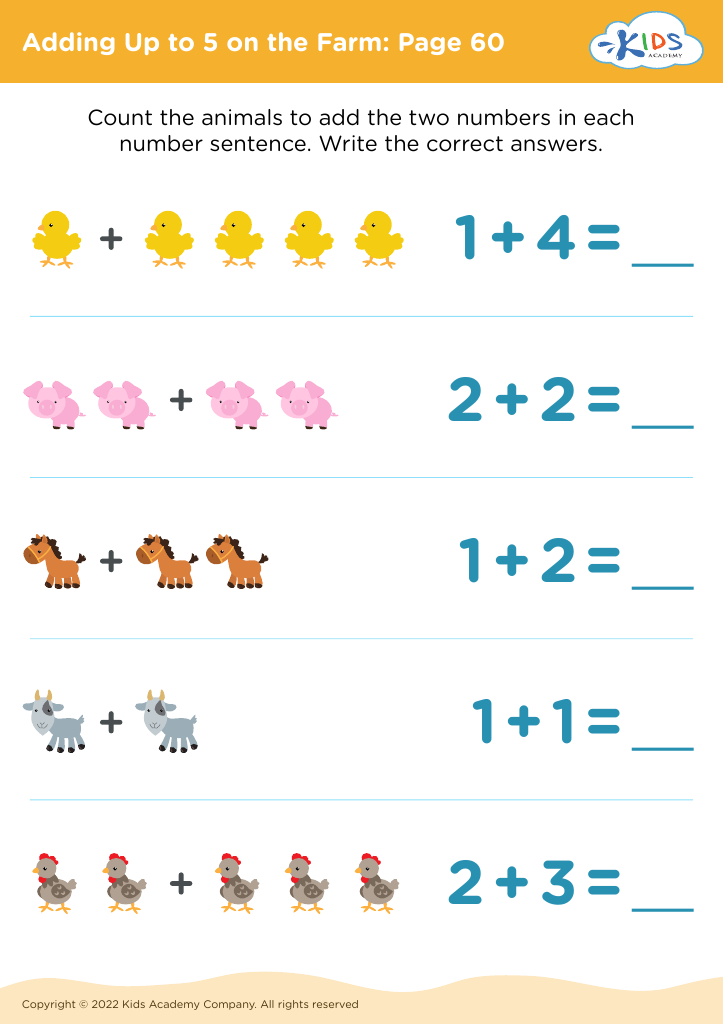
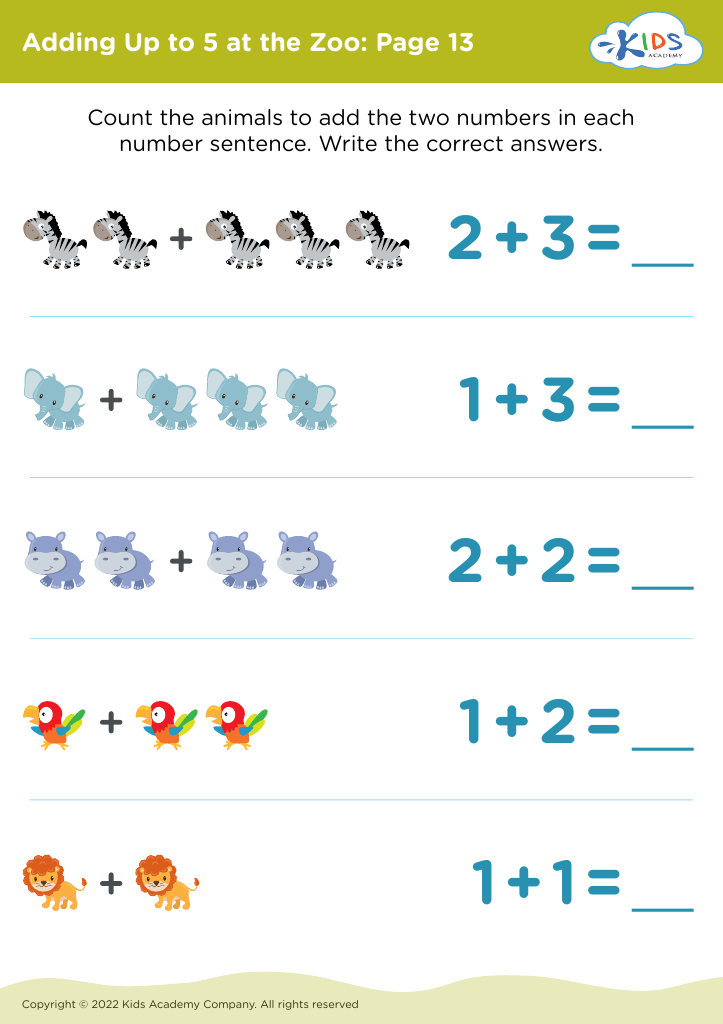
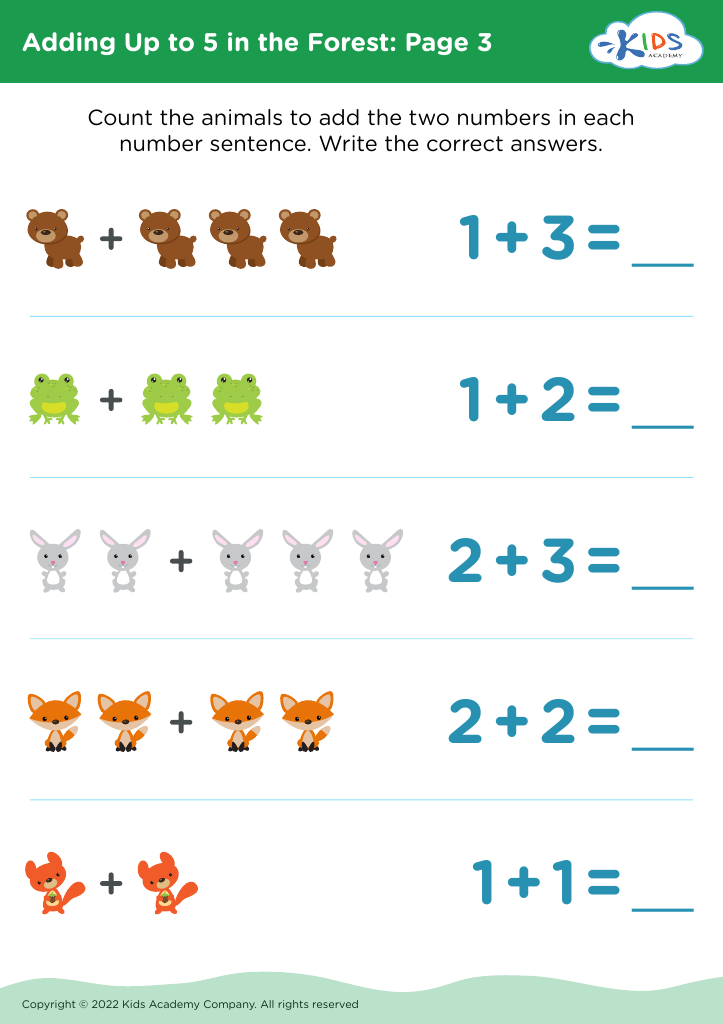
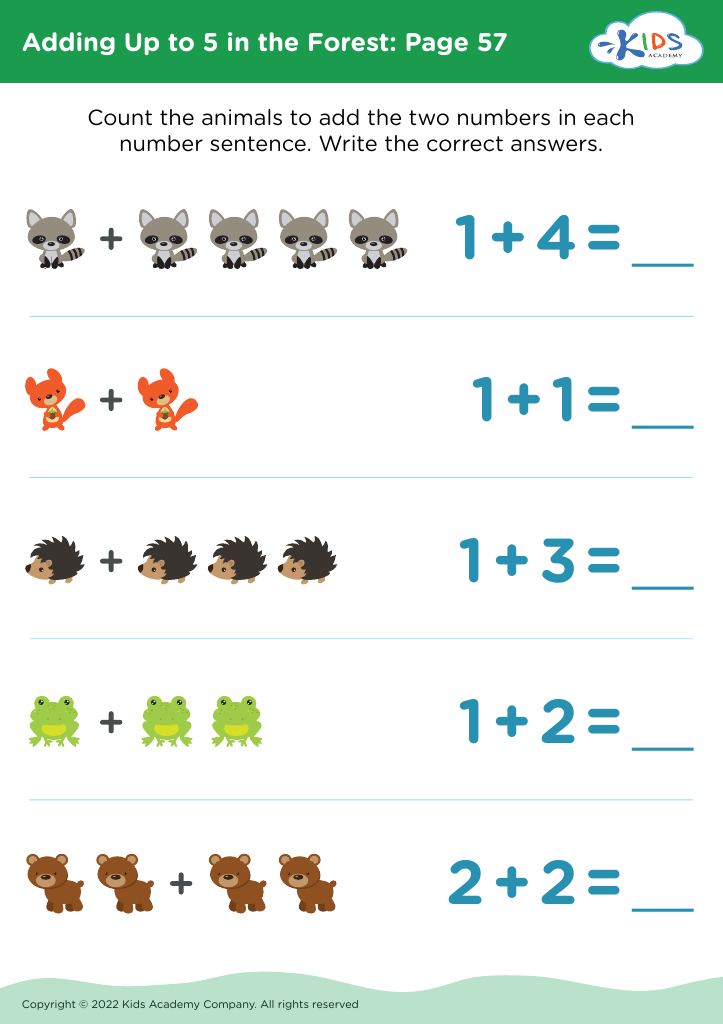
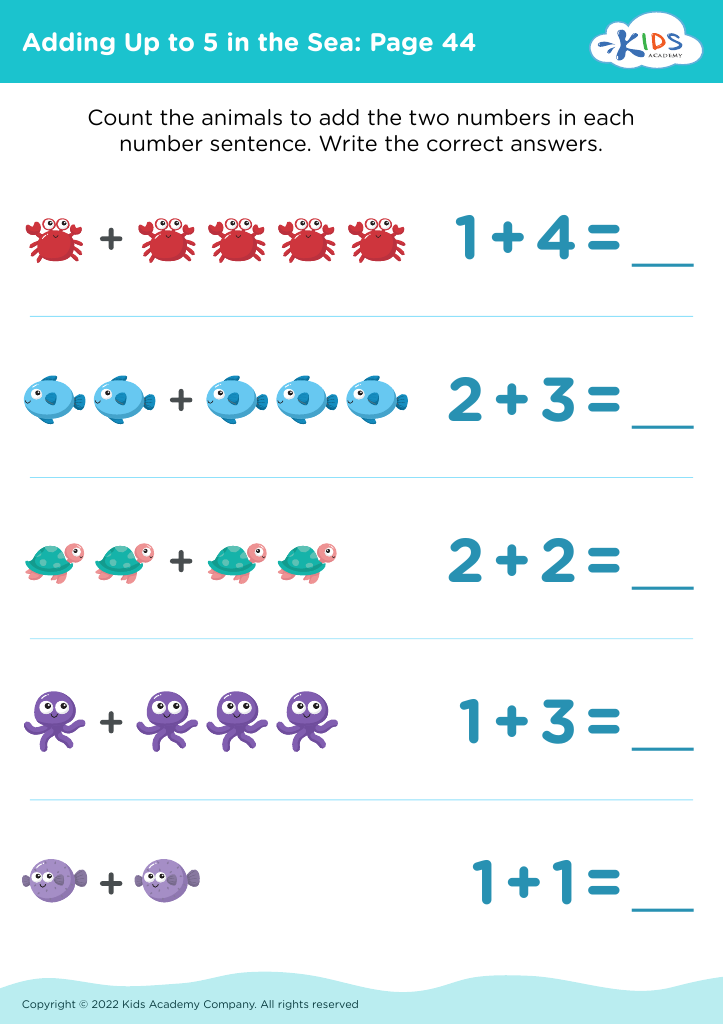
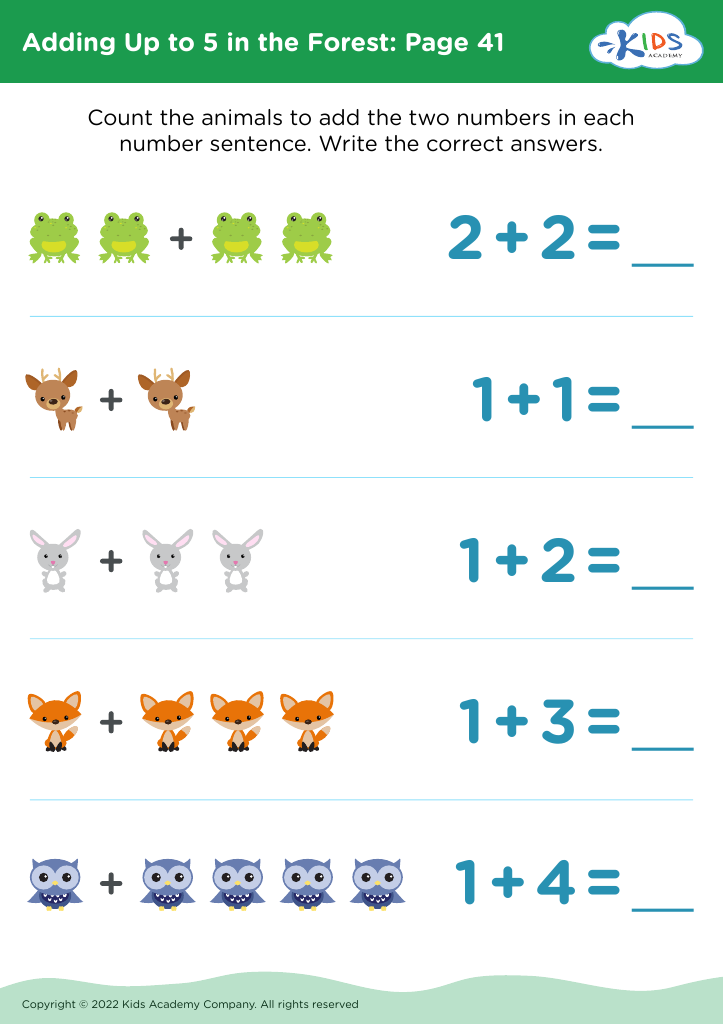








Basic addition skills are a cornerstone of early mathematical understanding and are crucial for children aged 5-9. For parents and teachers, fostering these skills is essential because they form the foundation for more advanced mathematical concepts. Children proficient in basic addition are more likely to develop confidence in their overall math abilities, making future learning less intimidating.
At this young age, kids are developing cognitive skills such as memory, attention, and logical thinking. Basic addition exercises these faculties by requiring children to hold numbers in their minds, follow sequential steps, and understand numerical relationships. Success in these tasks boosts self-esteem and reinforces a positive attitude toward learning.
Moreover, basic addition is crucial for real-world applications. Whether it's counting money, telling time, or measuring ingredients for a recipe, mastering addition helps children navigate daily tasks effectively. Early proficiency ensures they can understand and perform these activities without frustration.
Furthermore, practicing basic addition enhances problem-solving skills. It teaches children to break down complex tasks into simpler steps and explore different strategies to find solutions.
In summary, parents and teachers should prioritize basic addition skills for ages 5-9 to ensure a solid mathematical foundation, build critical cognitive abilities, and prepare children for both academic and real-life challenges.








