Basic arithmetic comprehension Addition Worksheets for Ages 5-9
3 filtered results
-
From - To
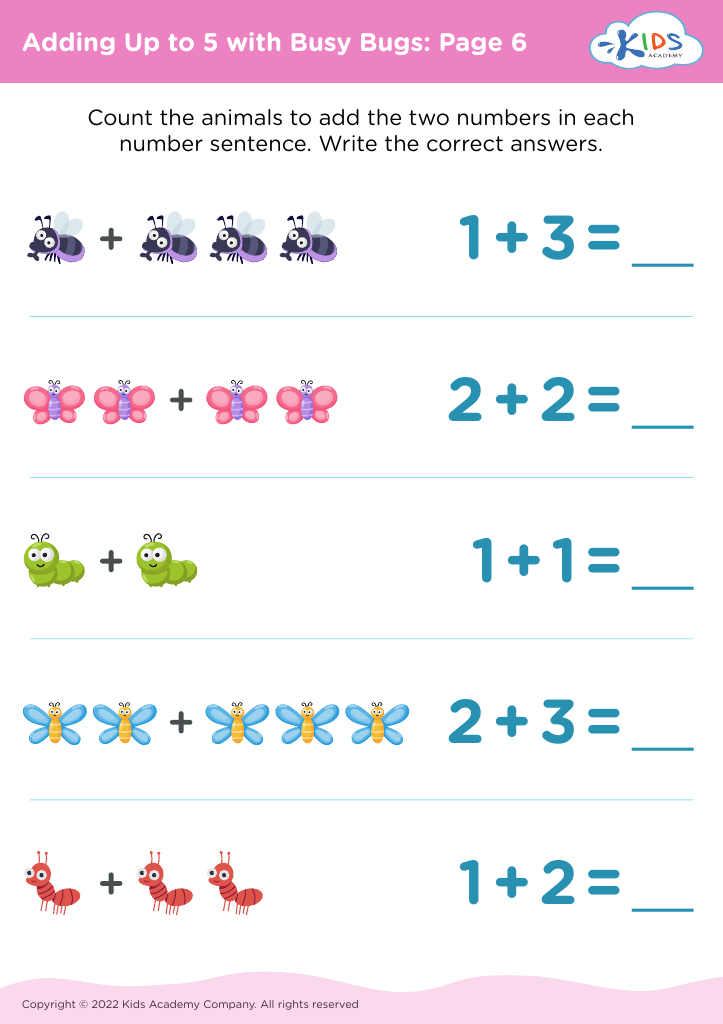
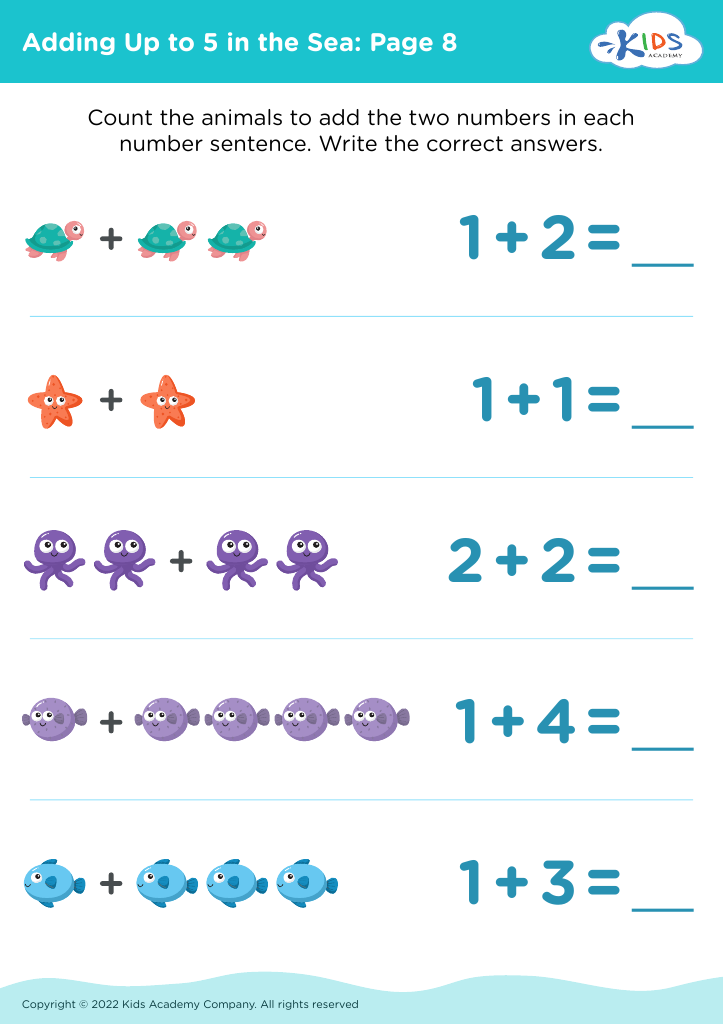
Discover our engaging "Basic Arithmetic Comprehension Addition Worksheets" specially designed for children ages 5-9. These worksheets provide a fun and interactive way for young learners to grasp essential addition skills. Featuring colorful illustrations and simple exercises, they help children recognize patterns, solve problems, and build confidence in their math abilities. Whether enhancing classroom learning or offering extra practice at home, our comprehensible worksheets promote a solid foundational understanding of addition. Parents and teachers can easily access printable resources that make math enjoyable, ensuring that each child develops a love for numbers while mastering basic arithmetic. Start their math journey today!
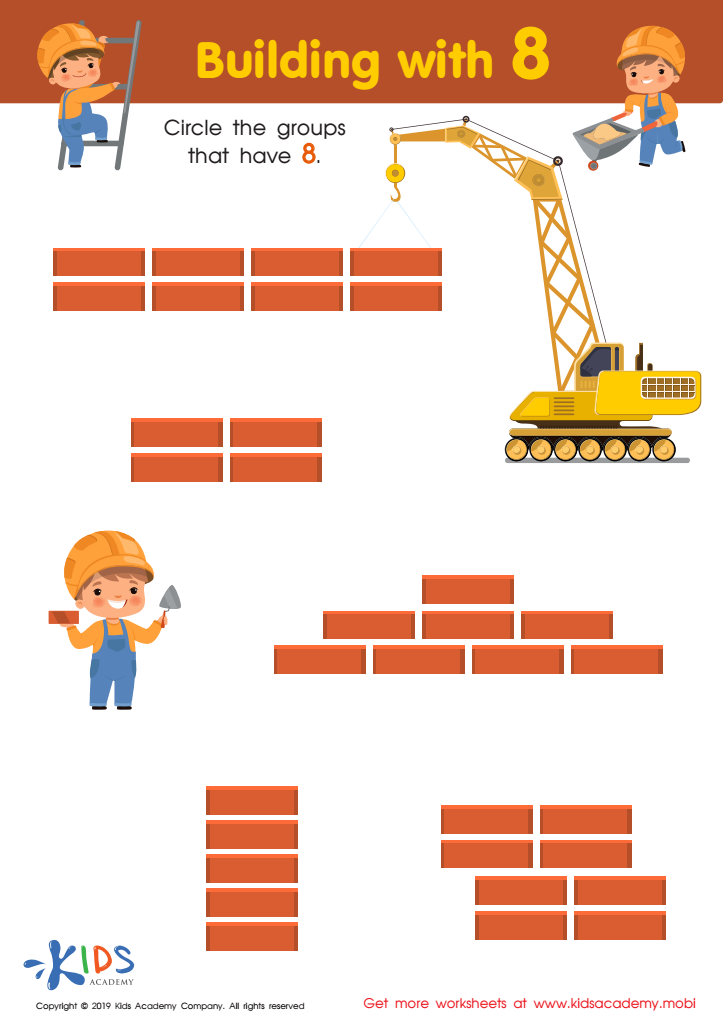
Building with 8 Worksheet
 Assign to My Students






.jpg)

Parents and teachers should prioritize basic arithmetic comprehension, particularly addition, for children aged 5-9, as it lays the vital foundation for future learning in math and critical thinking. At this formative age, children are not only mastering numbers, but they're also developing essential skills such as problem-solving, logical reasoning, and pattern recognition.
Understanding addition helps enhance cognitive skills, allows for effective communication about quantities, and encourages a positive attitude towards math. Strong addition skills build confidence, enabling children to tackle more complex concepts like subtraction, multiplication, and division later on. These early math experiences can significantly influence a child's attitude toward math, fostering a growth mindset rather than fear or frustration.
Additionally, incorporating addition into everyday activities—like counting money, measuring ingredients while cooking, or sharing snacks—makes learning relevant and enjoyable. This real-world application reinforces comprehension while keeping children engaged. Moreover, proficiency in basic arithmetic is crucial for real-world problem-solving and decision-making.
In summary, focusing on arithmetic comprehension for young children sets the stage for lifelong mathematical success, making it a critical area for parents and educators to nurture.








