Filters

83 filtered results

Clear all filters
Favorites
With answer key
Interactive

83 filtered results

Difficulty Level

Grade


Check out this FREE Trial Lesson on Addition for age 5-9!

H

Favorites
With answer key
Interactive
  • 5-9
  • Comparing Fractions
  • Addition
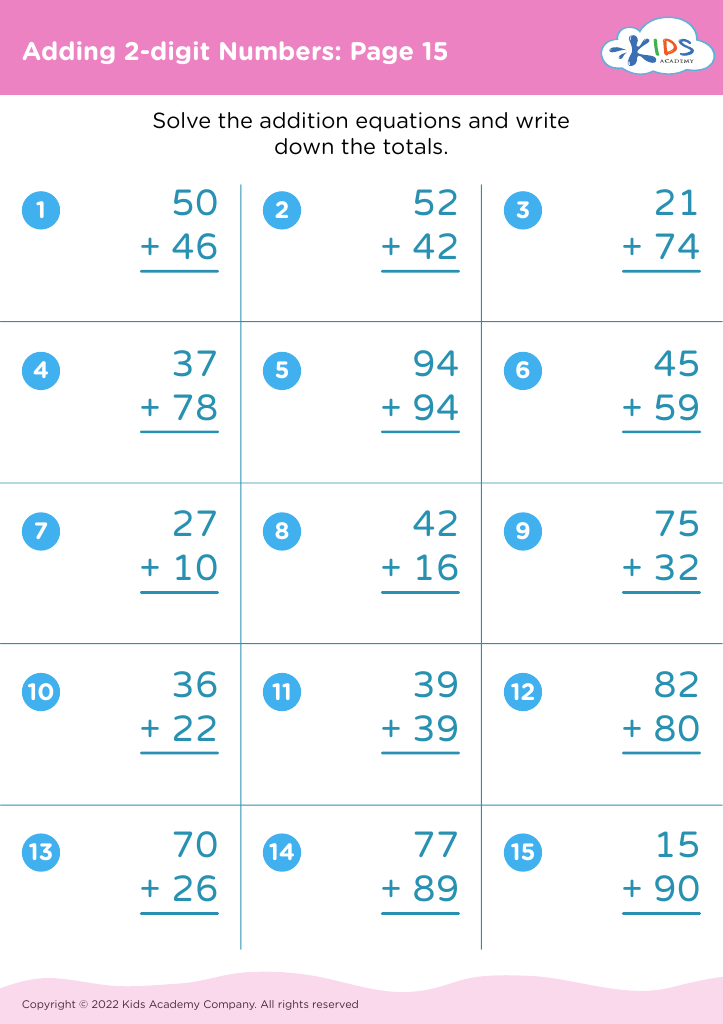
Adding 2-digit Numbers: Page 15

Adding 2-digit Numbers: Page 15

Adding 2-digit Numbers: Page 15
Worksheet
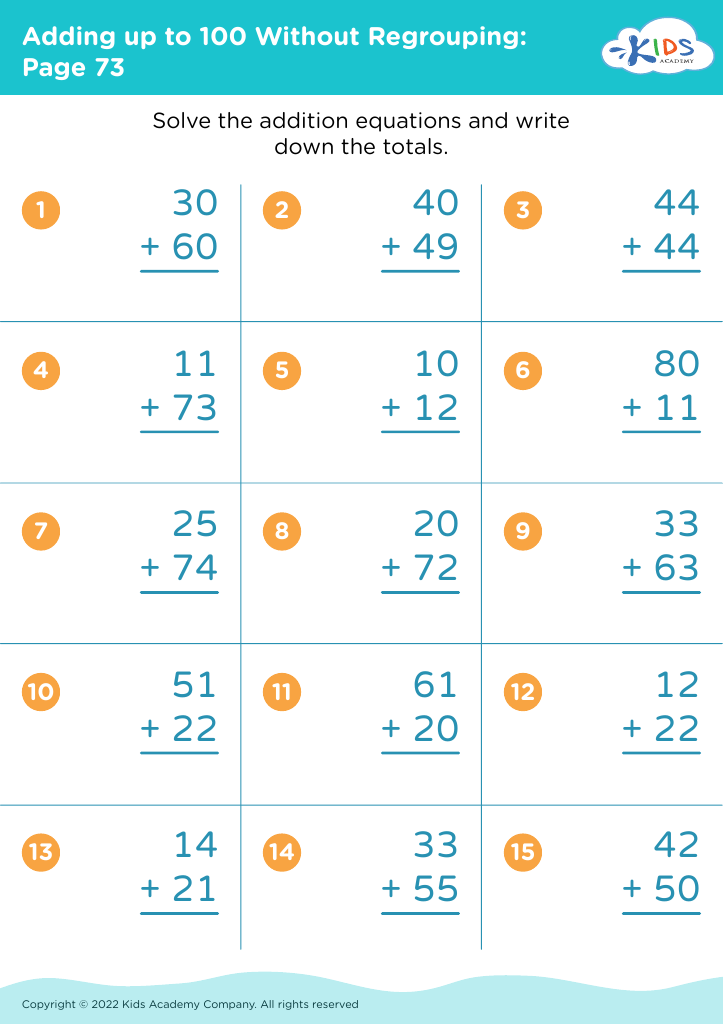
Adding up to 100 Without Regrouping: Page 73
Worksheet
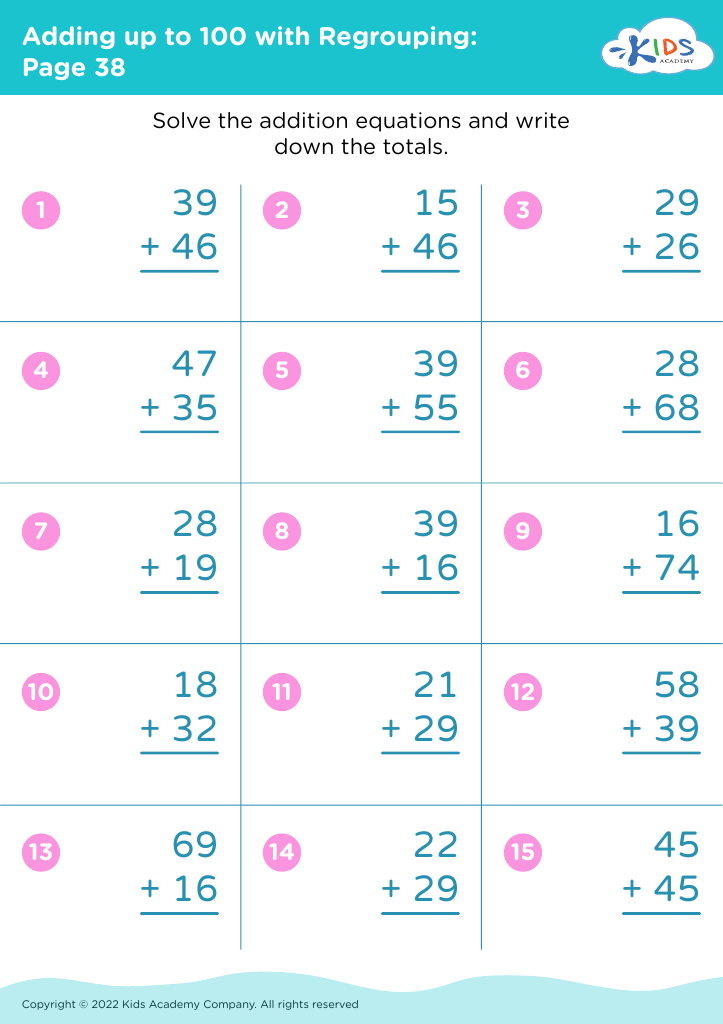
Adding up to 100 with Regrouping: Page 38
Worksheet
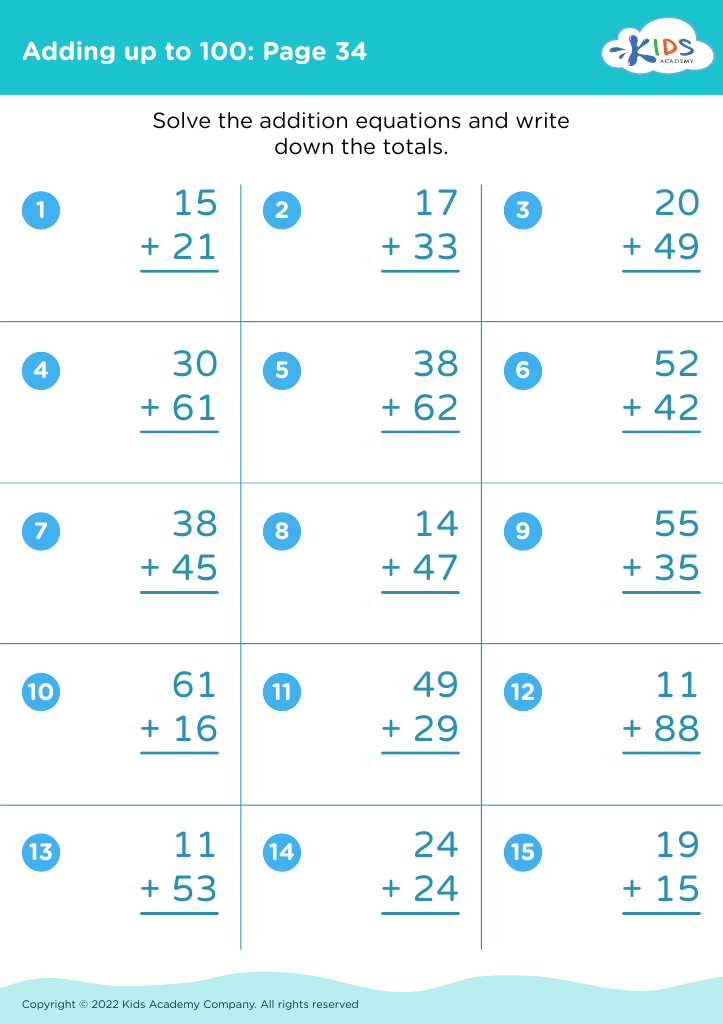
Adding up to 100: Page 34

Adding up to 100: Page 34

Adding up to 100: Page 34
Worksheet
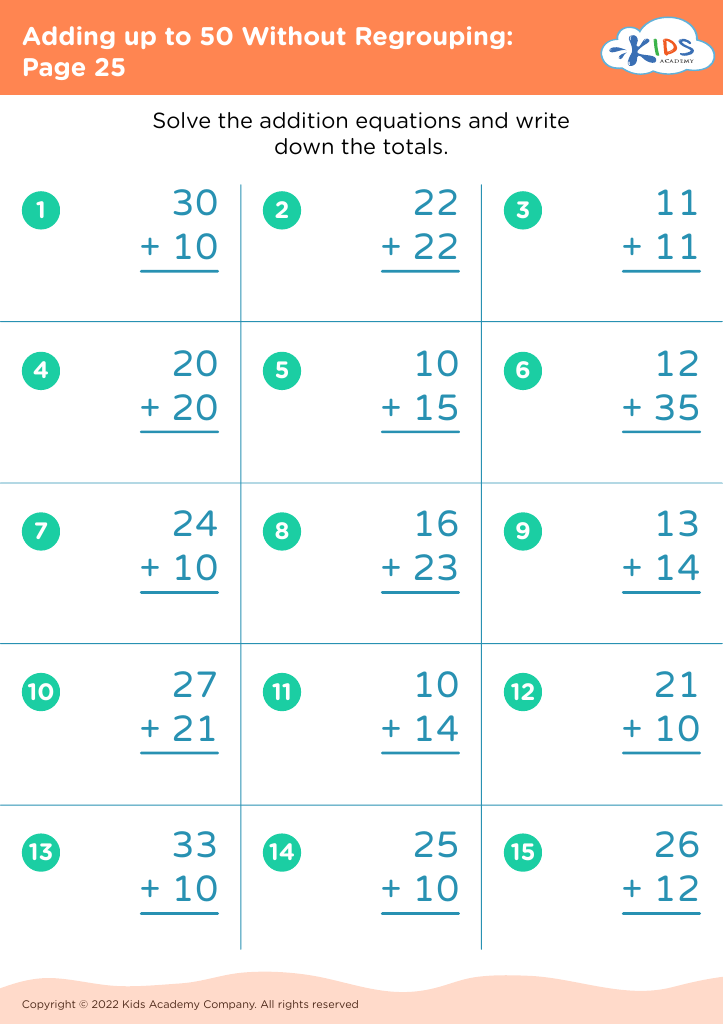
Adding up to 50 Without Regrouping: Page 25
Worksheet
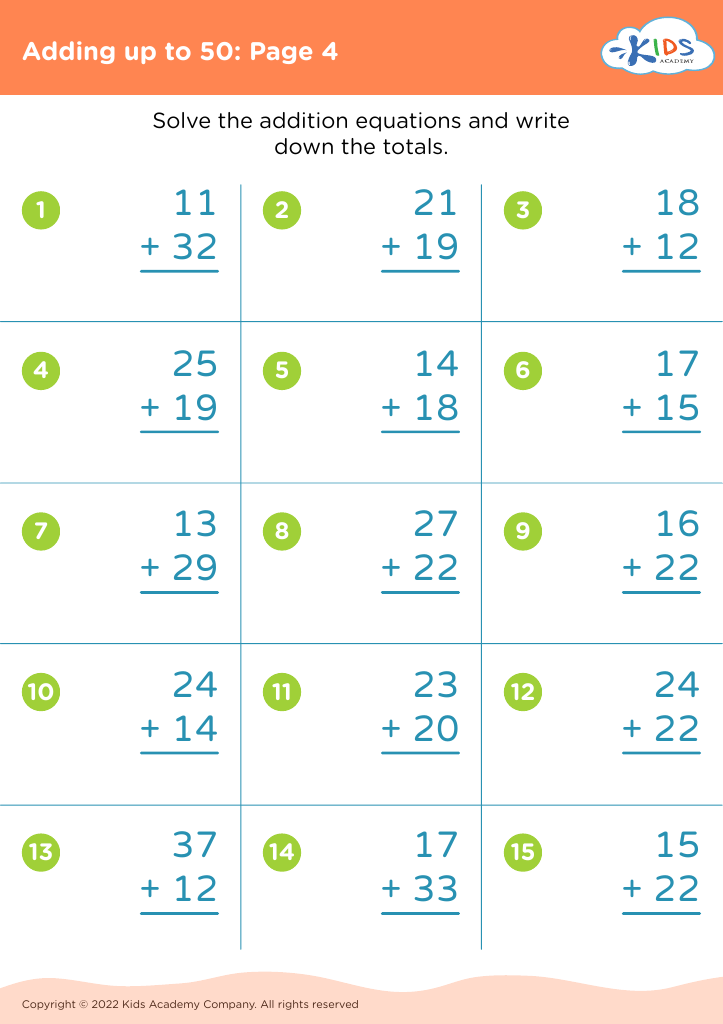
Adding up to 50: Page 4

Adding up to 50: Page 4

Adding up to 50: Page 4
Worksheet
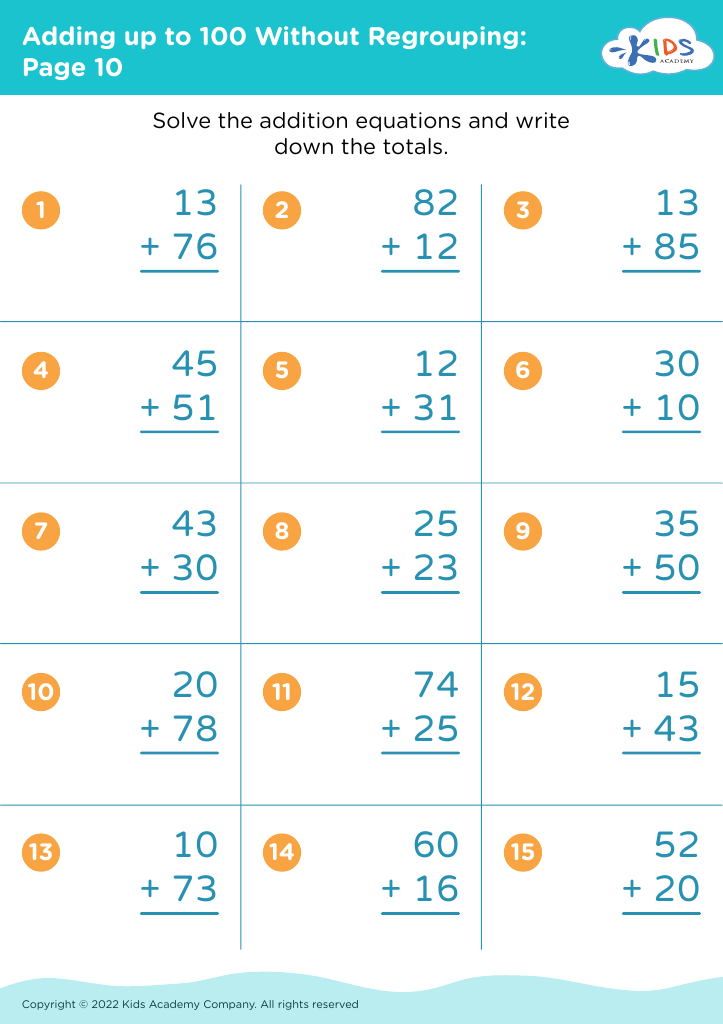
Adding up to 100 Without Regrouping: Page 10
Worksheet
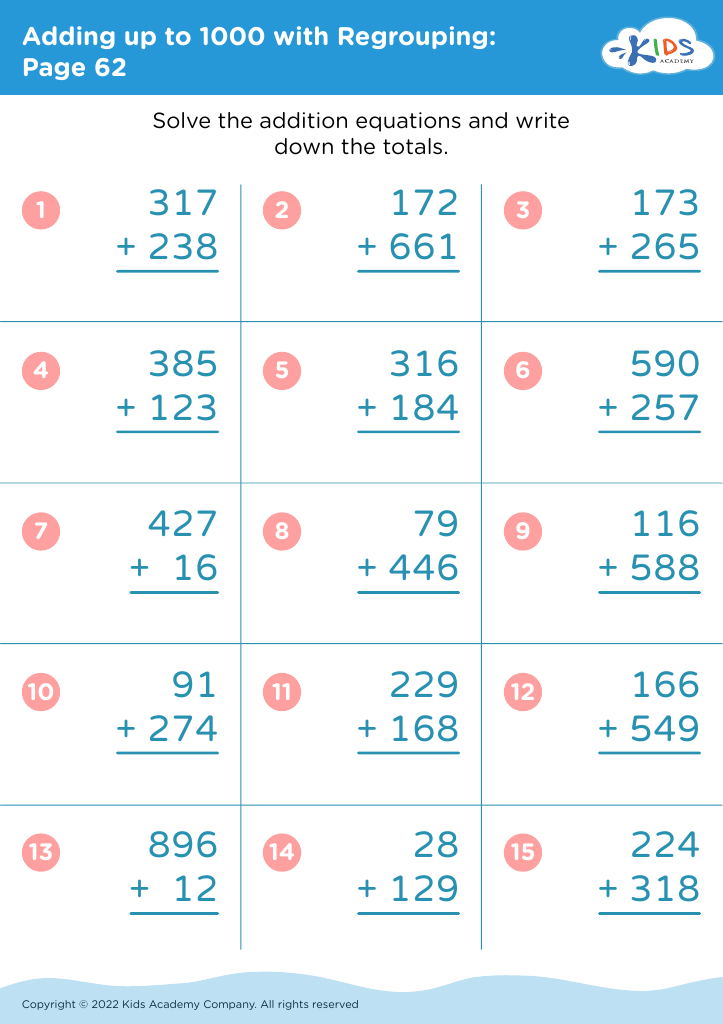
Adding up to 1000 with Regrouping: Page 62
Worksheet
Piecing Together 16 Worksheet

Piecing Together 16 Worksheet

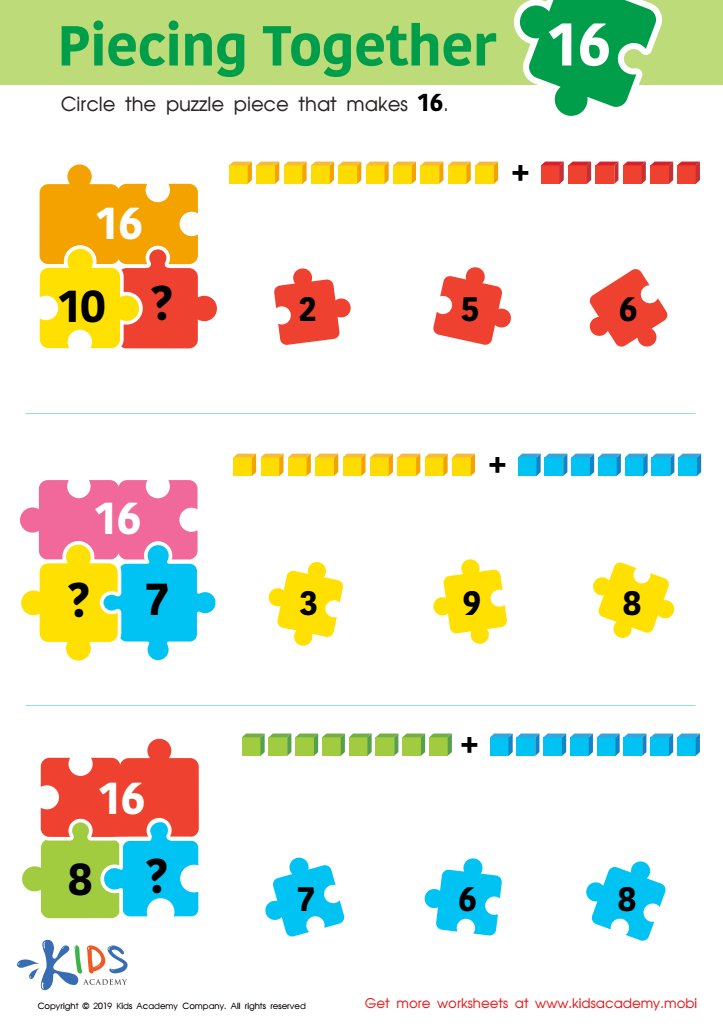
Combine learning with fun using this colorful worksheet! Ask your preschoolers what they see in the picture, then help them solve the mathematical equations on the puzzle pieces. One equation is missing on each; have them circle the piece that will make the bottom puzzle piece numbers equal 16. Use puzzles and bright colors to teach - it's one of the best ways your kids can learn!
Piecing Together 16 Worksheet
Worksheet
Adding up to 50: Page 55

Adding up to 50: Page 55

Adding up to 50: Page 55
Worksheet
Adding up to 100 Without Regrouping: Page 54
Worksheet
Adding up to 50 with Regrouping: Page 7
Worksheet
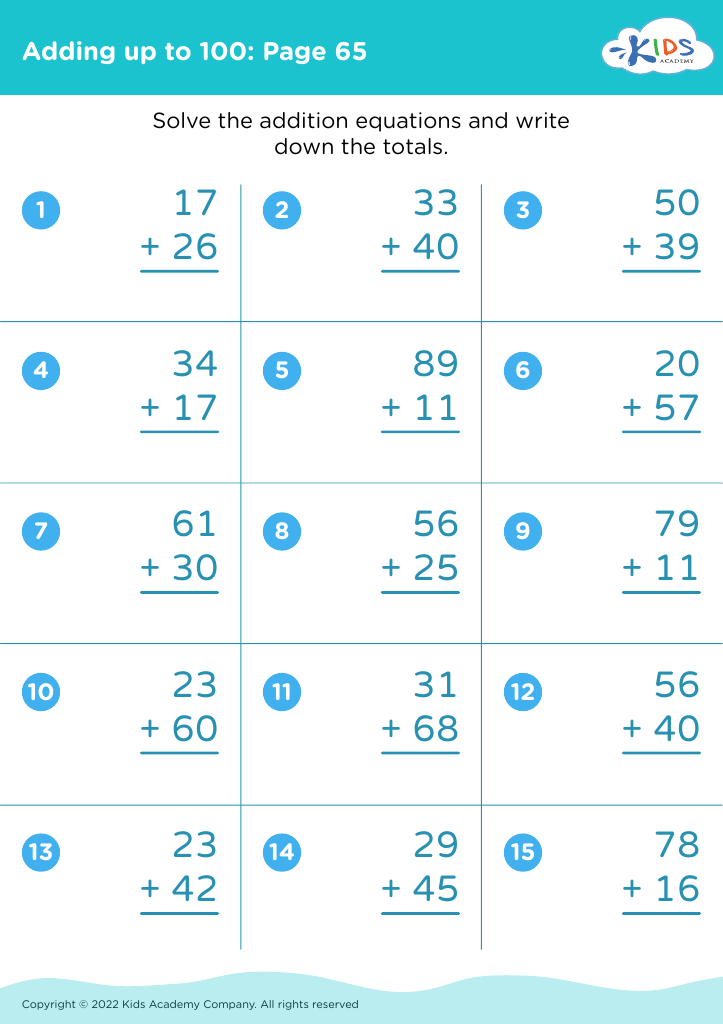
Adding up to 100: Page 65

Adding up to 100: Page 65

Adding up to 100: Page 65
Worksheet
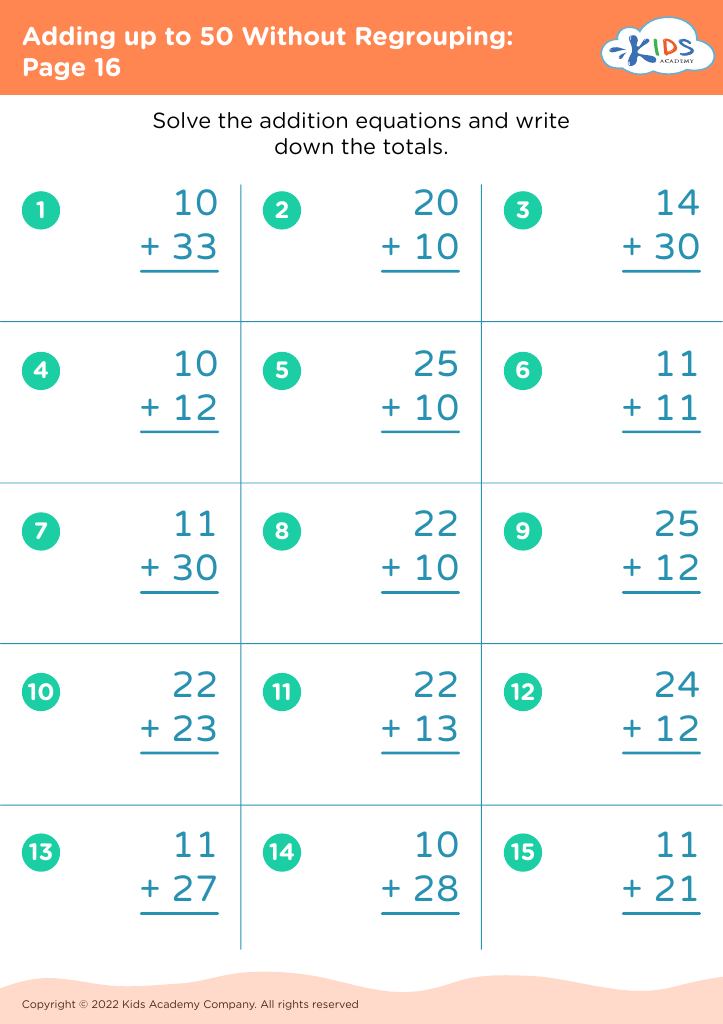
Adding up to 50 Without Regrouping: Page 16
Worksheet
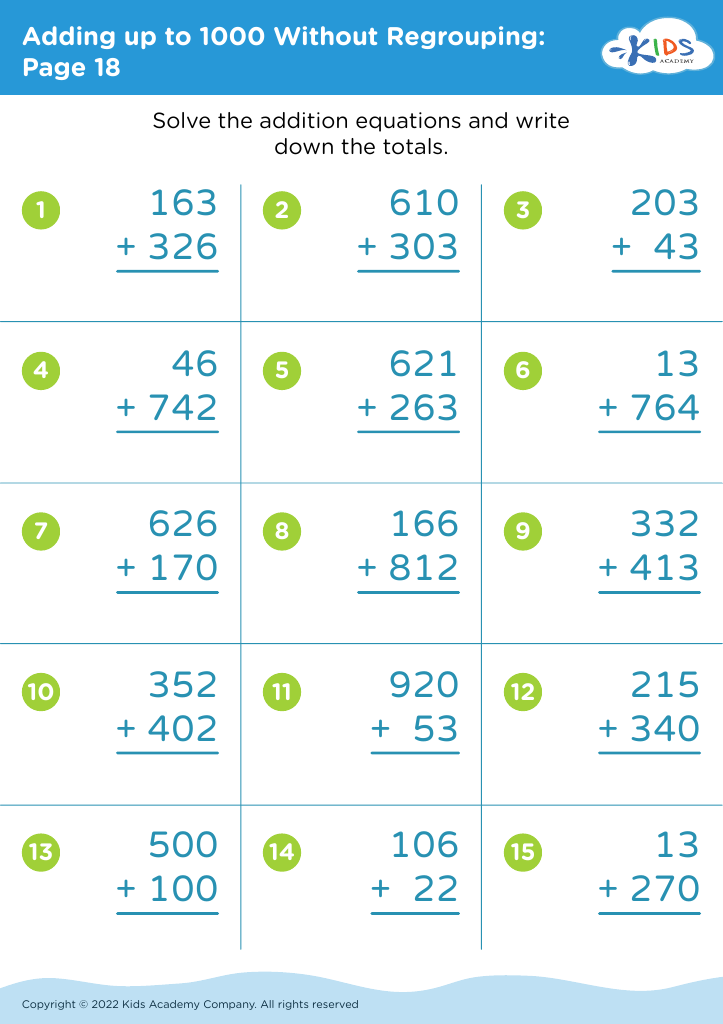
Adding up to 1000 Without Regrouping: Page 18
Worksheet
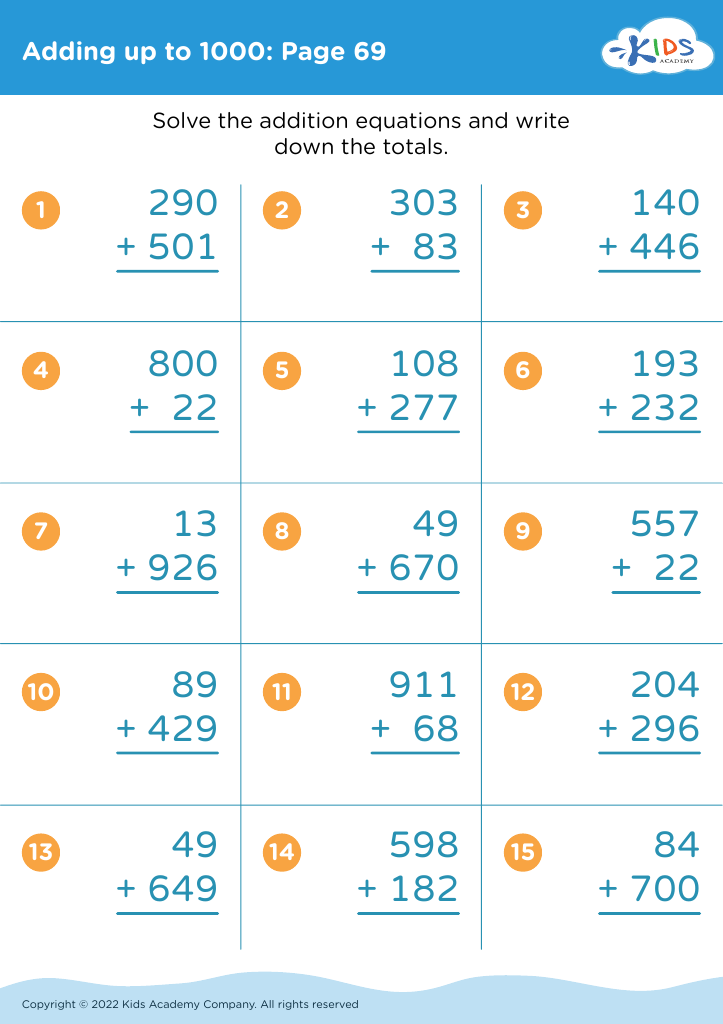
Adding up to 1000: Page 69

Adding up to 1000: Page 69

Adding up to 1000: Page 69
Worksheet
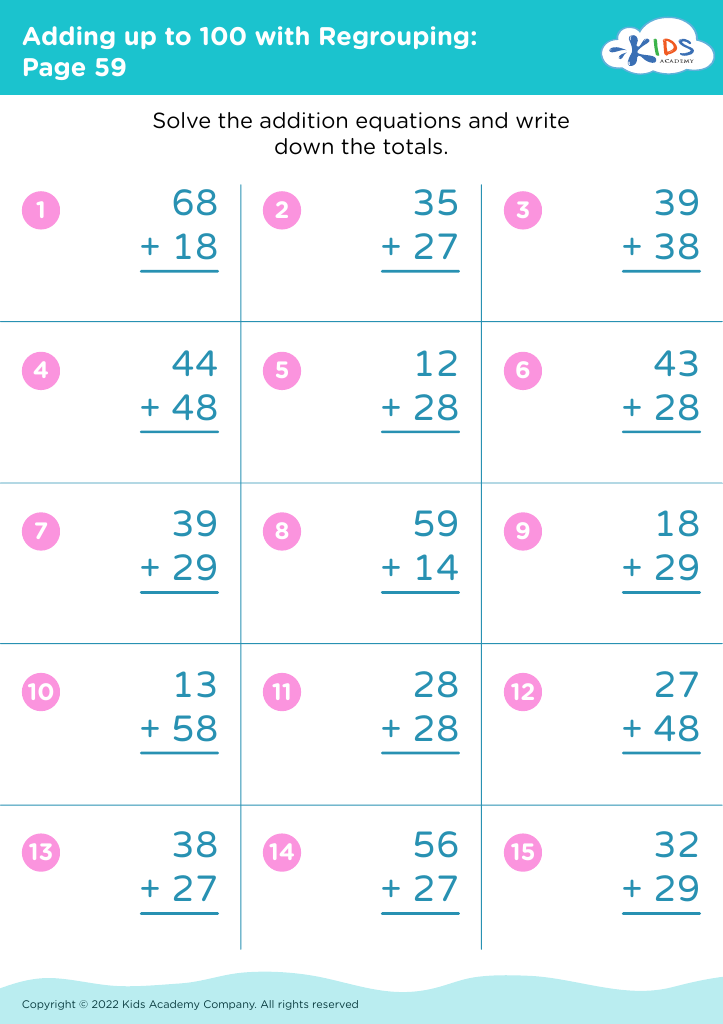
Adding up to 100 with Regrouping: Page 59
Worksheet
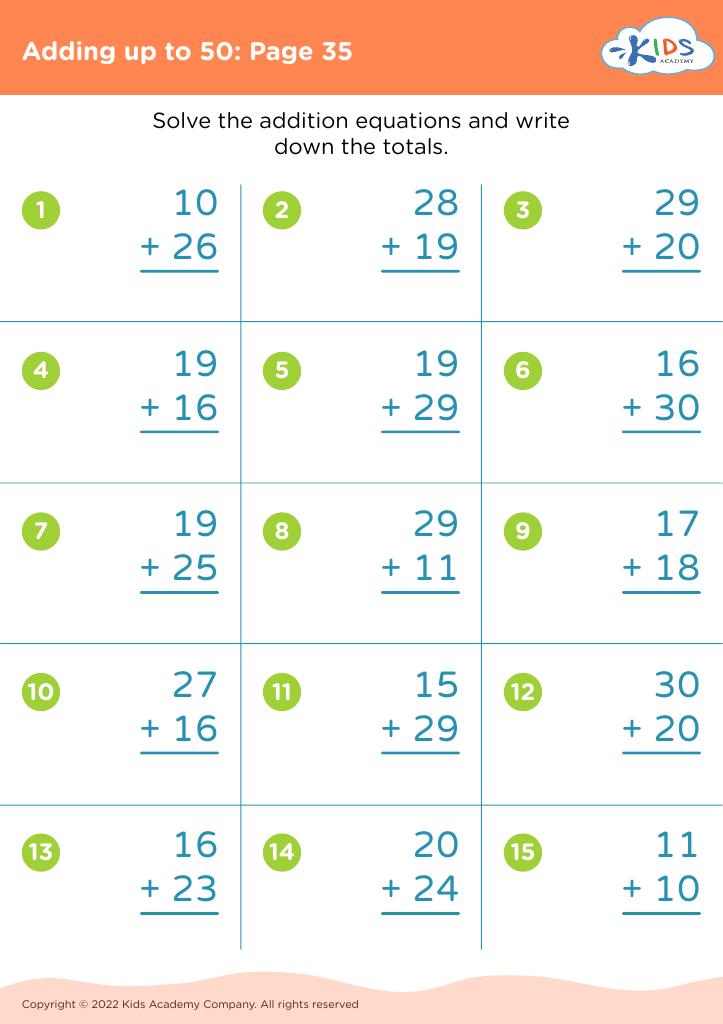
Adding up to 50: Page 35

Adding up to 50: Page 35

Adding up to 50: Page 35
Worksheet
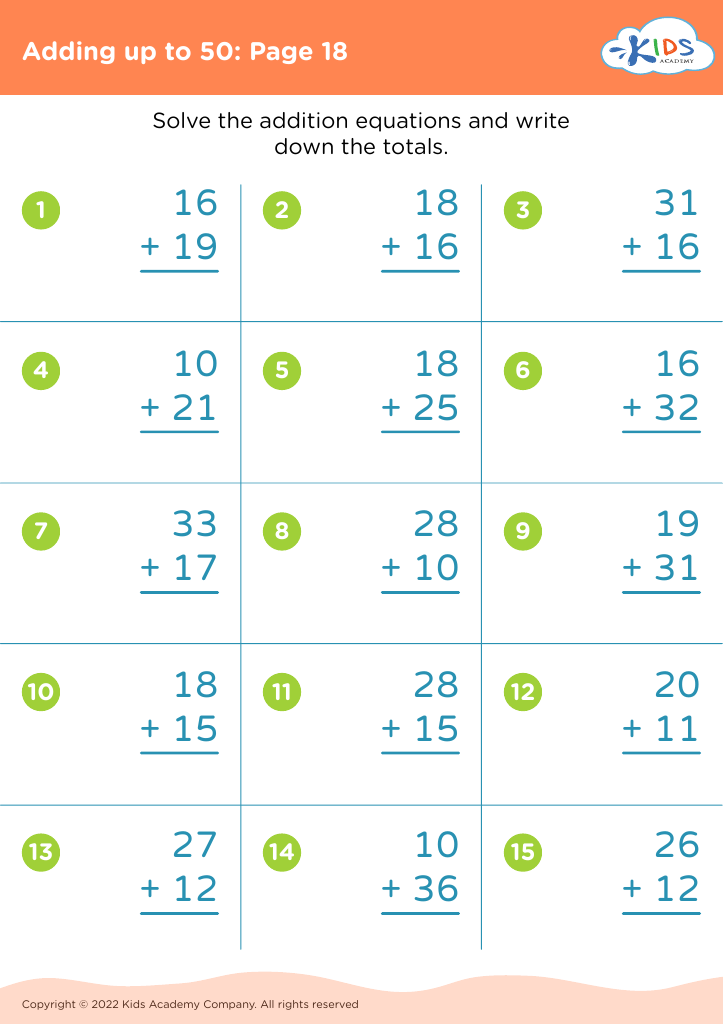
Adding up to 50: Page 18

Adding up to 50: Page 18

Adding up to 50: Page 18
Worksheet
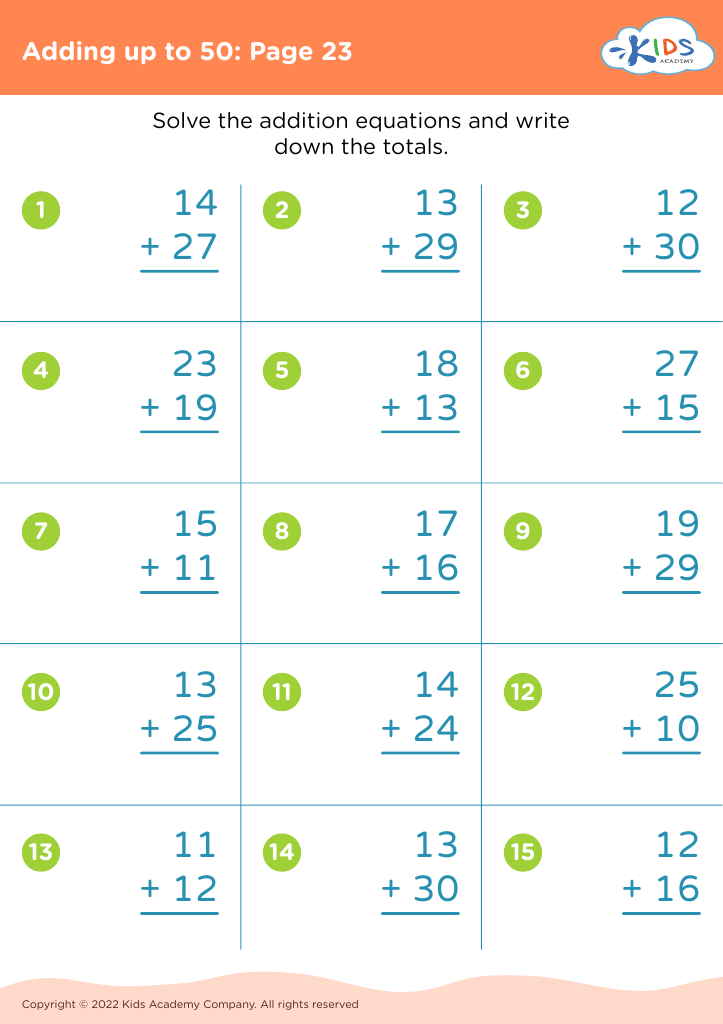
Adding up to 50: Page 23

Adding up to 50: Page 23

Adding up to 50: Page 23
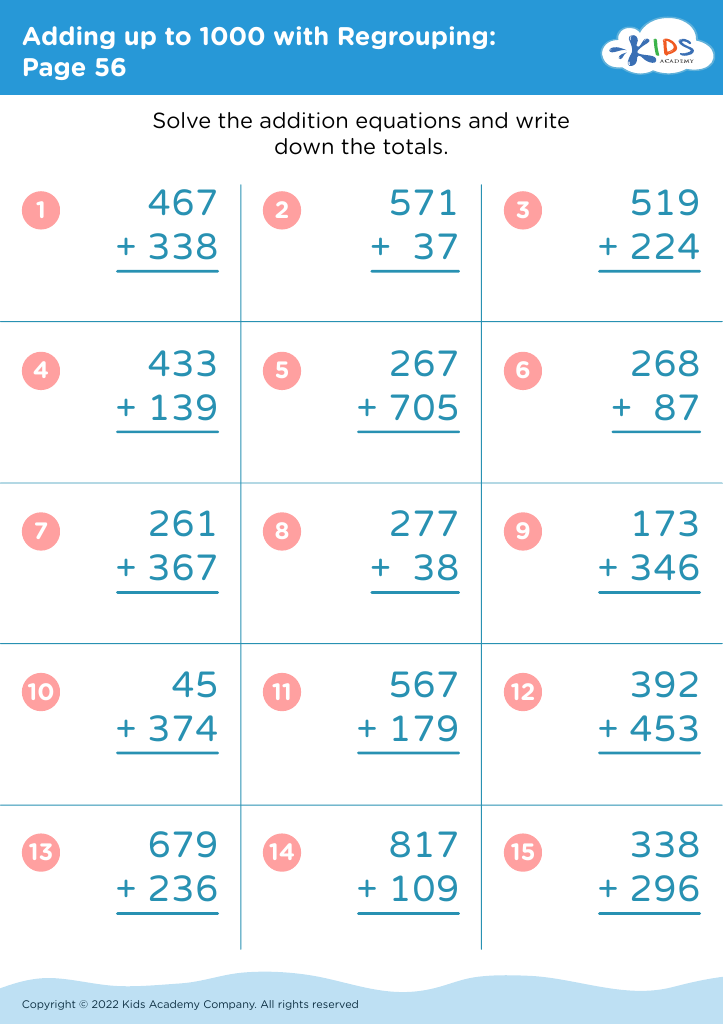
Worksheet
Adding up to 1000 with Regrouping: Page 56
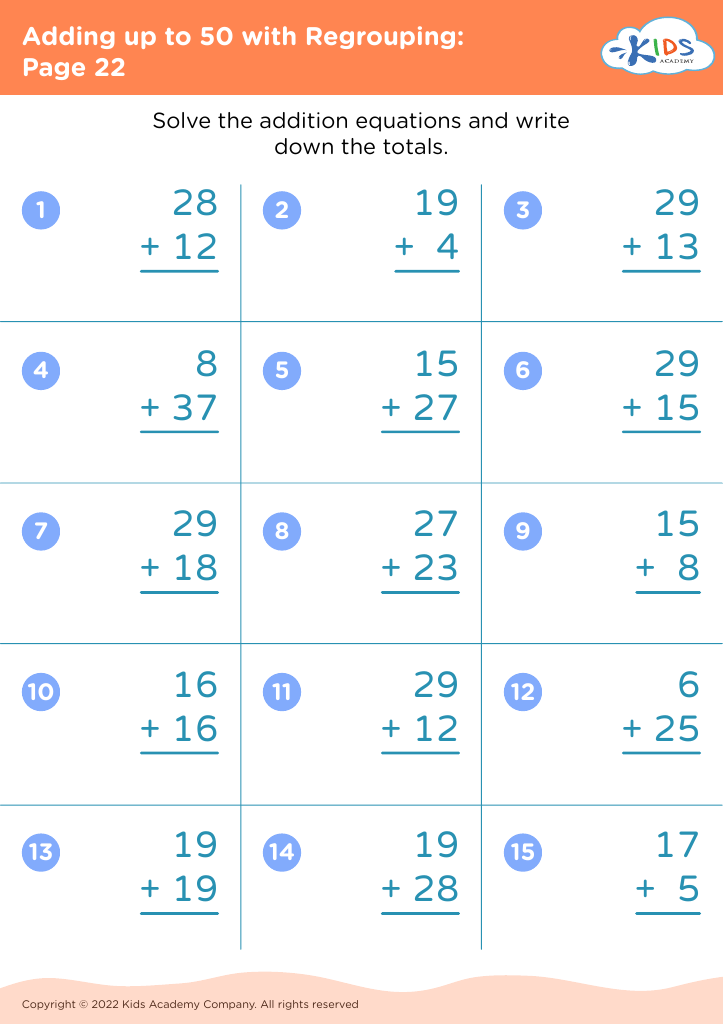
Worksheet
Adding up to 50 with Regrouping: Page 22
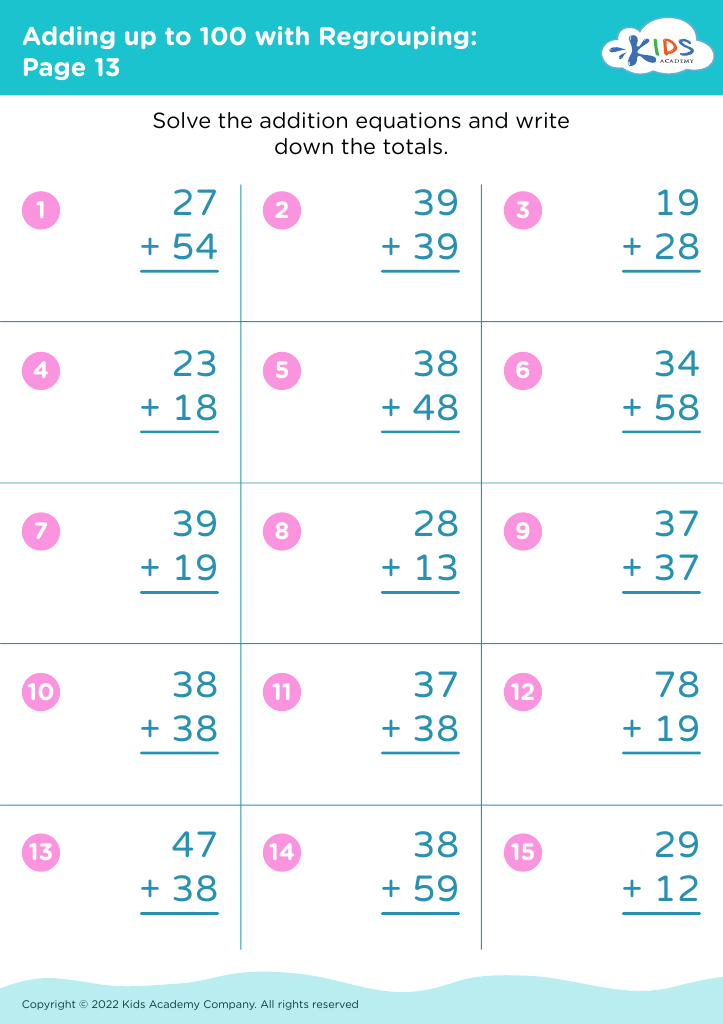
Worksheet
Adding up to 100 with Regrouping: Page 13
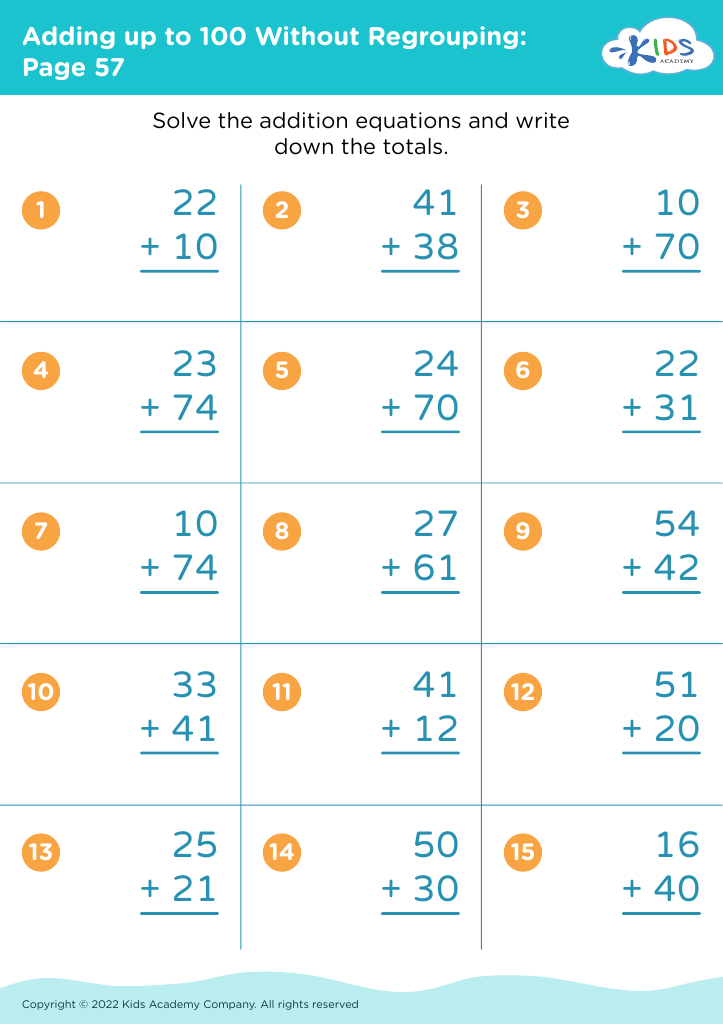
Worksheet
Adding up to 100 Without Regrouping: Page 57
Worksheet


Introducing children aged 5-9 to comparing fractions and learning how to add them offers myriad educational benefits. During these formative years, young minds are particularly receptive to grasping foundational concepts that will support future mathematical learning. Understanding how to compare and add fractions fosters critical thinking and problem-solving skills. These essential life skills go beyond math class, as they assist in everyday decision-making processes.

Implementing this knowledge early is advantageous because fractions represent a critical building block; they act as a bridge to more complex arithmetic, such as decimals and percentages, and in time, higher-level mathematics like algebra and geometry.

Furthermore, familiarizing children with fractions can remove the intimidation often felt when confronted with these concepts later. It encourages a positive mathematical mindset, showcasing that math can be engaging rather than daunting. It also provides children with concrete examples of math in the real world – such as slicing a pizza, sharing treats, or following recipes – making the learning relevant and practical.

Early understanding of fractions also paves the way for collaboration and communication, as children articulate their thought processes and reasoning in comparative and additive terms. Therefore, ensuring students understand these fundamentals from an early age — both at home and in the classroom — sets a strong, confidence-boosting foundation for their educational journey.