Comparing quantities Addition Worksheets for Ages 5-9
7 filtered results
-
From - To
Explore our engaging "Comparing Quantities Addition Worksheets" designed for ages 5-9. These worksheets help children master the fundamental skill of comparing numerical quantities while practicing addition. Featuring fun activities and colorful illustrations, our printable worksheets make learning addition enjoyable and interactive. Perfect for both classroom and home use, these resources support core math skills development, enhance critical thinking, and boost confidence. Created by educational experts, they align with educational standards, ensuring your child's learning is aligned with their grade level expectations. Discover a wide range of worksheets to enrich your child's math journey today!
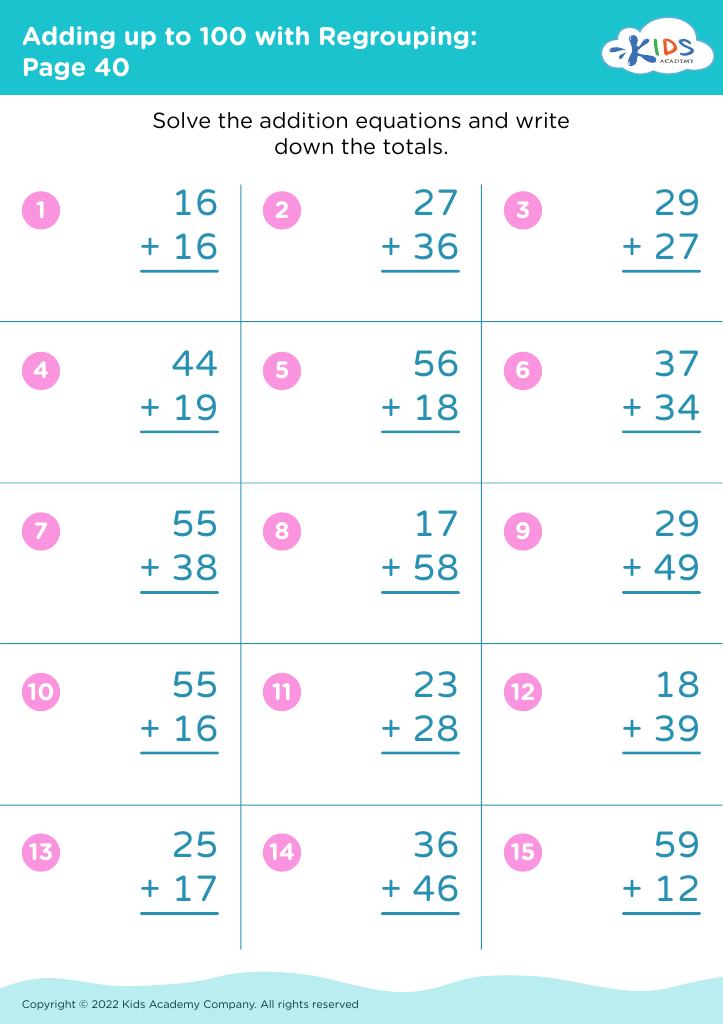
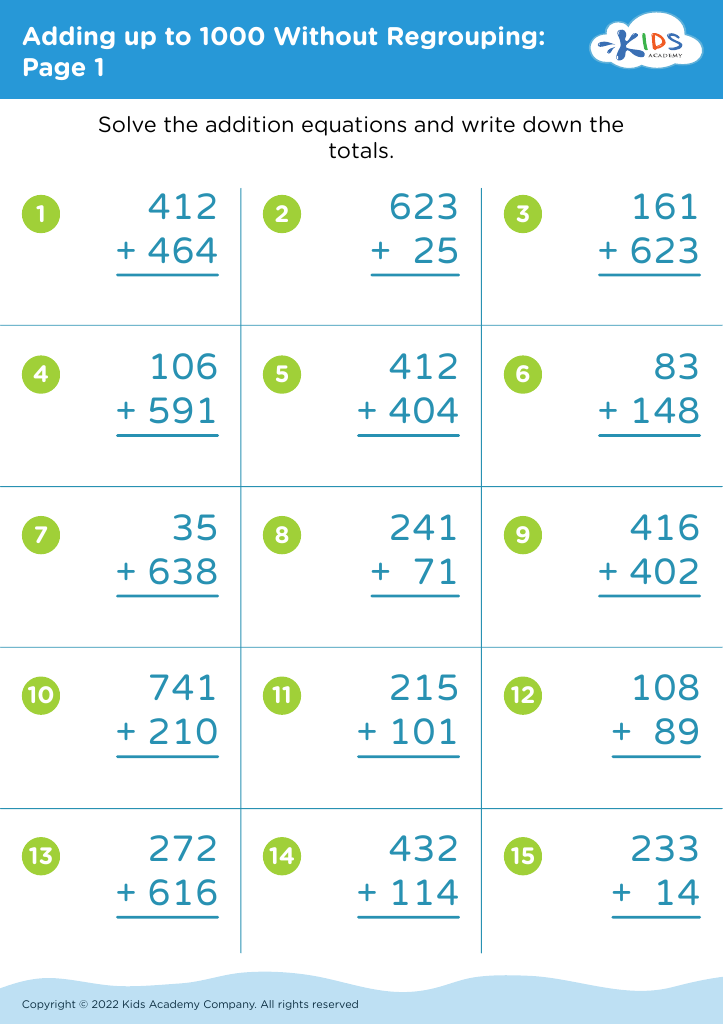
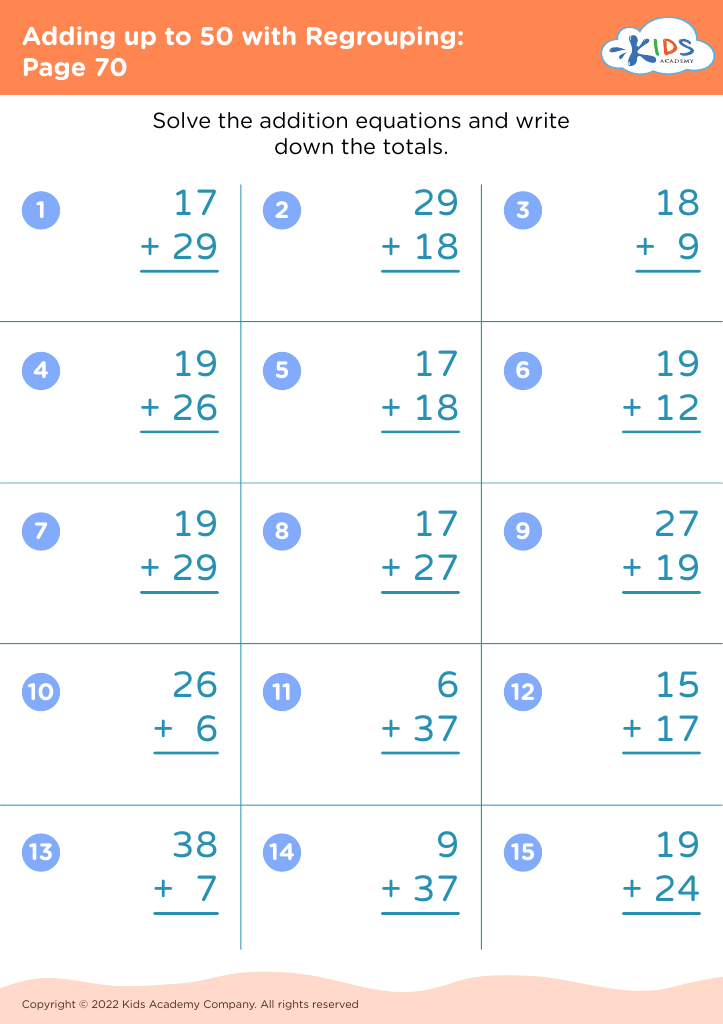
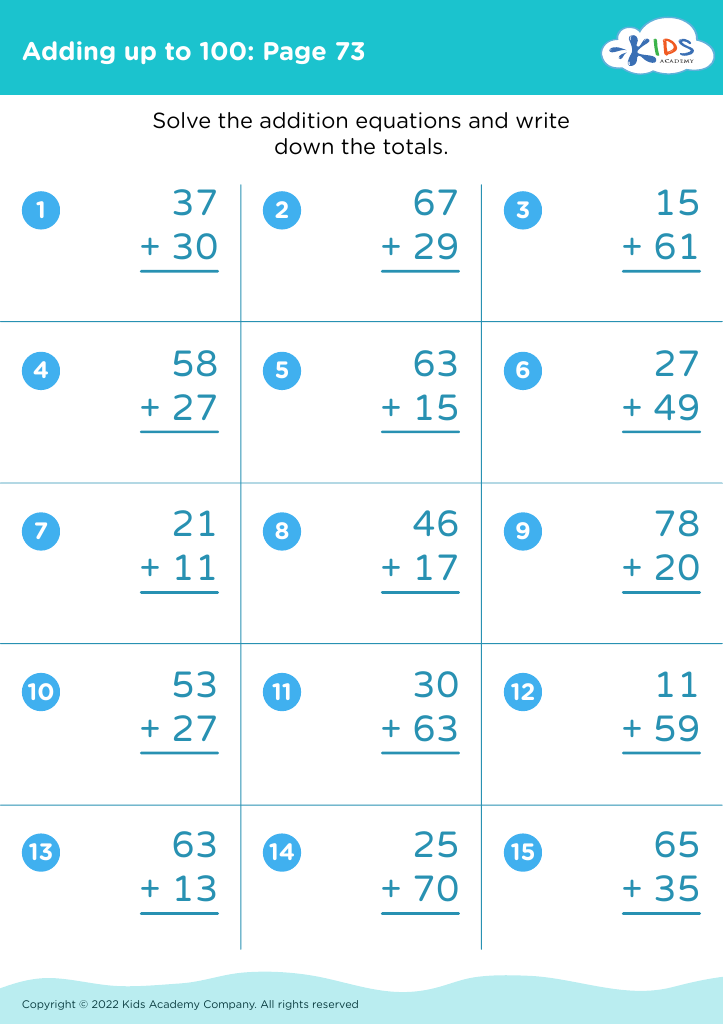
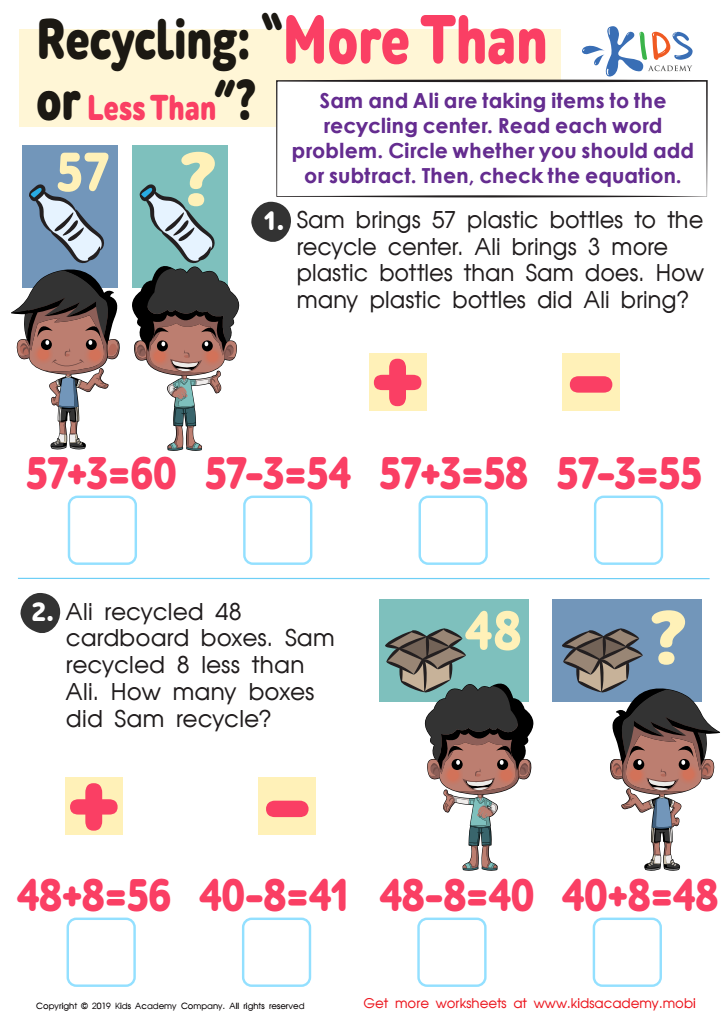
Recycling - More or Less Worksheet
 Assign to My Students








Understanding and comparing quantities through addition is a foundational math skill critical for children aged 5-9. Engaging in these activities lays the groundwork for numerical literacy and high-order mathematics in later years. When kids compare quantities, they develop a sense of magnitude and relative size, foundational concepts for number sense. For example, figuring out that adding 5 apples to a group of 3 apples results in more apples than adding 2 helps solidify their understanding of ‘more’ and ‘less.’
Furthermore, these activities stimulate cognitive development, enhancing problem-solving skills and logical reasoning. Young minds learn to process information more efficiently by identifying patterns and relationships between numbers.
Socially, comparing quantities and performing additions can improve collaborative skills. Children often engage in group activities that require sharing and comparing results, fostering communication and cooperation. It shows them concrete ways in which math is applicable in everyday situations, enhancing their engagement and curiosity.
Parents or teachers who invest time in these exercises contribute not only to a child's academic proficiency but also to their overall cognitive and social development. This nurtures a well-rounded educational foundation, setting the stage for future learning and helping children build confidence in their capabilities.








