Filters

19 filtered results

Clear all filters
Favorites
With answer key
Interactive

19 filtered results

Difficulty Level

Grade


Discover our engaging Counting Objects Addition Worksheets designed for children aged 5-9! These interactive worksheets provide a fun and effective way for young learners to develop essential addition skills through hands-on practice. Each worksheet features colorful visuals and counting activities that help kids learn to count objects, enabling them to master basic addition concepts. With a variety of exercises tailored to different learning levels, children will gain confidence while enhancing their math abilities. Perfect for both classroom and homeschooling environments, our worksheets make learning addition a joyful experience. Download your free worksheets today and watch your child excel in math!
Check out this FREE Trial Lesson on Addition for age 5-9!

Sorting Objects into 3 Categories

Favorites
With answer key
Interactive
  • 5-9
  • Counting objects
  • Addition
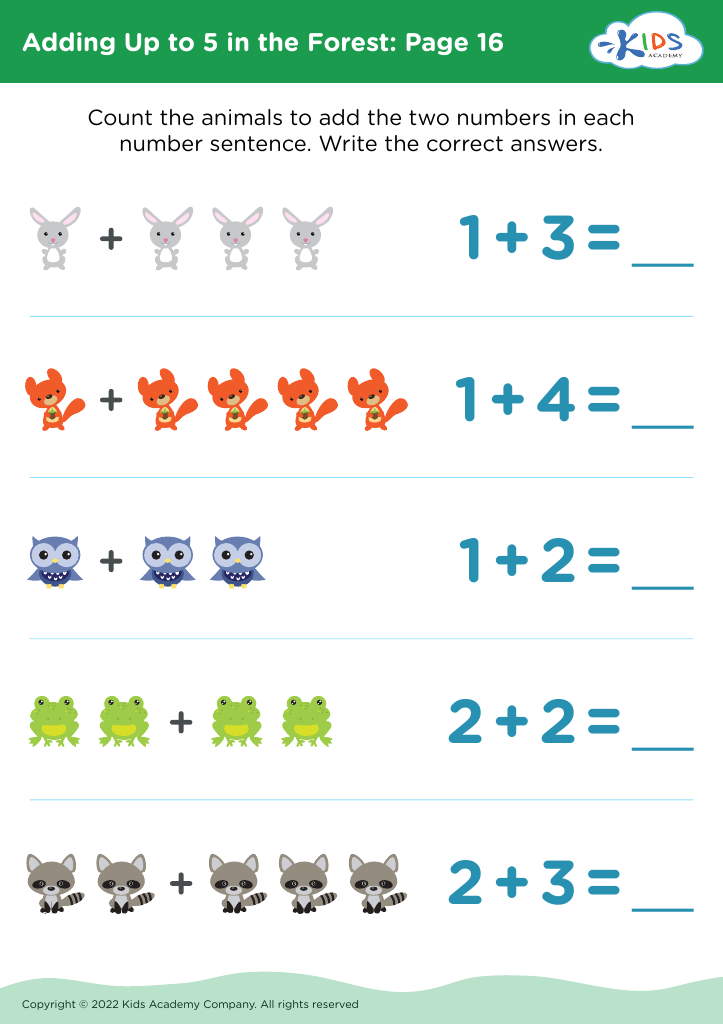
Adding Up to 5 in the Forest: Page 16
Worksheet
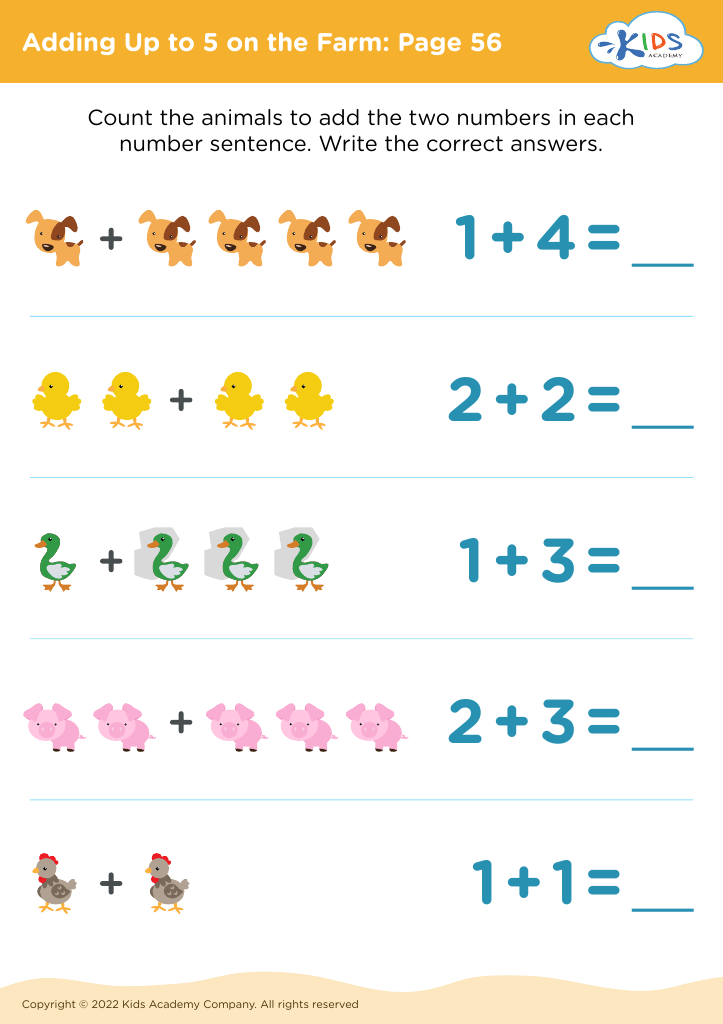
Adding Up to 5 on the Farm: Page 56
Worksheet
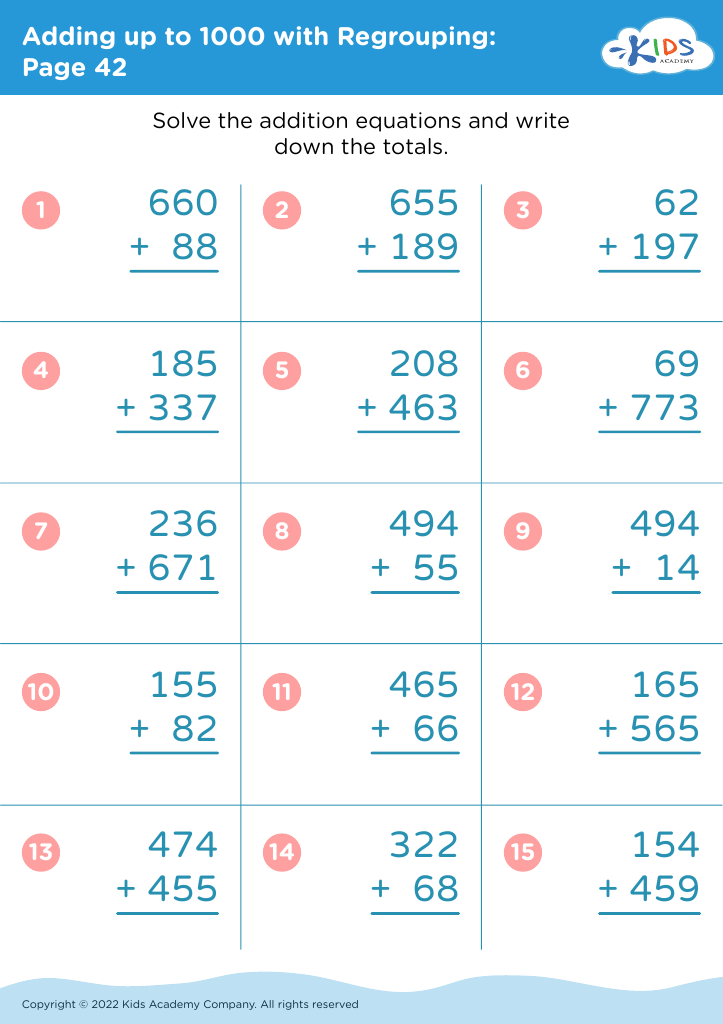
Adding up to 1000 with Regrouping: Page 42
Worksheet
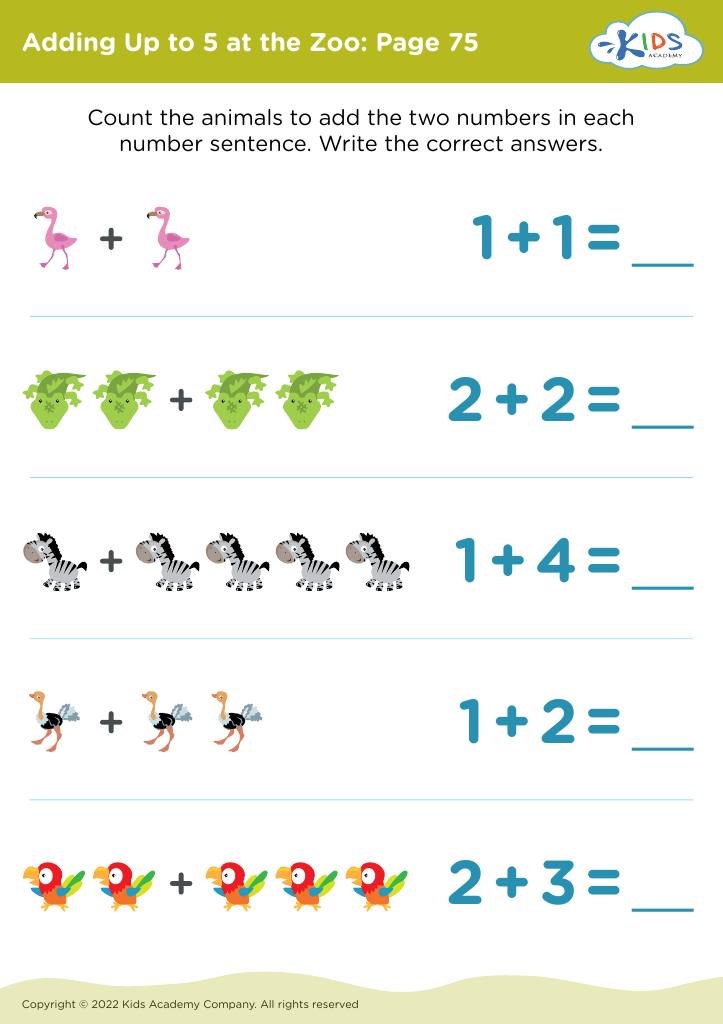
Adding Up to 5 at the Zoo: Page 75
Worksheet
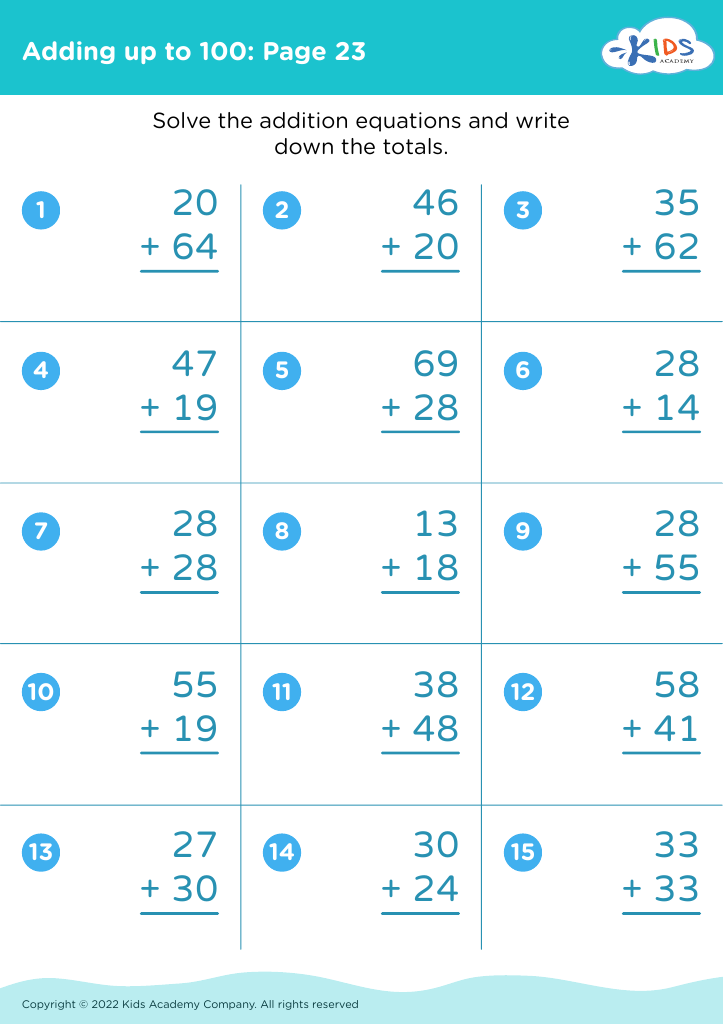
Adding up to 100: Page 23

Adding up to 100: Page 23

Adding up to 100: Page 23
Worksheet
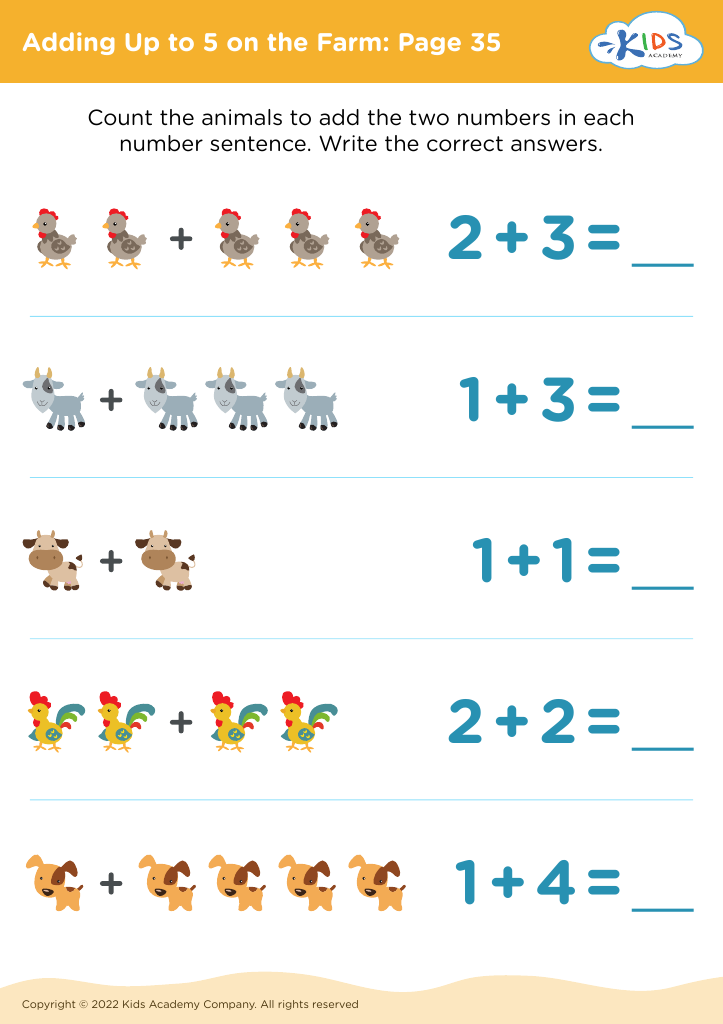
Adding Up to 5 on the Farm: Page 35
Worksheet
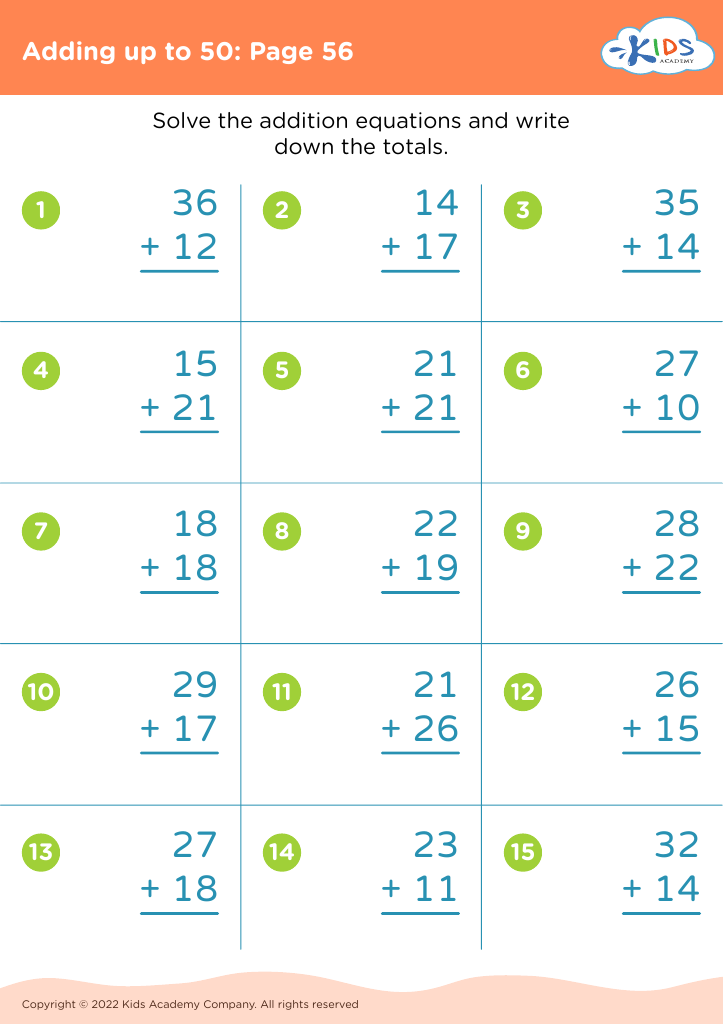
Adding up to 50: Page 56

Adding up to 50: Page 56

Adding up to 50: Page 56
Worksheet
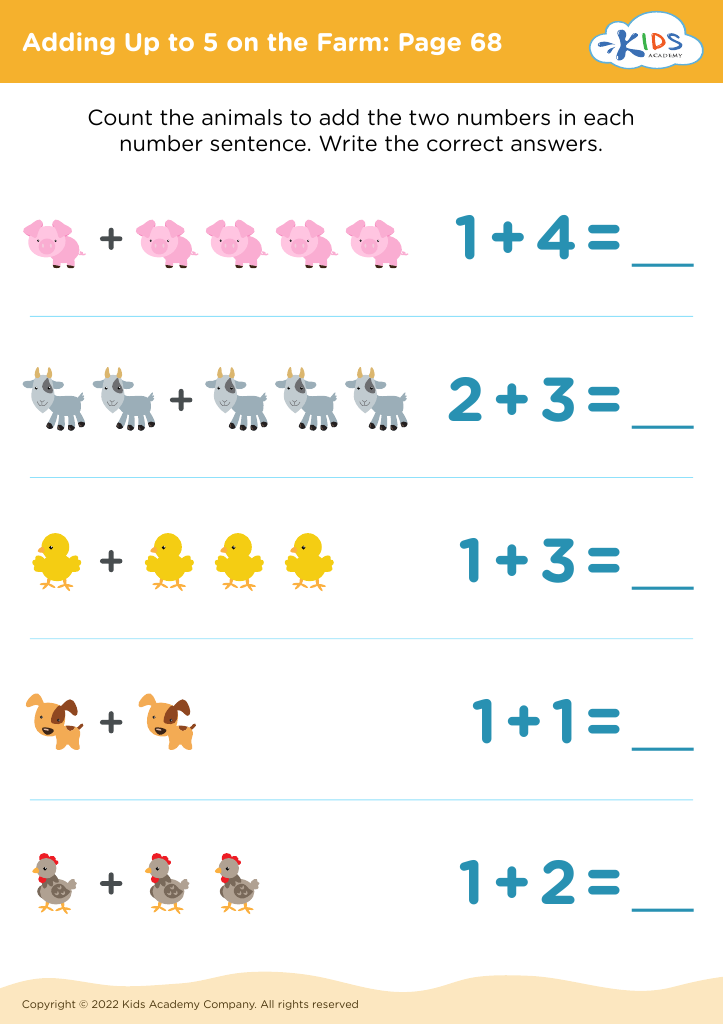
Adding Up to 5 on the Farm: Page 68
Worksheet
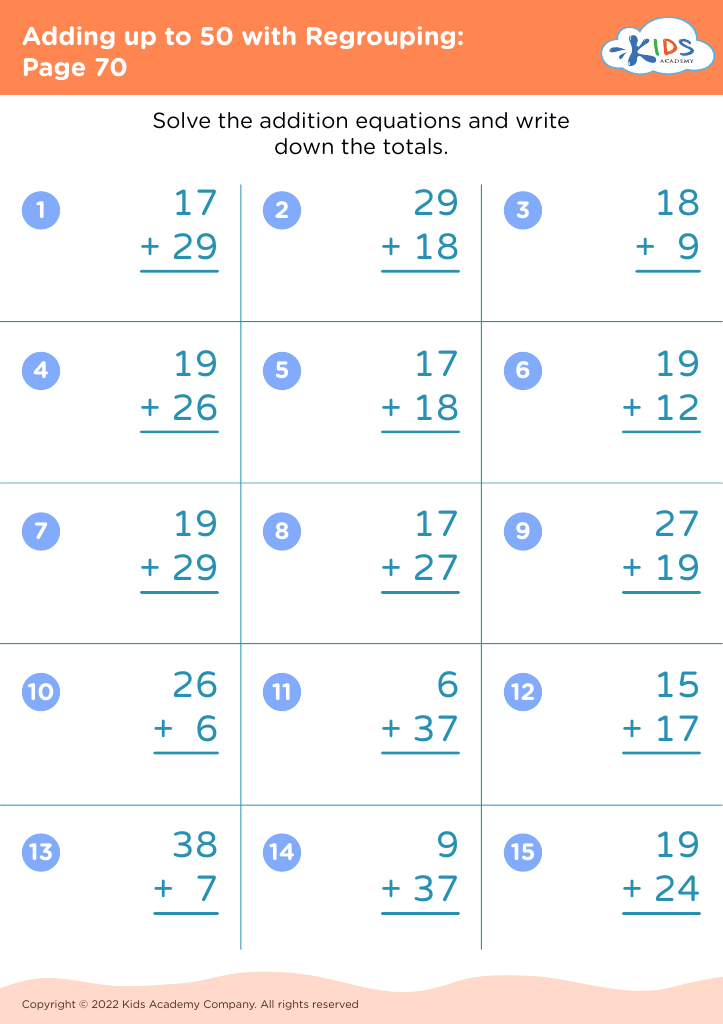
Adding up to 50 with Regrouping: Page 70
Worksheet
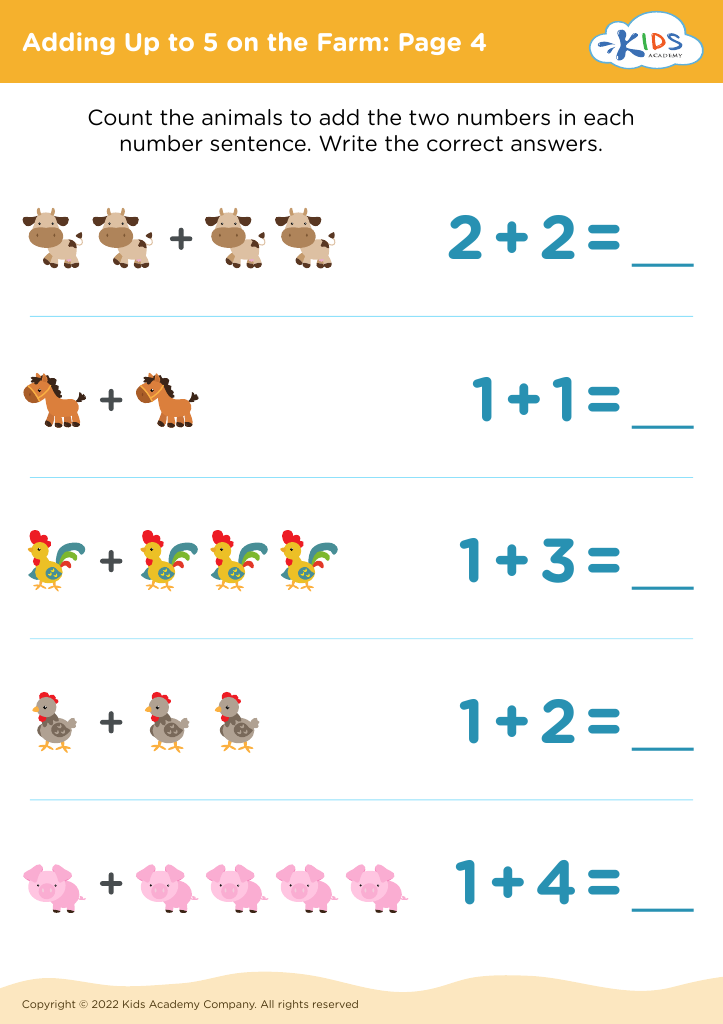
Adding Up to 5 on the Farm: Page 4
Worksheet
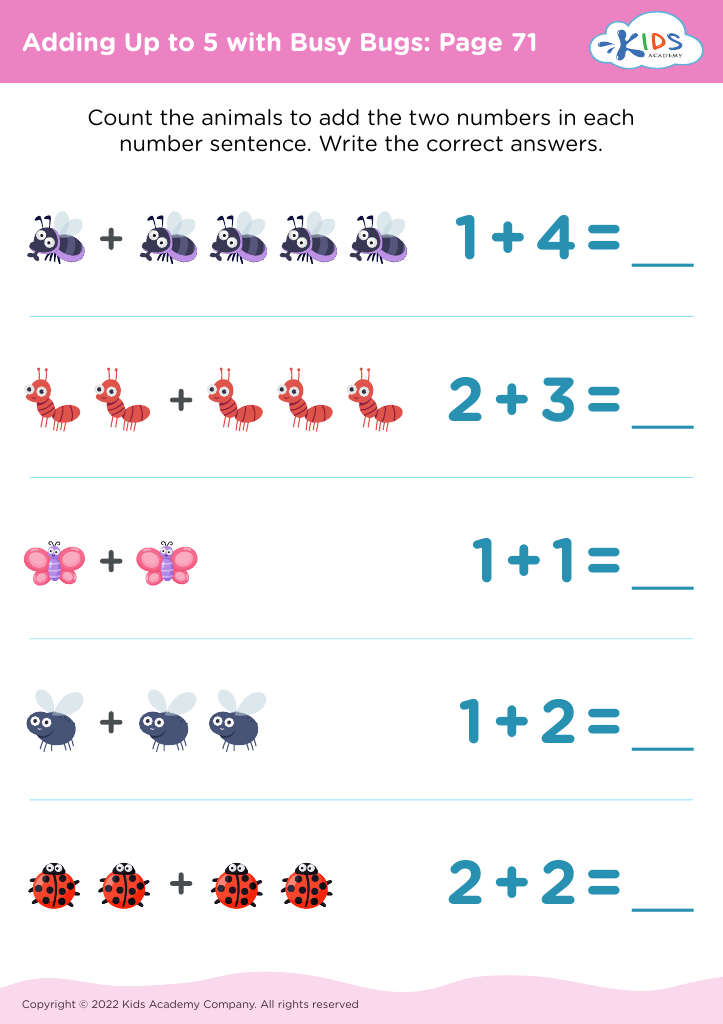
Adding Up to 5 with Busy Bugs: Page 71
Worksheet
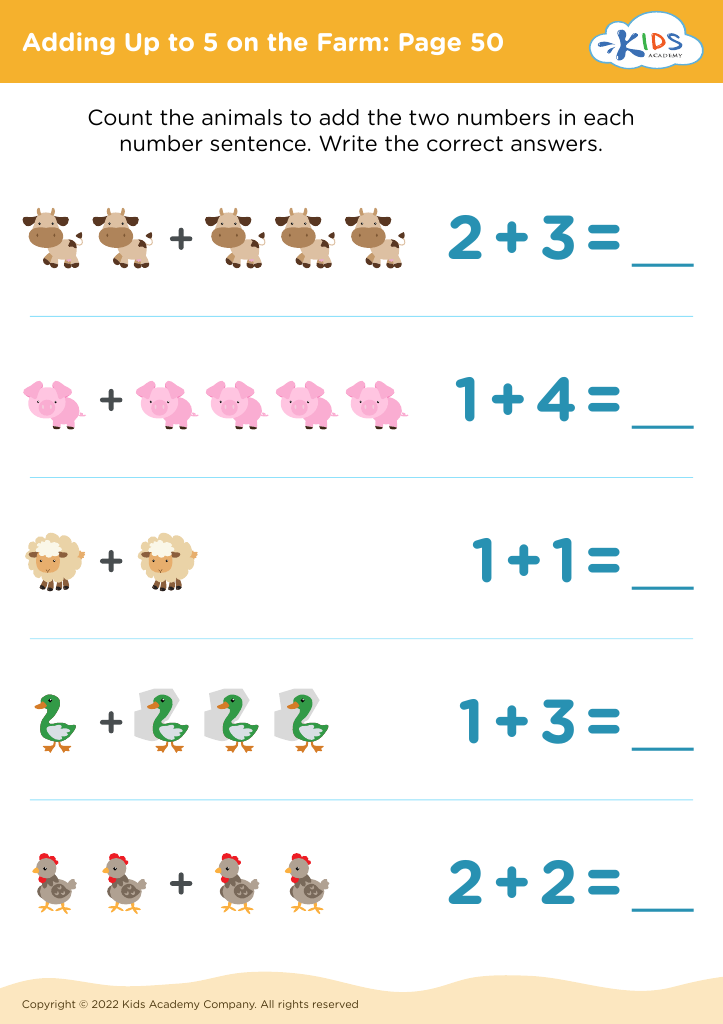
Adding Up to 5 on the Farm: Page 50
Worksheet
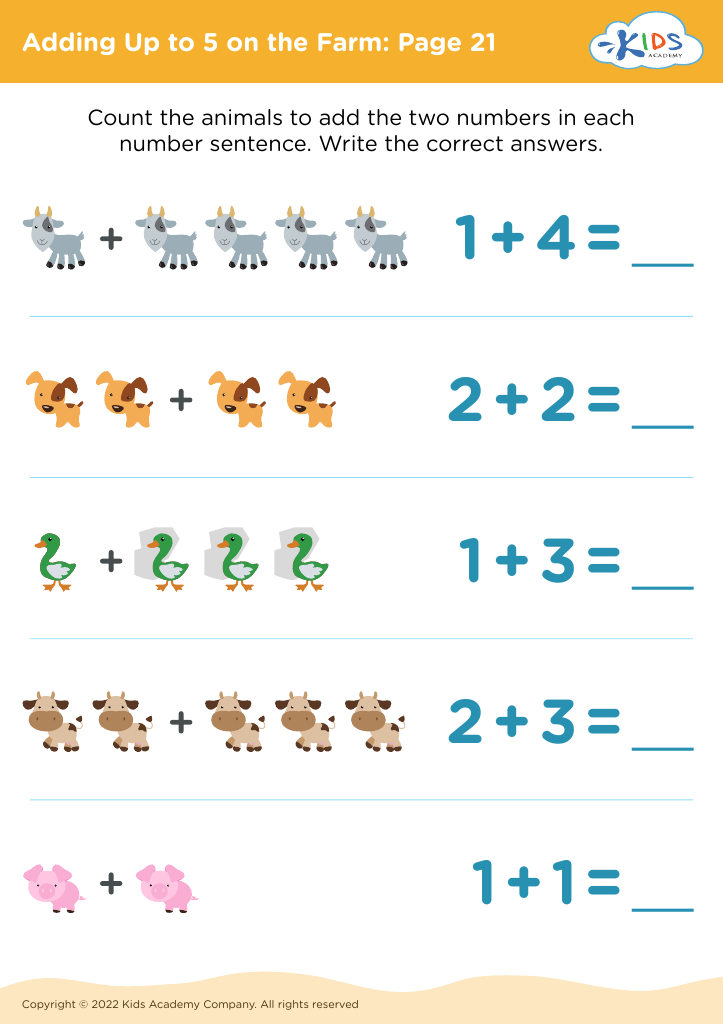
Adding Up to 5 on the Farm: Page 21
Worksheet
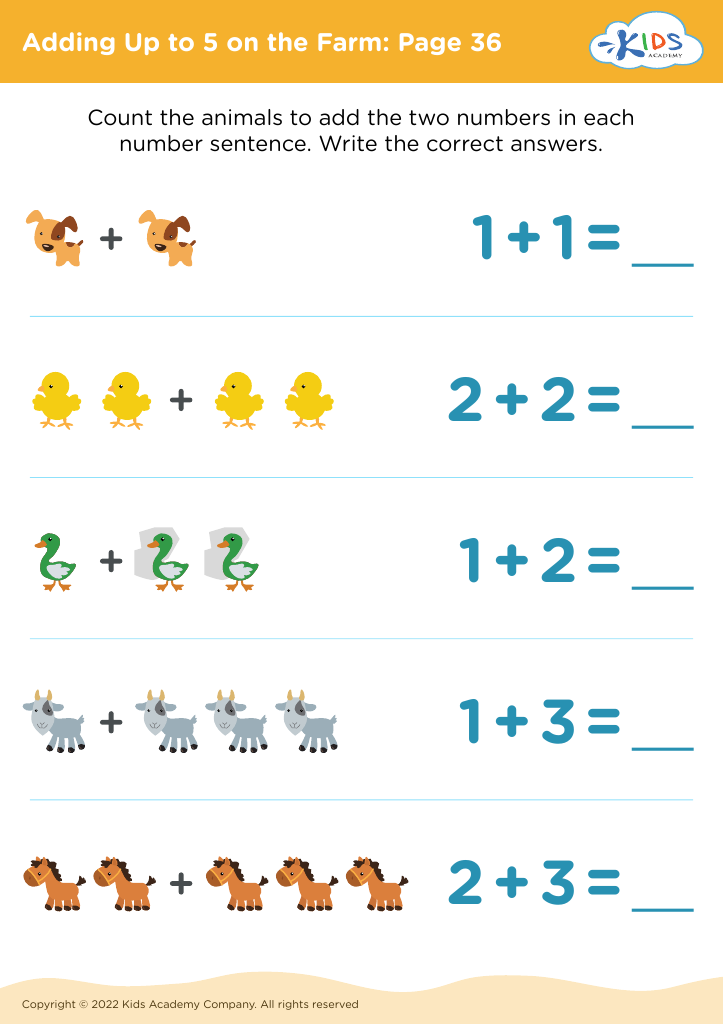
Adding Up to 5 on the Farm: Page 36
Worksheet
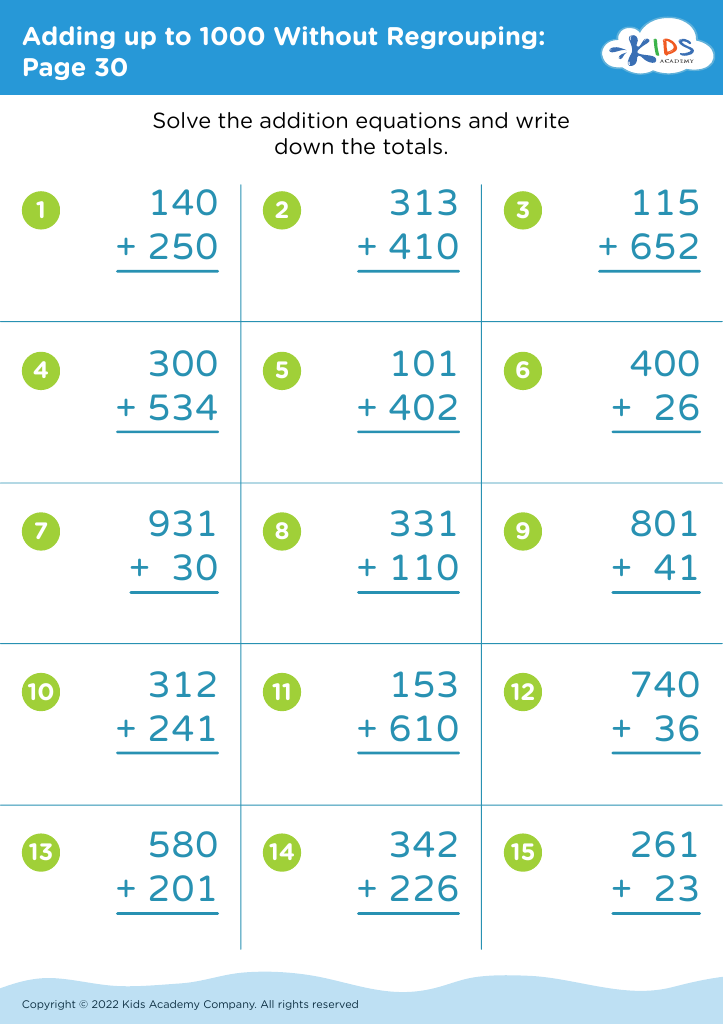
Adding up to 1000 Without Regrouping: Page 30
Worksheet
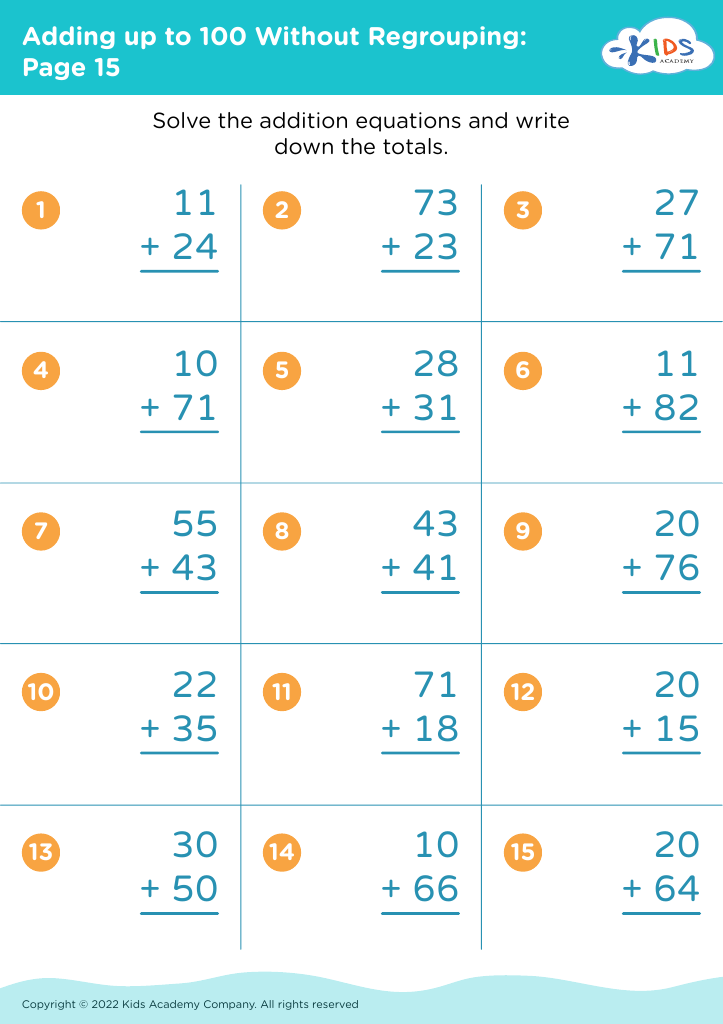
Adding up to 100 Without Regrouping: Page 15
Worksheet
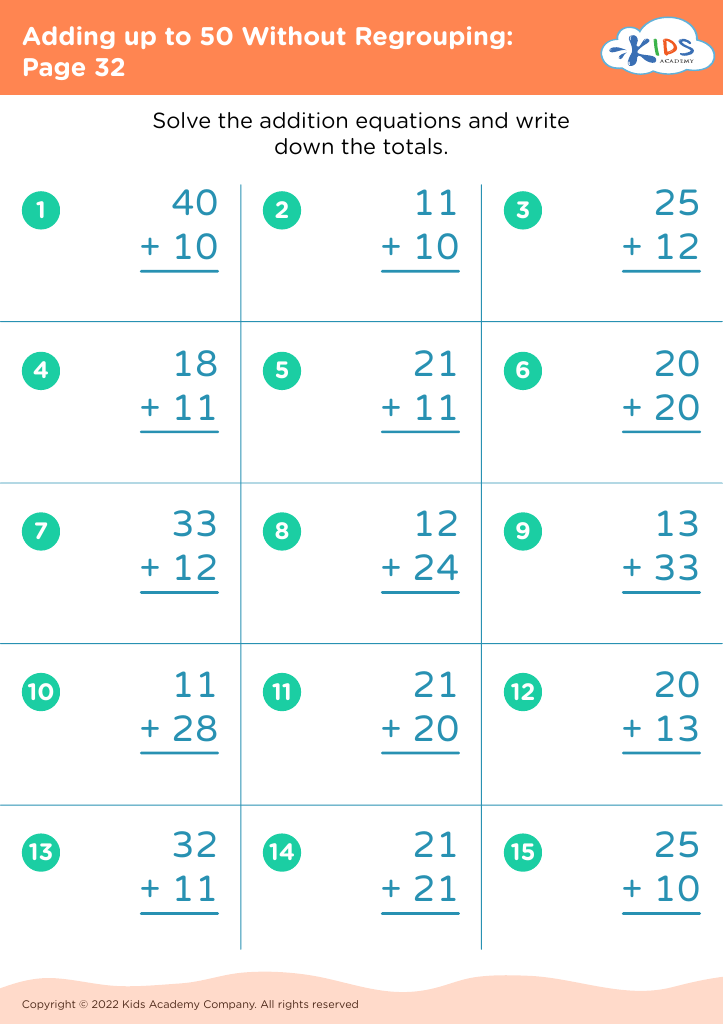
Adding up to 50 Without Regrouping: Page 32
Worksheet
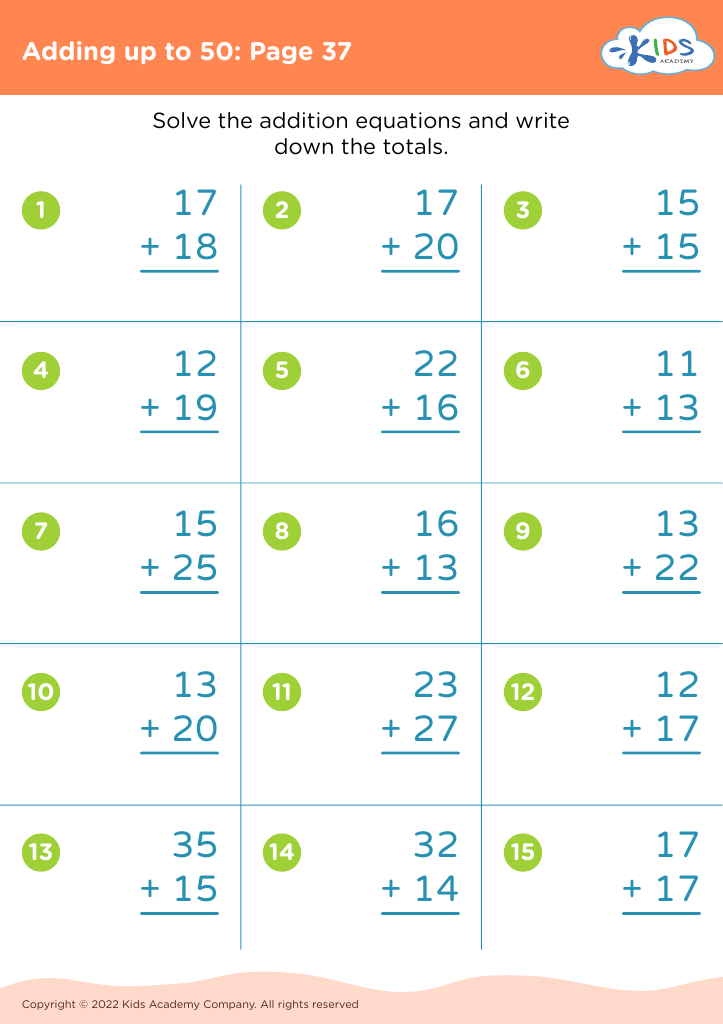
Adding up to 50: Page 37

Adding up to 50: Page 37

Adding up to 50: Page 37
Worksheet
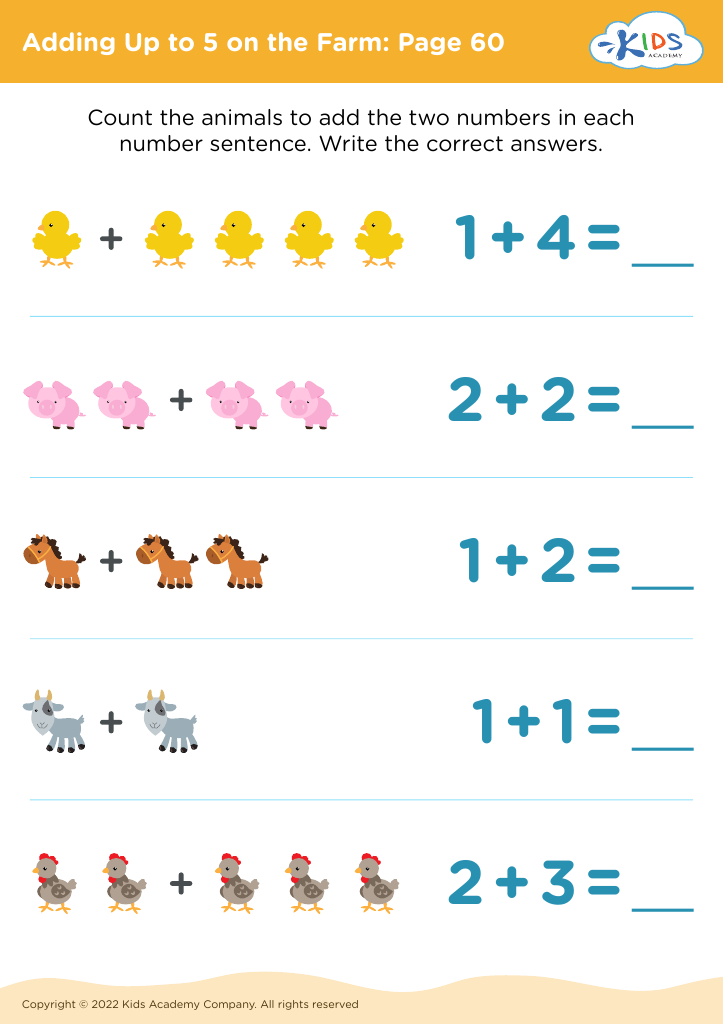
Adding Up to 5 on the Farm: Page 60
Worksheet


Counting objects and understanding addition are fundamental skills for children aged 5-9, forming the building blocks for future mathematical concepts. When parents and teachers prioritize these skills, they lay a solid foundation for a child’s cognitive development and problem-solving abilities. Counting helps children grasp the idea of quantity, which is crucial for both addition and subtractive reasoning. Engaging with physical objects allows children to visualize numbers, making abstract concepts more concrete.

Moreover, mastery of counting and basic addition fosters confidence in young learners. When children work with tangible items, they can see their progress and feel a sense of accomplishment. This positive reinforcement encourages a love for learning and mathematics. Additionally, these skills promote critical thinking; as children develop the ability to manipulate numbers through addition, they are better equipped to tackle more complex problems later on.

Investing time in counting and addition at an early age also encourages collaboration and communication, as children discuss strategies and share discoveries. Ultimately, fostering these skills ensures that children are well-prepared for future academic challenges and instills a lifelong appreciation for mathematics, essential in today’s increasingly quantitative world. Therefore, parents and teachers should actively engage in promoting these foundational concepts.