Developing fine motor skills Addition Worksheets for Ages 5-9
4 filtered results
-
From - To
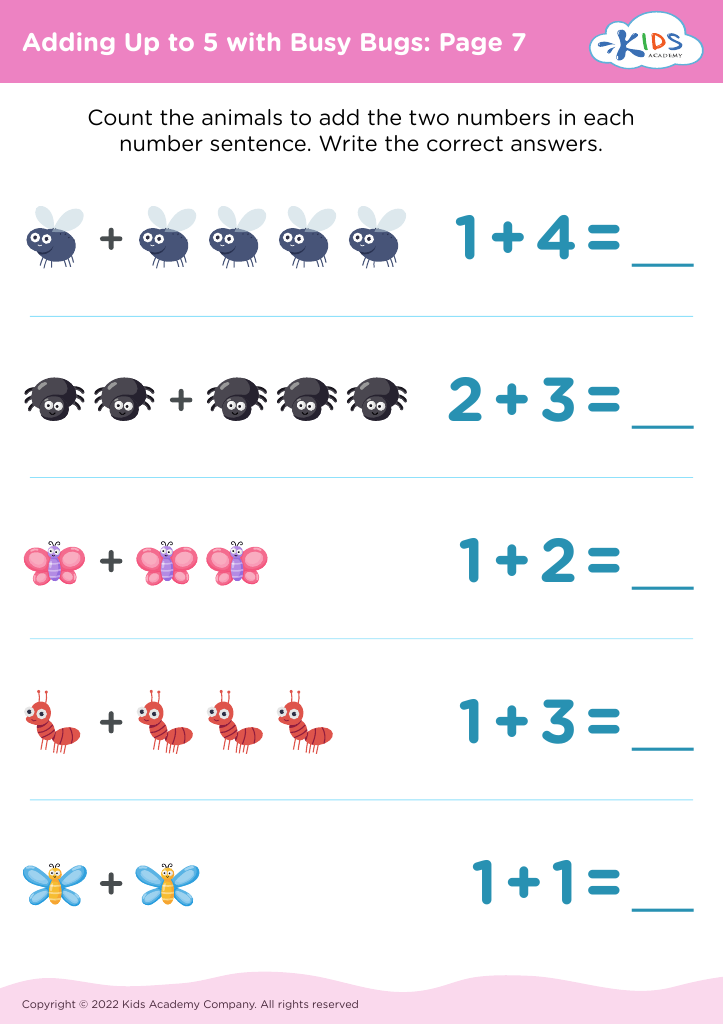
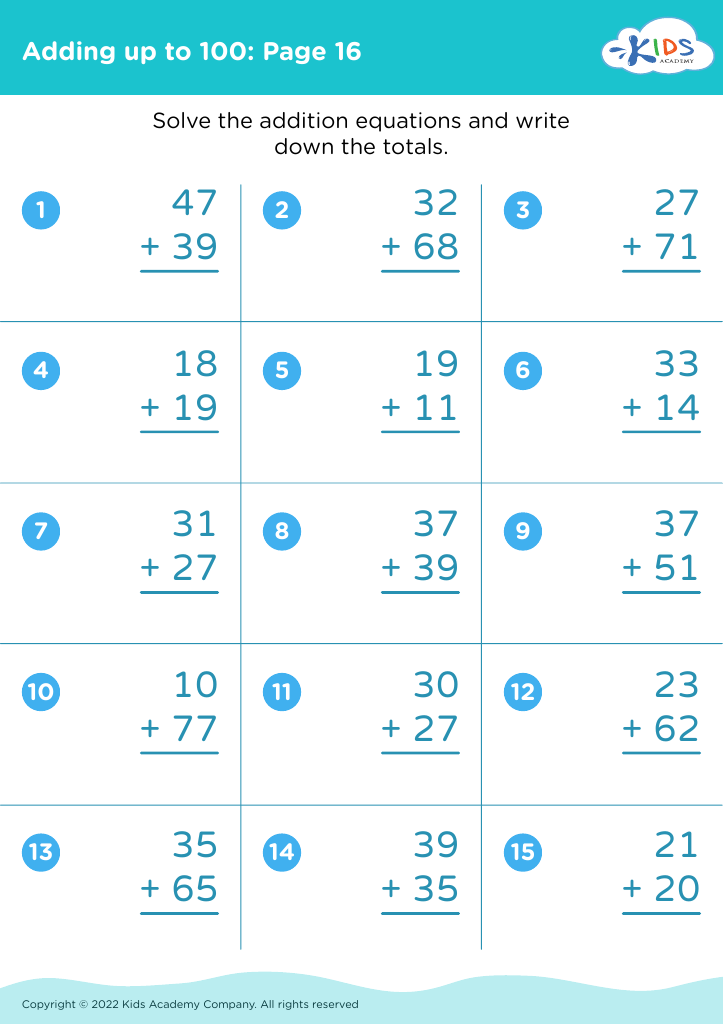
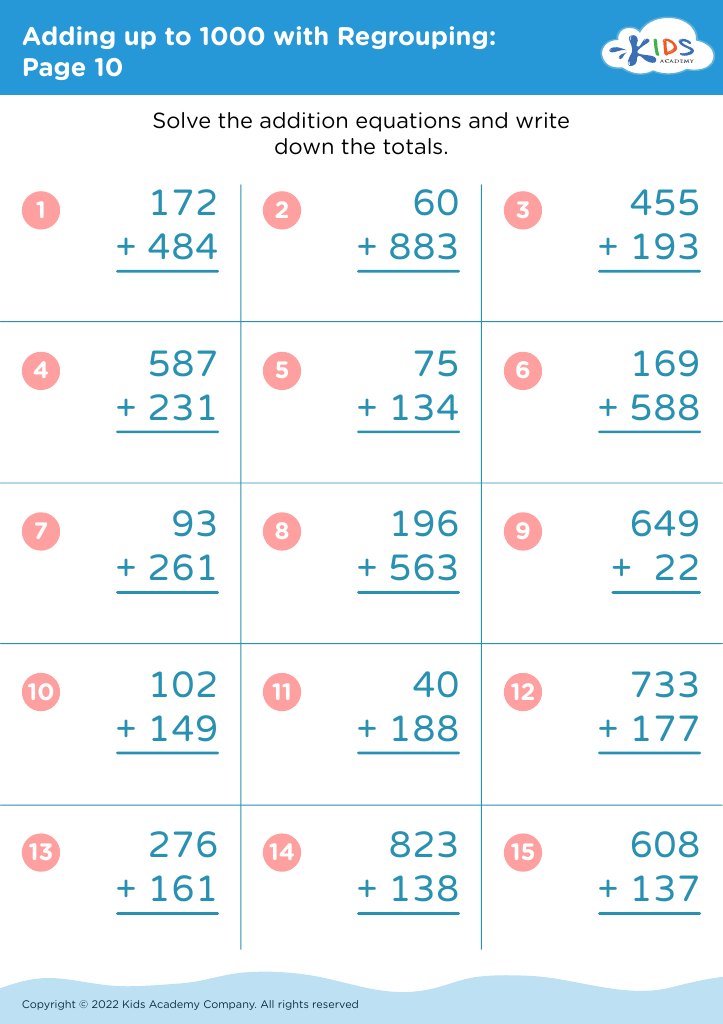
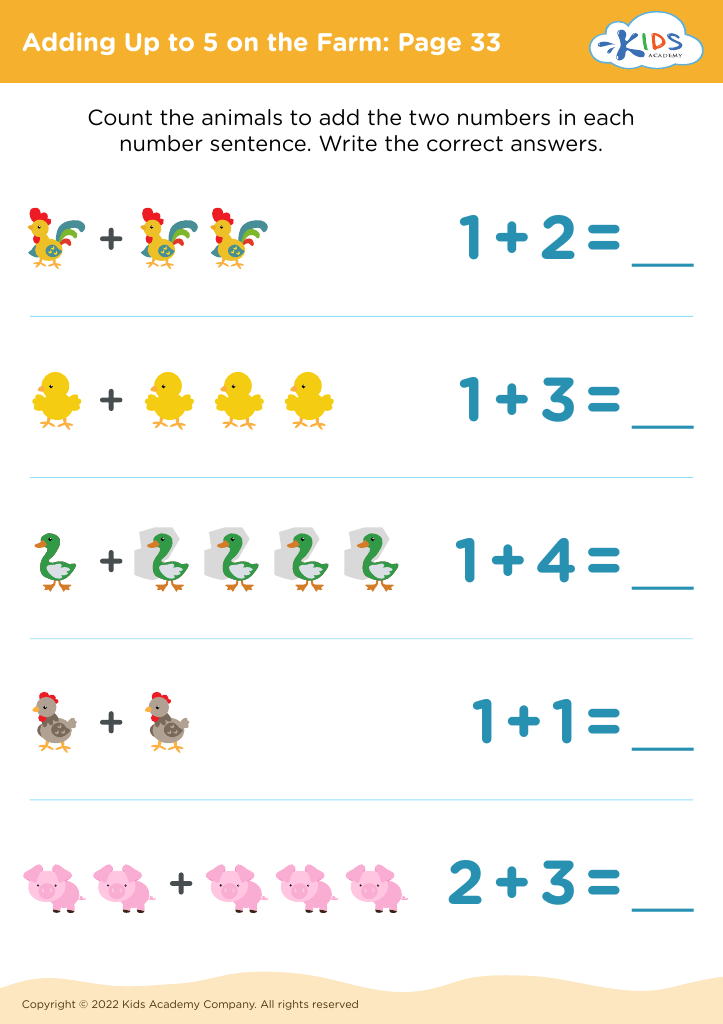
Discover our engaging fine motor skills addition worksheets designed for children aged 5-9! These printable activities not only help young learners practice basic addition concepts but also enhance their hand-eye coordination and dexterity. Each worksheet features fun illustrations and interactive tasks that encourage creativity while reinforcing mathematical skills. With challenges tailored to different skill levels, your child will enjoy exploring numbers through tracing, cutting, and coloring exercises. Ideal for homeschooling or classroom use, our resources make learning mathematics enjoyable and hands-on. Help your child build essential skills with our fine motor development worksheets today! Printable and ready to use—learning has never been this fun!








Developing fine motor skills is crucial for children aged 5-9 as these skills serve as the foundation for many everyday tasks and academic success. Fine motor skills refer to the small muscles in the hands and fingers that allow for precise movements, essential for writing, drawing, and manipulating objects. When children engage in activities that promote these skills, they enhance their hand-eye coordination, dexterity, and overall cognitive development.
For parents and teachers, fostering fine motor skills can improve children’s confidence and independence. As children gain proficiency in tasks like using scissors, buttoning their clothing, and writing legibly, they develop a sense of accomplishment that boosts self-esteem. This independence not only benefits their personal development but also leads to better performance in school, particularly in tasks that require writing and crafting.
Moreover, strong fine motor skills can directly affect academic readiness. Research indicates that children with well-developed motor skills tend to excel in literacy and numeracy because they can control their writing instruments effectively. By prioritizing activities like drawing, painting, and playing with building blocks, parents and teachers can create an engaging learning environment, nurturing not only fine motor skills but a lifelong love for learning.








