Enhance fine motor skills Addition Worksheets for Ages 5-9
4 filtered results
-
From - To
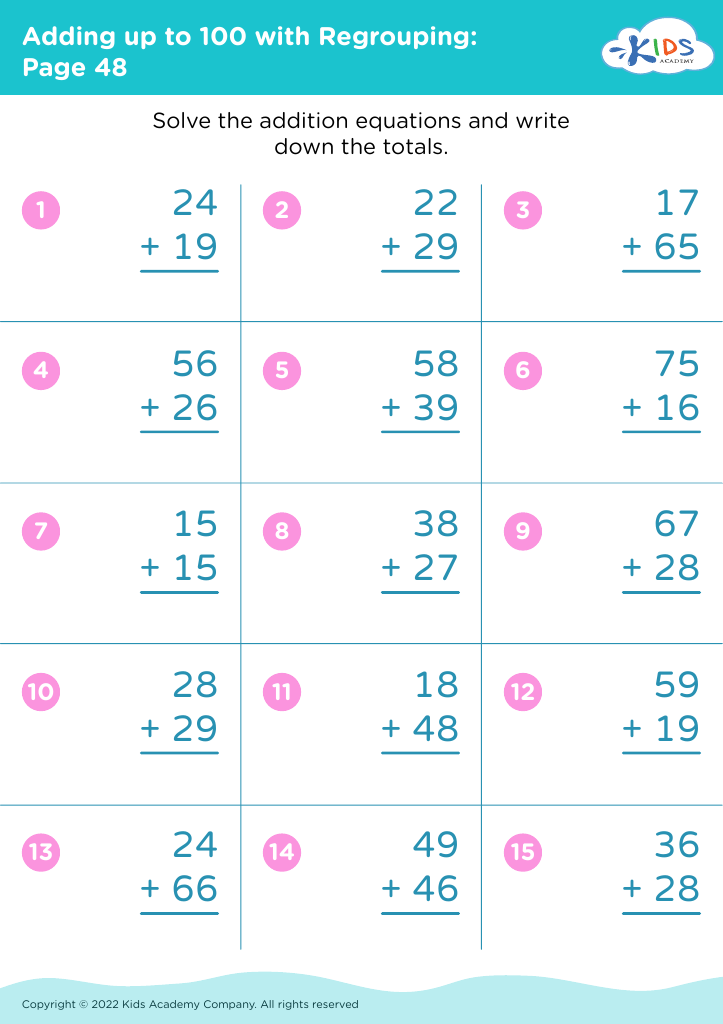
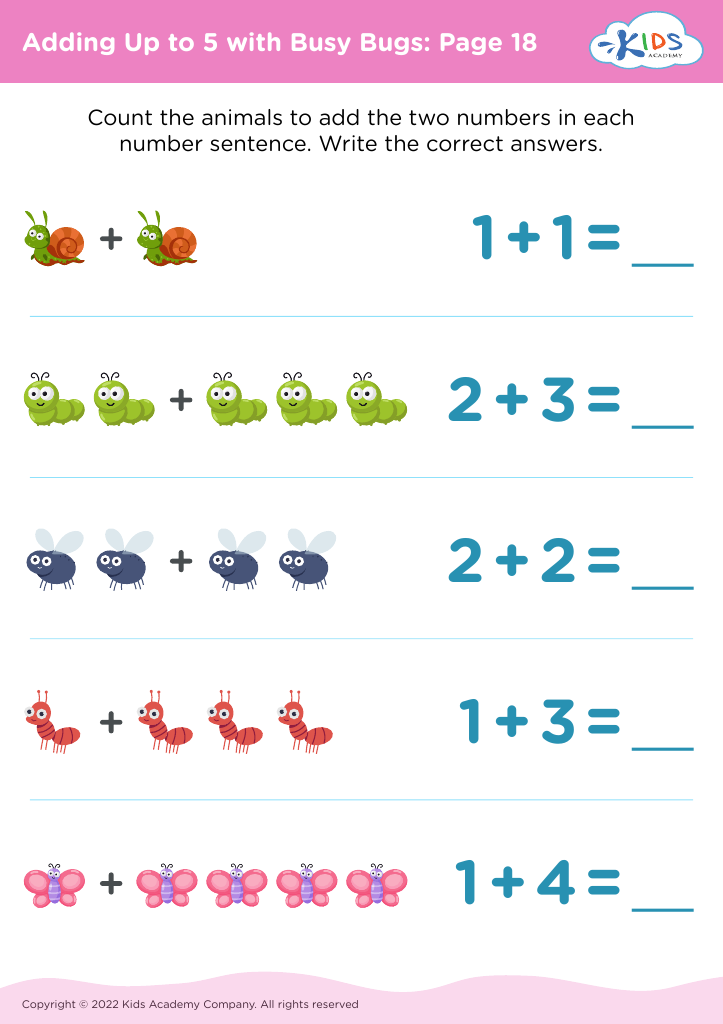
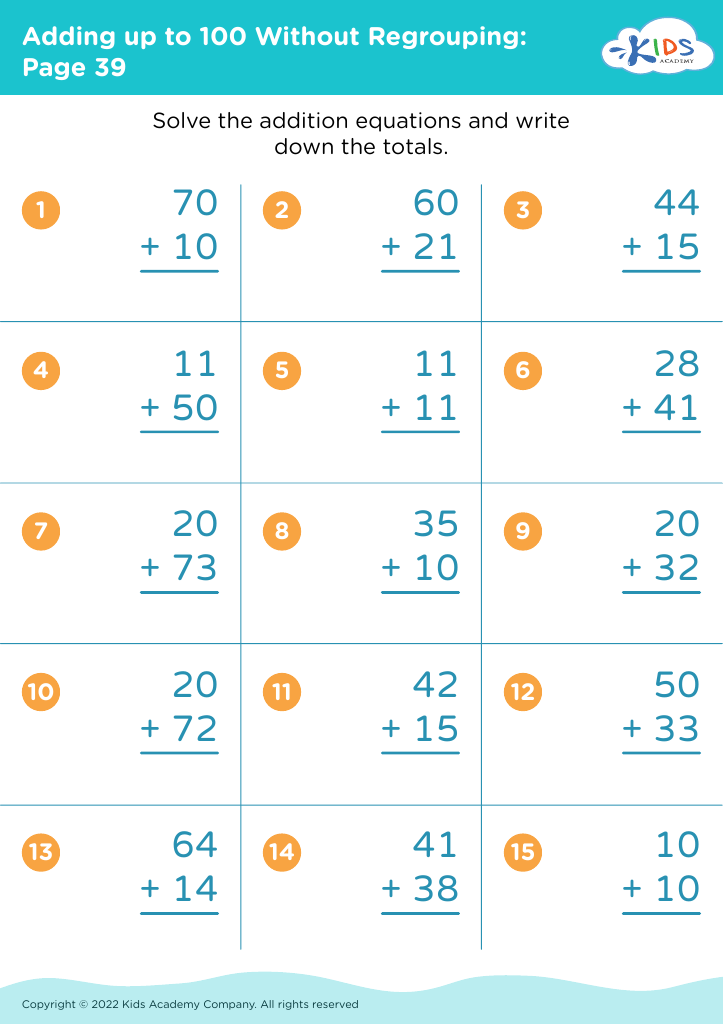
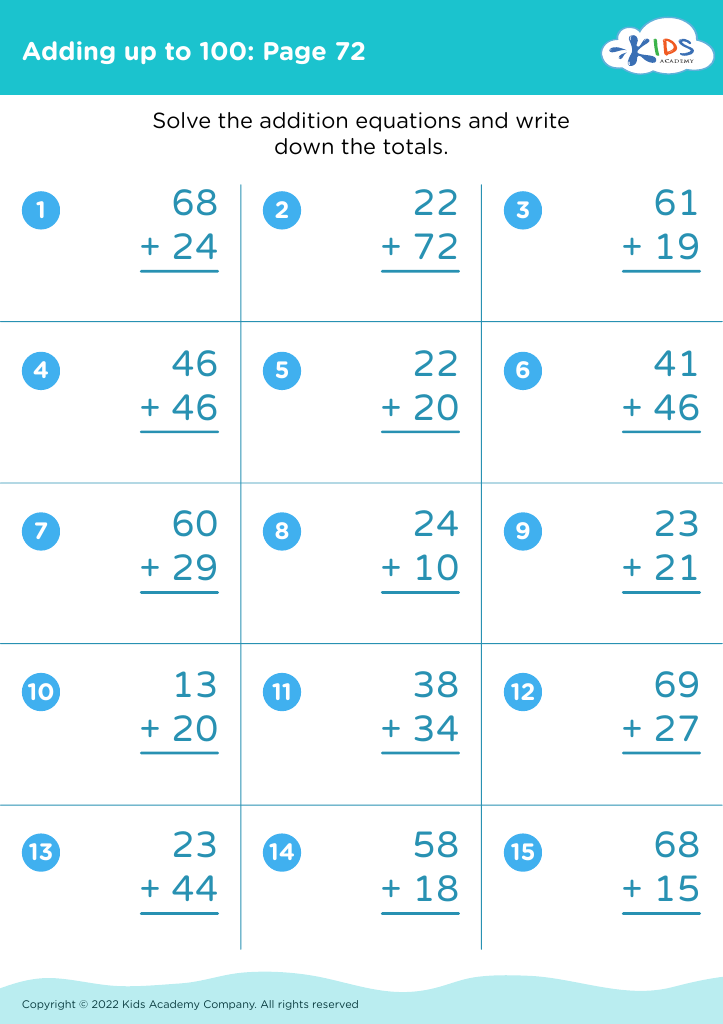
Boost your child's math proficiency and fine motor skills with our expertly designed Addition Worksheets for ages 5-9. Each worksheet combines engaging addition problems with fun activities that strengthen hand-eye coordination and pencil control. Perfect for young learners, these printable sheets include colorful graphics and stimulating exercises tailored to keep kids focused and excited about learning. Whether at home or in the classroom, these worksheets provide a dual educational benefit – foundational math practice and enhanced fine motor skills development. Visit Kids Academy to download and start enriching your child's learning experience today!






.jpg)

Fine motor skills are crucial for children aged 5-9 as they form the foundation for many academic and life tasks. Enhanced fine motor skills involve the coordination of small muscle movements, particularly in the hands and fingers. Here’s why parents and teachers should prioritize them:
-
Academic Performance: Fine motor skills are directly linked to essential academic tasks. Children need these skills to grip a pencil properly, write legibly, and control letter formation and spacing. Without them, writing can be slow and difficult, impacting their ability to complete assignments and acquire literacy skills.
-
Independence in Daily Activities: Proficient fine motor skills help children perform daily tasks such as buttoning clothes, tying shoelaces, eating with utensils, and brushing teeth. Mastery of these tasks leads to greater independence and self-confidence.
-
Cognitive Development: Engaging in activities that enhance fine motor skills, such as cutting with scissors, crafting, or building with blocks, also stimulates cognitive development. These tasks encourage children to plan, solve problems, and think critically.
-
Sensorimotor Integration: Developing fine motor skills helps children integrate sensory information with motor actions. This integration is fundamental to tasks requiring precision and coordinated movement, including playing musical instruments or participating in sports.
Therefore, focusing on the enhancement of fine motor skills during these formative years can lead to improved academic outcomes, daily independence, cognitive abilities, and overall coordination.








