Enhance Vocabulary Addition Worksheets for Ages 5-9
4 filtered results
-
From - To
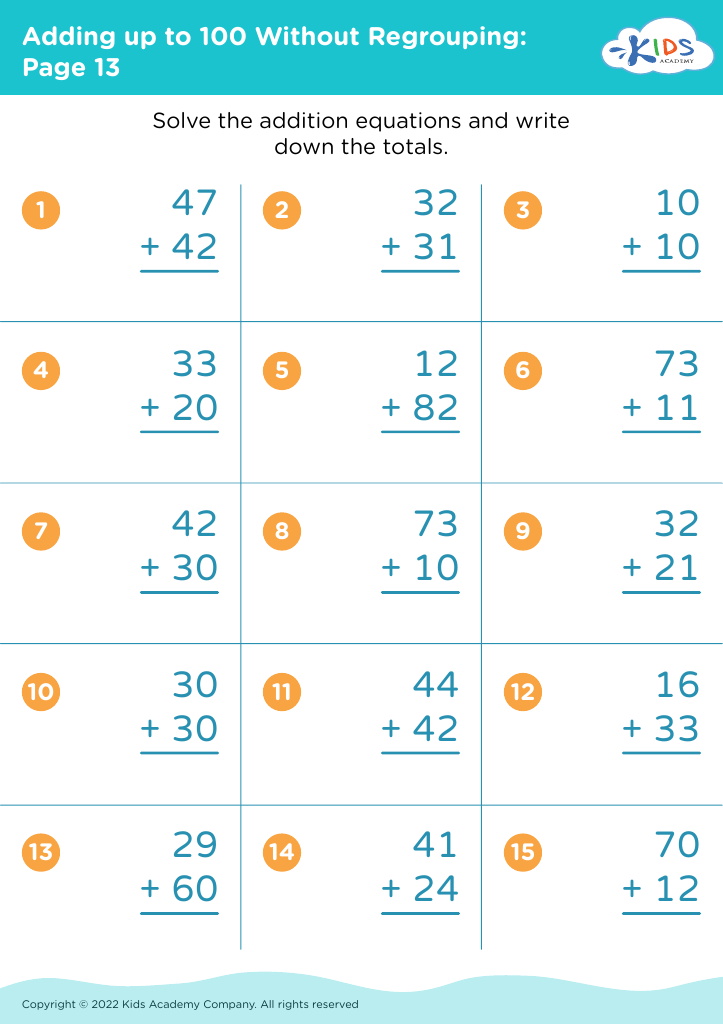
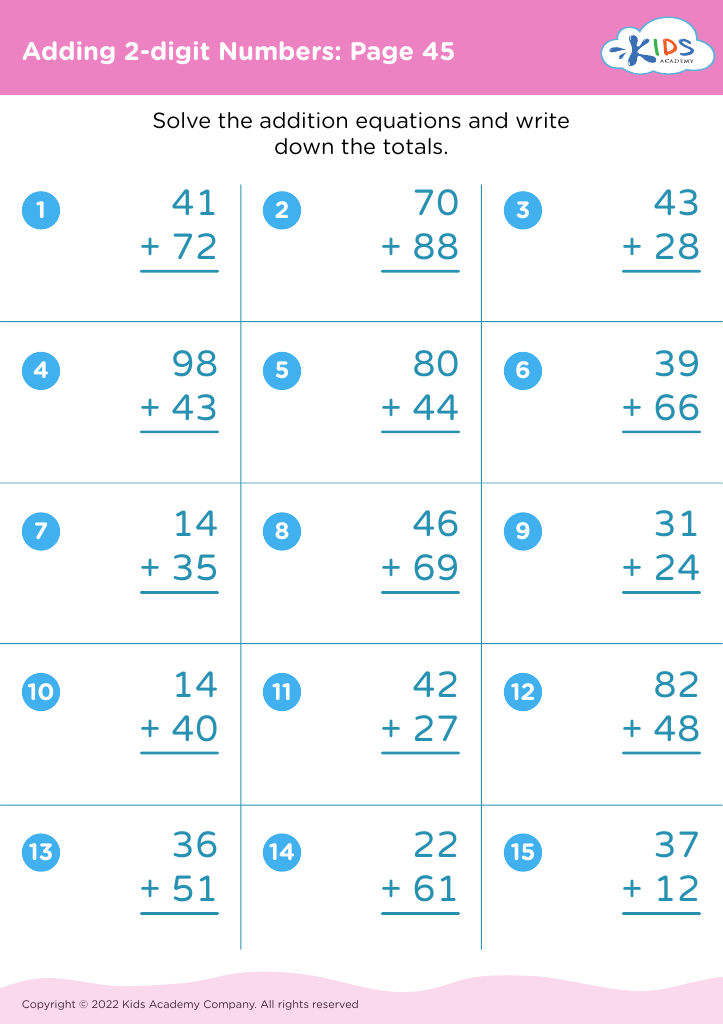
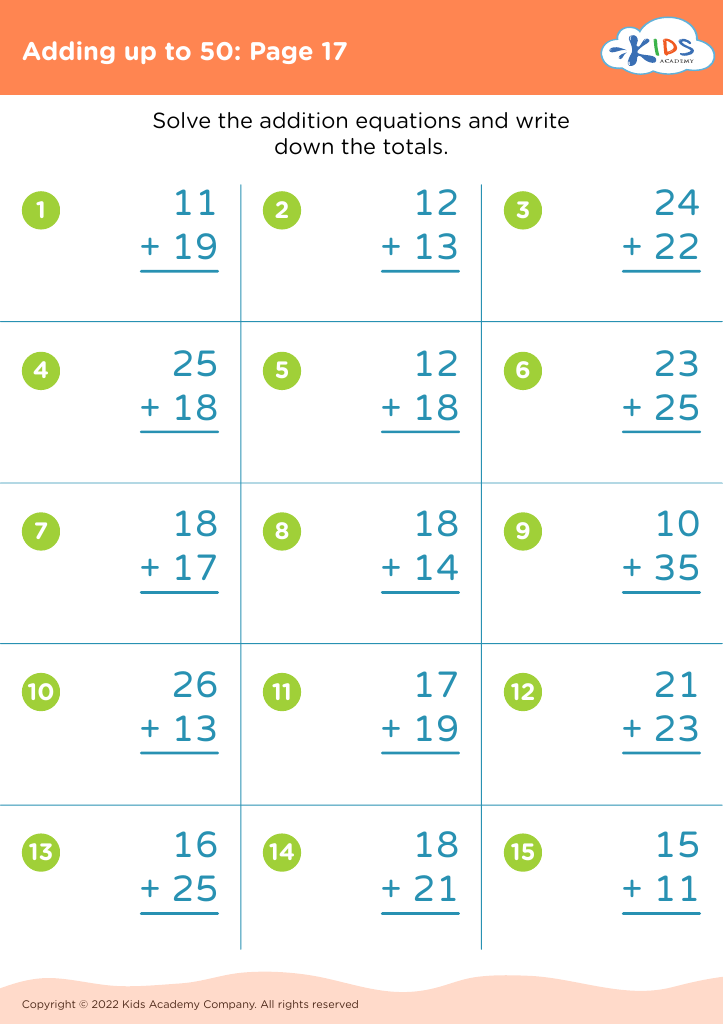
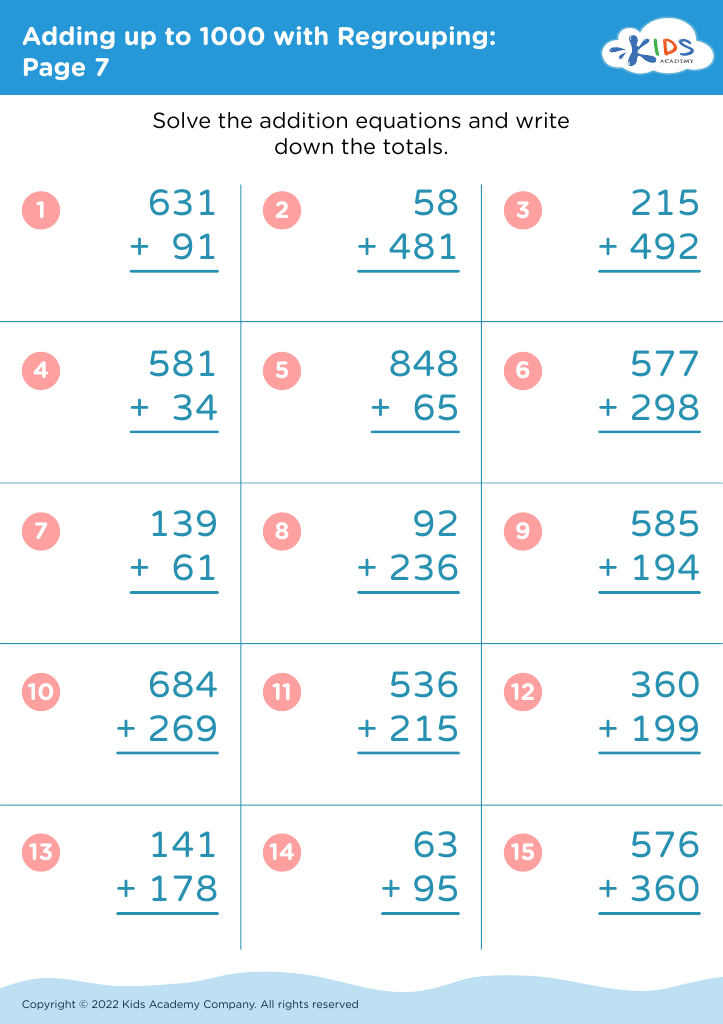
Boost your child's vocabulary while mastering addition with our "Enhance Vocabulary Addition Worksheets for Ages 5-9." Designed by expert educators, these engaging worksheets blend mathematics and language exercises to strengthen foundational skills. Each worksheet introduces essential vocabulary in fun, interactive ways, ensuring children build robust word banks as they tackle addition problems. Suitable for home or classroom use, these resources offer a dynamic approach to learning, fostering both numerical and linguistic development. With colorful illustrations and leveled difficulties, our worksheets are perfect for young learners, inspiring confidence and academic growth. Download now and watch your child excel!








Enhancing vocabulary for children ages 5-9 is crucial for several reasons. At this developmental stage, kids' brains are especially receptive to learning and making new connections, which forms the foundation for future academic and social success. A robust vocabulary enriches their ability to understand and express complex concepts and emotions. It improves reading comprehension, and children with larger vocabularies find it easier to learn to read and engage with texts at higher levels. Vocabulary is a predictor of literacy skills, which are essential for all subjects, from math to science.
Additionally, a strong vocabulary fosters better communication skills. Children who can express themselves clearly and understand others are more likely to develop positive relationships and navigate social situations effectively. Conflict resolution, collaboration, and negotiating skills are all enhanced when kids have the words they need to express themselves.
Parents and teachers play pivotal roles in this development. By incorporating a wide range of words into daily conversations, reading diverse books, and engaging students in activities that explore language, they can create a rich vernacular environment. Tools like word games, storytelling, and interactive discussions can make learning fun and memorable. Investing in a child's vocabulary equates to empowering them with a tool for lifelong learning and success.








