
Fine motor skills (drawing lines) Addition Worksheets for Ages 5-9
3 filtered results
Difficulty Level
Grade
Age
-
From - To
Subject
Activity
Standards
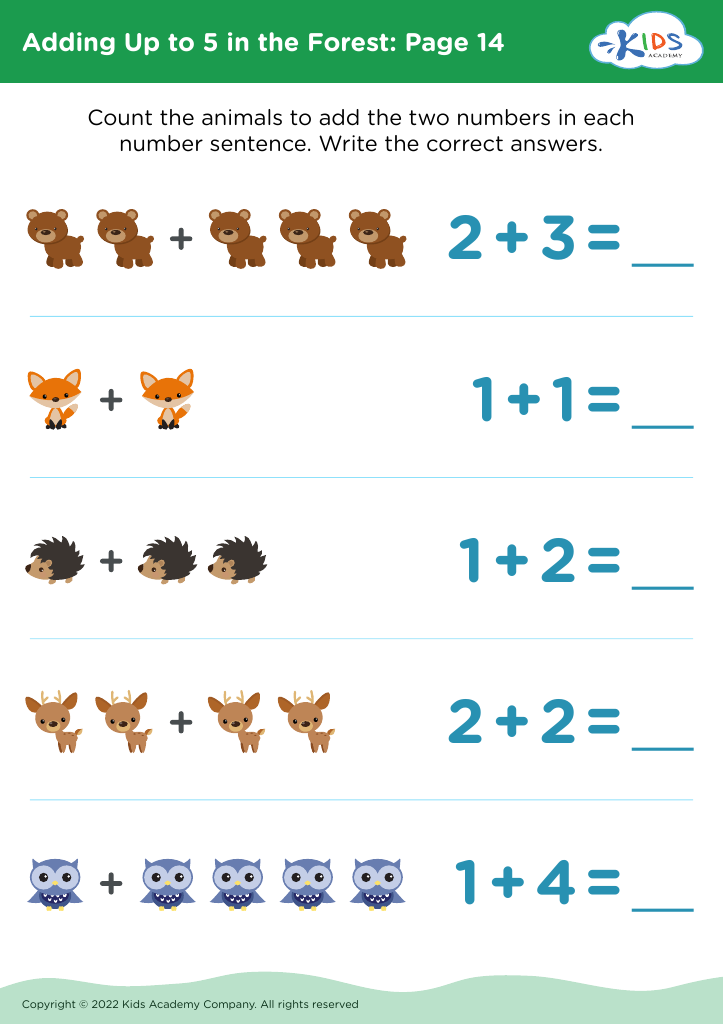
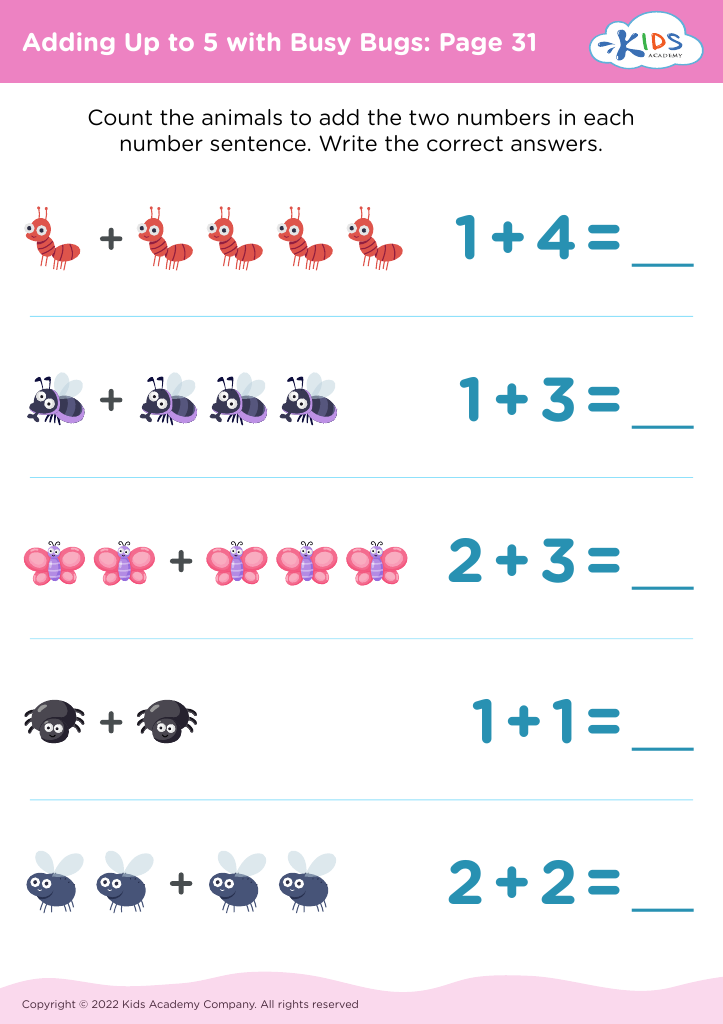
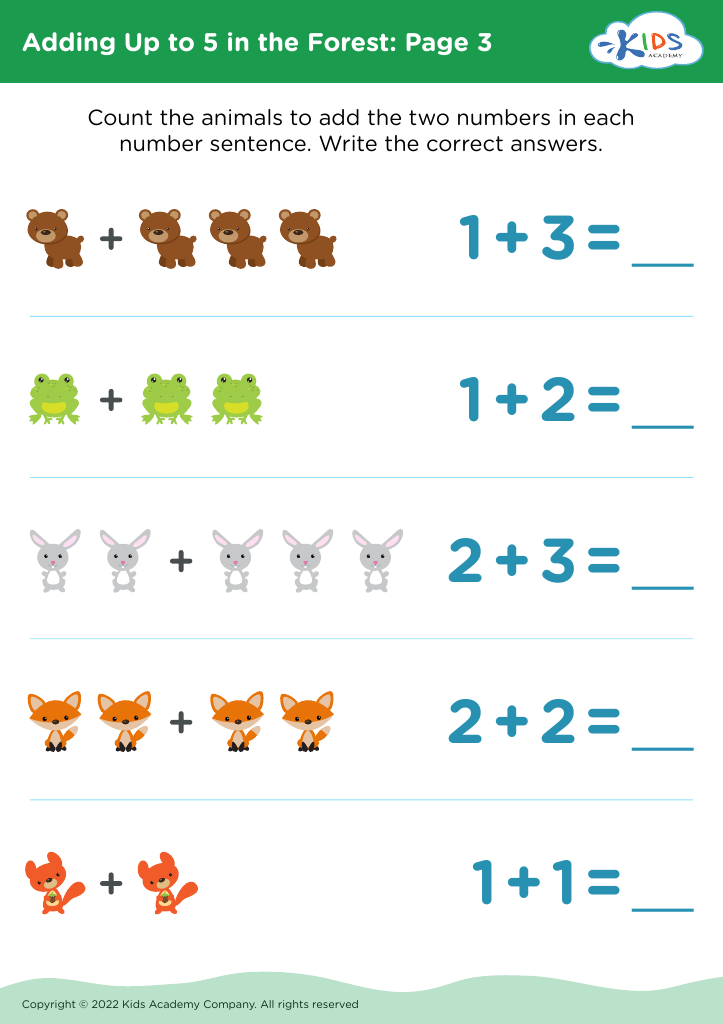
Boost your child's fine motor skills with our engaging drawing lines addition worksheets designed specifically for ages 5-9. These worksheets offer a fun way to combine essential mathematical learning with the development of hand-eye coordination and dexterity. Children will navigate various activities, such as connecting dots and tracing lines, while solving addition problems, ensuring an interactive learning experience. Our thoughtfully crafted worksheets encourage focus, creativity, and confidence as young learners sharpen their skills. Perfect for use at home or in the classroom, these resources lay a strong foundation for future success in math. Explore our fine motor skill worksheets today!
Favorites
With answer key
Interactive
Join Kids Academy for Free
Who is primarily going to use this learning content?








Fine motor skills, particularly activities like drawing lines, are crucial for children aged 5-9 as they lay the foundation for more complex academic tasks and daily activities. These skills involve the use of small muscles in the hands and fingers, essential for writing, coloring, and even self-care tasks such as buttoning clothes. As children engage in drawing lines, they refine their hand-eye coordination, spatial awareness, and dexterity, which are critical for success in school and life.
Improving fine motor skills enhances a child's ability to grip a pencil correctly, which in turn influences their handwriting quality and speed. This age group is also transitioning into more formal mathematics, where skills like counting and forming numbers rely heavily on their fine motor development.
Moreover, mastering fine motor tasks boosts confidence, promoting a sense of accomplishment that motivates further learning. By prioritizing fine motor skill activities, parents and teachers nurture cognitive development, emotional well-being, and social interactions. Thus, fostering these skills is not only instrumental for immediate academic success but also significantly advantageous for overall child development and future learning experiences.








